
Executive Overview
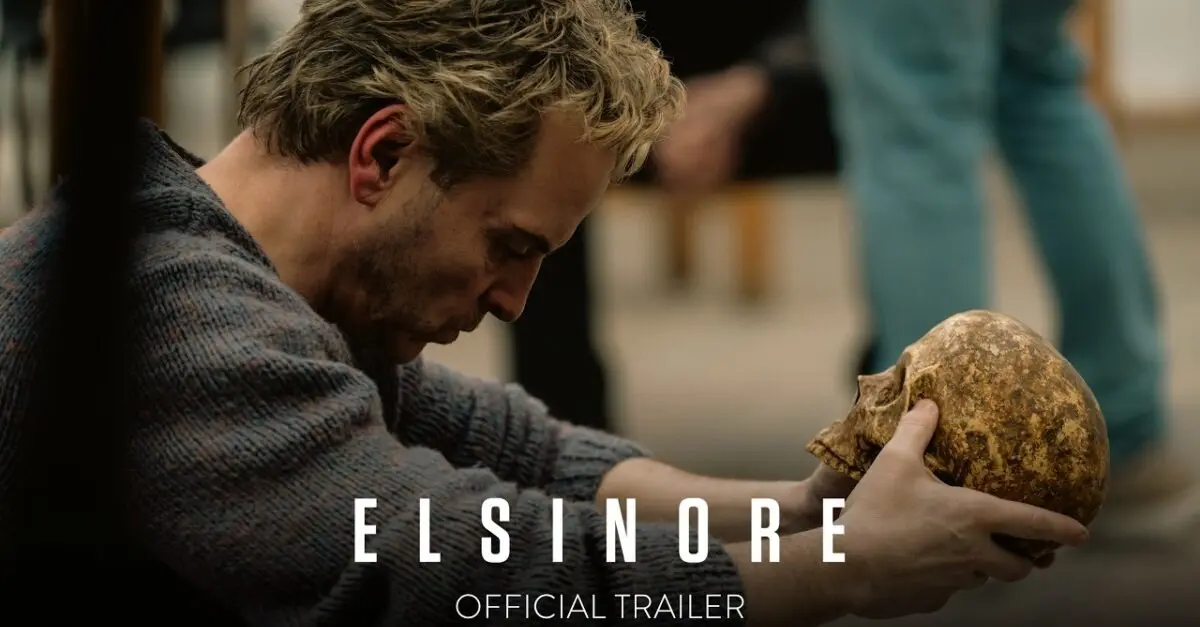
In the upper echelons of theatrical history, few performances carry the weight of myth. Even fewer are forged in the crucible of absolute physical vulnerability. On September 28, 2026, Focus Features released the official trailer for Elsinore, an upcoming biographical drama directed by Simon Stone and written by Stephen Beresford, based on an original concept by Ethan Silverman. Slated for a theatrical release on November 20, 2026, the film explores one of the most remarkable and harrowing chapters in modern British theatre: the final months of Scottish actor Ian Charleson.
The film stars two-time Olivier Award winner and BAFTA recipient Andrew Scott as Charleson, capturing his courageous, death-defying sprint to play the titular role in Shakespeare’s Hamlet at London’s National Theatre in 1989. Academy Award winner Olivia Colman stars opposite Scott as Dr. Margaret Johnson, the physician who navigated Charleson through his final performance while managing a terminal AIDS diagnosis. Supported by a stellar, star-studded ensemble cast that includes Billie Piper, Johnny Flynn, Joe Locke, and Juliet Stevenson, Elsinore promises to be more than a biopic; it is positioned as an intimate exploration of art’s capacity to transcend mortality, the stigma of the late-20th-century AIDS epidemic, and the unbreakable bond between an artist and his craft.
Detailed Chronology: The Genesis of a Masterpiece and a Tragedy
To understand the immense gravity of Elsinore, one must look back at the winter of 1989 at London’s National Theatre. Ian Charleson was already a celebrated figure, widely recognized for his brilliant portrayal of Olympic runner Eric Liddell in the 1981 cinematic masterpiece Chariots of Fire, as well as numerous revered stage turns with the Royal Shakespeare Company and the National Theatre. However, by the late 1980s, Charleson was privately battling the devastating complications of HIV/AIDS, a diagnosis he kept largely concealed from the public while symptoms grew increasingly severe.
When Daniel Day-Lewis famously walked off the stage during a production of Hamlet at the National Theatre in October 1989—mid-performance, overwhelmed by grief and nervous exhaustion—the production was thrust into sudden jeopardy. Charleson, who had been cast as Rosencrantz or understudying the production, stepped forward to take on the most demanding role in the English theatrical canon. At the time, Charleson was physically frail, enduring dramatic weight loss, low energy, and opportunistic infections. Yet, driven by an unyielding artistic fire, he embarked on a grueling rehearsal schedule.
Director Richard Eyre and the National Theatre company accommodated Charleson’s failing health, but the actor insisted on no special treatment in terms of performance intensity. On November 15, 1989, Charleson officially took over the role of the Danish prince. He played Hamlet for a limited, critically acclaimed run that culminated in late December. Theatergoers and critics alike were stunned by the electric, razor-sharp vitality he brought to the stage, unaware that the actor was performing through sheer force of will, sustained by medical interventions and a profound dedication to the text.
Just weeks after the run concluded, on January 6, 1990, Ian Charleson passed away at the age of 40. His public memorial service was a watershed moment for the British acting community, marking one of the first high-profile losses of a major British star to the AIDS epidemic. Friends and colleagues—including Ian McKellen, Derek Jacobi, and Richard Eyre—spoke openly about his illness, helping to dismantle the pervasive stigma of the era.
Elsinore retraces this exact chronology, following Charleson from the moment the mantle of Hamlet is handed to him to the final curtain call, interweaving the personal backstage realities with the theatrical triumph that defined his final days.
Supporting Context & Metrics: The Creative Team and Staggering Ensemble
The cinematic adaptation of Charleson’s life has been a long time in development, navigating the delicate balance required to honor a theatrical icon without sensationalizing his illness. The project originates from an original idea by producer and writer Ethan Silverman, who brought the concept to screenwriter Stephen Beresford. Beresford, celebrated for his work on the BAFTA Award-winning film Pride and the stage play The South Downs, crafted a screenplay that highlights both the artistic rigor of the theatrical world and the intimate, harrowing medical realities of the pre-antiretroviral era of HIV/AIDS treatment.
At the helm is director Simon Stone, renowned internationally for his visceral, modernist interpretations of classical texts in major European houses like the Toneelgroep Amsterdam and the Burgtheater in Vienna, as well as cinematic works like The Daughter and The Dig. Stone’s signature style—characterized by deep emotional exposure, relentless pacing, and stark visual framing—makes him uniquely suited to capture the psychological intensity of Elsinore.
A Who’s Who of British Cinema and Theatre
The production boasts one of the most formidable ensemble casts assembled for a British biographical drama in recent years. Beyond Andrew Scott and Olivia Colman, the credits read like a roll call of contemporary acting royalty:
- Billie Piper (I Hate Suzie, Doctor Who)
- Johnny Flynn (Emma, Stardust)
- Luke Thompson (Bridgerton)
- David Dawson (My Policeman)
- Matthew Beard (An Education)
- Joe Locke (Heartstopper, Agatha All Along)
- Monica Dolan (The Thief, His Wife and the Canoe)
- Georgie Glen (The Crown)
- Sadie Soverall (Saltburn)
- Adeel Akhtar (Sherwood, The Big Sick)
- Dickie Beau (Re-Membering Ian)
- Kadiff Kirwan (Slow Horses)
- Dame Juliet Stevenson (Truly, Madly, Deeply)
- Peter Mullan (Tyrannosaur, My Name Is Joe)
This constellation of talent reflects the deep reverence the modern British acting community holds for Charleson’s legacy. Many members of the cast have personal connections to the institutions that shaped Charleson’s career, making their involvement in Elsinore a collective act of homage.
Official Statements and Industry Reception
With the release of the trailer by Focus Features, the global film and theatre communities have begun reacting to the project’s emotional scope and aesthetic ambition. While official junkets have yet to begin in full, early commentary from the creative team underscores the delicate responsibility of bringing Charleson’s story to the screen.
In early press statements regarding the development of the project, producers emphasized that Elsinore is designed not merely as a tragedy, but as a celebration of radical autonomy. "Ian Charleson did not merely endure his final months; he mastered them," notes a production insider close to the film. "By choosing to step onto the stage as Hamlet, he utilized his greatest instrument—his body, his voice, his mind—to speak truth to mortality on his own terms."
Focus Features chairman Peter Kujawski highlighted the film’s resonance for contemporary audiences: "Elsinore captures a vital piece of recent history that still echoes today. It reminds us of the profound sacrifices artists have made for their craft, the devastating toll of the early AIDS crisis, and the extraordinary grace of individuals facing the ultimate horizon. Simon Stone, Stephen Beresford, and an incomparable cast led by Andrew Scott and Olivia Colman have crafted a cinematic experience of rare, staggering power."
Theatre historians have also welcomed the project. The Ian Charleson Awards, established in 1991 by the Sunday Times and the National Theatre to reward the best classical performances by actors under 30 in Britain, have long kept his name alive. The release of Elsinore is expected to introduce Charleson’s extraordinary legacy to an entirely new generation of filmgoers and young theatre practitioners who may only know his name through the annual awards ceremony.
Future Outlook: Awards Season Contender and Cultural Impact
As Focus Features positions Elsinore for its November 20, 2026 theatrical release, industry analysts are already whispering about potential awards season trajectories. Biographical dramas focusing on theatrical milestones—particularly those anchored by powerhouse performances from actors of Andrew Scott and Olivia Colman’s caliber—historically find favor with critics’ associations and major academy voters alike.
Andrew Scott, fresh off career-defining work in All of Us Strangers and Ripley, faces what many anticipate to be his most challenging and emotionally demanding cinematic role to date. The physical transformation required to portray Charleson’s final months, balanced against the intellectual and vocal demands of performing Shakespearean text within the narrative, places Scott squarely in early conversations for Best Actor accolades. Similarly, Olivia Colman’s portrayal of Dr. Margaret Johnson—a figure who stood on the frontline of both medical care and profound emotional grief during the height of the epidemic—is projected to be a formidable contender in supporting actress categories.
Beyond accolades, Elsinore arrives at a crucial cultural juncture. As contemporary society continues to grapple with the historical memory of the AIDS epidemic, artistic retrospectives like Elsinore serve a vital archival and educational purpose. By reclaiming the narrative of Ian Charleson from historical footnotes and placing it on the global cinema stage, the film ensures that his final act of defiance—refusing to let illness silence his voice—remains an enduring testament to the resilience of the human spirit.
As audiences await the November premiere, the trailer stands as a haunting, beautiful preview of a film that promises to shake the foundations of biographical cinema, reminding us all why we turn to the stage and screen to make sense of life, art, and the dark space beyond.