As the initial chaos of the autumn semester settles—name tags are discarded, instrument rental logistics are finalized, and school bands and orchestras begin to cohere into unified musical ensembles—music educators face one of the most critical transitions of the academic year. The honeymoon phase of the first few weeks gives way to the sobering reality of the impending first grading period and the rigorous preparation required for fall concert season.
At this precise juncture, instrumental music teachers confront a perennial challenge: accurately evaluating individual student comprehension, technical proficiency, and home practice habits before grades are finalized. Traditionally, this meant relying heavily on isolated performance assessments or subjective in-class observations. However, a major pedagogical shift is underway in middle and high school music classrooms across the country.
Leveraging advanced digital platforms like MakeMusic, innovative educators are expanding their evaluation toolkits far beyond standard catalog-based playing tests. By integrating Audio/Video-Only Assignments and Multiple Choice Assessments, teachers are gaining unprecedented visibility into independent practice routines and cognitive understanding. This comprehensive report explores how these flexible assessment strategies are transforming music education, providing a detailed breakdown of implementation frameworks, analyzing the pedagogical metrics behind blended learning routines, and outlining the future trajectory of music technology in the classroom.
Detailed Chronology: Navigating the Fall Semester Transition
To understand the strategic timing of these assessment tools, it is necessary to examine the natural lifecycle of a secondary school music ensemble during the fall term.
Phase 1: The Onboarding Window (Weeks 1–3)
The academic year begins with logistical turbulence. Educators spend the first several weeks learning student names, managing equipment distribution, repairing instruments, and establishing basic behavioral norms. During this period, the primary auditory goal is simply getting the ensemble to play in tune and maintain a unified tempo. Formal testing is rare; instead, formative assessments are informal and focused on physical posture and basic tone production.
Phase 2: The Diagnostic Imperative (Weeks 4–6)
As the ensemble begins to sound cohesive, the pedagogical landscape shifts. Teachers must determine what each student actually knows and can execute independently. This is the danger zone for many music programs: the gap between what students do in the shared classroom environment and what occurs during isolated home practice becomes glaringly apparent.
Historically, this is when teachers assign standard performance tests from a digital music catalog. While effective for testing pitch and rhythmic accuracy, these tests often fail to capture why a student is struggling—whether the barrier is poor posture, a misunderstanding of key signatures, or a lack of effective home practice strategies.
Phase 3: Implementing Flexible Digital Routines (Weeks 7 and Beyond)
Recognizing the limitations of pure performance metrics, progressive educators are introducing two specialized assignment types to bridge the gap between cognitive understanding and physical execution:
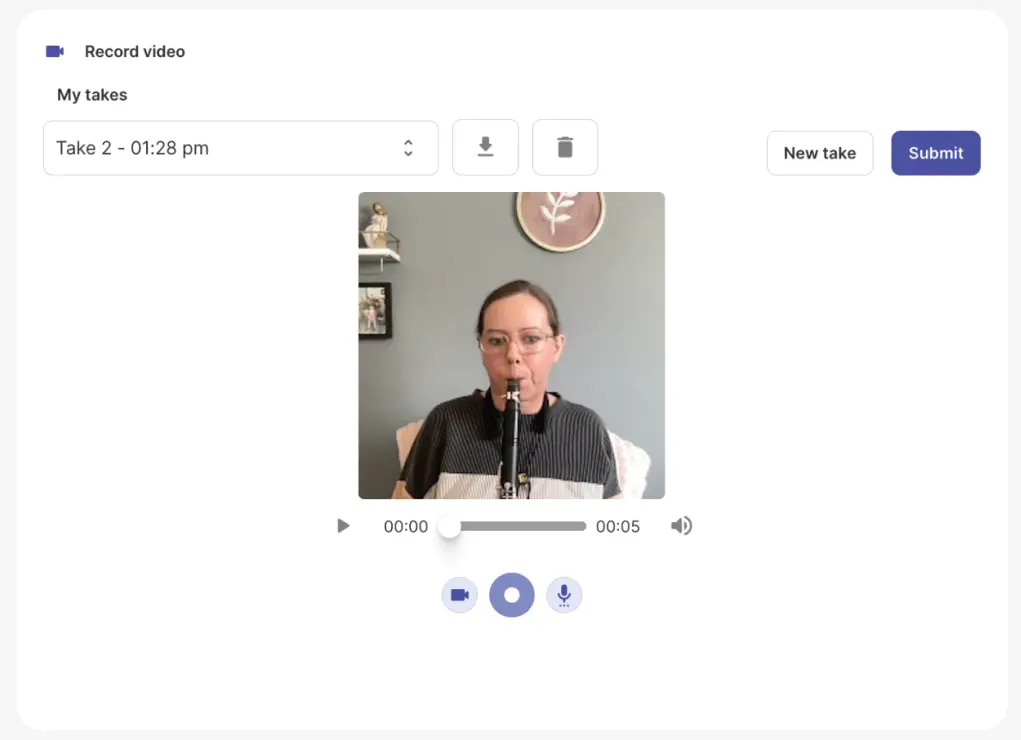
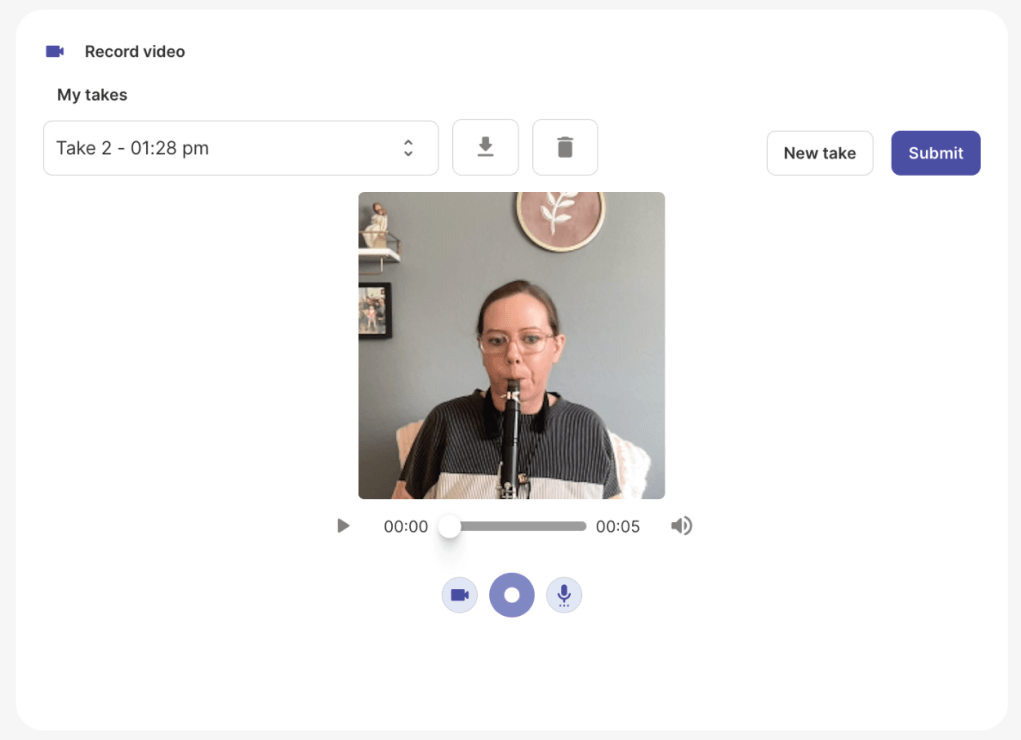
Audio/Video-Only Assignments: Designed to demystify home practice by requiring students to record, observe, and critique their own physical habits (posture, hand position, embouchure).
Multiple Choice Assessments: Designed to evaluate music theory, notation literacy, and score study before students ever play a new piece of concert repertoire.
By embedding these varied assessment formats into a balanced weekly routine, educators can evaluate holistic musicianship—encompassing technique, theory, and performance—without exponentially increasing their own grading workloads.
Supporting Context & Metrics: The Mechanics of Modern Music Assessment
To appreciate the impact of these digital tools, one must examine the specific mechanics and psychological principles behind Audio/Video-Only and Multiple Choice assignments in middle and high school ensembles.
Audio/Video-Only Assignments: Demystifying Home Practice
For decades, home practice has been a black box for music educators. Teachers assign thirty minutes of daily practice, but they rarely witness the environment, physical tension, or bad habits that accompany that practice.
Audio/video-only assignments provide a window into this isolated environment. More importantly, they shift the burden of critique from the teacher to the student. When a student records themselves playing a passage and is prompted to watch the playback, they frequently catch technical errors—such as collapsed wrists, incorrect bow holds, or slumped posture—long before a teacher points them out.
Target Demographic: Middle and high school band and orchestra students.
Time Commitment: Approximately 15 minutes at home.
Core Pedagogical Goal: Cultivating self-awareness, metacognition, and immediate self-correction regarding physical habits and posture during independent practice.
Multiple Choice Assessments: Cognitive Readiness Before Physical Execution
Music literacy is often treated as a secondary byproduct of performance. Students sight-read music by trial and error, repeating passages until their fingers memorize the physical patterns, frequently bypassing foundational theoretical comprehension.
MakeMusic’s incorporation of written multiple-choice assessments—which allow educators to integrate custom text and high-resolution images of musical scores—reverses this paradigm. By testing a student’s understanding of key signatures, dynamic markings, complex rhythms, and structural landmarks before they pick up their instruments, teachers transform home practice from an exercise in blind repetition into a targeted rehearsal session.
Target Demographic: Any instrumental ensemble (concert band, jazz band, string orchestra, full orchestra).
Time Commitment: Approximately 5 minutes at home.
Core Pedagogical Goal: Ensuring students can decode and analyze the structural elements of a new concert piece before executing it physically.
Building a Balanced Weekly Routine
Pedagogical experts recommend synthesizing these disparate tools into a cohesive, low-friction weekly framework. A sustainable digital assignment schedule might look structured as follows:
Monday: A Multiple Choice pre-practice assessment introducing a new concert piece’s key signature and rhythmic challenges.
Wednesday: A traditional Performance Assessment focusing on a specific technical excerpt from the catalog.
Friday: An Audio/Video-Only reflection assignment evaluating posture and self-correction during a short practice session.
By leveraging technological integrations such as Google Grade Passback, scores generated from these diverse assessment types sync automatically to external Learning Management Systems (LMS) like Google Classroom, stripping away hours of manual data entry and administrative friction for the educator.
Official Perspectives & Pedagogical Insights
Music education researchers and curriculum specialists emphasize that the integration of multi-modal assessments addresses long-standing inequities in how student achievement is measured in the arts.
"For generations, music grading has leaned too heavily on final product performance—how a student sounds on the night of the concert or during a high-stakes adjudication," notes a prominent curriculum developer specializing in secondary instrumental instruction. "However, true musical fluency is multi-dimensional. It involves theoretical literacy, physical ergonomics, reflective practice habits, and listening skills. By diversifying digital assignments, teachers can finally assign equitable grades that reward cognitive preparation and technical growth, not just natural aptitude."
Furthermore, ed-tech specialists highlight the psychological benefits of self-evaluation. When students engage with audio/video recording tools regularly, performance anxiety decreases. The recording process shifts from a terrifying examination to a routine feedback loop.
"When a student watches their own video submission, the cognitive shift is palpable," explains an experienced high school band director utilizing modern assessment software. "They stop waiting for the teacher to rescue them from a mistake. They begin asking, ‘How can I fix my hand position?’ The teacher transitions from an authoritarian judge to a collaborative coach."
Future Outlook: The Evolution of Ed-Tech in the Ensemble Classroom
As digital platforms continue to mature, the landscape of music education is poised for further transformation. Several key trends are expected to shape the future of ensemble assessments over the next decade:
1. Artificial Intelligence and Automated Formative Feedback
While current audio/video assignments require direct teacher review, the integration of advanced machine learning algorithms promises real-time automated feedback. Future iterations of music assessment platforms will likely offer instant visual and auditory prompts to students while they practice at home, flagging pitch discrepancies, rhythm errors, and posture deviations before the data ever reaches the teacher’s desk.
2. Deeper LMS Interoperability
The administrative burden on music educators is notoriously heavy, often spanning long hours outside the contractual school day spent grading portfolios, balancing inventories, and managing sheet music libraries. The expansion of seamless Grade Passback systems—extending beyond Google Classroom to Canvas, Schoology, and other major platforms—will continue to streamline workflow efficiency, allowing teachers to dedicate more time to direct, human-to-human musical mentorship.
3. Comprehensive Portfolios of Musical Growth
The shift toward multi-modal assessments—combining written theory, visual posture analysis, and pristine audio-visual performance recordings—paves the way for longitudinal student portfolios. Instead of a single letter grade at the end of a nine-week grading period, students will graduate with a rich digital archive documenting their artistic evolution from their first shaky notes in middle school band to polished symphonic performances in high school.
Conclusion
For educators looking to revitalize their programs without overhauling established curricula, the path forward is clear. By introducing bite-sized, flexible assessments—such as a five-minute multiple-choice pre-practice check or a fifteen-minute video reflection—teachers can unlock profound insights into student capability.
The tools are readily available for deployment. For those eager to test these strategies before the next rehearsal cycle, logging into digital platforms like MakeMusic and exploring the creation menu offers an immediate starting point. For educators new to the ecosystem, trial access provides an invaluable opportunity to experience these diverse assessment workflows firsthand, ensuring that when the fall concert curtain rises, every student is prepared, confident, and thoroughly understood.