
Executive Overview
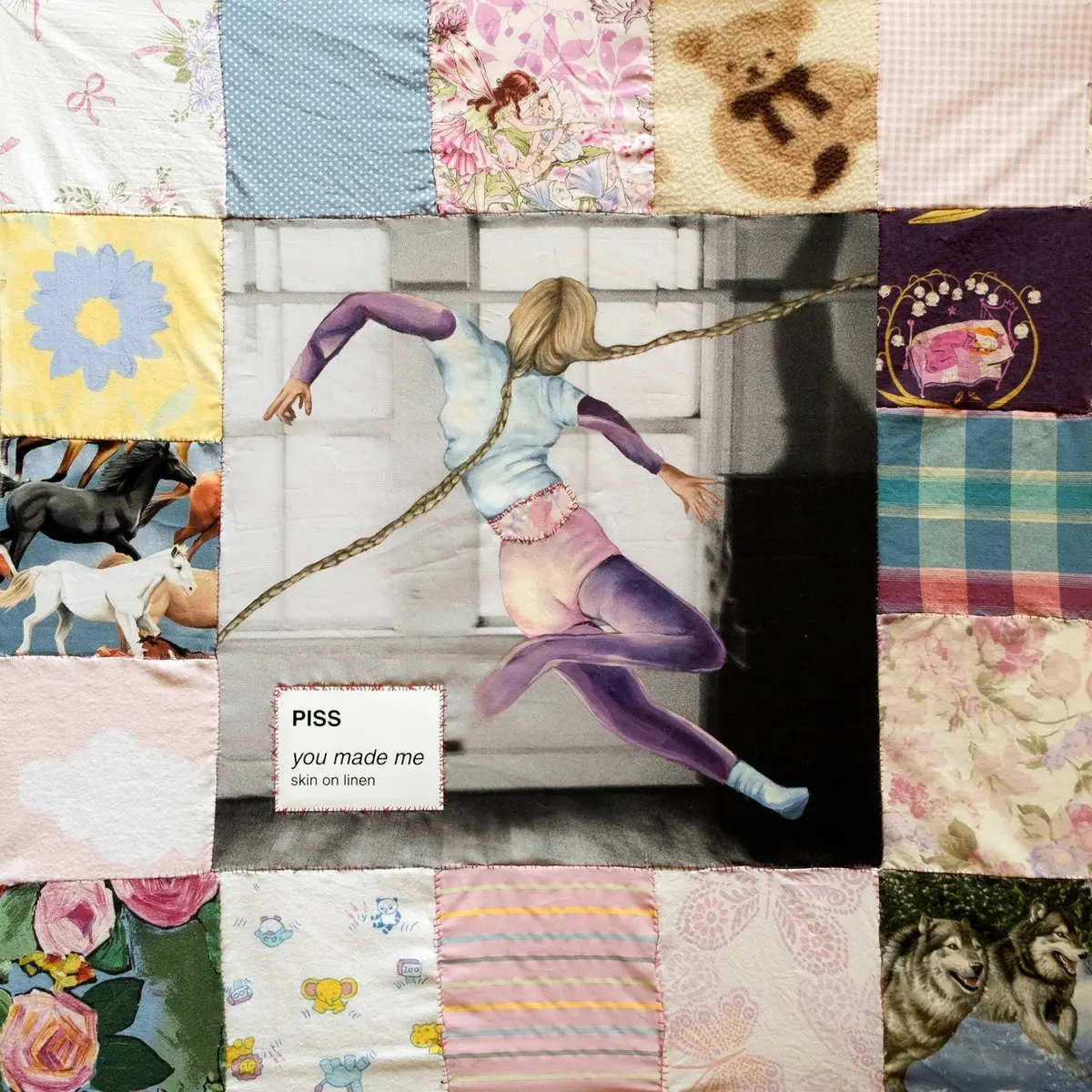
In the contemporary landscape of heavy, abrasive music, few releases arrive with the unmitigated, structural fury of the latest full-length album from noise-punk outfit PISS. Across fifteen uncompromising tracks, the band—anchored by vocalist Zantingh and guitarist Tyler Paterson—has constructed more than merely a collection of songs; they have built an acoustic monument to survival, trauma, and systemic misogyny. The album, titled you made me / skin on linen, serves as a harrowing audio documentary of pain, utilizing visceral noise-rock soundscapes, fragmented spoken-word interviews, and harrowing cinematic framing to confront listeners with the realities of gender-based violence.
True to her word, Zantingh cuts right down to the bone across the album’s runtime. She lives and relives her traumatic experiences with assault and misogyny, processing the jagged fragments of trauma through labored screams, audible gasps, and frantic appeals to anyone willing to listen. Far from standard punk catharsis, the record functions as an act of sonic excavation. It is a work that refuses to temper its righteous anger, operating on the belief that a world free of misogyny is worth fighting for, even as it acknowledges the crushing weight of the current reality.
This comprehensive report examines the structural anatomy of the album, contextualizes its radical political and theoretical framework, explores its critical reception, and analyzes the profound implications of its release for both the noise-rock genre and the broader cultural conversation surrounding gender-based violence.
Detailed Chronology: The Making and Mechanics of an Acoustic Reckoning
The Genesis of a Noise-Punk Masterpiece
The journey toward you made me / skin on linen was neither swift nor comfortable. Formed in the underground circuit, PISS built a formidable reputation for visceral, chaotic live shows that left audiences stunned. However, translating the volatile energy of their live performances into a recorded medium required a radical conceptual shift.
In a revealing interview with The Guardian, guitarist Tyler Paterson articulated the band’s unique instrumental approach. He likened PISS’s sonic methodology to "scoring a film" starring Zantingh, carefully situating her voice against what the band describes as "a centuries-long conversation about gender-based violence." This cinematic framework dictates every second of the album’s composition.
The tracks are remarkably concise—mostly clocking in at two minutes or shorter. Rather than lingering in traditional song structures, the music constructs and deconstructs noise-rock soundscapes at the frantic, unpredictable pace of a post-traumatic flare-up. Guitars shatter and feedback mimics the sharp ringing of adrenaline, while drums simulate the erratic heartbeat of a panic attack.
A Chronological Descent into the Architecture of Misogyny
As the album progresses through its fifteen movements, Zantingh recounts a life fundamentally transformed and warped by misogyny. Her lyrical disclosures are unflinchingly direct, stripping away the euphemisms that society often uses to shield itself from the realities of abuse. From the chilling recollection of "learning blowjobs on a glue stick" as a child, to the grueling navigation of adolescent assault and domestic violence, Zantingh fights desperately to make herself heard over the wall of instrumental noise.
The structural climax of the record arrives mid-album with the track "blocking a scene you can’t remember." Backed by a desolate, Slint-esque slowcore build that slowly gains psychological pressure, Zantingh performs a screenplay in the third-person perspective:
"Interior, a girl’s bedroom, nighttime… / His number is dialled, she’s finally going to let him have it."
However, the cinematic illusion shatters almost immediately. She repeatedly interrupts her own scripted screed, paralyzed and unprepared to articulate what she truly wants to say. The listener never hears her prepared, triumphant diatribe. Instead, the performance devolves into frantic, manic yelling as she is forcefully pulled back into the loop of her assault, experiencing it over and over in real-time.
She attempts to cognitively process and acknowledge the culture of dehumanization that birthed her assaulter, but the cognitive load proves too heavy. She is left with nothing raw and unvarnished except her trauma and the chilling, definitive realization that: "I’ll never feel safe in my body again."
On the immediate subsequent track, the aggressive defiance curdles into a profound, suffocating resignation. Zantingh seems to surrender to the systemic inevitability of gender-based violence, whispering to herself: "You could have lived at any time, in any body. You could have chosen any dress to wear for him."
Supporting Context & Metrics: Theory, Interludes, and Cultural Infrastructure
The Theoretical Tapestry: Archival Interludes
What elevates you made me / skin on linen from a purely personal tragedy to a universal indictment is the integration of archival interview recordings interspersed between the songs. These audio clips feature prominent feminist thinkers, radical organizers, and community activists, matched seamlessly with eerie sound collages and ambient compositions.
These inserted voices do not offer easy resolutions. Instead, they vault between fierce debates on rehabilitation, systemic accountability, and violent resistance:
- Andrea Dworkin: The radical feminist theorist’s voice cuts through the static, issuing an uncompromising call for violent self-defence against rapists.
- Vikki Reynolds: The Canadian clinical supervisor speaks with measured clarity about our pervasive culture of rape—a societal ecosystem that simultaneously victimizes both men and women.
- Rote Zora: Anonymous members of the West German feminist militant group are heard defending their historical campaign of targeting sexist institutions through direct action.
Significantly, the members of PISS rarely interface directly with these historical voices. They do not moderate, edit, or introduce them. Instead, they allow these disparate philosophies to exist in simultaneous conversation with one another and with Zantingh’s deeply personal narrative. This omnipresence frames the album simultaneously as an intimate diary and a universal incantation—summoning the collective rage, grief, and despair of countless women who have been systematically silenced throughout history.
Genre Metrics and Production Anatomy
To understand the cultural footprint of you made me / skin on linen, one must evaluate its formal properties within the contemporary extreme music landscape:
| Metric Category | Specification / Data Point |
|---|---|
| Total Track Count | 15 distinct movements (mix of noise-rock tracks and archival interludes) |
| Average Track Duration | Under 2 minutes (reflecting the erratic cadence of trauma responses) |
| Primary Sonic Influences | Noise-rock, slowcore (Slint-esque dynamics), ambient sound collage |
| Thematic Focus | Gender-based violence, childhood trauma, systemic misogyny, radical feminism |
| Vocal Delivery | Labored screams, audible gasps, third-person cinematic narration, whispered resolution |
| Archival Contributions | Andrea Dworkin, Vikki Reynolds, Rote Zora militants |
The production aesthetic deliberately rejects modern, over-polished digital compression. The instruments sound raw, room-imminent, and dangerously close to clipping, mirroring the psychological interiority of a person pushed past their breaking point.
Official Statements and Critical Reception
The Band’s Perspective
In their promotional communications and press statements, the members of PISS have been remarkably clear about the political and ethical stakes of their art. The band’s artistry is explicitly informed by feminist theory—specifically the foundational recognition that an anti-misogynist world is not an impossible utopia, but rather a reality that is both possible and worth fighting for.
However, the band refuses to sugarcoat the steep price of admission to this fight. In a society where brutality is treated as the unacknowledged birthright of all women, accessing that anti-misogynist reality is nearly impossible. Hope is characterized not as a cheerful default setting, but as an exhausting, uphill battle that must be painfully unearthed among the rubble of you made me / skin on linen.
Critical Consensus
Music critics and cultural theorists have begun evaluating the album as a watershed moment for extreme music. Reviewers have lauded PISS for refusing to sanitize trauma into digestible hooks or palatable narratives of tidy closure. By distilling, contextualizing, and empowering a single, deeply confrontational voice, the band has created a work that demands intellectual and emotional endurance from its audience.
Cultural commentators have particularly praised the album’s refusal to offer false comfort. As one underground zine noted, "PISS does not want you to feel better after listening; they want you to understand why feeling better is currently impossible without radical societal overhaul."
Future Outlook: The Legacy of you made me / skin on linen
As you made me / skin on linen circulates through the global underground and reaches wider audiences via critical acclaim, its long-term cultural impact is already taking shape. The album challenges the boundaries of what heavy music can achieve, proving that noise-punk can function as rigorous political theory, historical documentary, and deep psychological inquiry all at once.
The trajectory of PISS points toward a renewed intersection between extreme music and radical political organizing. By giving acoustic form to the realities of misogyny and gender-based violence, the band has established a high-water mark for confronting structural injustice through art.
Yet, the emotional weight of the album ultimately rests in its fragile, resolute conclusion. By the time the final track fades, Zantingh’s voice—shattered from screams and exhausted by the reliving of trauma—is reduced to a quiet, undeniable whisper:
"I won’t bleed forever."
In those final five words lies the ultimate thesis of the record. Resistance is possible. Survival is possible. Survival must be possible. It must be.