
Executive Overview
Ask any music educator about the most formidable obstacle in their professional life, and you will likely receive a catalog of familiar grievances. They might point to shrinking school arts budgets, erratic scheduling, institutional neglect, or the ancient, wheezing sound systems echoing through school auditoriums. Yet, when researchers survey music teachers across the globe, a single, deceptively simple answer emerges by an overwhelming margin—outstripping all administrative and logistical challenges combined: getting students to practice.
This is the quiet, invisible force that dictates the trajectory of every musical journey. The student who routinely practices experiences growth, discovers intrinsic motivation, and unlocks a lifelong relationship with the arts. Conversely, the student who fails to engage outside the classroom inevitably plateaus, falls prey to compounding frustration, and eventually arrives at a heartbreaking conclusion: "I’m just not musical."
Experienced instructors know this assumption is fundamentally false. They can hear the latent potential in every student, visualizing precisely what technical and expressive heights they could achieve with a mere twenty minutes of focused, daily practice. The structural rub, however, is impossible to ignore: a teacher cannot sit beside thirty different students in thirty different living rooms every single evening.
This article explores the root causes of the practice crisis, moving beyond outdated tropes of student laziness to examine the psychological and mechanical barriers of solo practice. Furthermore, we investigate how modern educational technology—specifically platforms like MakeMusic Cloud—is redefining the bridge between lessons, turning the isolation of home practice into an interactive, guided experience.
Detailed Chronology: The Evolution of Home Practice and the Solo Struggle
To understand the modern practice dilemma, one must examine how the paradigm of music instruction has evolved over the past century. Historically, the model of private and ensemble music education has remained remarkably static:
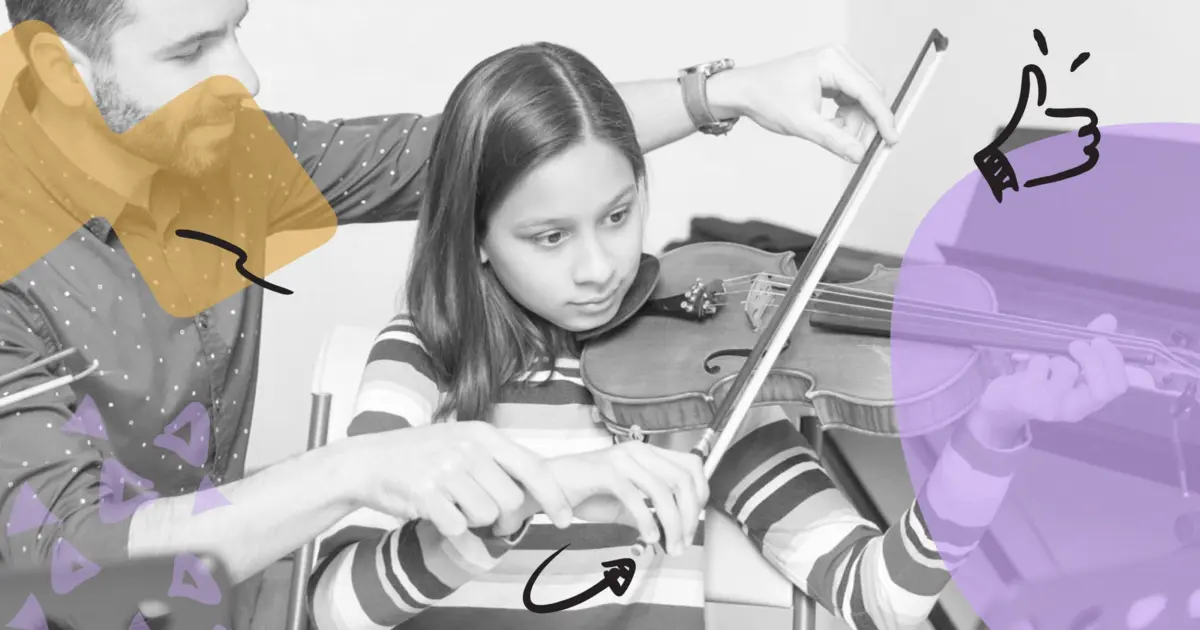
- The Weekly Touchpoint: A student meets with an instructor once a week for 30 to 60 minutes. During this window, the teacher diagnoses errors, introduces new repertoire, demonstrates technique, and sets expectations.
- The Six-Day Void: The student is sent home with a paper assignment, perhaps a metronome marking, and instructions to "practice."
- The Accountability Check: The following week, the student returns, and the instructor attempts to evaluate the intervening progress through a combination of performance and interrogation.
For generations, this system relied entirely on a student’s innate self-discipline, supportive parental oversight, and an implicit tolerance for trial and error. However, as modern schedules have grown exponentially more crowded—juggling advanced academics, athletics, and digital distractions—the fragility of this model has become glaringly apparent.
When a student closes their bedroom door to practice, they enter a vacuum. Without an instructor present, they face a barrage of cognitive hurdles:
- The Ambiguity of Accuracy: Playing a passage repeatedly does not inherently equal progress; it frequently results in the entrenchment of errors. A student might play a difficult measure twenty times with incorrect fingering or rhythmic drift. Because it begins to feel physically familiar, they assume it is correct, accidentally rehearsing the mistake until it becomes permanent muscle memory.
- The Demoralization Loop: Armed with confidence from their self-directed sessions, the student arrives at their next lesson, only to be immediately corrected on measures they assumed they had mastered. This cycle of well-intentioned practice followed by unexpected reprimand is profoundly demoralizing.
- The Ensuing Shrug: Over time, the emotional toll of this cycle leads to disengagement. When asked how practice went during the week, the enthusiastic "good!" or the defensive shrug becomes a protective mechanism. It is not an expression of apathy, but a symptom of a systemic breakdown in the learning loop.
Supporting Context & Metrics: The Science of the Feedback Loop
Cognitive science and educational psychology offer clear insights into why traditional solo practice fails so frequently. The human brain learns motor skills and auditory patterns most efficiently through immediate reinforcement loops. When an action is performed, the brain immediately evaluates the outcome, adjusts neural pathways, and refines the subsequent attempt.
The Power of Immediate Correction
When an instructor is physically present in a lesson, they act as an instantaneous feedback engine. A raised eyebrow, a verbal redirection ("try that measure again, watch your sharps"), or a hummed correction closes the loop within milliseconds. The student adjusts before the incorrect neural pathway hardens into habit.
In contrast, solo practice without immediate feedback severs this loop. The delay between execution and correction spans days or even a full week. By the time an instructor points out an error, the erroneous neural pattern has been reinforced dozens, if not hundreds, of times.
Transforming the Metrics of Engagement
Educators who successfully navigate the practice crisis have consistently shifted their focus away from punitive accountability ("Did you practice for thirty minutes?") toward qualitative engagement ("How effective was your practice time?").
Recent observations in classrooms and studios utilizing real-time interactive assessment tools reveal striking trends:
- Accelerated Mastery: Students using real-time assessment technologies improve technical proficiency up to two times faster because they eradicate error-rehearsal during home study.
- Increased Volume: Paradoxically, when practice becomes less frustrating, students naturally increase their time on instrument. Progress is visible and immediate; because the guessing game is removed, the psychological friction of opening the instrument case vanishes.
- Optimized Lesson Time: Instructors report that lesson time is reclaimed from "detective work" (identifying what went wrong during the week) and restored to its true purpose: artistic interpretation, advanced technique, and mentorship.
Official Insights: The MakeMusic Cloud Solution and the Modern Classroom
Recognizing that the six-day void between lessons was the ultimate bottleneck in music education, developers and educators collaborated to engineer digital solutions that replicate the immediacy of a teacher’s ear. Foremost among these interventions is MakeMusic Cloud.
Rather than replacing the human element of instruction, MakeMusic Cloud acts as a digital co-pilot for home practice. As a student plays their assigned repertoire, the platform listens via microphone input, providing synchronized, real-time visual feedback that highlights accurate pitches and rhythms in green, while immediately flagging errors in red.
A New Standard for Pre-Lesson Preparation
For the modern music teacher, platforms like MakeMusic Cloud transform administrative workflows. Instructors no longer have to rely on vague verbal reports or guesswork. Before a student even walks through the studio door or logs into a virtual lesson, the teacher can access detailed analytics regarding practice frequency, trouble spots, and accuracy metrics.
An instructor can review the data dashboard and instantly recognize that an entire section struggled with measure 40, or that a specific student excelled in rhythm but faltered in intonation. This turns the lesson into a targeted intervention rather than a broad recap.
"The hardest part of teaching music isn’t the music. It’s everything that happens in the hours you’re not there," notes a leading curriculum designer. "Solve that—give students real feedback the moment they play—and the shrugs turn into ‘wait, listen to what I figured out.’"
Future Outlook: The Horizon of Music Pedagogy
As we look toward the future of arts education, the integration of intelligent software, hybrid learning models, and real-time auditory assessment is poised to become the baseline standard rather than an optional luxury.
Several key developments are shaping the next decade of music instruction:
- Hyper-Personalized Repertoire Paths: Future iterations of practice platforms will leverage machine learning to dynamically adjust exercises based on a student’s historical error patterns, tailoring remedial drills specifically to individual anatomical and cognitive learning styles.
- Redefining Equity in Music Access: By providing robust, intelligent guidance outside of formal lesson hours, digital tools help level the playing field for students who may not have access to private tutors every day of the week, democratizing high-level musical achievement.
- Amplifying Human Mentorship: Far from alienating students behind screens, technological tools free human teachers from repetitive mechanical error-checking, allowing them to lean heavily into emotional expression, historical context, artistry, and inspirational mentorship.
Conclusion
The crisis of student practice is not an intractable flaw in the character of modern youth, nor is it a sign of declining interest in the arts. It is a structural inefficiency—a six-day communication blackout between the expert guidance of the classroom and the solitary effort of the bedroom.
By integrating intelligent, real-time feedback mechanisms into the practice routine, educators can dismantle the walls of isolation that lead to frustration and burnout. When students are equipped to understand their performance accurately in the moment, practice transforms from an obligation into a journey of discovery. The anxious shrugs vanish, replaced by the eager voice of a young musician saying, "Wait, listen to what I figured out." And for any music teacher, that is the exact answer they have always wanted to hear.