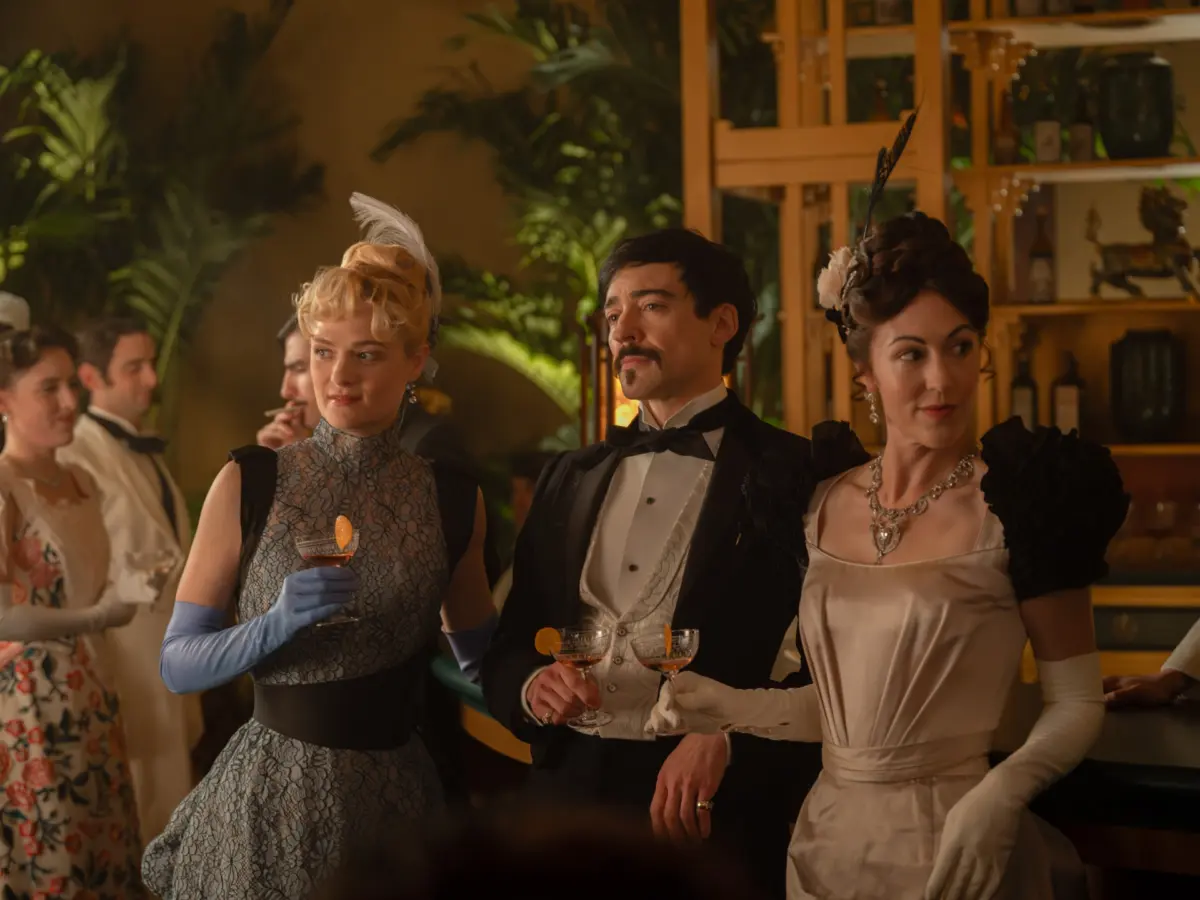

Executive Overview
HBO’s sweeping period drama The Gilded Age has returned for its highly anticipated fourth season, plunging viewers once more into the gaslit, hyper-stratified, and fiercely competitive social battlefield of late-19th-century New York. Yet, amid the grandeur of opera boxes, Newport mansions, and the eternal clash between Old Money aristocracy and New Money ambition, a remarkably modern narrative heartbeat has emerged.
The fourth-season premiere sets its theatrical tone with the wedding of Oscar van Rhijn—portrayed with sharp comedic and dramatic timing by Blake Ritson—and Enid Winterton, brought to vivid life by Kelley Curran. As the newly minted bride approaches the altar, Oscar leans over with a conspiratorial smirk and whispers a line that serves as the thematic manifesto for their entire storyline: "This is going to be such fun."
It is a promise that extends far beyond the scripts. For Ritson and Curran, stepping into the roles of Manhattan’s unlikeliest new power couple has been an off-screen masterclass in collaboration. During a joint press day interview—fittingly conducted in matching all-black ensembles—the actors finished each other’s sentences, reflecting the deep synchronicity required to portray two characters navigating a radical alliance.
Far from the stifling, tragic marriages often depicted in period dramas of this era, Oscar and Enid’s union is built on total honesty, mutual ambition, and a shared desire to dismantle the rigid etiquette of Gilded Age society. Blending historical research into historical "lavender marriages" with contemporary sensibilities, Ritson and Curran are helping to steer The Gilded Age toward a more progressive, playful, and compelling vision of television history.
Detailed Chronology: The Evolution of Oscar and Enid’s Alliance
To understand the seismic shift represented by Oscar and Enid’s marriage in Season 4, one must trace the winding trajectory of their characters through the narrative landscape of Julian Fellowes’ creation.
The Setup: A Pragmatic Union of Convenience
In earlier seasons, Oscar van Rhijn’s romantic pursuits were fraught with social peril and heartbreak, primarily driven by his hidden sexuality and his desperate need to secure his financial footing within the van Rhijn dynasty. Similarly, Enid Winterton has long hovered on the periphery of high-society machinations, seeking a foothold that could elevate her status and alleviate her isolation.
When the paths of Oscar and Enid converge in Season 4, it results in a marriage of convenience. It is a transactional arrangement in its purest economic sense: she marries him for his coveted Old Money family name and aristocratic pedigree, while he marries her for access to her substantial New Money fortune. However, unlike the countless loveless, deceitful marriages that populated the era, Oscar and Enid establish an immediate, radical transparency. There are no deceptions regarding Oscar’s sexual preferences; Enid knows, accepts, and embraces who he is.
The Premiere and the Breakthrough Dance Sequence
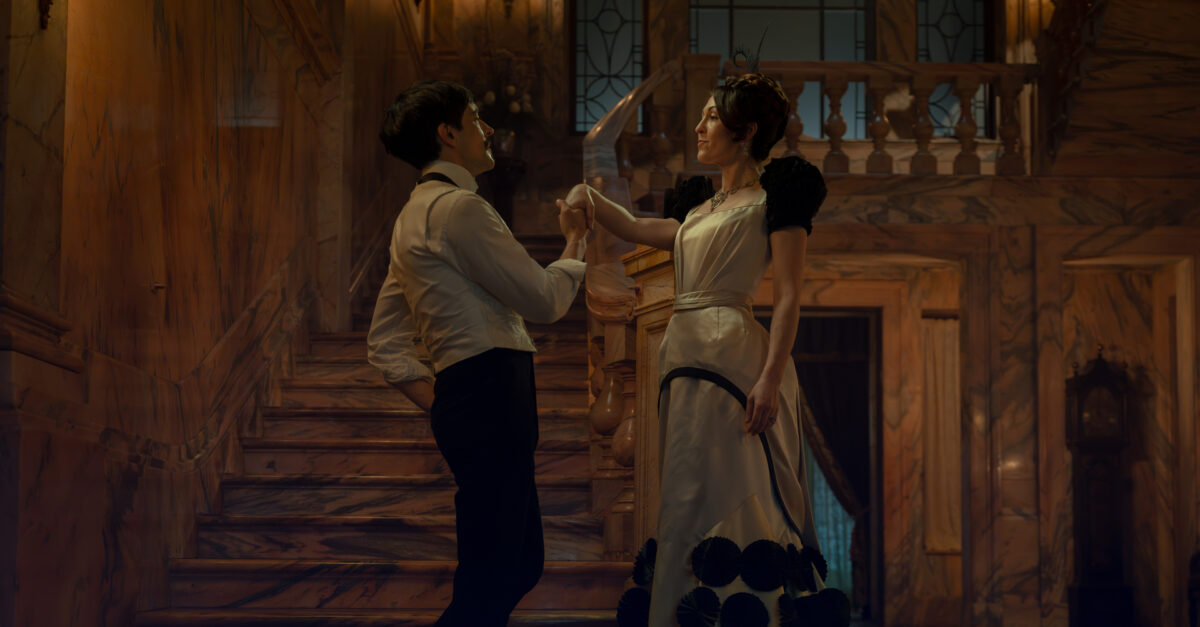
The execution of this narrative pivot is immediately signaled in the season premiere. Discussing his favorite moments from the current season, Ritson highlights the wedding reception sequence in Episode 1, where the newlywed couple leads their wedding party downtown for a celebration that shatters the formal mold.
"All the balls have been very structured and stately," Ritson notes, describing the rigid cotillions and stiff promenades that typically dominate the show’s social calendar. Instead, the sequence required them to "cut a rug and just have this spontaneous" energy. Under the guidance of choreographer John Crawford, the actors were given simple instructions that unlocked the scene’s infectious joy.
Interjecting fondly, Curran recalls the mandate from the set: "’Go be fun.’ It was a whole day of dancing. And you and I…"
"Every take is different," Ritson adds.
"Just having a ball all day long," Curran concludes, capturing the kinetic, joyous spirit that infuses their scenes together.
The Salon and the Modern Vision
This spirit of liberation quickly spills over from the dance floor into the couple’s domestic ambitions. In a pivotal mid-season scene, Enid pitches a revolutionary concept to Oscar:
"What if we started hosting a sort of salon, not one of those stuffy, dull affairs… Ours would be fun, like the French or the Italians would do, full of artists and musicians."
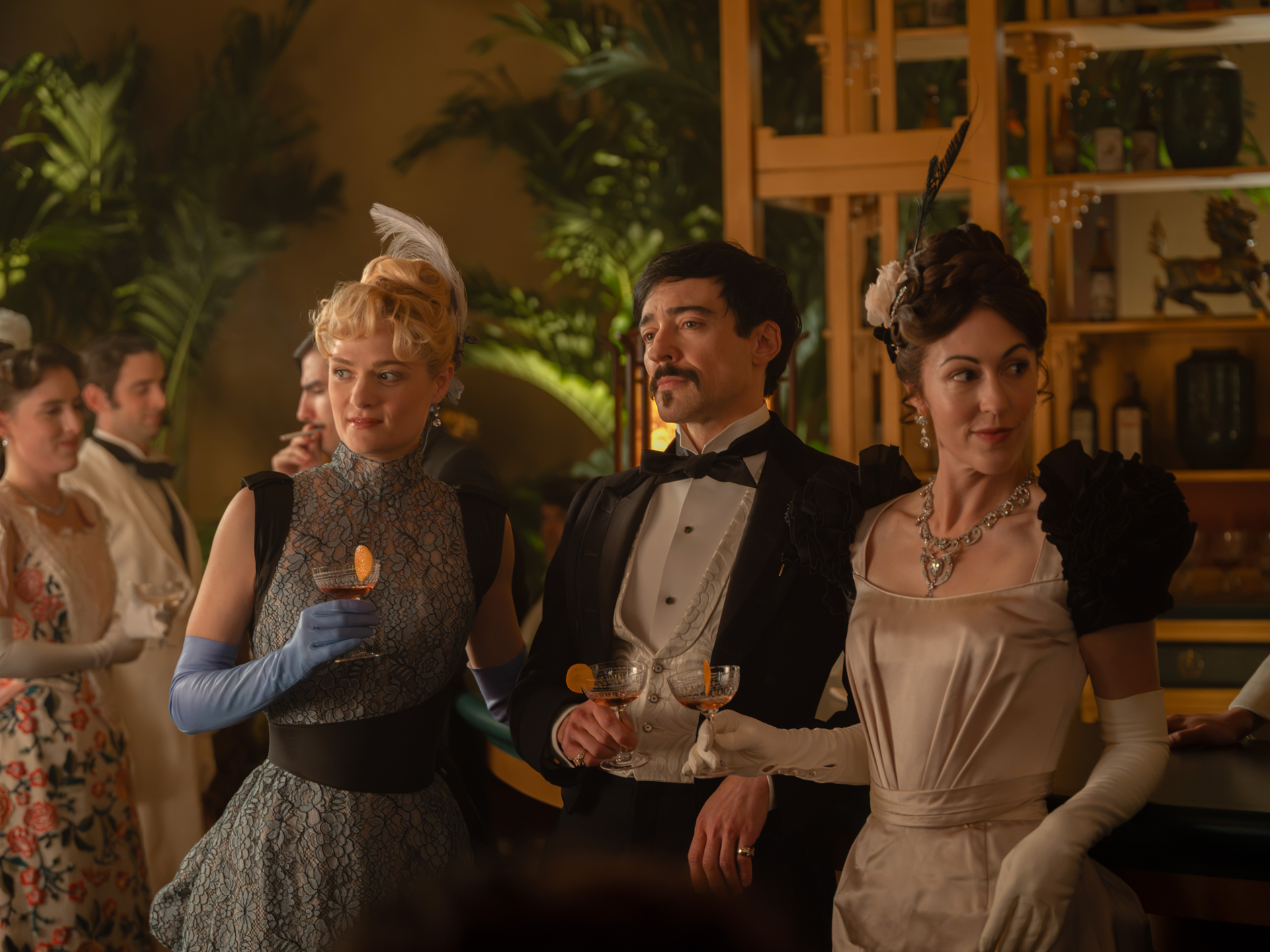
Oscar’s response—an awed, delighted "And we’ll serve… cocktails!"—encapsulates the ethos of their partnership. They are not merely playing the game of society; they are actively rewriting its rules.
Supporting Context & Metrics: The Theatrical Heavyweights of The Gilded Age
The Gilded Age has long been celebrated as a particular paradise for theatre lovers and Broadway aficionados. The series draws its magnetic gravitational pull not only from its opulent production design and lavish costumes, but from the staggering concentration of Tony Award winners and legendary stage actors populating its call sheet.
The Broadway Continuum
The series serves as a masterclass in American and British theatrical talent, bridging the worlds of the Great White Way and prestige television. The cast reads like a master roll of theatrical royalty:
- Tony Award Winners: Christine Baranski, Cynthia Nixon, Audra McDonald, Phylicia Rashad, and Donna Murphy.
- Tony Award Nominees: Denée Benton, Jordan Donica, Carrie Coon, and numerous others.
This deep theatrical bench anchors the show’s sprawling portrait of late-19th-century New York. Both Blake Ritson and Kelley Curran bring robust theatrical pedigrees to their roles. Ritson, a classically trained British actor, famously starred in Tom Stoppard’s Arcadia in the West End. Curran’s extensive stage credits include starring opposite Glenn Close in the Off-Broadway production of Mother of the Maid.
This shared theatrical background heavily influences their on-screen chemistry. The precise timing, deep text analysis, and breath control required for live stage performance translate seamlessly into the rapid-fire, witty banter and layered subtext that define Oscar and Enid’s interactions.
Historical Roots: Lavender Marriages in the Gilded Age
To ground their characters in historical authenticity, Ritson and Curran dove deep into the historical archives, examining the phenomenon of "lavender marriages"—arrangements that were far more common in elite circles than conventional history often acknowledges.
A primary touchstone for their research was the infamous historical marriage of Harry Lehr and Elizabeth Drexel. In her explosive 1935 memoir, King Lehr and The Gilded Age, Drexel detailed the devastating moment on her wedding night when her new husband blindsided her with the declaration: "Our marriage will never be a marriage in anything but in name. I do not love you, I can never love you."
However, the creators and actors of The Gilded Age consciously chose a different path for Oscar and Enid, steering away from 19th-century tragedy and toward an empowered, companionate partnership. Rather than a source of misery, Ritson characterizes their lavender marriage as a relationship between two "countercultural" best friends who provide mutual shelter from the storms of societal judgment.
Curran views Enid’s overarching character arc in Season 4 as a crucial stepping stone, positioning her as part of "the next generation of women in society who will move it forward."
Official Statements & Cast Insights
In interviews conducted during the press day for Season 4, both actors offered profound insights into the psychological architecture of their characters and the broader implications of their storyline for contemporary television audiences.
Blake Ritson on Modernity and Rebellion
Reflecting on the psychological health of the van Rhijn-Winterton household, Ritson offered a striking assessment:
"I think it may be the happiest marriage of the show; there is a weird honesty to it."
He elaborated on the thrill of portraying a character who finds power in subversion:
"It’s exciting to play a character who is constantly pushing against the rules of society. Who is constantly working out where you can nibble and erode at the etiquette. They’re trying to present a vision of society that is much more playful and spontaneous and fun. I think it’s a very compelling vision of the future."
Kelley Curran on Revolutionary Acceptance
Curran echoed her co-star’s sentiments, emphasizing the radical nature of unconditional mutual validation within the rigid social structures of the 1890s:
"It may be the healthiest this season. That they both accept each other for exactly who they are is revolutionary."
Unlike many of the traditional couples in the series—whose relationships are frequently strained by hidden agendas, social climbing anxieties, and emotional withholding—Oscar and Enid operate as a unified front. They leverage their individual strengths to carve out an influential space within New York high society, proving that survival and success do not require the sacrifice of personal authenticity.
Future Outlook: Beyond the Gilded Parlors
As Season 4 of The Gilded Age continues to unfold on HBO, the trajectory of Oscar and Enid van Rhijn points toward an increasingly influential role in the cultural and social life of New York. Their planned salons, introduction of modern libations, and integration of artists and musicians into the upper echelons of society threaten to disrupt the old guard more effectively than any overt scandal ever could.
Furthermore, the undeniable on-screen chemistry between Ritson and Curran has sparked inevitable speculation about future collaborations outside the universe of Julian Fellowes’ creation. When the conversation turned toward the world of live theatre during their Playbill interview, the duo demonstrated an instantaneous theatrical synergy.
Asked what stage show they would most want to tackle together, Ritson offered two inspired suggestions: Shakespeare’s Much Ado About Nothing and the darkly comedic world of The Addams Family. Pointing to their matching black attire for the press day, Ritson quipped, "I think we can do Gomez and Morticia."
Curran responded with immediate, unbridled enthusiasm: "We absolutely could."
Whether haunting the Broadway stage as America’s favorite gothic couple or continuing to dismantle 19th-century social mores on HBO, Blake Ritson and Kelley Curran have established themselves as a formidable creative duo. Through sharp intellect, deep historical curiosity, and an infectious sense of play, they have transformed a marriage of convenience into one of the most memorable and progressive partnerships in modern prestige television.