
Executive Overview
For decades, the traditional music industry has viewed visual media through a singular, well-established lens: film and television synchronization licensing. Under this conventional framework, music rightsholders pitch vast catalogs, negotiate upfront fees for specific cues, and expect passive consumption where audio serves as background accompaniment to a narrative.
However, as the global entertainment landscape undergoes a seismic digital shift, this decades-old playbook is proving increasingly obsolete. Nowhere is this mismatch more pronounced than in the gaming industry—a cultural and economic juggernaut that now dwarfs both the global film and music markets combined.
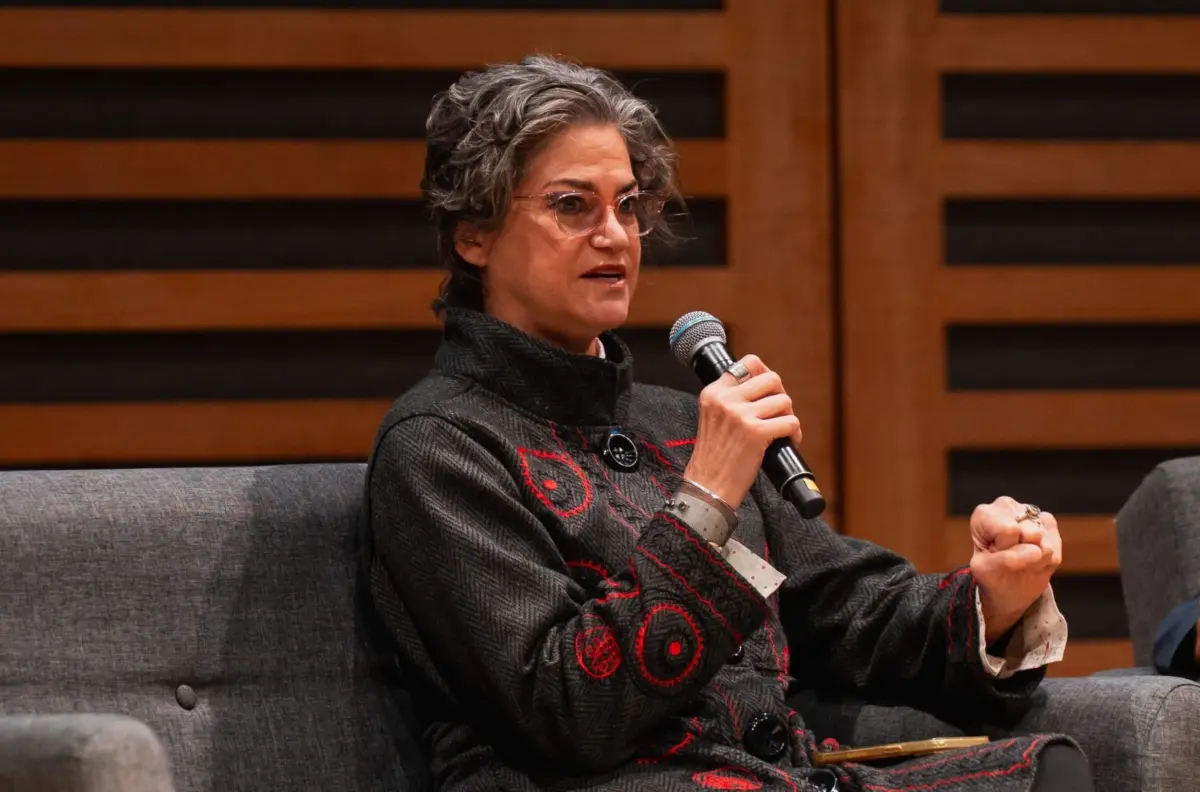
According to Vickie Nauman, CEO of digital consultancy CrossBorderWorks, the music industry is fundamentally misunderstanding the mechanics, culture, and financial architecture of video games. Speaking at the recent Music Ally Publishing Summit, Nauman—a veteran strategist who has spent the last 12 years bridging the gap between music rightsholders and interactive entertainment giants—warned that rightsholders are asking the wrong questions. Instead of obsessing over how to extract larger upfront payouts from game developers, the music business must first learn to navigate the high-risk, capital-intensive realities of game development.
Furthermore, Nauman highlights a massive, untapped commercial horizon. With 3.3 billion active gamers worldwide and nearly half actively seeking out new music experiences, interactive entertainment represents the single largest audience of active music consumers on the planet. Yet, unlocking this potential requires abandoning DSP-style catalog expectations in favor of curated, artist-driven sync models, modernizing public performance collection societies, and recognizing that gamers—and developers alike—place a premium on authentic, human-created art.
Detailed Chronology: Navigating the Friction Between Music and Games
To understand the current friction between music publishers and game developers, one must examine how licensing deals have historically evolved—and faltered—over the past decade.
When Nauman founded CrossBorderWorks 12 years ago, the intersection of music and gaming was largely viewed as an afterthought. Game studios either relied on in-house composers to build original scores or secured perpetual, one-off buyouts for tracks, leaving zero backend royalties for the creators. As games evolved into persistent online worlds, virtual reality platforms, and live-service experiences, the demand for commercially released, artist-driven music skyrocketed. Yet, the institutional understanding of these platforms remained remarkably stagnant among traditional music publishers.
The Beat Saber Test Case
A prime illustration of this disconnect occurred during Nauman’s work licensing tracks by Imagine Dragons for Beat Saber, the smash-hit virtual reality rhythm game. As negotiations neared completion, a major music publisher holding crucial rights balked at the structure of the deal.
The sticking point? The agreement relied on an advance-plus-revenue-share model—a structure common in gaming and tech partnerships, but alien to a publisher accustomed to traditional film and television sync fees.
Recalling the resistance from the publisher, Nauman noted: "They called me up and they said, ‘What is this? What is a VR rhythm game? And why isn’t there more money?’—because it was an advance rev-share—and they said ‘We don’t even know what this is. We don’t like it. We’re uncomfortable.’"
Faced with a potential roadblock that could sink the integration, Nauman took a massive professional gamble. She put her personal reputation on the line, reassuring the hesitant publisher: "I know this is going to work, and I will promise you, if it does not work and we do not recoup the advance, that I will never come to you again about this game."
The publisher reluctantly signed off. The risk paid off spectacularly. Within the first quarter of release, the game completely recouped the advance, triggering steady streams of downstream royalty checks for the publisher. The shift in attitude was instantaneous. The publisher returned with enthusiastic inquiries about how to place even more music into the title.
This anecdote encapsulates the core thesis of Nauman’s advisory work: traditional music rightsholders are paralyzed by unfamiliar technology and compensation models, yet once they take calculated risks within gaming ecosystems, the financial and cultural returns routinely exceed expectations.
Supporting Context & Metrics: The Scale of the Opportunity
To properly contextualize Nauman’s warnings at the Music Ally Publishing Summit, one must look closely at the hard data driving the gaming sector, alongside the structural quirks that separate it from traditional streaming services.
A Captive Audience of 3.3 Billion
The scale of the gaming market defies traditional media comparisons. Nauman emphasized a staggering global statistic during her summit address:
- 3.3 billion people actively play video games across consoles, PCs, mobile devices, and virtual reality headsets worldwide.
- A landmark study by Deloitte revealed that 49% of gamers actively want more music integrated into their gaming experiences.
When calculated, this means interactive media houses an active demographic of over 1.5 billion consumers who are explicitly looking for music discovery.
"Where else can the music industry find over 1.5 billion people who are specifically looking for more music?" Nauman asked the audience. Furthermore, she noted the unique nature of music consumption within games: "Music is not in the background. It’s not just an accompaniment while we’re making dinner. It’s really up front and centre, and people play games over and over and over again, so they really get exposed to music."
Why Games Are Not "Mini-DSPs"
A persistent point of friction for music rightsholders is the false equivalency between streaming platforms (like Spotify or Apple Music) and video games. Publishers often approach game studios as if they are digital service providers (DSPs) that require access to millions of tracks.
In reality, most video games do not want or need vast, sprawling catalogs. A typical game soundtrack—even for a massive open-world title—usually requires a tightly curated collection of 10 to 50 songs.
While curating small collections of music is relatively straightforward via traditional synchronization licensing, it creates complex secondary challenges, particularly regarding public performance rights. Because games are played globally, streamed on platforms like Twitch and YouTube, and hosted in persistent online environments, tracking and distributing performance royalties has historically been an administrative nightmare for Collective Management Organizations (CMOs) and Performing Rights Organizations (PROs).
Over the past four years, Nauman has collaborated extensively with collecting societies to untangle this public performance headache. Despite initial skepticism from industry peers who warned her that PROs and CMOs were too entrenched to adapt, Nauman’s persistence has yielded results.
"Many people told me not to do this because they said the CMOs and the PROs will never be open [to it] but they’ve proven them wrong," she stated. "I’ve got a lot of support because everyone’s trying to figure out games, and we need a model that doesn’t require the artist or the writer to exit from a PRO."
Official Statements & Industry Insights
During her wide-ranging conversation with Music Ally CEO Paul Brindley at the Publishing Summit, Nauman addressed several critical debates shaping the future of entertainment, ranging from the economics of game development to the rising anxiety surrounding generative artificial intelligence (GenAI).
The High-Risk Realities of Game Development
Addressing the recurring demand from music clients asking how to squeeze more upfront capital out of game developers, Nauman offered a sobering reality check:
"I think that’s the wrong question. Games are incredibly high-risk, high-cost products with an enormous amount of capital investment that goes into them—but a traditional approach to music that often swerves licensing deals in favour of hiring composers and buying out the rights to their work."
Nauman explained that because game production budgets often rival or exceed Hollywood blockbusters—often taking five to eight years to develop with no guarantee of commercial success—developers have historically favored composer buyouts. Under this legacy model, studios pay a flat fee once and secure the rights in perpetuity, avoiding ongoing liabilities.
However, Nauman believes the industry is entering a transitional, experimental phase. Game studios are increasingly eager to experiment with artist-driven music because established artists bring pre-built fan communities and immediate cultural relevance.
"If [artist-driven music] doesn’t perform better than original music, they’re probably going to go back to original music, but I believe that artist music will because it gives them a cultural relevance."
Generative AI: Resistance in Gaming vs. Broader Industry Debates
When Paul Brindley questioned whether AI-generated music poses an immediate threat to human music-licensing deals within the gaming sector, Nauman offered a reassuring perspective rooted in gamer culture.
"There is resistance against any kind of AI-generated music, AI-generated characters. Both game developers and gamers really love the human aspect," Nauman asserted. "I’m not seeing a lot of interest, and in fact, more resistance against any kind of generative music in games."
While Nauman acknowledges that she closely monitors emerging tech and the broader music industry debates concerning GenAI, copyright, and artist compensation, she views the technology’s ultimate trajectory differently than many alarmists.
"I think AI and generative music is going to evolve into a whole suite of tools that are going to be artist tools, songwriter tools, mixing tools. I think if you take streaming fraud out of the equation, right now I don’t know how much of a use-case there is in just truly ‘prompt-to-generative-music’."
Displaying her trademark pragmatic optimism—forged in the early days of digital music disruption—Nauman expressed complete confidence in the music industry’s resilience:
"Because I’ve been around since those early days of [digital] disruption, I really have a ton of confidence that the music industry is going to hold these companies accountable and that we will come up with things that work. I’m more worried about AI drones and weaponry and surveillance than this!"
To which Music Ally CEO Paul Brindley dryly quipped in agreement: "The killing of all humanity is a slightly bigger concern…"
Future Outlook: What the Music Industry Must Do Next
As the boundaries between interactive gaming, virtual spaces, and recorded music continue to dissolve, the path forward requires a fundamental shift in mindset from music publishers, labels, and rightsholders alike.
1. Shift from Extraction to Collaboration
Music rightsholders must stop treating game developers as cash cows to be milked for oversized sync fees. Instead, publishers must understand the precarious economics of game production—where budgets routinely soar into the hundreds of millions—and structure deals that align with development cycles, such as reasonable advances paired with robust revenue-sharing models.
2. Embrace the "Small Catalog" Reality
Publishers need to recognize that video games are not streaming services. They do not need millions of tracks; they need curated, bespoke selections of 10 to 50 songs that emotionally anchor the player’s experience. Rightsholders must streamline their internal pitching and clearance pipelines to cater efficiently to these micro-catalog demands.
3. Modernize Royalty Collection Frameworks
The ongoing modernization of public performance rights for interactive media must remain a top priority. As Nauman’s work with CMOs and PROs demonstrates, creating flexible frameworks that accommodate in-game streaming, live broadcasts, and UGC (User-Generated Content) platforms without forcing creators to abandon their societies is vital to long-term sustainability.
4. Prioritize Human Authenticity
As technological advancements press forward, the gaming market has sent a clear, unmistakable signal: players and developers value human creativity, artist communities, and genuine cultural touchstones over sterile, algorithmic prompt-to-music generation. By leaning into artist-led integrations rather than relying solely on automated audio solutions, the music industry can secure its place at the heart of the world’s most lucrative interactive entertainment medium.
For those looking to dive deeper into these insights, the full recording of the Music Ally Publishing Summit is available for purchase via the official Music Ally event portal.