
Executive Overview
In the mid-1980s, the landscape of contemporary jazz was undergoing a seismic, synthesis-driven transformation. Synthesizers were dominating commercial jazz-fusion, production techniques leaned heavily on pristine, multi-layered overdubs, and the genre as a whole occasionally threatened to polish away the raw, sweat-soaked immediacy of live performance. Enter John Scofield, the definitive alumnus of the Miles Davis touring band, whose unmistakable guitar tone—slanted, angular, blues-drenched, and immediately recognizable by its distinct behind-the-beat phrasing—was primed to subvert these trends.
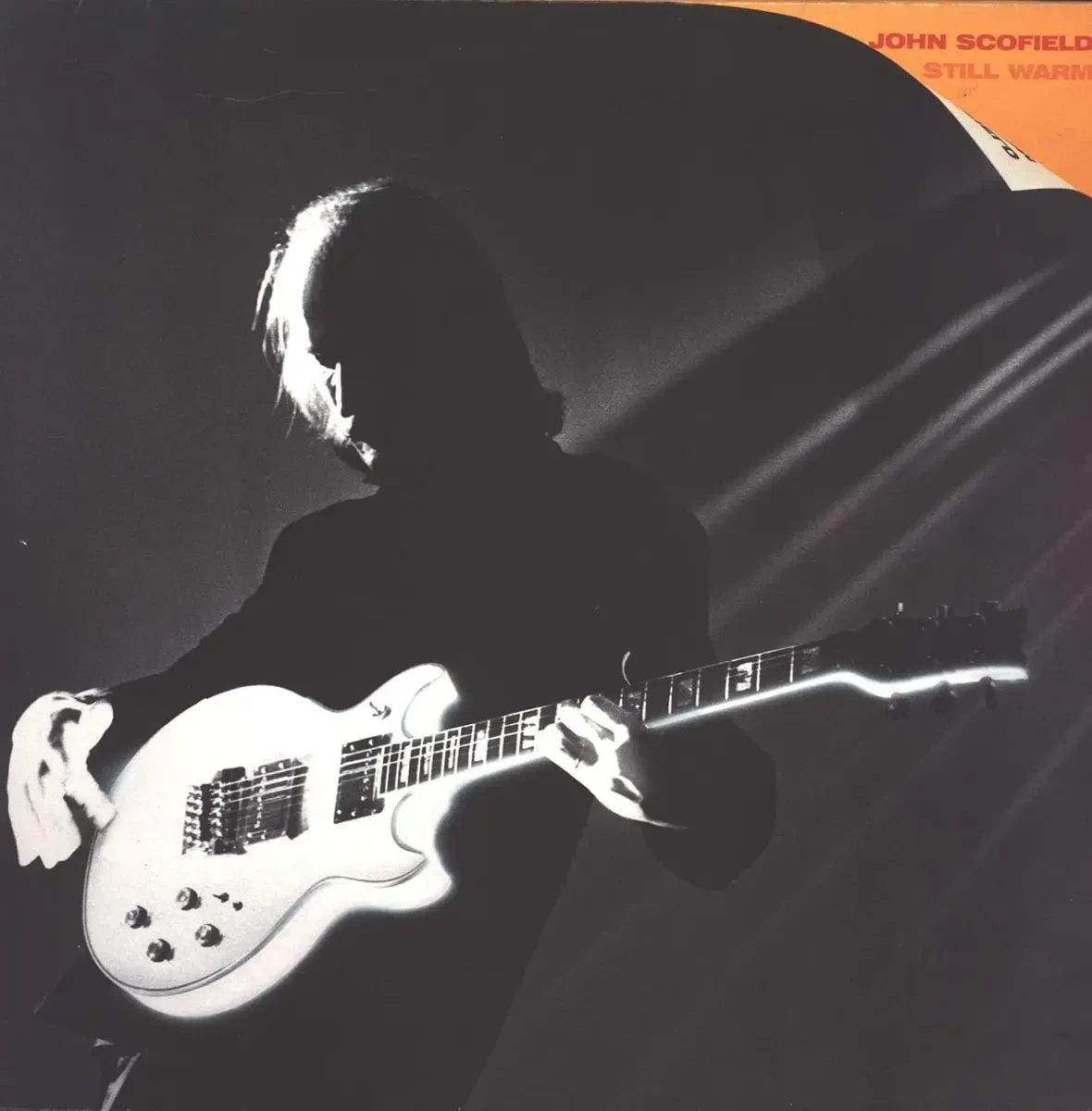
Released in 1985 on the forward-thinking Gramavision label, Scofield’s Still Warm arrived as an urgent corrective to the over-produced tendencies of the era. Positioned as the direct successor to his 1984 solo project Electric Outlet, Still Warm stripped away extraneous studio gloss in favor of fundamental musical values: spontaneous interplay, high-octane groove, and unbridled improvisation.
Far from being a standard fusion record, the album functioned as a masterclass in modern ensemble dynamics. Backed by a powerhouse rhythm section comprising bassist Darryl Jones, drummer Omar Hakim, and keyboardist Don Grolnick, Scofield weaponized his trademark rough-diamond improvisations, delivering a statement that was simultaneously rooted in deep American musical traditions and violently forward-looking.
Decades after its initial pressing, Still Warm stands not merely as a high-water mark in Scofield’s extensive discography, but as a pivotal document of 1980s instrumental music. This retrospective analysis examines the genesis, execution, cultural resonance, and enduring legacy of an album that, despite its deceptively mild title, proved to be nothing short of "ruddy hot."
Detailed Chronology: The Road to Still Warm (1982–1985)
The Miles Davis Apprenticeship and the Search for a Voice
To understand the precise architectural brilliance of Still Warm, one must first trace John Scofield’s trajectory through the early 1980s. Having paid his dues alongside jazz royalty like Gerry Mulligan, Chet Baker, Charles Mingus, and Gary Burton, Scofield joined the Miles Davis ensemble in 1982. This tenure placed him at the white-hot center of electric jazz evolution. Playing alongside heavyweights like Marcus Miller and Mike Stern, Scofield absorbed the rhythmic elasticity and modal demands of Davis’s late-period aesthetic.
However, Scofield possessed an idiosyncratic vocabulary that blended bebop chromaticism with deep-seated blues and R&B roots. His tone—often described as a cross between a honking saxophone and a weeping blues singer, achieved via his chorus pedal and precise pick attack—demanded a setting where he could stretch out as a primary soloist without being swallowed by synthesizer pads or rigid sequencer beats.
The Gramavision Era and Electric Outlet
By 1984, Scofield signed with Gramavision, an independent label known for championing boundary-pushing avant-garde and jazz-fusion artists. His label debut, Electric Outlet, established his command over original compositions and modern electric textures. Yet, in retrospect, Electric Outlet suffered from the production afflictions of its time: it was occasionally fussy, burdened by excessive overdubs, and relied on a slightly contrived studio polish that muted the improvisational fire of its creator.
Recognizing the limitations of over-engineering his sound, Scofield made a deliberate U-turn for his sophomore Gramavision outing. He resolved to capture the raw, volatile energy of a live blowing session within the confines of a New York City recording studio in June 1985. The result was Still Warm, a project that abandoned meticulous over-dubbing in favor of organic, high-wire ensemble interaction.
Supporting Context & Metrics: Anatomy of a Masterpiece
The Personnel: A Saddle-Hardened Rhythm Section
The triumph of Still Warm hinges entirely on the chemistry of its personnel. Scofield assembled a crew of modern jazz masters who could bridge the gap between complex jazz harmony and earth-shattering groove.
+-----------------------------------------------------------------+
|                        JOHN SCOFIELD                            |
|                     (Lead Guitarist)                            |
+-----------------------------------------------------------------+
        |                        |                        |
        v                        v                        v
+------------------+    +------------------+    +------------------+
|   Darryl Jones   |    |    Omar Hakim    |    |   Don Grolnick   |
|     (Bass)       |    |     (Drums)      |    |   (Keyboards)    |
| Heavy-duty struts|    | Whipcrack snare  |    | Subdued foil     |
+------------------+ +------------------+ +------------------+- Darryl Jones (Bass): Fresh from his foundational work with Miles Davis and on the cusp of his legendary tenure with The Rolling Stones, Jones served as the structural anchor of the record. His basslines turned Scofield’s infectious, in-the-pocket riffs into heavy-duty, load-bearing struts. Jones provided the deep-pocket foundation that allowed the improvisational acrobatics to take flight.
- Omar Hakim (Drums): A luminary of Weather Report and Sting’s touring bands, Hakim brought a relentless, driving pulse to the sessions. His whipcrack snare work and crisp handling of electric accessories drove home every thematic shift with an almost imperceptible, yet overwhelming, urgency.
- Don Grolnick (Keyboards): Operating as a strangely subdued foil to Scofield’s assertive guitar lines, Grolnick provided tasteful harmonic padding and counter-melodies, intentionally stepping back to ensure the spotlight remained fixed on the leader’s sprawling solos.
Track Breakdown and Structural Analysis
The tracklist of Still Warm balances compositional rigor with reckless improvisational abandon. Recorded across a series of intense sessions in New York City, the album spans two distinct suites of music, originally mapped out across vinyl sides.
Side One: Techno; Still Warm; High And Mighty; Protocol (22:03)
- "Techno": An upbeat, rhythmically complex opener that immediately establishes the album’s ethos. It subverts expectations of electronic music by filtering machine-age propulsion through organic, flesh-and-bone musicianship.
- "Still Warm": The title track leans into a mid-tempo, moody groove. Here, Scofield’s guitar cries out with sustained notes that he inspects from every conceivable harmonic angle, building tension through repetition and micro-tonal bends.
- "High And Mighty": A swaggering tune that showcases Darryl Jones’s low-end dominance, providing a greasy, funk-infused platform for Scofield to unspool rapid-fire bebop lines.
- "Protocol": A tightly wound composition that tests the rhythmic telemetry of Hakim and Jones, forcing the rhythm section to lock into intricate syncopated patterns while Scofield skates across the top.
Side Two: Rule Of Thumb; Picks + Pans; Gil b643 (19:26)
- "Rule Of Thumb": Perhaps the most legendary moment on the record. Operating as a soft, unassuming country-blues shuffle, the track features a moment where Scofield’s improvisational train of thought threatens to derail entirely near the end of his solo. In a display of pure jazz survival instinct, Scofield saves the day by executing the time-honoured principle of covering his "mistake" by immediately playing the exact same phrase again, turning a potential disaster into a masterclass in motif development.
- "Picks + Pans": A high-velocity burner that highlights Scofield’s peerless flat-picking technique, featuring angular melodic leaps and harmonic subversions.
- "Gil b643": A moody, atmospheric closer that pays subtle homage to the arrangerly sensibilities of Gil Evans, winding down the album with smoky, nocturnal textures.
Official Statements and Critical Reception
Upon its release in the autumn of 1985, Still Warm received widespread critical acclaim, immediately separating itself from the crowded field of contemporary fusion releases. Jazz critics noted that while many of Scofield’s peers were retreating into smooth jazz or commercial pop-fusion, Scofield was digging deeper into the gritty realities of American roots music.
In contemporary retrospective reviews, jazz historians have consistently elevated the album to classic status. Jazz Journal remarked on its directness:
"Where Outlet was at times a little fussy, over-overdubbed and perhaps a touch contrived, Still Warm celebrates fundamental values. It has the zest of an impromptu live set, with Scofield hammering together the unchamfered offcuts of a good three decades of American music to form a solid platform for his own ideas."
Furthermore, critics have long marveled at the ironic contrast between the album’s modest title and its scorching musical content. As one retrospective critic astutely summarized:
"Apart from being the best testimony yet to Scofield as improviser pure and simple, Still Warm is also misnamed. It’s actually Ruddy Hot."
Future Outlook: The Enduring Legacy of Still Warm in Modern Jazz
As we look at the contemporary jazz landscape, the influence of John Scofield’s mid-80s output—and Still Warm in particular—remains pervasive. Today’s generation of crossover jazz guitarists, from Kurt Rosenwinkel and Julian Lage to modern fusion innovators, frequently cite Scofield’s ability to merge cerebral harmonic knowledge with unrefined gut-bucket blues as a foundational blueprint.
The album proved that electric jazz did not need to sacrifice organic warmth for rhythmic precision, nor did it need to compromise complex improvisational vocabulary to achieve a visceral groove. As vinyl reissues and digital remasters continue to introduce Still Warm to new generations of listeners, the record retains its fierce vitality.
In an era dominated by algorithmic perfection and DAW-edited pristine audio, Still Warm serves as an enduring reminder of the power of human risk-taking in music. It remains a testament to what happens when master musicians step into a room, lock into a groove, and dare each other to leap without a safety net. More than forty years after its creation, John Scofield’s masterwork is, and always will be, ruddy hot.