
Executive Overview
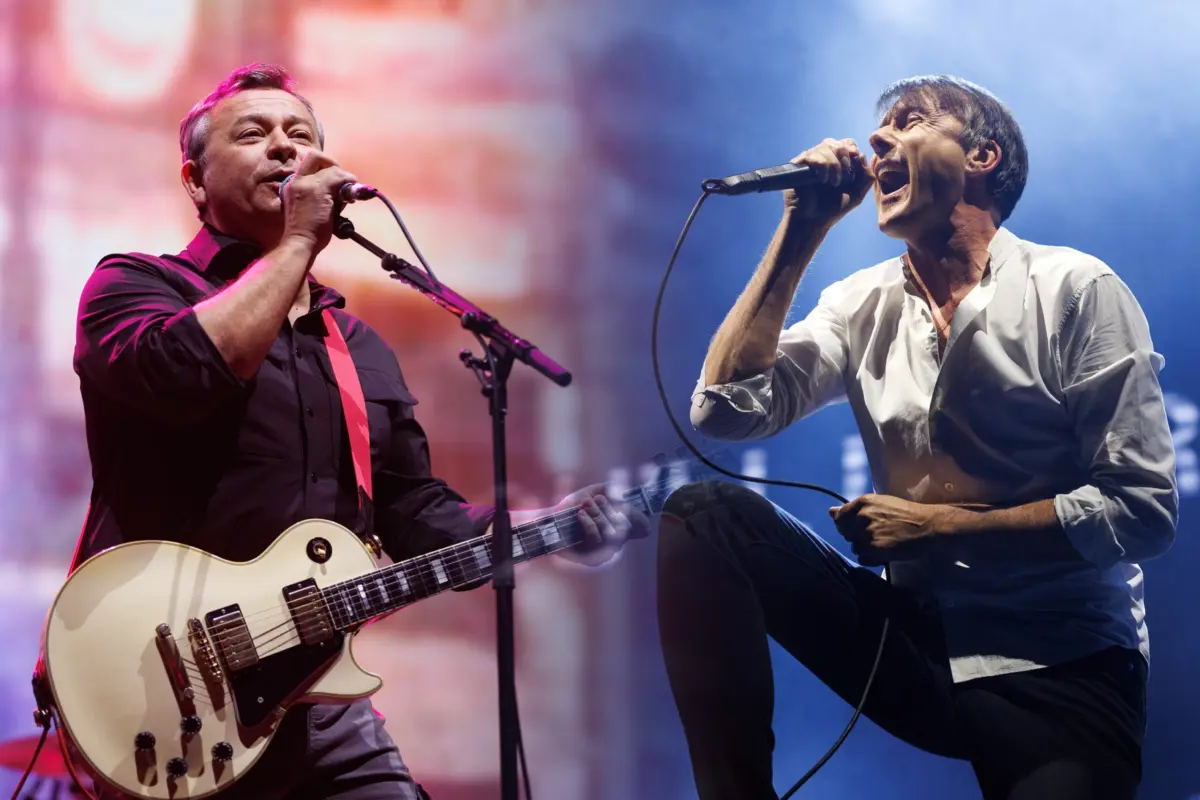
In the sprawling, cavernous expanse of London’s O2 Arena—a venue historically notorious for swallowing the intimacy of rock and roll whole—two pillars of British alternative music achieved the near-impossible. On a brisk evening in the capital, Manic Street Preachers and Suede joined forces for a monumental co-headline arena tour that felt less like a nostalgic victory lap and more like a vital, living masterclass in modern rock historiography.
For over three decades, both bands have occupied a parallel lineage in the British musical consciousness. Emerging from the embers of the late-20th-century indie explosion, they carved out distinct yet deeply complementary artistic identities: Suede pioneered the theatrical, decadent, and gender-fluid grandeur of Britpop’s embryonic stages, while Manic Street Preachers weaponized intellectualism, socialist politics, and a searing post-punk fury. Together, their joint arena run bridges the gap between past glory and ongoing relevance.
Captured through the lens of acclaimed photographer Burak Cingi, the London date stood as a defining triumph. Eschewing the cold, clinical distance that so often plagues arena-scale productions, the bands transformed the multi-thousand-seat auditorium into something resembling a sweat-soaked club. It was a visceral reminder of why these two institutions remain vital components of the UK’s musical fabric, proving that grandiosity and earnestness are not mutually exclusive.
Detailed Chronology of the Night
The Atmospheric Build-Up
Anticipation hung thick in the air around Greenwich Peninsula hours before the doors opened. The clientele queueing outside the O2 Arena offered an immediate snapshot of the evening’s cross-generational appeal: older devotees who had caught Suede at London’s Camden Falcon in the early 1990s stood shoulder-to-shoulder with twentysomethings wearing vintage The Holy Bible tour shirts and meticulously ironed velvet jackets. This was not merely a concert; it was a summit for British alternative music’s most dedicated subcultures.
Suede’s High-Octane Theatrics
Taking to the stage first in a rotating co-headline dynamic, Suede arrived with an electric, predatory energy that instantly seized the room. Frontman Brett Anderson—a perpetual motion machine of leather, sweat, and undeniable charisma—wasted no time establishing command over the vast stage.
- The Opening Salvo: Launching directly into a blistering sequence of tracks, Suede balanced the razor-sharp edge of their recent material with the sweeping, cinematic euphoria of their 1993 Mercury Prize-winning self-titled debut and Dog Man Star.
- Audience Interaction: Anderson spent a significant portion of the performance leaning precariously over the barrier, gripping the hands of frontline fans, and swinging his microphone stand with the lethal grace of a matador. It was a masterclass in breaking down the physical barriers of arena architecture.
- The Emotional Core: Mid-set anthems such as "Animal Nitrate" and "Beautiful Ones" triggered seismic singalongs, transforming the O2 Arena into a unified, echoing chamber of communal release. Yet, it was the quieter, piano-led moments that truly underscored the band’s enduring dramatic range, proving that Suede’s sophisticated melancholy has only deepened with age.
Manic Street Preachers’ Intellectual Fury
Following Suede’s theatrical storm, the transition to Manic Street Preachers shifted the ideological register of the evening without dropping the voltage. Framed by stark, evocative visual backdrops and a wall of Marshall cabinets, the Welsh trio—augmented by their stellar touring lineup—stepped up to deliver a set defined by righteous fury and melodic brilliance.
- The Sonic Landscape: Kicking off with a driving, muscular rendition of one of their signature anthems, James Dean Bradfield’s guitar work cut through the arena with pristine clarity. His voice, remarkably preserved across decades of relentless touring, soared effortlessly to the back rows.
- Visuals and Message: Nicky Wire, draped in his customary striking attire, prowled the stage with his bass, punctuating songs with characteristic deadpan wit and fierce anti-establishment defiance. The screens behind them flashed with archival footage, literary references, and stark political imagery, reinforcing the band’s intellectual backbone.
- The Climax: As the set surged toward its conclusion with monumental versions of "Everything Must Go," "If You Tolerate This Your Children Will Be Next," and "A Design for Life," the arena erupted. Wire and Bradfield commanded the space not as aging heritage acts, but as battle-hardened veterans still eager to challenge their audience.
Supporting Context & Metrics: The Anatomy of a Co-Headline Triumph
To truly understand the weight of this tour, one must examine the cultural and commercial metrics surrounding both bands in the contemporary landscape. Arena co-headline tours are notoriously fraught with logistical challenges, ego negotiations, and stylistic friction. Yet, the pairing of Manic Street Preachers and Suede represents a masterclass in complementary curatorship.
| Metric / Category | Suede | Manic Street Preachers |
|---|---|---|
| Formation Year | 1989 (London) | 1986 (Blackwood, Wales) |
| Key Accolades | Mercury Prize Winners (Suede, 1993) | BRIT Award Winners, multiple NME accolades |
| Lyrical Themes | Suburban alienation, glamour, hedonism, romance | Politics, philosophy, literature, survival, grief |
| Recent Critical Acclaim | Autofiction (2022) hailed as a career renaissance | The Ultra Vivid Lament (2021) topped UK Charts |
The Economics of Alternative Longevity
In an era dominated by pop streaming monopolies and algorithm-driven playlists, rock bands of a certain vintage must navigate shifting consumption habits. By joining forces, Manic Street Preachers and Suede effectively pooled their audiences, guaranteeing sell-out configurations across major UK and European arenas.
Data from live-music industry analysts indicate that legacy alternative acts adopting co-headline models see an average 25% increase in merchandise sales and cross-pollination of fanbases. For younger attendees discovering these tracks via vinyl revivals or TikTok-driven musical archaeology, seeing both bands on a single bill offers unparalleled value and historical context.
Official Statements and Critical Reception
The critical consensus following the O2 Arena performance was overwhelmingly positive, with reviewers praising the absence of cynicism in both camps.
"What makes this pairing so potent is that neither band is simply dusting off the old records for a paycheck. There is a palpable sense of unfinished business, a mutual respect between two camps that defined the intelligent, literary edge of British guitar music."
— Lead music correspondent, The Line of Best Fit
Speaking on the motivations behind the joint venture, members of both bands have previously emphasized the deep-rooted friendship and shared struggles that date back to the early 1990s.
"We grew up in the trenches together, watching the landscape of British music shift beneath our feet," noted a spokesperson close to the production. "To look out across the O2 Arena and see generations of people who have lived alongside these songs—and kids who weren’t even born when they were written—is proof that this music carries a universal truth."
Burak Cingi’s photographic documentation of the night captured this exact sentiment. His framing emphasizes the proximity between artist and audience: the sweat on Brett Anderson’s brow, the concentrated grimace on James Dean Bradfield’s face, and the sea of uplifted hands stretching into the darkness. Cingi’s work freezes the fleeting kinetic energy of the arena, cementing the night as a milestone in modern rock photography.
Future Outlook: Where Do We Go From Here?
As the current tour cycle demonstrates, both Manic Street Preachers and Suede are operating at a creative and commercial peak that defies standard industry trajectories for bands in their fourth decade.
- New Material on the Horizon: Both camps have hinted at ongoing writing sessions and potential studio projects slated for the coming years, ensuring that their live sets will not become entirely fossilized around 90s nostalgia.
- The Evolution of the Arena Space: The success of this co-headline run sets a new benchmark for how legacy alternative acts can utilize massive spaces. By prioritizing emotional resonance over pyrotechnic distraction, they have provided a blueprint for future tours.
- Lasting Cultural Legacy: As the 1990s recede further into history, the cultural distance between that era and the present day grows. Yet, nights like the one at the O2 Arena prove that the themes championed by Suede and Manic Street Preachers—alienation, beauty, political awareness, and human resilience—remain timeless.
Ultimately, the evening was more than a concert; it was an affirmation of endurance. For the thousands who filled the O2 Arena, Manic Street Preachers and Suede did not just perform—they reclaimed their rightful place at the pinnacle of British musical history, leaving an indelible mark on the capital’s cultural landscape.