
Executive Overview
The contemporary jazz landscape continues to evolve through a delicate tension between archival self-reflection and cross-idiomatic exploration. In recent months, three distinct releases have captured the critical imagination of the global jazz community, offering a panoramic view of where the genre stands and where it is heading. Tyrone Allen II’s mosaic-like Upward, Ryan Meagher’s stylistically adventurous Snakes, and Anggie Obin’s emotionally resonant live debut Luz each demonstrate how modern improvisers manipulate form, memory, and genre boundaries.
Recorded across diverse geographies—from the urban intensity of Brooklyn to the historic stages of Igualada, Spain, and the Pacific Northwest hub of Portland, Oregon—these albums defy easy categorization. They present a masterclass in modern musicianship, showcasing artists who balance virtuosic command of their instruments with profound conceptual rigor. This report provides an exhaustive, multi-dimensional examination of these three significant releases, detailing their structural components, historical contexts, personnel dynamics, and the broader trajectory they project for the contemporary jazz idiom.
Detailed Chronology and Album Analysis
Tyrone Allen II: Upward (Dreams & Fears Records)
Conceptual Framework and Mosaic Structure
Released on Dreams & Fears Records (DF 9101 CD) following sessions in Brooklyn, USA, in April 2024, Tyrone Allen II’s Upward is a masterclass in recursive composition. What goes around unequivocally comes around on this 14-track release. Allen utilizes a compositional strategy where motifs and rhythms introduced in early tracks are systematically recycled, fragmented, and recontextualized across the record’s later movements.
Several compositions explicitly revisit the psychological atmospheric density of pandemic lockdowns. Rather than presenting a linear narrative, Upward functions as a sonic mosaic built from recycled material, yielding a sharp-edged, unflinching portrait of its creator. Allen’s aesthetic is defined by poise and patience, frequently integrating rhythmic paradigms borrowed from contemporary R&B without sacrificing the harmonic sophistication of modern jazz.
Personnel Dynamics and Track Breakdown
The recording features a fluid ensemble of six collaborators who drift in and out of the sonic architecture, cultivating an unassuming yet deeply focused group dynamic. For instance, harpist Samantha Feliciano steps back during the track Smp Sng, making room for trumpeter Aidan Lombard. This particular composition features the album’s most prominent deployment of electronic effects and samples, during which Allen temporarily abandons his primary instrument—the upright bass—in favor of synthesizers. Smp Sng is a fidgety, nervous composition anchored by a simple recurring pattern that is further stripped down and simplified for the subsequent piece, When Is It Ever Really Smp / Smp 4 Me.
Conversely, the title track, Upward, serves as the record’s most conventional modern jazz number. It also holds the distinction of being the album’s longest and chronologically oldest tune. Here, Lombard’s trumpet and Neta Raanan’s tenor saxophone deliver a smudged, textural melody before breaking into overlapping, conversational solos. Pianist Lex Korten seizes an extensive turn in the spotlight, executing scampering right-hand lines that dance gracefully above punchy, driving chord shapes.
The Lockdown Suite
At the core of the album lies a five-track suite dedicated to exploring the claustrophobia and psychological toll of isolation. It begins with Stuck, a piece characterized by an exhausted, cooped-up energy accentuated by Allen’s plaintive arco bass work. Feliciano’s harp steps in to foster a more hopeful, luminous mood before the ensemble abruptly pivots to darker, angrier sentiments on Alt. Stuck. The deliberate reuse of recalled thematic material throughout this suite aligns seamlessly with the psychological reality of lockdown life, where days and experiences frequently blurred into indistinguishable loops.
Throughout Upward, Allen exhibits a remarkable willingness to cede the spotlight. Rather than performing as a dominant bandleader, he acts as a subtle architect, anchoring the rhythm section with precise, necessary nudges. Slowly, the listener is left with the distinct outline of a thoughtful, soulful composer whose work transcends the sum of its patchwork parts.
Tracklisting & Personnel:
- Tracks: (Early 2020’s); Smp Sng; Cassia; Upward; Art Day; The A-Side (Dedicated To R. P.); 2020’s Intro; Stuck; Harp Solo; Mood: 1a-1b; Mood: 1c; Alt. Stuck; When Is It Ever Really Smp / Smp 4 Me; Bass Unlimited (Total Duration: 39:48)
- Personnel: Tyrone Allen II (b, elb, syn, elec); Aidan Lombard (t); Neta Raanan (ts); Lex Korten (kyb); Samantha Feliciano (hp); Abe Nouri (elec); Kayvon Gordon (d). Recorded in Brooklyn, USA, April 2024.
Ryan Meagher: Snakes (PJCE Records)
Cross-Idiomatic Synthesis and Experience
More than two decades have elapsed since guitarist Ryan Meagher—whose surname is pronounced like “Marr”—embarked on his professional recording career. That wealth of hard-earned experience is palpable on Snakes, released via PJCE Records (PJCER 075) following sessions in Portland, Oregon, in June 2025. Meagher’s writing synthesizes a sprawling array of influences, culling ideas from traditional folk, rock, bebop, swing, and contemporary classical idioms. Crucially, despite its intellectual rigor, the resulting music is thoroughly engaging and deeply fun.
For the vast majority of the album, Meagher is joined in the studio by a core quartet of heavy-hitting collaborators: tenor saxophonist Noah Preminger, pianist George Colligan, bassist Michael Feinberg, and drummer Jonathan Pinson. This same lineup anchors his stage performances, supplemented on select tracks by guest saxophonist Joe Manis. The profound, long-standing musical kinship among these players infuses the recording with a relaxed, free-and-easy atmosphere that is increasingly rare in highly polished modern studio productions.
Track-by-Track Highlights: Wit and Mourning
That close rapport shines brightly on Snaking’ It. The track’s title stems from an in-joke shared among Preminger, Feinberg, and Meagher originating from their mutual fantasy baseball league. Following an introductory passage characterized by country-inflected guitar picking, the band settles into a light-swinging groove. Preminger stretches out, testing the absolute limits of his saxophone’s lowest and highest registers. It is a smooth-romping piece that radiates the spontaneous energy of a live club date.
Speaking of live performance, two tracks on the album were captured directly from real-world concerts. On Pillage A Village, Meagher noodles expansively around a folk-inflected introduction until his bandmates materialize one by one, gradually building a pent-up, delightfully cantankerous group spirit. The second live inclusion, Mongoose Of Damascus, is a hard-bop tour de force featuring a bubbling, highly articulate bass solo from Feinberg.
Amidst these moments of high-spirited hijinks, deeper emotional currents surface on standout studio tracks. Bruiser boasts a relentless, delicious forward momentum, with Preminger’s tenor articulating the intricate melody with exacting weight given to every single syllable. Conversely, Uncle Paul is a poignant, mournful elegy that seems to actively decelerate, lowering its dynamic footprint until it quietly dives into introspection.
Tracklisting & Personnel:
- Tracks: Snakin’ It; The Boss; Rope Burn; Pillage A Village [live]; Bruiser; Mongoose Of Damascus [live]; Uncle Paul (Total Duration: 58:08)
- Personnel: Ryan Meagher (g); Noah Preminger (ts); George Colligan (p); Michael Feinberg (b, elb); Jonathan Pinson (d); Joe Manis (ts). Recorded in Portland, Oregon, USA, June 2025.
Anggie Obin: Luz (UnderPool)
Classical Foundations and a Tribute to Ancestry
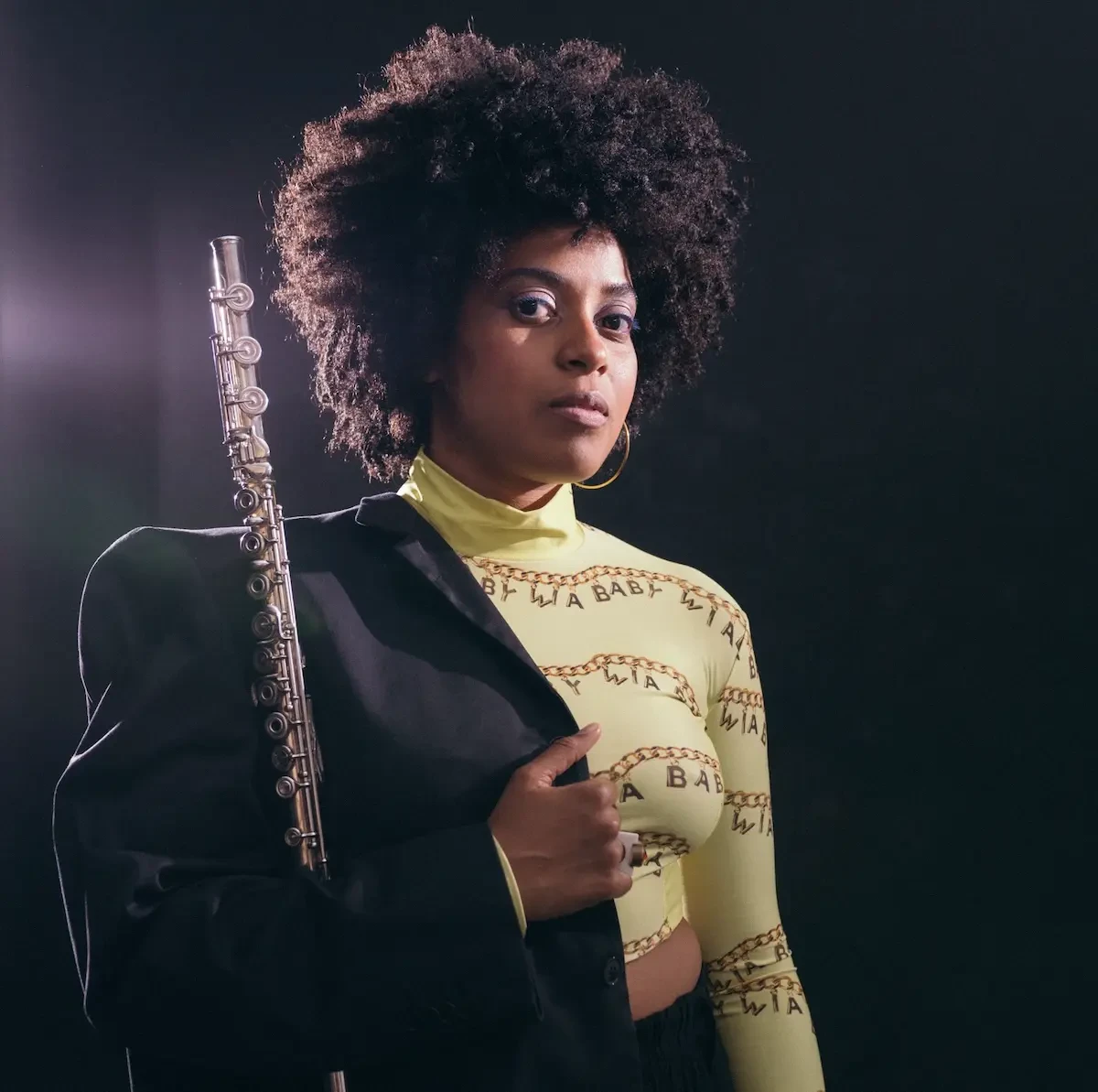
Panamanian flutist Anggie Obin presents a profoundly tender, feelings-first record with her debut album, Luz, released on the UnderPool label following a June 2025 performance in Spain. Having completed rigorous academic training in both classical music and contemporary jazz performance, Obin constructs a five-track release comprising four original compositions and one carefully curated cover. Named in honor of her great-grandmother, the album exudes a musical ethos that is watchful, selfless, and deeply nurturing.
The recording captures a high-wire live performance executed during the prestigious Estival de Jazz in Igualada, located near Barcelona. The sonic environment is wonderfully organic; occasional waves of audience applause punctuate the musical ebb and flow, though the crowd largely maintains a hushed, reverent silence throughout the majority of the performance.
Ensemble Dynamics and Repertoire
Obin’s debut unites an international cohort of virtuosos: American tenor saxophonist Bill McHenry, Cuban pianist Miguel “Wiwi” García, Japanese bassist Masa Kamaguchi, and Spanish drummer Estefanía Chamorro. Together, they create soft-rolling shapes and expansive rhythmic foundations that prioritize emotional resonance over technical gymnastics.
A prominent feature of the album is its prevalence of slow-creeping, atmospheric compositions. La Eucaristía, for instance, is a forlorn, haunting piece anchored by a hesitant, intertwined melody delivered jointly by flute and saxophone. Obin generates a palpable sense of anxious energy through her controlled, quivering vibrato, while Chamorro’s drumming remains intensely sensitive, introducing a subtle, unsettled undertow beneath the sparse arrangement.
In contrast, Flash Of The Spirit was composed by Panamanian bassist Santi Debriano, directly leveraging harmonic and structural concepts pioneered by the legendary Thelonious Monk. The melody is delightfully twisty, the rhythm purposely wonky, and McHenry delivers a brilliant, stop-start solo punctuated by expansive, purposeful silences.
The album concludes with Ballot Or The Bullet, a swaggering, heavy-grooved blues that showcases Obin’s fiery stylistic range. Here, she unleashes a howling solo characterized by knife-like high notes and biting overtones that add a serrated, urgent edge to the flute’s traditional vocal timbre—drawing an ecstatic, instantaneous roar of approval from the Igualada audience.
Tracklisting & Personnel:
- Tracks: For Mr. G; Flash Of The Spirit; La Eucaristía; Luz; Ballot Or The Bullet (Total Duration: 44:39)
- Personnel: Anggie Obin (f); Bill McHenry (ts); Miguel “Wiwi” García (p); Masa Kamaguchi (b); Estefanía Chamorro (d). Recorded live in Igualada, Spain, June 2025.
Supporting Context & Metrics
To contextualize these releases within the broader commercial and critical framework of the modern jazz industry, several structural shifts must be considered:
- Geographic Decentralization of Production: While traditional industry hubs like New York and Chicago remain vital, these releases highlight an increasingly decentralized recording ecosystem. Production centers now thrive across secondary and international markets—spanning Brooklyn basements, Portland independent studios, and European boutique festivals like the Estival de Jazz in Igualada.
- Independent Label Resilience: All three albums are distributed via independent or artist-run imprints (Dreams & Fears Records, PJCE Records, and UnderPool). This underscores a broader market reality: specialized, risk-taking contemporary jazz is increasingly reliant on boutique labels that prioritize artistic autonomy over mass-market commercial viability.
- Duration and Format Economics:
- Tyrone Allen II’s Upward: 39:48 (Compact Disc / Digital Stream optimization)
- Ryan Meagher’s Snakes: 58:08 (Extended LP / CD format capacity)
- Anggie Obin’s Luz: 44:39 (Standard LP-length conceptual suite)
These runtimes reflect a strategic return to concise, highly curated listening experiences reminiscent of classic vinyl sequencing, rejecting the bloated tracklists sometimes encouraged by streaming algorithms.
Official Statements and Artist Intentions
While formal press statements for boutique jazz releases are frequently embedded directly within liner notes and artist manifestos, the overarching philosophies of these three bandleaders articulate a unified desire for sincerity, memory preservation, and cross-genre synthesis.
- Tyrone Allen II on Upward: Allen has repeatedly emphasized that his structural use of recycled motifs is designed to mirror human cognitive processing—specifically, how trauma, memory, and isolation recur and evolve over time. By treating past musical fragments as raw materials for future compositions, Allen views the album not merely as a collection of songs, but as a psychological map of survival during the pandemic era.
- Ryan Meagher on Snakes: In discussions surrounding his two-decade milestone, Meagher has stressed the importance of levity in serious music. The incorporation of personal in-jokes (such as fantasy baseball references) alongside complex, multi-idiomatic arrangements reflects his belief that high artistic standards do not require the sacrifice of humor, warmth, or interpersonal camaraderie among bandmates.
- Anggie Obin on Luz: Dedicated explicitly to her great-grandmother, Obin’s debut is framed as an act of ancestral reverence. In interviews surrounding her European tour dates, she has articulated a desire to strip away ego, allowing the ensemble to function as an organic ecosystem where silence, patience, and emotional intuition dictate the structural progression of the music.
Future Outlook
The trajectory established by Upward, Snakes, and Luz points toward several encouraging trends for the future of the jazz genre:
- The Rise of Conceptual Archiving: Artists are increasingly treating their own recorded history as a living archive. Allen’s recursive methodology suggests that future jazz compositions will lean further into self-referential, long-form thematic development rather than treating each album as an isolated stylistic exercise.
- Uncompromising Genre Fluidity: The seamless blending of folk, rock, bebop, and R&B elements demonstrated by Meagher and Allen indicates that traditional genre boundaries are no longer merely crossed; they have effectively dissolved. Future generations of jazz musicians will likely operate with an even broader palette of stylistic influences.
- The Primacy of Live-In-Studio Chemistry: As demonstrated by Obin’s live recording in Spain and Meagher’s integration of concert tracks, audiences and critics are placing a renewed premium on unedited, high-stakes ensemble interaction. Studio perfectionism is steadily yielding ground to organic group dynamics, capturing the raw, unpredictable vitality that defines the true spirit of jazz improvisation.
Ultimately, these three releases confirm that the contemporary jazz scene is in robust, deeply imaginative health. By grounding technical virtuosity in emotional authenticity, historical awareness, and structural innovation, Allen, Meagher, and Obin have provided essential listening material that will continue to reward repeated analysis for years to come.