
By the Educational Technology & Music Education News Desk
Executive Overview
Sight reading has long been heralded as the cornerstone of musical literacy, yet it remains one of the most persistent hurdles in instrumental and vocal instruction. Educators understand that strong sight-reading skills empower students to learn music at an accelerated pace, navigate rehearsals with optimal efficiency, and enter festival performance rooms with poise rather than anxiety. Beyond academic milestones, independent reading is the vital gateway that ensures students continue making music long after they exit the formal classroom—whether participating in local community bands, sacred choir lofts, or informal weekend jam sessions with peers.
However, a fundamental pedagogical bottleneck has consistently plagued music educators: the paradox of practice. Sight reading genuinely improves only through continuous exposure to unfamiliar, unseen material. Traditional method books, while structured and reliable, possess finite physical pages. Once a student reviews a page a handful of times, cognitive recognition shifts from active sight reading to rote memorization. Consequently, teachers have historically been forced to spend countless unpaid hours every week hand-copying notation, scouring secondary anthologies for leveled material, or attempting to draft custom exercises on chalkboards and digital scores.
Enter MakeMusic’s latest breakthrough: correlated sight reading templates. Integrated directly into the expansive MakeMusic ecosystem via Sight Reading Studio, these innovative digital generators transform standard method books into an infinite, inexhaustible reservoir of fresh sight-reading material. By automatically aligning lesson-by-lesson with widely trusted pedagogical curriculums, MakeMusic has effectively eliminated the administrative burden of test and exercise preparation. This article explores the mechanics of this new release, its profound classroom and at-home applications, the broader implications for music educators, and what the future holds for digital-assisted music instruction.
Detailed Chronology: The Evolution of Sight Reading and Digital Intervention
To fully appreciate the significance of MakeMusic’s correlated sight reading templates, it is necessary to examine the historical trajectory of how sight reading has been taught, assessed, and mechanized over the past half-century.
The Era of Static Print and Manual Labor (Late 20th Century)
For generations, music teachers relied almost exclusively on printed anthologies, flashcards, and handwritten board exercises. While master pedagogues could synthesize custom exercises on the fly, this method was wildly inefficient. A band director managing eighty brass and woodwind students across multiple grade levels lacked the hours required to write individualized, developmentally appropriate sight-reading snippets for every section.
As a result, sight reading often became an ad-hoc element of the curriculum—something squeezed in during the final five minutes of a rehearsal or reserved exclusively for high-stakes festival preparation. Students who naturally grasped spatial-notational patterns excelled, while struggling readers fell further behind, trapped in a cycle of frustration and avoidance.
The Rise of Digital Notation and Early Software (Early 2000s)
The dawn of computer-assisted music notation software in the late 1990s and 2000s offered a glimmer of hope. Teachers could now design, edit, and print clean exercises using software like Finale or Sibelius. Yet, this digital shift merely replaced the pencil and manuscript paper with a mouse and keyboard. The core labor remained entirely on the educator’s shoulders. Composing a balanced, pedagogical eight-measure exercise in a specific key signature, restricted to precise rhythmic values and interval jumps, still took fifteen to twenty minutes per iteration. For an educator juggling lesson planning, concert staging, instrument repairs, and administrative duties, digital notation software solved formatting issues but failed to solve the time deficit.
The Advent of Automated Practice Environments (2010s–Present)
The proliferation of cloud-based music education platforms completely altered the landscape. Platforms like MakeMusic Cloud (formerly SmartMusic) introduced interactive assessment tools that allowed students to practice alongside recorded accompaniments while receiving immediate visual feedback on pitch and rhythm accuracy.
Yet, even within these advanced digital environments, a gap persisted. While libraries offered pre-made repertoire, finding dynamic, algorithmically controlled sight reading that directly mirrored the exact pedagogical progression of a school’s mandated method book remained an unmet challenge. Teachers were still forced to manually match software content to their daily classroom curriculum.
The October 2026 Breakthrough
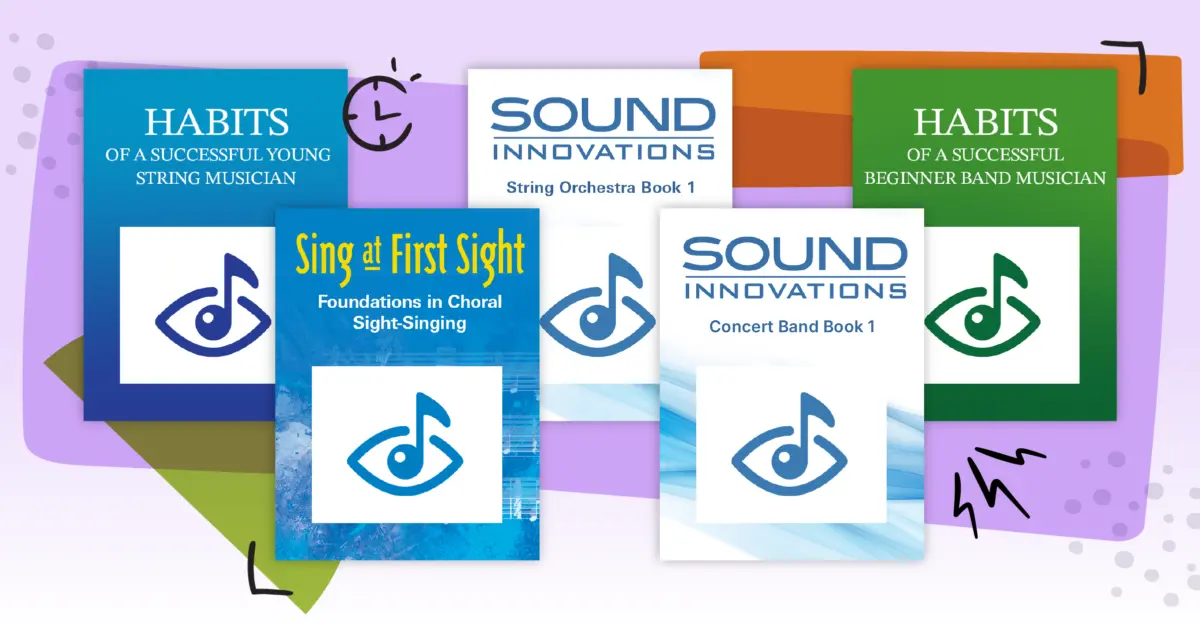
Recognizing this friction point, MakeMusic development teams engineered a synthesis between static method books and dynamic algorithmic generation. By mapping established, widely adopted method books into the backend architecture of Sight Reading Studio, developers created pre-built templates that synchronize automatically with physical or digital curriculums. Released globally to music educators, this launch represents a monumental shift: technology is no longer just a grading or playback tool, but an active, intelligent co-designer of daily lesson content.
Supporting Context & Metrics: The Pedagogical Crisis of Prep Time
To understand the urgency behind MakeMusic’s latest innovation, one must look closely at the socioeconomic and operational realities facing modern music educators. Recent surveys conducted across K-12 and collegiate music programs highlight staggering metrics regarding teacher workload and burnout.
The Administrative Burden
According to data aggregated by music education advocacy groups, the average instrumental and vocal instructor spends approximately 6.5 to 9 hours per week on non-instructional administrative tasks, including sheet music management, concert program design, festival paperwork, and—significantly—the creation of supplemental instructional handouts. Within that window, teachers report dedicating an average of 2.4 hours weekly solely to finding, writing, formatting, and distributing sight-reading exercises.
For an educator working a standard 40-to-50-hour contract—frequently extending into evening rehearsals, marching band camps, and weekend performances—reclaiming those two and a half hours represents a massive preservation of mental energy and professional longevity.
The Cognitive Science of Sight Reading
Cognitive psychologists and musicologists emphasize that true sight reading requires the brain to process multiple sensory inputs simultaneously: visual decoding of clefs, pitch, and meter; cognitive mapping to kinesthetic motor controls (fingerings, bowings, vocal placements); and anticipatory scanning ahead of the current focal point.
When students play familiar exercises, working memory is bypassed. The brain relies on episodic memory and muscle memory, meaning genuine cognitive growth stalls. The neurological benefits of sight reading—enhanced neuroplasticity, improved working memory, and accelerated language processing—are maximized only when the brain is forced to decode entirely novel graphical symbols in real-time. By providing an infinite stream of unique exercises that strictly adhere to a student’s current skill tier, the correlated sight-reading generators ensure that cognitive load remains optimal: challenging enough to stimulate growth, yet accessible enough to prevent cognitive overload.
Official Statements and Pedagogical Insights
Industry leaders, curriculum designers, and classroom educators have been vocal about the transformative impact of the new Sight Reading Studio templates.
Streamlining the Classroom Experience
In a statement accompanying the rollout, MakeMusic product strategy teams emphasized the core philosophy driving the update:
"Our primary objective has always been to remove friction between the student and the music. For decades, teachers have acted as human printing presses, wasting valuable instructional minutes writing notes on marker boards or searching through dusty filing cabinets for an exercise that matches Lesson 14. By bridging trusted method books with algorithmic generation, we are returning the focus of the music room to where it belongs: active listening, artistic expression, and human mentorship."
Experienced band and choir directors who beta-tested the templates have echoed these sentiments, noting how the tool fundamentally alters classroom dynamics. One veteran middle school band director observed:
"In the past, introducing sight reading meant a collective groan from the brass section because they knew we were going to drudge through the same three exercises in the back of the method book. Now, I pull up the correlated template on the smartboard, hit generate three times, and every student is looking at brand-new music that utilizes precisely the notes and rhythms we unlocked yesterday. The engagement level is night and day."
Practical Application: Inside the Classroom and at Home
The true genius of the correlated sight-reading templates lies in their structural versatility, designed to integrate seamlessly into both synchronous classroom environments and independent at-home practice routines.
Inside the Classroom
Classroom implementation requires minimal technological overhead and zero advance preparation. Music educators can utilize the system in several structured ways:
- The Five-Minute Warm-Up Routine: Upon entering the classroom, students find a freshly generated sight-reading exercise projected on the main display. Because the template is tied directly to the current lesson in their method book, the exercise reinforces immediate technical concepts—such as a newly introduced accidentals, dynamic shifts, or syncopated rhythms—without requiring verbal explanation.
- Formative Assessment and Polling: Teachers can utilize MakeMusic Cloud’s integrated assessment features to have students sight-read the generated exercise individually or collectively. The software captures performance data, allowing instructors to instantly identify which students are struggling with specific interval leaps or rhythmic subdivisions.
- Dynamic Differentiation: In heterogeneous classrooms containing students of varying skill levels, educators can generate multiple versions of an exercise corresponding to different pages within the same method book series, ensuring that advanced students remain challenged while struggling learners experience achievable success.
At Home
Independent practice often suffers from a lack of oversight, frequently leading students to practice only the music they already play well. The at-home application of correlated generators solves this accountability gap:
- Self-Guided Mastery: Students logging into MakeMusic Cloud from home can navigate to their specific method book and lesson number. By clicking "generate," they can practice unlimited variations of the exact concepts assigned by their teacher.
-
Anxiety Reduction for Festivals: Solo and ensemble festivals routinely feature a sight-reading component that causes acute performance anxiety. By making unique, low-stakes sight reading
a routine part of daily home practice, students desensitize themselves to the psychological pressure of unfamiliar scores.
- Parental Visibility: Parents seeking to support their child’s musical journey can easily verify whether practice time is being spent on active, developmental reading rather than repetitive warm-ups.
Future Outlook: The Next Frontier in Digital Music Pedagogy
As educational technology continues its rapid advancement, the launch of correlated sight-reading templates points toward a broader paradigm shift in how music curriculums will be designed and consumed in the coming decades.
Artificial Intelligence and Adaptive Generation
Industry analysts predict that the next evolution of tools like Sight Reading Studio will incorporate adaptive artificial intelligence. Rather than relying solely on pre-set parameters aligned with specific lesson numbers, future generators may dynamically adjust difficulty levels in real-time based on a student’s historical performance data. If a student consistently stumbles over dotted-eighth/sixteenth note combinations in compound meter, the algorithm could autonomously inject targeted micro-exercises into their next sight-reading session to remediate the specific weakness.
Expansion of Global Methodologies
While current templates successfully cover foundational North American and international method books, the underlying architecture paves the way for global integration. Future updates are anticipated to incorporate diverse pedagogical frameworks from international traditions—including Suzuki, Kodály, and Dalcroze methodologies—ensuring that educators worldwide can leverage automated generation regardless of their regional curriculum of choice.
Preserving the Human Element in Music Education
A recurring concern in discussions surrounding educational technology is the fear of automation replacing human artistry. However, music educators point out that tools like MakeMusic’s correlated generators achieve the exact opposite. By offloading the mechanical, administrative drudgery of writing notes on a page, technology liberates educators to focus on the irreducible human elements of teaching: emotional interpretation, phrasing, tone quality, ensemble listening, and personal mentorship.
Conclusion
MakeMusic’s correlated sight reading templates represent a milestone development for modern music education. By solving the long-standing crisis of resource scarcity and prep-time exhaustion, these tools bridge the gap between structured pedagogical design and infinite digital capability.
Teachers no longer need to choose between rigorous, method-aligned instruction and the variety required for true sight-reading literacy. By logging into MakeMusic Cloud and exploring the new templates, educators can instantly reclaim hours of their week, banish the dread of the sight-reading room, and equip a new generation of musicians with the confidence and independence to make music for a lifetime.