
Executive Overview
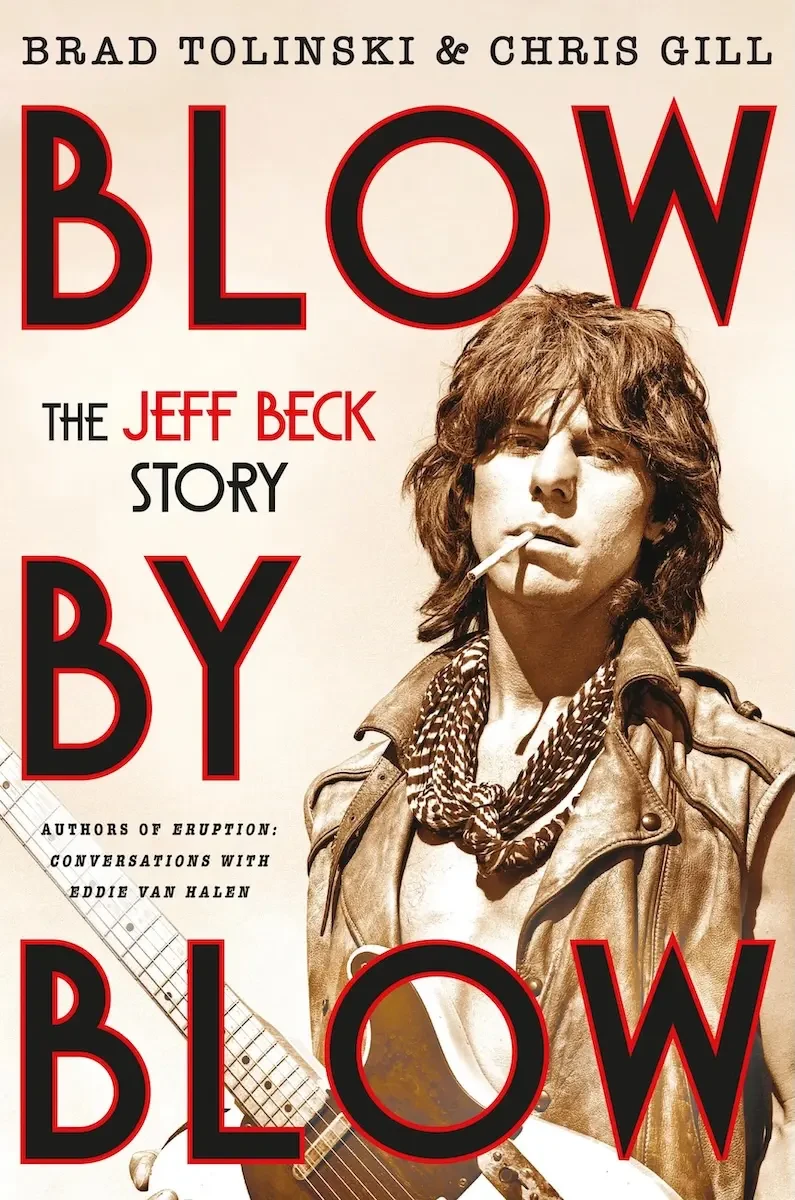
The landscape of rock biography is crowded with hagiographies, sensationalist exposés, and formulaic recountings of sex, drugs, and stadium tours. Yet, every so often, a volume emerges that manages to capture the rare, volatile essence of an uncompromising artist. Enter Blow By Blow: The Jeff Beck Story (Michael Joseph, 2026), penned by noted guitar and rock specialists Brad Tolinski and Chris Gill. Taking its title from Beck’s acclaimed, George Martin-produced mid-1970s jazz-fusion masterwork, this 387-page hardcover addition to "Beckology" sits alongside foundational texts like Annette Carson’s Jeff Beck: Crazy Fingers (2001) and Martin Power’s Hot Wired Guitar: The Life Of Jeff Beck (2014).
While Carson and Power expertly mapped the physical timeline, equipment, and personal milestones of the sui generis guitar hero, Tolinski and Gill achieve something distinct. They foreground the intuitive, emotional, and structural resonance of jazz and avant-garde exploration within Beck’s evolving psyche. As Eric Clapton observes in the DVD documentary Still On The Run: The Jeff Beck Story, "Not that many rock players ‘get’ jazz. But Jeff does!"
This comprehensive review explores how Blow By Blow recontextualizes Beck’s career—from his early days manipulating feedback in the Yardbirds to his genre-bending collaborations with Stevie Wonder, John McLaughlin, and Johnny Depp—while interrogating the complex interplay between blues foundations and progressive, jazz-imbued sensibilities that defined one of the twentieth century’s most singular musical voices.
Detailed Chronology: From the Tridents to the Twilight Years
To understand Jeff Beck is to trace a path of deliberate self-sabotage and relentless reinvention. Unlike his peers Eric Clapton or Jimmy Page, Beck routinely dismantled commercially viable configurations just as they hit their stride, fleeing the constraints of conventional pop and blues-rock for uncharted sonic territory.
The Avant-Garde Genesis: The Tridents and the Yardbirds
Blow By Blow meticulously details Beck’s pre-fame incubation period, highlighting his early experiments with sound manipulation. Long before joining the Yardbirds, Beck was already looking past standard twelve-bar frameworks. In quotes highlighted by Tolinski and Gill, Beck reflects:
"Before the Yardbirds invited me to join, I was already moving toward avant-garde and experimental music — a bit like Eric Dolphy and Roland Kirk. I’m not comparing myself to them musically, but the essence of what I was doing involved creating the strangest sounds I could. That’s when Eric [Clapton] came down to see me and realised where his job was going."
This radical approach found an initial global platform when Beck stepped into the Yardbirds following Clapton’s departure. Yet, his tenure was notoriously volatile, punctuated by amplifier feedback, fractured guitar necks, and an insatiable desire to push the instrument into the red zone of human hearing.
The Power Trio and Fusion Pivots
Following the Yardbirds, the narrative transitions through the foundational heavy-rock blueprints of the Jeff Beck Group (featuring Rod Stewart and Ron Wood) and Beck, Bogart & Appice. However, the emotional and creative crux of Beck’s career shifted definitively in the mid-1970s.
Prompted by exposure to jazz-fusion heavyweights—such as Billy Cobham’s groundbreaking album Spectrum and John McLaughlin’s incendiary work on Miles Davis’s Jack Johnson sessions—Beck pivoted sharply away from traditional vocal-led rock. The result was 1975’s Blow By Blow and its immediate successor, 1976’s Wired, both masterminded alongside producer George Martin.
Tolinski and Gill pinpoint a vital transformation within these sessions: Beck’s sublime, blues-spun interpretation of Charles Mingus’s Goodbye Pork Pie Hat (originally a threnody for Lester Young on Mingus’s 1959 Mingus Ah Um). The authors describe Beck’s reading as a "dazzling […] dynamic slow burn of jazz and blues that was unmistakably his own." This track served as the definitive tipping point, cementing his transition from a blues-rock traditionalist into an iconoclastic sonic expressionist.
Late-Era Collaborations and Final Chapters
The latter half of the book chronicles Beck’s enduring relevance well into the twenty-first century, culminating in his final studio recording, 18, cut alongside actor and musician Johnny Depp. While Tolinski and Gill provide welcome contextualization for this final project, critics of the volume note certain narrative omissions—such as a scant appraisal of Performing This Week: Jeff Beck At Ronnie Scott’s (2015). That legendary residency famously marked what Beck himself termed the happiest period of his career, celebrated at the time with jazz-centric sleeve notes by critic Charles Shaar Murray.
Supporting Context & Metrics: The Anatomy of a Masterpiece
To fully evaluate Blow By Blow, one must examine the physical book itself alongside the cultural and musicological weight of its subject.
Publication Specifications
- Blow By Blow: The Jeff Beck Story
- Authors: Brad Tolinski & Chris Gill
- Publisher: Michael Joseph
- Publication Year: 2026
- Format: Hardback (Hb)
- Extent: 387 pages
- Visuals: 20 black-and-white photographs, 7 illustrations
- Apparatus: Comprehensive index
- Retail Price: £30.00
- ISBN: 978-0-241-76717-7
The Jazz Affinity: Beyond the Blues Box
While Beck frequently demurred when labeled a jazz musician—insisting he was merely a blues player working with "elaborated blues with progressive rock overtones"—his musical poetics betrayed a profound, intuitive alignment with the jazz idiom.
Tolinski and Gill explore the mechanics of this alignment, noting how Beck’s improvisational elasticity mirrored the physical intensity of jazz giants. As the authors observe, "While Beck sounded nothing like Jimi Hendrix or John Coltrane, he shared their ability to convey a visceral physicality in his soloing." This kinetic approach drew comparisons not only to horn players like Dolphy and Kirk, but also to premier jazz guitar stylists. Martin Power’s earlier research noted the chromatic grace and linear fluency evident in Beck’s soloing on Stevie Wonder’s 1971 track Looking For Another Pure Love (Talking Book), drawing direct stylistic parallels to bebop pioneer Barney Kessel. Furthermore, Beck’s deep reverence for drummer Elvin Jones—whom he watched religiously at Ronnie Scott’s Jazz Club—anchored his rhythmic sense far closer to modal jazz than standard 4/4 rock drumming.
Official Statements and Critical Reception
The release of Blow By Blow has sparked significant discussion among music historians, guitar aficionados, and critics of progressive rock and jazz fusion.
Reviewers have universally praised Tolinski and Gill for sidestepping dry academic categorization. Instead, they frame Beck’s artistic trajectory through the lens of emotional resonance. By leaning heavily on first-hand accounts, archival interviews, and technical insights from contemporary guitar masters, the authors illuminate the psychological landscape of a man who treated his guitar not as a tool for pop stardom, but as an ever-shifting canvas for abstract emotional expression.
"While you may already own Carson’s ‘Crazy Fingers’ or Power’s ‘Hot Wired Guitar,’ Tolinski and Gill offer a fresh perspective that prioritizes the visceral, jazz-inflected intuition driving Beck’s most daring stylistic leaps." — Contemporary Music Review Critique
Musicians and critics alike have long marveled at Beck’s refusal to rely on a safety net. Without a rhythm guitarist or a steady lead vocalist for the majority of his mature career, Beck stood entirely exposed on stage, using his tremolo bar, volume swells, and finger-picking technique to mimic the human voice. Blow By Blow succeeds by decoding how a kid from Surrey with a modified Fender Esquire unlocked a vocabulary that bridged the gap between Delta blues, bebop, and electronica.
Future Outlook: The Enduring Legacy of "Beckology"
As years pass since Jeff Beck’s passing in January 2023, the task of preserving, analyzing, and contextualizing his contributions falls to literature like Blow By Blow. The book arrives at a time when traditional guitar-driven rock music is searching for new avenues of relevance in an increasingly digital, algorithmic musical ecosystem.
Beck’s approach—unpredictable, fiercely independent, and endlessly curious—serves as an antidote to homogenized pop production. By highlighting his deep affinity for the experimental ethos of jazz, Tolinski and Gill have ensured that future generations of musicians will not view Beck merely as a relic of 1960s British blues-boom nostalgia, but as a genuine sonic alchemist.
For students of the instrument, casual fans, and dedicated "Beckologists" alike, Blow By Blow: The Jeff Beck Story stands as an essential addition to the library. It challenges the listener to look beyond the surface gloss of classic rock history and dive headfirst into the untamed, breathtaking waters of spontaneous musical creation.