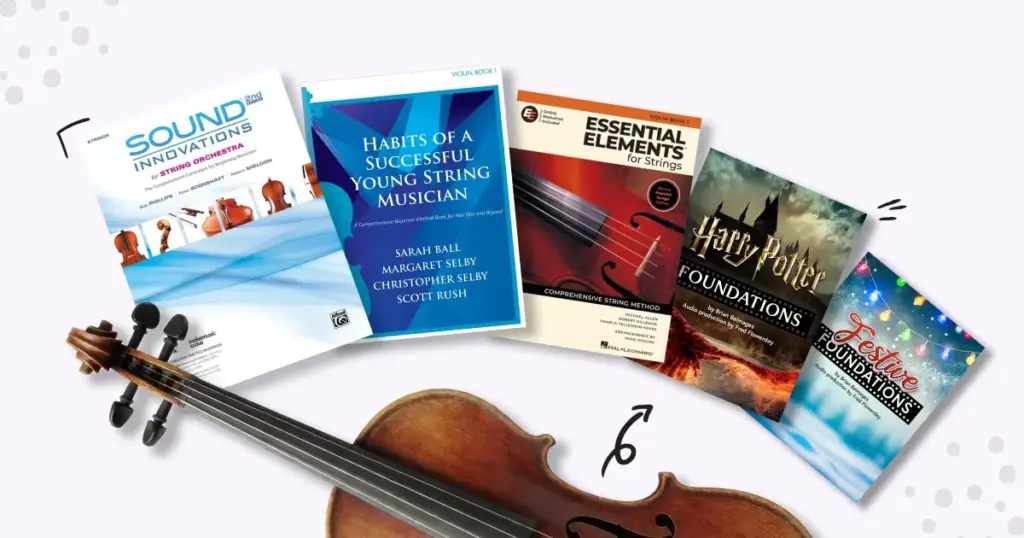

Executive Overview
The landscape of instrumental music education is undergoing a quiet yet profound digital transformation. For centuries, mastering an orchestral string instrument—particularly the violin—has been synonymous with arduous technical drills, relentless posture corrections, and a trial-by-fire approach to sheet music literacy.
Recognizing the acute anxiety and pedagogical gaps that often accompany the early stages of string instruction, SightReadingMastery has officially announced the launch of its dedicated Grade 1 Violin Sight-Reading curriculum.
Spearheaded by founder, musician, and software engineer Evan R. Murphy, this expansion marks a significant milestone for a platform designed to eradicate the intimidation traditionally associated with reading unfamiliar music at first sight.
For intermediate and beginner violinists alike, the journey toward technical mastery involves an intricate juggling act: managing complex hand placements, navigating sophisticated bowing techniques, maintaining intonation, and cultivating proper posture. When sight-reading is introduced prematurely or without a structured methodology, students frequently experience cognitive overload, leading to frustration and avoidance.
The newly released Grade 1 curriculum bridges this gap. By offering a thoughtfully curated suite of short, engaging, and original compositions, SightReadingMastery aims to transform sight-reading from a dreaded chore into an accessible, rewarding daily habit. Rather than relying on dry, sterile technical exercises, the platform delivers genuine musicality composed by professionals, ensuring that learners experience the intrinsic joy of making music from their very first sight-reading session.
Detailed Chronology: The Evolution of Digital Sight-Reading
To understand the significance of the Grade 1 violin launch, one must examine the trajectory of SightReadingMastery since its inception in 2011. Founded in Seattle, Washington, by Evan R. Murphy, the platform was born out of a clear pedagogical necessity: Murphy recognized that while countless musicians spent years practicing polished repertoire, many remained functionally illiterate when confronted with a brand-new score. This bottleneck routinely limited their professional opportunities, chamber music collaborations, and overall musical confidence.
2011–2015: Laying the Foundation
In its early years, SightReadingMastery established itself as an innovative digital solution for pianists and foundational instrumentalists. The core philosophy was simple: consistency over volume. Instead of asking students to wade through massive, overwhelming etude books, the platform delivered bite-sized, daily exercises designed to build cognitive recognition and physical reflexes systematically.
The Expansion Era: Multi-Instrumental Integration
As digital learning tools matured, Murphy and his team recognized that different instrument families present unique physical and cognitive hurdles. A pianist reads across a grand staff utilizing both hands simultaneously, whereas a flutist manages breath control and fingering patterns across a linear melody.
String instruments, however, present an entirely different pedagogical paradigm. Violinists do not have frets to guide intonation, and they must constantly balance bow distribution, string crossings, shifting, and left-hand finger spacing. Introducing dedicated curricula for instruments like the flute and the guitar marked critical milestones for the platform, paving the way for the rigorous acoustic and ergonomic analysis required to build a violin-specific program.
The Present Day: The Arrival of Grade 1 Violin
The formal rollout of the Grade 1 violin module represents years of internal development, testing, and collaboration with professional composers. Designed specifically to align with foundational skill sets, this release provides a structured runway for violinists who have moved past absolute beginner stages and are ready to systematically build their literacy skills without risking burnout.

Supporting Context & Metrics: The Anatomy of Violin Sight-Reading Anxiety
Why is sight-reading notoriously difficult for string players, and what metrics matter most when evaluating a digital pedagogy tool?
The Cognitive Burden of the Violin
Unlike keyboard players who can rely on a fixed visual grid of black and white keys, violinists operate in a continuous spatial continuum. Consider the challenges inherent in early violin execution:
- Intonation Deficits: There are no visual or tactile frets on a standard fingerboard. A student must rely entirely on auditory feedback and muscle memory.
- Bow Arm Mechanics: While the left hand decodes pitches, rhythms, and finger patterns, the right arm must manage bow speed, weight, sound point ( sul tasto vs. sul ponticello ), and smooth string crossings.
- Clef and Position Dynamics: While Grade 1 primarily utilizes first position and treble clef, the mental translation from staff note to finger placement demands rapid cognitive processing.
When these physical demands are compounded by an unfamiliar piece of music, the brain’s working memory can easily become saturated.
The Pedagogical Solution: Controlled Complexity
SightReadingMastery addresses this neurological bottleneck by strictly controlling variables within its Grade 1 curriculum. The exercises are intentionally engineered with several core parameters in mind:
- Limited Range: Melodies stay within a comfortable, accessible register that avoids extreme finger extensions or early shifting requirements.
- Simplified Key Signatures: Exercises focus on keys with minimal accidental modifications, allowing the student’s brain to map staff positions to fingerboard geography effortlessly.
- Bite-Sized Duration: Short, focused phrases prevent physical fatigue and mental exhaustion, ensuring high engagement and retention rates.
The Death of the "Mindless Drill"
A cornerstone of the platform’s philosophy is the rejection of sterile, unmusical exercises. Traditional method books often rely on repetitive, monotonous rhythm drills that fail to stimulate the auditory imagination.
By contrast, the melodies featured in the SightReadingMastery violin module are penned by professional composers. These pieces possess genuine artistic merit—featuring charming motifs, lyrical phrasing, and harmonic interest. This approach validates the adult or youth learner, transforming a technical chore into an engaging musical experience that fosters immediate psychological reward.
Official Statements & Pedagogical Insights
To gain a deeper understanding of the vision driving this release, we look to the platform’s founder, Evan R. Murphy. A multi-instrumentalist, software engineer, and experienced music educator, Murphy’s dual background uniquely positions him to build technology that respects the nuances of traditional music pedagogy.
"Violin players have a lot to think about as they’re working toward mastery of their hand positions and bowing technique," Murphy explains. "Trying to learn sight-reading on top of all this can easily be overwhelming if it’s not approached in a smart way."
This sentiment strikes at the heart of modern music education challenges. Teachers frequently lament that students avoid sight-reading because it feels like an insurmountable hurdle. By designing an environment that eases violinists into the discipline through incremental, manageable steps, Murphy’s platform bridges
the gap between passive note-decoding and active musical expression.

Furthermore, Murphy emphasizes the community-driven aspect of the platform’s growth:
"Leave a comment below or email me if you have any questions about SRM for violin! Our goal has always been to build tools that genuinely move the needle for musicians, and community feedback is vital to that mission."
This collaborative ethos explains why features roll out with such precision. Every instrument addition—from the early guitar modules to the recent flute expansion and now the Grade 1 violin release—is informed by the real-world needs of students and educators navigating the complexities of instrumental literacy.
Future Outlook: The Next Horizon in Digital Music Pedagogy
The release of the Grade 1 violin sight-reading curriculum is not an isolated event; it represents a major stepping stone in an expansive roadmap for SightReadingMastery. As the platform continues to scale, several key trends and future developments are shaping its trajectory:
1. Broadening Grade Progressions
While the initial release focuses squarely on Grade 1—establishing a firm foundation for early players—the natural evolution of the curriculum will involve higher-tier modules. Future iterations will undoubtedly tackle advanced key signatures, shifting into higher positions (third, fifth, and beyond), tenor and alto clef challenges for orchestral players, and intricate contemporary rhythmic structures.
2. Deeper Technological Integration
Given Evan R. Murphy’s software engineering background, the platform is uniquely positioned to integrate emerging audio-recognition and artificial intelligence tools. Future updates could potentially incorporate real-time pitch and rhythm tracking via microphone input, allowing the software to listen to a violinist play an exercise and provide immediate, automated feedback on intonation and timing accuracy.
3. Holistic Musicianship Ecosystems
The launch of the violin curriculum closely follows other platform innovations, such as dedicated note-recognition apps and cross-instrumental support. This points toward a future where SightReadingMastery functions not merely as an exercise archive, but as a comprehensive, multi-platform ecosystem for foundational musicianship. Whether a student is picking up the violin, flute, or guitar, they will have access to a unified, data-driven approach to sight-reading literacy.
Conclusion
The introduction of Grade 1 violin sight-reading on SightReadingMastery is a welcome development for string teachers, students, and self-directed learners alike. By stripping away the intimidation factor and replacing sterile drills with genuine, professionally composed music, the platform is helping a new generation of violinists unlock their full potential. As the digital education space matures, initiatives like this prove that technology, when guided by deep pedagogical empathy, can profoundly enrich the timeless art of acoustic music-making.