
Executive Overview
On Friday, April 14, 2023, the historic Church of the Holy Trinity at 1904 Walnut Street in Philadelphia transformed into a magnificent nexus where medical science met high art. The occasion was the 53rd Annual Spring Concert presented by the Thomas Jefferson University Choir and Orchestra, a celebrated institution that has long championed the symbiotic relationship between rigorous academic medicine and transcendent musical performance. Staged in joyous celebration of World Voice Day 2023 in collaboration with The Voice Foundation, the evening offered a masterclass in vocal pedagogy, artistic direction, and symphonic execution.
At the helm of this monumental production was Robert Thayer Sataloff, M.D., D.M.A., a towering figure in both otolaryngology and choral conducting. Under his visionary leadership, alongside Associate Conductor Philip Doucette, M.A., M.M., Associate Conductor Emerita Margaret M. Baroody, M.M., and Accompanist Yoni Levyatov, the ensemble delivered a program of staggering stylistic breadth. The repertoire juxtaposed the sacred, dramatic grandeur of Franz Joseph Haydn’s Lord Nelson Mass (Missa in angustiis) with the deeply American, soulful idioms of George Gershwin’s masterwork, Porgy and Bess.
This review and retrospective examines the intricate mechanics of that April evening, exploring the historical significance of the chosen repertoire, the physiological marvels of the human voice celebrated on World Voice Day, the institutional pedigree of the Thomas Jefferson University musical ensembles, and the reverberating impact of this cultural milestone on the Philadelphia artistic community and beyond.
Detailed Chronology
Setting the Stage: The Venue and Atmosphere
As twilight settled over downtown Philadelphia on April 14, 2023, an expectant audience converged upon the Church of the Holy Trinity. Known
for its soaring gothic architecture, magnificent stained-glass windows, and resonant acoustic profile, the venue proved to be the ideal acoustic vessel for the forces assembled by Thomas Jefferson University.
By 7:30 PM, the pews were filled to capacity, drawing a diverse constituency of medical professionals, students, faculty, classical music aficionados, and supporters of The Voice Foundation. The air buzzed with a distinct charge—an awareness that this was not merely a seasonal university concert, but an intellectual and cultural observance honoring the extraordinary physiological instrument that makes vocal music possible: the human voice.
The Maestros Take the Podium
At precisely 8:00 PM, the house lights dimmed, and absolute stillness descended upon the nave. The instrumentalists of the Thomas Jefferson University Orchestra took their places, followed by the formidable chorus. A wave of applause greeted the arrival of Dr. Robert Thayer Sataloff.
Dr. Sataloff’s presence on the podium is uniquely authoritative. As a world-renowned laryngologist who has treated professional singers, actors, and speakers of international renown, his approach to conducting is inextricably linked to an intimate, microscopic understanding of vocal health and production. Alongside him, Associate Conductor Philip Doucette and Accompanist Yoni Levyatov ensured that the intricate machinery of the performance ran with clockwork precision.
Part I: Franz Joseph Haydn’s Lord Nelson Mass
The first half of the concert was dedicated to one of the crown jewels of the classical sacred repertoire: Franz Joseph Haydn’s Missa in angustiis (Mass in Straits/Troubled Times), popularly known as the Lord Nelson Mass. Composed in 1798 as the shadow of Napoleon Bonaparte’s military conquests loomed over Europe, the work reflects tension, anxiety, and a profound yearning for divine deliverance.
From the opening notes of the Kyrie, the orchestra established a tense, dramatic urgency driven by Haydn’s unusual scoring—notable for its omission of woodwinds in favor of three trumpets, timpani, strings, and organ. The Thomas Jefferson University Choir attacked the demanding polyphonic textures with astonishing clarity and dynamic discipline.
The soloists stepped forward to navigate the treacherous vocal topography of the work:
- Soprano: Melanie Culhane, Susannah Foos, and Luciana Piovan
- Alto: Alyson Harvey and Kristina Lewis
- Tenor: Kurt Hoffman, Maximilliano Marques, and Jimson Mathew
- Bass: Curtis Cummings and Richard Kovach
The soprano solo in the Kyrie, in particular, requires acrobatic coloratura coupled with soaring lyricism. The soloists executed these demands with poise, their voices cutting through the rich choral and orchestral tapestry. The transition from the fearful supplicative passages to the triumphant, C-major explosions of the Gloria and Credo demonstrated the choir’s remarkable breath control and emotional range. Under Dr. Sataloff’s baton, the orchestra captured Haydn’s shifting moods—the militaristic timpani rolls serving as a stark reminder of the historical anxieties embedded in the score, contrasted with moments of serene, celestial grace.
Part II: Excerpts from George Gershwin’s Porgy and Bess
Following a brief intermission, the sonic landscape underwent a radical transformation. The solemn, ecclesiastical grandeur of 18th-century Vienna gave way to the sultry, jazz-infused, folk-opera idioms of 20th-century Charleston, South Carolina, through excerpts from George Gershwin’s Porgy and Bess.
Premiered in 1935, Gershwin’s masterpiece seamlessly melded European operatic structures with African-American spirituals, blues, and jazz harmonies. For a university ensemble, tackling Porgy and Bess presents unique rhythmic, stylistic, and cultural challenges. The choir and orchestra embraced these challenges with infectious enthusiasm and stylistic authenticity.
The selected excerpts brought the emotional spectrum of Catfish Row to life. The chorus swung and swayed, capturing the vernacular rhythms and syncopated phrasing essential to Gershwin’s writing. The soloists shone brightly in this secular domain, delivering iconic melodies with theatrical flair, rich vocal color, and deep emotional resonance. The collaborative synergy between the orchestral brass, the pulsing piano accompaniment of Yoni Levyatov, and the soaring vocal lines created an electrifying atmosphere that brought the audience to rapt attention.
The Grand Finale and Ovation
As the final, lingering chords of the Gershwin medley faded into the vaulted arches of the Church of the Holy Trinity, the audience erupted into a sustained, thunderous standing ovation. Multiple curtain calls were required, with Dr. Sataloff gesturing to various sections of the orchestra, the collaborative vocal soloists, and the tireless choir members, acknowledging their months of rigorous rehearsal.
Supporting Context & Metrics
The Significance of World Voice Day and The Voice Foundation
To fully appreciate the gravity of the April 14 concert, one must contextualize it within the global mission of World Voice Day and its principal architect in the United States, The Voice Foundation.
Observed annually on April 16 (with celebrations occurring globally throughout the week), World Voice Day is a worldwide annual event dedicated to celebrating the phenomenon of the human voice. The mission is to demonstrate the immense importance of the voice in daily life, to encourage vocal health awareness, and to promote scientific research into voice production and disorders.
The Voice Foundation, headquartered in Philadelphia and closely affiliated with Thomas Jefferson University and Dr. Sataloff, is the world’s oldest and foremost organization dedicated to voice medicine, science, and education. For over five decades, the Foundation has hosted the annual Symposium on Care of the Professional Voice, drawing otolaryngologists, speech-language pathologists, vocal coaches, and performing artists from every corner of the globe.
By tying the 53rd Annual Spring Concert directly to World Voice Day, Thomas Jefferson University underscored the practical application of vocal science. The performers on stage—students, healthcare workers, scientists, and community members—were living proof of the principles researched, taught, and championed by the university and The Voice Foundation.
Institutional Pedagogy: Music and Medicine at Jefferson
Thomas Jefferson University has long recognized that the arts are not merely peripheral hobbies for medical and scientific professionals, but essential components of holistic human development, cognitive agility, and emotional resilience.
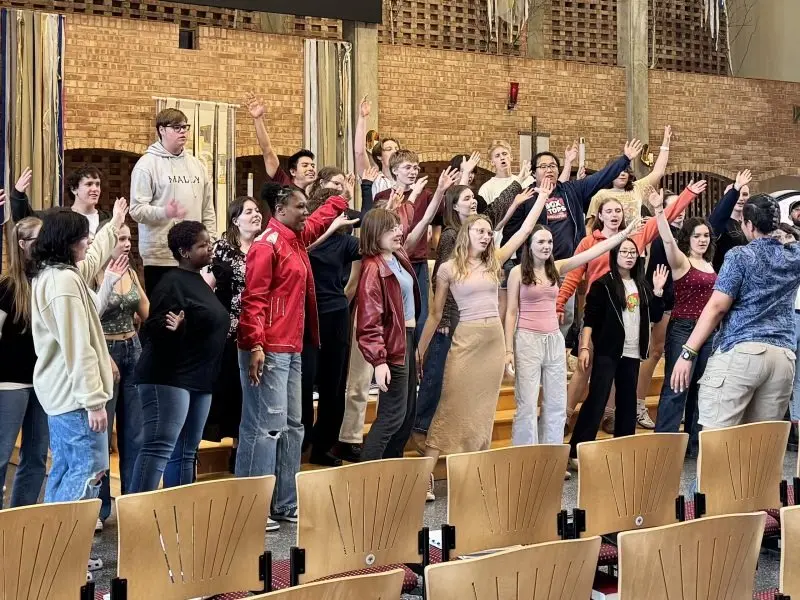
- The Choir and Orchestra: Comprising medical students, resident physicians, researchers, undergraduate and graduate students, and affiliated community members, the ensemble represents a living laboratory of interdisciplinary collaboration.
- Leadership Lineage: Under the long-standing directorship of Dr. Robert T. Sataloff—who serves as Professor and Chairman of the Department of Otolaryngology-Head and Neck Surgery and Senior Vice President for Academic Affairs at Jefferson Health—the music program has achieved professional performance standards while maintaining its educational ethos.
- Associate Leadership: Philip Doucette and Margaret M. Baroody (Associate Conductor Emerita) have spent decades refining the vocal techniques of the ensemble, ensuring that singers ranging from absolute novices to seasoned vocalists develop healthy, sustainable emission techniques grounded in physiological science.
Official Statements and Artistic Insights
In reflections surrounding the 53rd Annual Spring Concert, artistic and institutional leaders emphasized the profound philosophical alignment between the concert’s musical selections and its scientific purpose.
"The human voice is our most intimate instrument; it is an exposed physiological miracle that reflects our health, our emotions, and our deepest humanity," noted Dr. Robert Thayer Sataloff during preparations for the event. "In performing works as physically and stylistically demanding as Haydn’s Lord Nelson Mass and Gershwin’s Porgy and Bess, our performers are not only exercising artistic expression—they are demonstrating the functional capacity of the trained human voice in optimal health."
The collaborative nature of the enterprise was echoed by the artistic staff. Associate Conductor Philip Doucette highlighted the dedication required of the student and community musicians:
"Balancing the rigorous academic schedules of a major medical university with the intense rehearsal demands of a symphonic chorus requires extraordinary discipline. The choir and orchestra approached this milestone year with a level of focus and passion that elevated every rehearsal into a masterclass of collective listening."
Furthermore, representatives from The Voice Foundation praised the concert as a shining example of public outreach. By utilizing the universal language of music, the event successfully translated complex concepts of vocal health, artistic expression, and interdisciplinary collaboration into an accessible, deeply moving public experience that resonated far beyond the academic lecture hall.
Future Outlook
As the echoes of the April 14, 2023 concert settle into the archives of Thomas Jefferson University’s storied musical history, the legacy of the 53rd Annual Spring Concert points firmly toward an expanded horizon for arts-in-medicine initiatives.
Expanding the Interdisciplinary Model
The success of the collaboration between the University Choir and Orchestra, The Voice Foundation, and the Department of Otolaryngology serves as a blueprint for future programming. Academic medical centers across the United States are increasingly recognizing the "Arts and Health" movement—integrating music therapy, performance art, and creative expression into medical curricula and patient care environments. Thomas Jefferson University remains at the vanguard of this movement, proving that rigorous scientific inquiry and sublime artistic creation are not mutually exclusive, but mutually reinforcing.
Looking Ahead to Future Seasons
Planning for subsequent concert cycles is already underway. Building upon the technical triumphs achieved in navigating both classical polyphony (Haydn) and American musical theater/opera (Gershwin), future repertoires will continue to challenge performers and delight Philadelphia audiences.
Moreover, the digital preservation of the event—captured via high-definition video recording and streamed globally (accessible via archival platforms such as YouTube)—ensures that the educational and artistic value of the performance extends to international scholars, vocal pedagogues, and music lovers who were unable to attend in person.
Conclusion
The Thomas Jefferson University Choir and Orchestra’s 53rd Annual Spring Concert was far more than a routine seasonal performance. It was a cultural summit where history, medicine, and art converged under the soaring vaulted ceilings of the Church of the Holy Trinity. Through the masterful direction of Dr. Robert Thayer Sataloff and his creative team, the ensemble reminded the world that when science seeks to understand the voice, and art seeks to elevate it, the result is nothing short of transcendent.