
Executive Overview
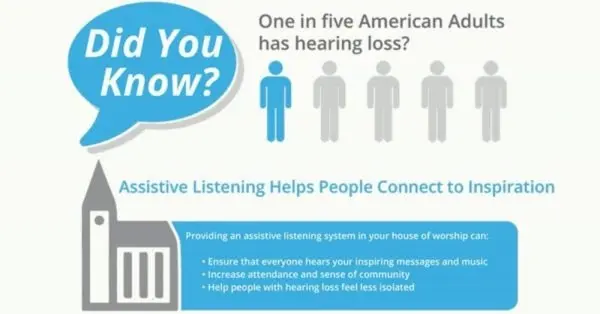
In an era where modern houses of worship strive to foster environments of radical inclusion, community engagement, and spiritual connection, one critical demographic is frequently overlooked: individuals experiencing hearing loss. For millions of congregants globally, attending a traditional religious service can transform from a communal, uplifting experience into an isolating ordeal marked by muffled audio, competing background noise, and missed spoken words. Despite advancements in architectural acoustics and modern sound reinforcement, speech intelligibility remains a persistent challenge in large, resonant sanctuaries, historic cathedrals, and multi-purpose auditoriums alike.
To bridge this profound communication gap, religious organizations are increasingly turning to advanced Assistive Listening Systems (ALS). However, the successful integration of these technologies requires far more than a simple equipment purchase. It demands a strategic, highly intentional roadmap that encompasses congregation assessment, financial planning, comprehensive staff and volunteer training, and aggressive community outreach.
This report provides an authoritative, in-depth blueprint for faith-based leaders, administrative boards, and technical directors seeking to implement or upgrade an assistive listening infrastructure. Drawing on industry best practices and insights from audio-visual integration experts—such as CCI Solutions and Listen Technologies—this article explores the four critical pillars of successful ALS deployment: understanding congregational needs, navigating financial options, preparing operational teams for success, and driving broad awareness. By prioritizing auditory accessibility, houses of worship can ensure that every member of their flock can fully experience the beauty, nuance, and emotional resonance of the spoken and musical word.
Detailed Chronology: The Four-Step Implementation Roadmap
Implementing an Assistive Listening System is a multi-phase journey that requires careful coordination across administrative, technical, and pastoral teams. To maximize return on investment and ensure high user adoption rates, organizations should follow a structured, sequential framework.
[Phase 1: Needs Assessment]
       │
       ▼
[Phase 2: Technical & Financial Evaluation]
       │
       ▼
[Phase 3: Operational Preparation & Training]
       │
       ▼
[Phase 4: Awareness & Community Outreach]
Step 1: Understand Your Needs Through Data-Driven Assessment
The foundational step when considering an Assistive Listening System in any church or worship facility is to establish an empirical baseline of your congregation’s actual auditory requirements. Too often, leadership teams rely on assumptions or anecdotal feedback rather than concrete data.
The most effective, reliable way to uncover these needs is to design and distribute a comprehensive congregational survey. This survey should be distributed broadly—both digitally via email newsletters and physically through Sunday bulletins—to capture feedback from all demographics, particularly seniors and aging populations.
Key data points to collect during this phase include:
- Subjective Service Experience: Ask respondents to rate their ability to understand sermons, prayers, and musical performances during a typical service.
- Hearing Aid Utilization: Determine what percentage of your congregation currently uses prescription hearing aids or cochlear implants.
- T-Coil Compatibility: Specifically inquire whether their hearing devices are equipped with telecoils (t-coils), as this will heavily influence whether an induction loop system, an FM system, or an infrared system is the most viable technological choice.
By quantifying the scope of hearing loss within your community, leadership can justify the capital expenditure and tailor the technology precisely to the demographic it aims to serve.
Step 2: Fully Understand Your Options and Financial Pathways
Once the demographic need has been established, the next phase involves evaluating the technological landscape and developing a realistic budget. The marketplace offers a variety of solutions—ranging from Radio Frequency (RF) and Wi-Fi streaming systems to infrared and hearing loop technologies—each carrying distinct implementation costs and architectural requirements.
Estimating the total cost of ownership requires looking beyond the hardware itself to include transmitters, receivers, neck loops, sanitary ear pads, and charging stations. Because navigating these technical specifications can be daunting for non-engineers, external partnerships are invaluable. Industry leaders like CCI Solutions offer specialized assistance, providing free consultations designed to help church boards navigate expense planning, hardware selection, and long-term budgeting.
Furthermore, capital constraints should not deter smaller congregations from pursuing these vital upgrades. Houses of worship should actively consider targeted fundraising campaigns, memorial gifts, or grant opportunities specifically earmarked for accessibility improvements. Framing the ALS purchase as an inclusive ministry initiative often inspires generous donor backing.
Step 3: Prepare for Success Through Rigorous Staff and Volunteer Training
Investing in cutting-edge audio technology is futile if the equipment sits unused in a drawer due to staff intimidation or operational friction. The success of a new Assisted Listening System hinges entirely on the human element—specifically, the staff members, ushers, and ministry volunteers responsible for managing the devices.
To ensure seamless execution, treat your front-line hospitality teams as your dedicated "Assisted Listening Ambassadors." These individuals must undergo mandatory, hands-on training covering:
- Basic troubleshooting and device operation.
- Proper sanitization and maintenance protocols.
- Effective communication techniques for interacting with hard-of-hearing visitors.
Operational friction can be minimized by implementing systematic distribution workflows. When checking out a receiver to a congregant, ambassadors should take a moment to provide a friendly, step-by-step demonstration of how the device functions and how to adjust the volume. Additionally, to eliminate guesswork during high-traffic Sunday mornings, facilities should maintain a laminated copy of Frequently Asked Questions (FAQs) directly at the reception counter or welcome desk where receivers are stored and distributed.
Step 4: Create Awareness and Cultivate an Inclusive Culture
Even the most sophisticated assistive listening infrastructure will fail if the congregation and the surrounding community do not know it exists. Launching an ALS demands a proactive, multi-channel communication strategy designed to normalize its use and drive adoption.
Effective awareness campaigns should incorporate the following elements:

- Visual Signage: Prominently display clear, universally recognized accessibility signage throughout the facility, indicating that Assisted Listening Devices are available and directing visitors precisely where to find them.
- Print and Digital Reminders: Insert brief, welcoming notices in every weekly bulletin, digital newsletter, and pre-service multi-media slide presentation.
- Live Educational Demonstrations: Consider hosting a dedicated live training session or Sunday school demonstration. This allows curious congregants to familiarize themselves with the technology in a low-pressure environment, dispelling any social stigma associated with wearing assistive devices.
- Community Outreach: Extend your marketing beyond your current walls. Local senior centers, retirement communities, and disability advocacy groups should be informed of your accessibility upgrades. Many individuals frequently drop out of active church life due to hearing fatigue, and they will eagerly return—or visit for the first time—when they hear about a congregation’s deliberate efforts to accommodate them.
Supporting Context & Metrics: The Imperative of Auditory Inclusion
To fully appreciate the urgency of deploying Assistive Listening Systems in houses of worship, one must examine the broader socio-medical landscape surrounding hearing loss. According to the World Health Organization (WHO) and the Hearing Loss Association of America (HLAA), over 48 million Americans—approximately 15% of the population—experience some degree of hearing loss. Within the demographic most heavily represented in traditional religious congregations (adults aged 65 and older), that prevalence spikes dramatically, with nearly one in three individuals affected.
| Demographic Category | Estimated Prevalence of Hearing Loss | Impact on Worship Experience |
|---|---|---|
| Young Adults (18–44) | ~5.5% | Difficulty with high-frequency clarity in large, reverberant rooms. |
| Middle-Aged Adults (45–64) | ~19% | Onset of age-related presbycusis; struggling with dialogue-to-music mix. |
| Older Adults (65+) | ~33% to 50%+ | Severe isolation without amplification; high reliance on t-coils or assistive receivers. |
Beyond the physical inability to perceive sound waves, untreated hearing loss carries profound psychological and social consequences. Clinical studies consistently link age-related hearing loss to social isolation, depression, cognitive decline, and an increased risk of dementia. When individuals find themselves unable to follow a sermon, sing along with hymns, or converse with fellow parishioners during fellowship time, they quietly slip away from the community.
From a theological and institutional perspective, failing to provide adequate auditory access is an unintentional form of exclusion. Houses of worship invest thousands of dollars into acoustic treatment, state-of-the-art line-array speaker systems, and digital mixing consoles to optimize the worship experience for those with acute hearing. Yet, without targeted assistive listening devices that bypass room acoustics and deliver customized audio straight to the ear, a significant portion of the congregation remains entirely cut off from the message.
Official Statements and Industry Insights
Industry leaders, accessibility advocates, and audio-visual specialists emphasize that inclusion must be viewed as an ongoing ministry rather than a one-time compliance checkbox.
"Reaching out to those who feel disconnected from your community due to hearing loss is central to sharing the message of inclusion. Genuinely compassionate service involves being aware of and caring for the needs of everyone, especially those dealing with impairments. Make sure they are able to hear the beauty and emotion of the spoken word in your church by providing them with the equipment they need to stay connected."
— Audio-Visual Integration Advisory, CCI Solutions
Experts also point out that technological standards have evolved significantly over the past decade. Modern assistive listening solutions are no longer bulky, stigmatizing devices that draw awkward attention to the user. Sleek, lightweight receivers, discreet neck loops, and direct audio streaming to personal smartphones have revolutionized the user experience.
Furthermore, organizations like Listen Technologies provide extensive administrative toolkits designed to streamline the implementation process. Resources such as the Listen Technologies Church Assistive Listening Toolkit offer invaluable downloadable assets, including sample congregation surveys, standardized signage templates, bulletin announcement text, and technical specification guides. By leveraging these turnkey resources, church administrators can bypass the guesswork and fast-track their accessibility initiatives.
Future Outlook: The Next Horizon in Worship Accessibility
Looking ahead, the landscape of assistive listening in religious facilities is poised for rapid transformation, driven by emerging technologies and shifting demographic trends. As global populations continue to age, the demand for accessible architectural and digital spaces will only accelerate.
1. The Rise of Personal Smartphone Integration
Traditional dedicated RF and infrared receivers will increasingly share space with Bring Your Own Device (BYOD) Wi-Fi streaming solutions. These systems allow congregants to download an app onto their own smartphones or tablets, connecting seamlessly to the church’s audio feed via local Wi-Fi. This eliminates the sanitary concerns of sharing physical hardware, reduces administrative check-out burdens on volunteers, and allows users to utilize their personal, highly customized listening preferences (such as custom EQ curves or volume limits) directly through their own earbuds or Bluetooth-enabled hearing aids.
2. Integration with Advanced Hearing Loop Infrastructures
While wireless streaming gains traction, the demand for Hearing Induction Loops remains exceptionally high, particularly among older demographics. The future will likely see a hybrid approach, where facilities install high-performance perimeter loops in historic sanctuaries—complying strictly with the Americans with Disabilities Act (ADA) and international accessibility standards—while simultaneously offering supplemental Wi-Fi or FM channels for non-loop users.
3. Artificial Intelligence and Automated Speech-to-Text
As artificial intelligence (AI) and natural language processing mature, future assistive systems may move beyond simple audio amplification to incorporate real-time, AI-generated closed captioning projected onto sanctuary screens or streamed directly to personal mobile devices. This will provide a vital lifeline not only for the hard-of-hearing community but also for neurodivergent congregants, non-native language speakers, and those processing auditory information differently.
Conclusion
Ultimately, implementing an Assistive Listening System is far more than an exercise in audio engineering or regulatory compliance; it is a profound pastoral commitment. By systematically assessing congregational needs, navigating financial options, thoroughly training staff, and driving intentional community awareness, houses of worship can dismantle invisible barriers. Ensuring that every individual can hear the spoken word, share in the communal liturgy, and feel deeply welcomed is foundational to authentic community.
For more detailed information on choosing the right Assistive Listening System and tools to ensure your success—including sample surveys, professional signage templates, and bulletin announcements—please download a copy of the official Listen Technologies Church Assistive Listening Toolkit.
If your worship facility is ready to take the next step toward comprehensive accessibility, reach out to industry specialists to explore how custom assistive listening solutions can transform your ministry today.