
Executive Overview
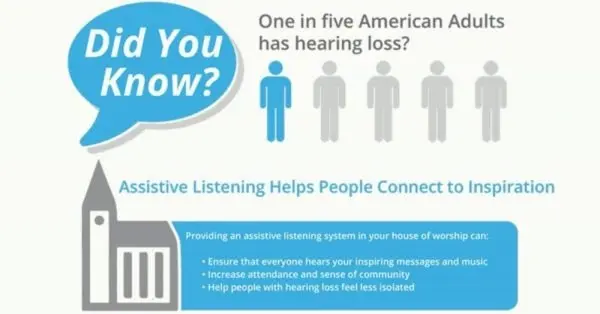
In the modern landscape of religious assembly, the primary mission of any house of worship is to foster a deeply connected, inclusive community where every individual can fully participate in spiritual services. Yet, for millions of congregants worldwide, physical architecture and acoustic limitations present invisible barriers to participation. Hearing loss remains one of the most prevalent yet frequently overlooked challenges within congregational life. When an aging demographic or individuals with congenital hearing impairments attend services only to struggle against reverberant sanctuaries, poor sound system design, and ambient noise, they experience spiritual isolation.
The implementation of an Assistive Listening System (ALS) bridges this critical gap, transforming traditional worship services into fully accessible environments. However, installing technology is merely the first step; successful integration requires a strategic, highly intentional approach that spans congregational assessment, budgetary planning, rigorous staff training, and proactive community outreach.
This report provides an authoritative, in-depth blueprint for faith-based organizations seeking to evaluate, procure, and deploy state-of-the-art assistive listening technology. Drawing upon industry standards, expert technological insights from providers like CCI Solutions and Listen Technologies, and best practices in accessibility management, this article outlines the definitive four-phase methodology to guarantee that no member of your congregation misses a single spoken word, prayer, or musical note.
Detailed Chronology: The Four-Step Implementation Framework
Successfully deploying an Assistive Listening System in a church, synagogue, mosque, or temple requires a methodical, step-by-step approach. Raging ahead with equipment purchases without proper preparation often results in underutilized assets and frustrated users. Below is the essential chronological roadmap designed to guide administrative boards, AV teams, and pastoral staff from initial concept to full operational success.
Phase 1: Understand Your Needs (Data-Driven Assessment)
The foundational step when considering an Assistive Listening System is to ensure that leadership fully understands the actual, ground-level needs of the congregation. Assumptions about who can and cannot hear during services are notoriously inaccurate. To establish an empirical baseline, leadership must initiate a comprehensive data-gathering process.
- Conducting the Congregational Survey: The most effective way to identify specific listening challenges is to distribute a targeted survey. This questionnaire should be made available in multiple formats—both physical printed copies inserted into worship bulletins and digital forms sent via email or church apps.
- Key Survey Inquiries: Respondents should be asked to detail their day-to-day listening experiences during standard services. Crucially, the survey must inquire whether attendees currently use hearing aids and, if so, whether those devices are equipped with telecoils (t-coils). Understanding the prevalence of t-coil technology dictates whether an induction loop system, an FM system, or an infrared system will provide the most seamless user experience.
- Analyzing Demographic Trends: Beyond direct surveys, leadership should review local demographic data regarding aging populations. In many communities, the fastest-growing demographic consists of senior citizens, a group with a statistically higher incidence of age-related hearing loss (presbycusis). Aligning facility capabilities with demographic projections ensures long-term relevance and stewardship.
Phase 2: Fully Understand Your Options (Financial and Technical Planning)
Once congregation-specific needs are mapped out, the next phase involves translating those requirements into concrete technical specifications and realistic financial budgets. Selecting the correct hardware requires balancing acoustic environment constraints, architectural limitations, and fiscal realities.
- Cost Estimation and Technical Consultation: Estimating the cost of assistive listening equipment can be daunting for non-technical staff. Organizations should leverage external expertise; partners such as CCI Solutions offer dedicated assistance in this area, providing free professional consultations explicitly tailored for expense and budgeting purposes. These consultations help leadership navigate the nuances between radio frequency (RF) systems, infrared (IR) emitters, and audio frequency induction loop systems (AFILS).
- Capital Allocation and Fundraising Strategies: Upgrading sanctuary acoustics or installing comprehensive assistive technologies represents a significant capital expenditure. Churches must look beyond general operating funds if budgets are tight. Dedicated fundraising campaigns centered around the theme of "Inclusion and Accessibility" often resonate deeply with congregations. Donors are frequently inspired to contribute when they realize their gifts directly enable elderly parents, deaf-blind members, or hearing-impaired children to engage fully in the life of the church.
Phase 3: Prepare for Success (Operational Training and Logistics)
The finest audio hardware in the world is bound to fail if the human element is neglected. It is vital to the operational success of a new Assistive Listening System that staff members, ushers, and audio-visual volunteers receive thorough, hands-on training regarding how to maintain, distribute, and troubleshoot the devices.
- Designating "Assisted Listening Ambassadors": Ministry staff and volunteer ushers should not merely hand out equipment; they should view themselves as specialized ambassadors of hospitality. When checking devices out to congregants, ushers must take the time to instruct users patiently on the specific functions, volume controls, and ear-piece fittings of the device.
- Optimizing Distribution Stations: The reception desk or welcome center where receivers are stored and charged must be organized for maximum efficiency. To prevent user error and reduce staff confusion during high-traffic Sunday mornings, facilities should keep a laminated copy of answers to frequently asked questions (FAQs) prominently displayed at the counter. Quick-reference troubleshooting guides ensure that minor technical glitches are resolved in seconds rather than disrupting the service.
Phase 4: Create Awareness (Marketing, Signage, and Community Outreach)
An installed system that remains a secret is of no use to anyone. Once the technology is operational, leadership must execute a strategic awareness campaign to ensure that both current congregants and the surrounding geographic community know the facility is fully accessible.
- Internal Signage and Multimedia Integration: Proper signage must be displayed prominently throughout the facility, using the universal international symbol for deafness and hard of hearing. Signs should clearly indicate that Assisted Listening Devices are available and direct visitors precisely where to find them. Furthermore, regular reminders should be printed in every weekly bulletin and incorporated into pre-service multi-media slide presentations.
- Hosting Live Demonstrations: To overcome initial technical hesitation among older adults who may be intimidated by new gadgets, churches should host a dedicated live training session or workshop. This allows congregants to familiarize themselves with the technology in a low-pressure environment before the formal service begins.
- External Community Marketing: Outreach should not stop at the existing membership roster. Many individuals with hearing impairments have dropped out of active church life simply because they could not understand the sermon. Actively advertising your accessible environment to the broader community—via local media, senior center partnerships, and targeted digital marketing—will draw visitors who are searching for an inclusive, welcoming spiritual home.
Supporting Context & Metrics: The Imperative of Acoustic Inclusion
To understand why investing time and capital into Assistive Listening Systems is paramount, one must examine the broader socio-medical context of hearing loss and its profound impact on human psychology and spiritual well-being.
The Scale of the Challenge
According to the World Health Organization (WHO) and public health agencies, disabling hearing loss affects hundreds of millions of people globally, a figure projected to rise significantly over the coming decades due to aging populations and exposure to recreational noise. In the United States alone, approximately one in eight people aged 12 years or older (13% of the population) exhibits hearing loss in both ears. Among adults aged 60 and older, the prevalence jumps dramatically, affecting nearly one in three individuals.
[General Population: 13%]
████████████░░░░░░░░░░░░░░░░░░░░░░░░░░░░

[Adults Aged 60+: ~33%]
████████████████████████████████████████████████████
In a typical house of worship seating several hundred or thousand people, a significant percentage of the congregation struggles to comprehend spoken dialogue, particularly in acoustically challenging spaces characterized by marble pillars, hard floors, and high vaulted ceilings—architectural hallmarks of traditional sacred spaces that generate heavy reverberation.
The Psychological Toll of Acoustic Isolation
When individuals with hearing impairments attend traditional worship services without technological assistance, they face a grueling cognitive load. Straining to lip-read or mentally filling in missing syllables leads rapidly to listening fatigue. Over time, this constant frustration drives many to stop attending services altogether.
The consequences extend far beyond missing a sermon. Research in audiology and gerontology consistently links unmanaged hearing loss to:

- Social withdrawal and isolation
- Anxiety and depression
- Cognitive decline and accelerated brain atrophy
By implementing an Assistive Listening System, a house of worship actively combats these destructive psychological trends. Providing crystal-clear audio directly to the ear restores social connection, empowers independent participation, and reaffirms the inherent dignity of every congregant.
Official Statements and Industry Insights
Industry leaders and pastoral advocates emphasize that accessibility is not merely a legal or compliance obligation (such as adherence to the Americans with Disabilities Act in applicable jurisdictions), but a core moral imperative of compassionate ministry.
Perspectives on Inclusive Ministry
Spiritual leaders who have integrated modern listening technologies into their campuses report a profound transformation in congregational culture. A spokesperson for Listen Technologies noted:
"Reaching out to those who feel disconnected from your community due to hearing loss is central to sharing the message of inclusion. Genuinely compassionate service involves being aware of and caring for the needs of everyone, especially those dealing with impairments. Make sure they are able to hear the beauty and emotion of the spoken word in your church by providing them with the equipment they need to stay connected."
This perspective reframes audio engineering from an artistic or performance-driven pursuit—focused solely on making the worship band sound pristine—to a ministry of hospitality and radical welcome. Sound reinforcement is ultimately about intelligible communication of the spoken word, ensuring that the elderly parishioner in the back row experiences the exact same emotional resonance and clarity as the sound technician at the mixing console.
Technical Recommendations from Audio Integrators
Engineering experts point out that modern systems have evolved far beyond the clunky, static-prone analog receivers of the past. Today’s options offer immense versatility:
- Wi-Fi Based Systems: Leveraging existing local wireless networks to stream ultra-low latency audio directly to personal smartphones and tablets via custom apps.
- Induction Loop Systems: Transmitting an electromagnetic field directly to hearing aids and cochlear implants equipped with t-coils, eliminating the need for users to wear external receivers or headphones.
- Advanced RF and IR Systems: Providing dedicated, highly reliable hardware receivers designed for rugged longevity and ease of sanitation between services.
Future Outlook: The Horizon of Accessible Worship
As audio technology continues to advance at a rapid pace, the future of accessible worship holds even greater promise for eliminating the barriers imposed by sensory impairments.
The Convergence of Artificial Intelligence and Audio
Looking ahead, the integration of Artificial Intelligence (AI) and machine learning into church AV ecosystems will redefine assistive listening. Real-time automated speech recognition (ASR) is already paving the way for live captioning screens integrated into sanctuary walls or streamed directly to personal mobile devices alongside direct audio feeds. For congregants with profound deafness, these hybrid systems combine tactile audio enhancement with visual text streams, offering a multi-sensory worship experience.
Mainstreaming Personal Device Integration
The future of hardware distribution is shifting away from centralized equipment checkouts toward "Bring Your Own Device" (BYOD) models. As more worshipers adopt Bluetooth Low Energy (BLE) audio standards and Auracast broadcast technologies, churches will be able to transmit pristine, multi-channel audio directly into congregants’ personal hearing aids, earbuds, or smartphones without requiring specialized venue-owned receivers. This seamless integration removes the psychological friction of having to request specialized equipment at a welcome desk, normalizing accessibility for all users.
Conclusion and Actionable Next Steps
Investing in an Assistive Listening System is an investment in the spiritual health, longevity, and vitality of a faith community. It declares unequivocally that every individual—regardless of physical capability—belongs.
For leadership teams ready to take the next step, comprehensive resources are readily available. Detailed information on choosing the right system, along with practical administrative tools such as sample congregation surveys, printable signage templates, and worship bulletin announcements, can be found in the Listen Technologies Church Assistive Listening Toolkit.
Assess your congregation’s needs today, consult with audio professionals to determine the optimal technical architecture, train your volunteer ambassadors, and open your doors wider than ever before. Let us know if you believe your worship facility could benefit from assistive listening, and take the first step toward a fully inclusive community.