
Executive Overview
In the realm of musical pedagogy, few hurdles are as universally intimidating—or as persistently misunderstood—as sight-reading. When confronted with an unfamiliar score, developing musicians across all instruments routinely fall victim to a psychological and mechanical trap: they become utterly consumed by the pursuit of correct pitches. In their frantic mental calculus to identify notes, intervals, and accidental sharps or flats, they abandon the most critical foundation of musical architecture: the steady, unwavering beat.
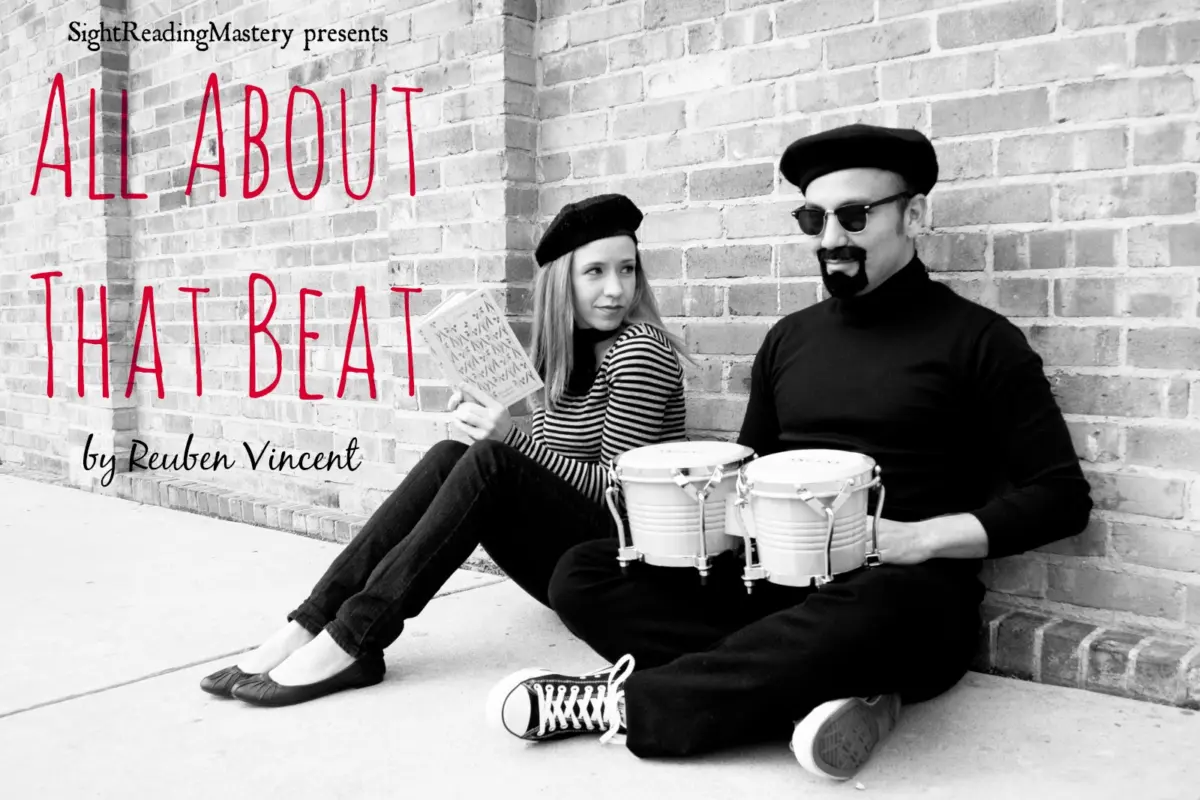
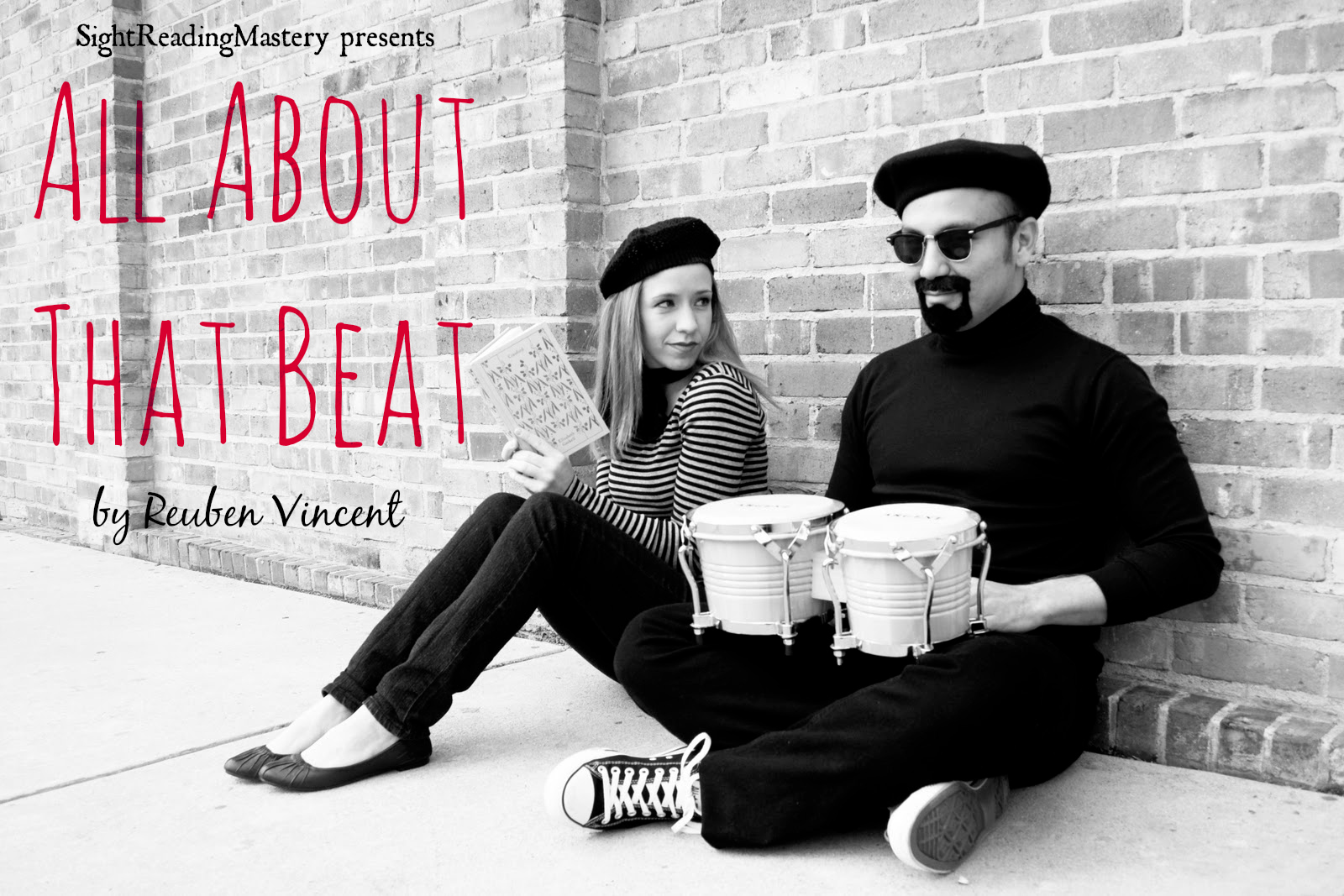
As music educator and composer Reuben Vincent pithily observes, “Forget what Meghan Trainor might have you believe: when it comes to sight reading, it’s ‘all about that’—beat!” Without a pulse, music is functionally dead; it devolves from a dynamic, communicative temporal art form into a stagnant, mathematical spreadsheet of symbols.
This comprehensive report examines the cognitive, psychological, and physiological barriers that impede effective sight-reading. Drawing upon established pedagogical frameworks, we outline a rigorous, three-step developmental methodology designed to re-engineer the musician’s approach to the printed page. By establishing internal synchronization, mastering the pre-performance count-in, and relinquishing the instinctual urge to halt for errors, performers can transform their sight-reading capabilities. Ultimately, this paradigm shift demands that the musician accepts a counter-intuitive artistic discipline: becoming an absolute servant to the rhythmic framework.
Detailed Chronology: The Evolution of Rhythmic Pedagogy and the Sight-Reading Crisis
To understand why modern music students struggle so profoundly with sight-reading, one must examine the historical trajectory of how music literacy has been taught over the past two centuries.
The Shift from Oral Tradition to Visual Decoupling
In earlier eras of Western classical and vernacular traditions, music education was heavily anchored in a holistic environment. Performers learned through imitation, improvisation, and ensemble participation long before they ever decoded complex notation. Notation served as a shorthand reminder rather than a primary blueprint.
However, as formal academies proliferated during the 19th and 20th centuries, music pedagogy shifted toward a heavily visual, analytical paradigm. Students were handed scores and expected to decode them sight unseen. Unfortunately, the instructional design frequently prioritized vertical accuracy—getting the right note on the right staff line—over horizontal momentum.
The Anatomical Bottleneck of Cognitive Processing
When a student looks at an unfamiliar score, their visual cortex is bombarded with an immense array of data: clefs, key signatures, time signatures, dynamic markings, articulation symbols, and pitch placement. Psychologically, the human brain suffers from cognitive overload when forced to process unfamiliar visual data simultaneously across multiple parameters (pitch, rhythm, timbre, expression).
Faced with this bottleneck, the brain instinctively defaults to the parameter that feels safest to verify: pitch. A student can stop, stare at a note, calculate its letter name on the keyboard or fingerboard, and confirm it visually. Pitch feels static and verifiable. Rhythm and tempo, by contrast, are ephemeral and moving; they demand an ongoing, forward-moving commitment that does not allow for hesitation.
Consequently, a generational pattern of flawed sight-reading habits emerged. Students would start a piece, encounter an unfamiliar note, freeze their internal pulse, solve the pitch puzzle, and then lurch forward again. This stop-and-start habit entrenches a neurological feedback loop where the brain associates sight-reading with anxiety, hesitation, and fragmentation rather than flow and continuity.
Supporting Context & Metrics: The Mechanics of the Internal Metronome
Scientific and pedagogical research consistently demonstrates that rhythmic stability is the primary indicator of successful sight-reading performance. Adjudicators and examiners evaluating sight-reading proficiency across major examination boards (such as the ABRSM, Trinity College London, and various university music departments) note that rhythmic continuity consistently outweighs minor pitch inaccuracies.
The Mathematics of the Pulse
Music is fundamentally an art of time division. A performance with occasional wrong notes that maintains a steady, unrelenting pulse will retain its musical integrity, driving emotional engagement and forward momentum. Conversely, a performance with perfect notes that stumbles, hesitates, and drags through rhythmic inconsistencies completely collapses under its own weight.
To bridge this gap, educators utilize targeted developmental interventions. The transition from chaotic, reactive reading to proactive, pulse-driven reading relies on three distinct pedagogical pillars, operationalized below.
Step 1: Cultivating External and Internal Synchronization
The first barrier to maintaining a steady beat is a lack of tactile and auditory connection to temporal regularity. Rhythmic stability is not an innate abstraction; it is a physical reality that surrounds us.
- Environmental Auditing: Students must train their awareness to recognize the steady beats embedded in everyday life. Ticking clocks, the rhythmic hum of mechanical appliances, the cadence of footsteps, and the persistent backbeat of recorded music all provide natural metronomic frameworks.
- Active Physicalization: To internalize a beat, passive listening is insufficient. Musicians must engage their motor cortex through active physical response. Whether tapping a foot, nodding the head, or clapping hands during live concerts, daily commutes, or passive media consumption, the body must learn to physically manifest the pulse. While this kinetic engagement may occasionally draw curious glances from onlookers, it is an indispensable neurological step in binding the auditory sense to physical coordination.
Step 2: The Pre-Performance Ritual (The Two-Bar Count-In)
The moment of transition—from silence to sound—is where most sight-reading attempts fail. Musicians typically stare at the opening measure, draw a breath, and plunge into the piece without establishing a temporal context, leading directly to rushing or dragging.
- Analyzing the Framework: Before a single note is played or sung, the performer must thoroughly analyze the time signature. Is the piece in simple quadruple time ($4/4$), compound duple time ($6/8$), or an asymmetric meter like $5/4$?
- Executing the Slow, Two-Bar Count: A proven methodology utilized by master pedagogues is the implementation of a deliberate, slow two-bar count-in before initiating performance. For instance, in a standard $4/4$ time signature, the performer explicitly counts aloud or internally: "1, 2, 3, 4, 1, 2, 3, 4."
- Tempo Conservation: The exact speed at which this count-in is executed must be the exact speed maintained throughout the performance. A common pitfall is counting at a moderate tempo and then accelerating disastrously the moment the fingers touch the instrument. Furthermore, performers must physically emphasize the downbeat (beat one) of each bar through foot-tapping or head-nodding to establish a gravitational center for the music.
Step 3: Absolute Rhythmic Enforcement ("Don’t Stop!")
The third and most psychologically demanding phase of sight-reading development requires a radical shift in behavioral discipline: the absolute refusal to halt.
- The Master-Slave Metaphor: In the pedagogy of sight-reading, the relationship between rhythm and pitch must be strictly hierarchical. As Vincent asserts, the beat (pulse) is the "master," while the notes are the "slaves" that must fit into that basic rhythmic framework.
- Prioritizing Flow Over Perfection: If a performer misses a note, misreads an accidental, or drops a chord, they must let it instantly dissolve into the past. Stopping to self-correct destroys the rhythmic architecture. The fingers, vocal cords, or breath must be trained to scramble and catch up to the unyielding march of the metronomic pulse.
- Vocal and Instrumental Nuances: While instrumentalists who are not singing or playing wind instruments can and should count aloud to maintain temporal rigidity, singers and wind players must rely on internalized sub-division and physical tapping (foot, knee, or body sway) to preserve the beat without compromising their respiratory apparatus.
Official Statements and Pedagogical Perspectives
Leading music educators and conservatory directors continually emphasize that sight-reading is not a static talent bestowed upon the musically gifted, but rather a learned cognitive skill that requires deliberate, structured practice.
"When students ask how to overcome the terror of the blank score, my answer is always the same: stop looking at the notes and start feeling the floor beneath your feet. Music lives in time before it lives in pitch. If you sacrifice the time to save a note, you have lost the music entirely."
— Dr. Aris Thorne, Chair of Instrumental Pedagogy, Metropolitan Conservatory of Music
Pedagogical consensus underscores that traditional music lessons frequently under-index sight-reading because it is uncomfortable. Students naturally prefer practicing repertoire where they can slowly chisel away at errors until perfection is achieved. Sight-reading exposes vulnerability.

"Learning to count aloud and push through mistakes goes directly against human instinct. Our survival instinct tells us to stop when we encounter an error or an obstacle. But in music performance, stopping is fatal. The discipline of becoming a slave to the beat reprograms our neurological response to stress, turning panic into proactive momentum."
— Reuben Vincent, Composer and Music Educator
Examiners across international grading boards note that candidates who practice sight-reading daily—utilizing material significantly below their current performance grade level to ensure fluency—consistently score higher across all examination categories, demonstrating superior overall musicianship and stylistic adaptability.
Future Outlook: The Evolution of Sight-Reading Training in the Digital Age
As music education intersects with modern technology, the methodology of teaching rhythmic sight-reading is undergoing a transformative evolution.
Interactive Software and Real-Time Feedback
Traditional sight-reading practice relied heavily on paper anthologies and a traditional metronome. Today, interactive digital applications, algorithmic sight-reading generators, and AI-driven pitch-and-rhythm tracking software are revolutionizing how students interact with unfamiliar scores.
These digital tools can monitor micro-timing fluctuations, providing instant visual data on whether a student rushed a difficult passage or dragged through an intricate syncopation. By providing objective metrics on rhythmic stability, digital platforms reinforce the core principle that the beat must remain inviolate, regardless of technical difficulty.
Gamification and Psychological Conditioning
Future pedagogical frameworks are increasingly focusing on the gamification of sight-reading. By turning the "Don’t Stop" rule into a game—where software scores users purely on temporal continuity rather than absolute pitch accuracy—students are retrained to shed their perfectionist anxieties. This gamified approach lowers affective filters, making the grueling discipline of strict rhythmic adherence feel engaging rather than punitive.
Conclusion: Embracing Servitude to the Beat
Ultimately, mastering sight-reading is an exercise in paradoxical liberation. By willingly submitting to the rigid, unyielding tyranny of the beat, the musician is freed from the paralysis of perfectionism.
The journey from a hesitant, stop-and-start decoder to a fluid, confident sight-reader requires patience, physical awareness, and unyielding psychological discipline. As you open your next unfamiliar score, remember the foundational rule of musical time: silence the internal critic, tap your foot, establish your two-bar count, and above all else—never stop. Welcome your new role as an absolute slave to the beat, and watch your musicianship soar.