
In the landscape of modern classical music journalism, few names carry the pioneering resonance of Chris Caspell. As he celebrates his 60th birthday, the classical music community finds itself reflecting not only on a major personal milestone for a dedicated patron of the arts, but also on the enduring legacy of Classical Source—the digital publication he co-founded more than thirty years ago.
Long before the digital sphere became the default medium for cultural commentary, Caspell had the foresight to recognize the internet’s potential to democratize and preserve music criticism. Operating independently, without institutional backing, corporate funding, or digital paywalls, Classical Source emerged during the late-1990s dot-com boom as a vital sanctuary for deep, uncompromised writing about classical music and dance.
As Managing Director, technical architect, and financial backbone, Caspell has spent three decades “at the wicket,” guiding the publication through shifting technological tides, economic uncertainties, and industry disruptions. From its inception as an ambitious independent e-zine to its status as a monumental digital archive of London’s concert life, Classical Source represents a masterclass in grassroots cultural preservation. Today, as colleagues, reviewers, and admirers rally to celebrate his diamond jubilee, Caspell’s contributions are recognized not merely as a technical achievement, but as an indispensable pillar of the global classical music community.
Detailed Chronology: The Genesis and Evolution of Classical Source
The Late-1990s Digital Frontier
The genesis of Classical Source dates back over thirty years, when Caspell and two fellow visionaries first conceived of a dedicated online platform for classical music. However, its official digital footprint expanded dramatically in 1999—an era Caspell memorably describes as "the height of the dot-com boom, the year Napster appeared, BlackBerrys were everywhere, and the internet felt full of possibility."
At the turn of the millennium, print journalism was entering a slow, painful contraction. Traditional newspapers and culture magazines were beginning to slash column inches, relegate arts reporting to the sidelines, and enforce strict word limits that favored brevity over insight. Into this void stepped a vanguard of independent digital publishers. Alongside Len Mullinger’s MusicWeb International (founded in 1995) and Basil Ramsey and Keith Bramich’s Music & Vision (1999), Classical Source spearheaded the UK’s online cultural commentary movement. Platforms like Bachtrack (2008) and The Arts Desk (2009) would follow years later, building upon the trail blazed by Caspell and his peers.
Challenging the Print Paradigm
Initially, digital publishing faced widespread skepticism. Industry insiders questioned whether computer screens could ever replace the tangible authority of print broadsheets, or if online platforms could command genuine respect. Caspell answered with an emphatic yes.
By removing traditional constraints on article length and allowing unlimited space for reviews of concerts and compact discs, Classical Source achieved something radical: it temporarily reversed the decades-long contraction of arts journalism. Reviewers were suddenly transported back to the golden era of post-war daily newspapers—a time when debutants at the Wigmore Hall received the same serious, thoughtful consideration as legendary maestros like Arthur Rubinstein or Herbert von Karajan at the Royal Festival Hall.
The platform quickly earned the enthusiastic backing of the classical music establishment. London’s major orchestras, concert venues, and the BBC Proms recognized the site as a vital organ for cultural promotion. Caspell gave both lay and professional writers a remarkably free hand, fostering an environment where diverse opinions and deeply considered analysis could flourish.
The Threat of Closure and the Spirit of Renewal
Despite its immense popularity—at its peak hosting up to three reviews daily and boasting 18,000 Twitter followers—Classical Source faced severe headwinds in recent years. By February of last year, news broke that the site was facing an apparent final curtain. Readership trends had shifted, and operational pressures mounted. Caspell candidly noted that publishing only a handful of monthly reviews was "not a fitting end to something that achieved so much, with so little, for so long."
The announcement sent shockwaves through the classical music community. Reviewers, loyal readers, and long-standing contributors universally agreed that allowing such a monumental repository of contemporary music criticism to vanish would be an unacceptable cultural loss. Fortunately, the story did not end in silence. By April, collaborative preservation efforts and plans for a strategic relaunch breathed new life into the platform, ensuring that its rich archival legacy and future operations would be safeguarded.
Supporting Context & Metrics: The Anatomy of a Cultural Archive
To understand the true magnitude of Classical Source, one must examine the metrics and the human infrastructure that sustained it over the decades.
At its zenith, the site was an engine of prolific output. In March 2017, analytics revealed 59,492 page views, with an impressive 46.3% returning visitor rate—a testament to the high-value, sticky nature of its content. Beyond the raw numbers, the site functioned as an irreplaceable historical document. For decades, it meticulously chronicled the micro-climates of London concert life, capturing performances, debuts, and repertoire shifts that would otherwise have vanished into the ether of unrecorded memory.
Yet, Classical Source was more than a digital database; it was a deeply human enterprise built on camaraderie and mentorship. The editorial steering of seasoned practitioner Colin Anderson—who later launched Colin’s Column in 2020—brought a non-invasive, supportive leadership style that empowered writers. This collaborative spirit weathered profound losses, notably the passing in 2023 of Kevin Rogers, a chemistry teacher at the City of London School for Boys who had served as the site’s media-savvy Deputy Editor since 2007.
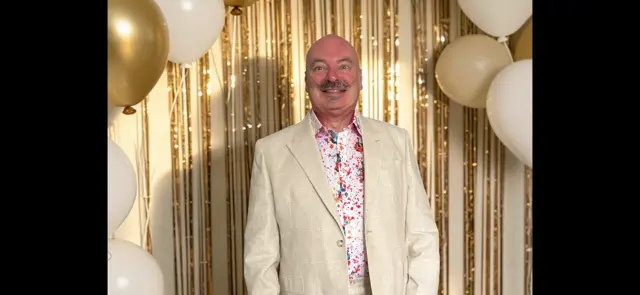
Chris Caspell’s role in this ecosystem has always been uniquely multifaceted. Although not a career music professional by trade, Caspell’s personal life has long been deeply entwined with the arts. A skilled viola player, conductor, entrepreneur, and church choir singer—not to mention an accomplished tango dancer distinguished by his signature, unmissable mustache—Caspell approached arts administration with the passion of a devoted practitioner. During periods of personal crisis for his colleagues, such as during and following the COVID-19 pandemic, Caspell’s compassionate, hands-on support proved to be the glue holding the editorial collective together.
Official Statements: Tributes from the Classical Community
On the occasion of his 60th birthday, colleagues, critics, and collaborators shared their admiration for Caspell’s tireless dedication and enduring vision:
Rob Pennock:
“Congratulations to Chris on his 60th birthday. His personal and financial support of Classical Source has ensured that it has made a substantial contribution to the world of classical music and dance. I look forward to working with him over the coming years as the site develops and further improves the service it offers to the world’s classical music community.”David Rice:
“Chris, I send my warmest wishes to you on your sixtieth birthday. Your tireless efforts to maintain and sustain The Classical Source over the years are deeply appreciated, as is the guidance you have provided to me on numerous occasions. Happy Birthday!”David Gutman:
“Wishing you a fabulous significant birthday. We may be living through an age of uncertainty in so many ways, but now is not the time to underestimate the achievements, nor the joy and support you have given to others over the years. Take care and all the very best.”Lisa Stone-Ford:
“Happy Birthday! Wishing you a truly wonderful day and every happiness in the year ahead. Your passion and commitment to sharing classical music with so many people is inspiring, and I hope this year brings you continued success, good health, and many reasons to celebrate. Have a fantastic birthday!”Curtis Rogers:
“Very best wishes on your milestone, and for taking Classical Source through to its next phase.”Nick Breckenfield:
“Happy 60th Chris! I can well remember meeting you with Colin at the launch, and look back in amazement at the coverage Classical Source has amassed. What an archive of particularly London concert life. Thank you for your enthusiasm and your commitment. Long may it continue!”Atëş Orga:
“Critics lead many lives. Chris isn’t a music professional, but a committed influencer in Britain’s musical arena post-9/11, someone with an intense passion for his muse. Concerts and recordings, whatever their shade or genre, are his for the hunting and cherishing. Pragmatic and focused, may he remain a guiding star. Happy Sixtieth Chris.”
Future Outlook: Preserving a Legacy for Generations to Come
As Chris Caspell steps into his sixth decade, the immediate focus for Classical Source is stabilization, modernization, and preservation. The existential threat faced early last year acted as a vital wake-up call, galvanizing the platform’s writers, technical supporters, and loyal readership to rally around its preservation.
The primary challenge ahead lies in migrating decades of invaluable reviews, interviews, and cultural commentary into a secure, future-proof digital framework. In an age dominated by fleeting social media reactions and automated content aggregators, the deep-dive, contemplative criticism championed by Caspell is more endangered—and more essential—than ever before.
With plans underway to transition Classical Source into its next evolutionary phase, Caspell remains firmly at the helm as Managing Director and technical guardian. His pragmatism, entrepreneurial spirit, and lifelong love affair with music ensure that the platform will continue to serve as a beacon for independent arts journalism.
As Astor Piazzolla famously wrote—and as those who live and breathe classical music know intimately—"Once you marry music, she is your forever lasting love." For thirty years, Chris Caspell has honored that eternal marriage through his unwavering stewardship of Classical Source. As he marks his diamond birthday, the classical music world offers a unified chorus of gratitude: Happy 60th Birthday, Chris, and long may you remain at the wicket.