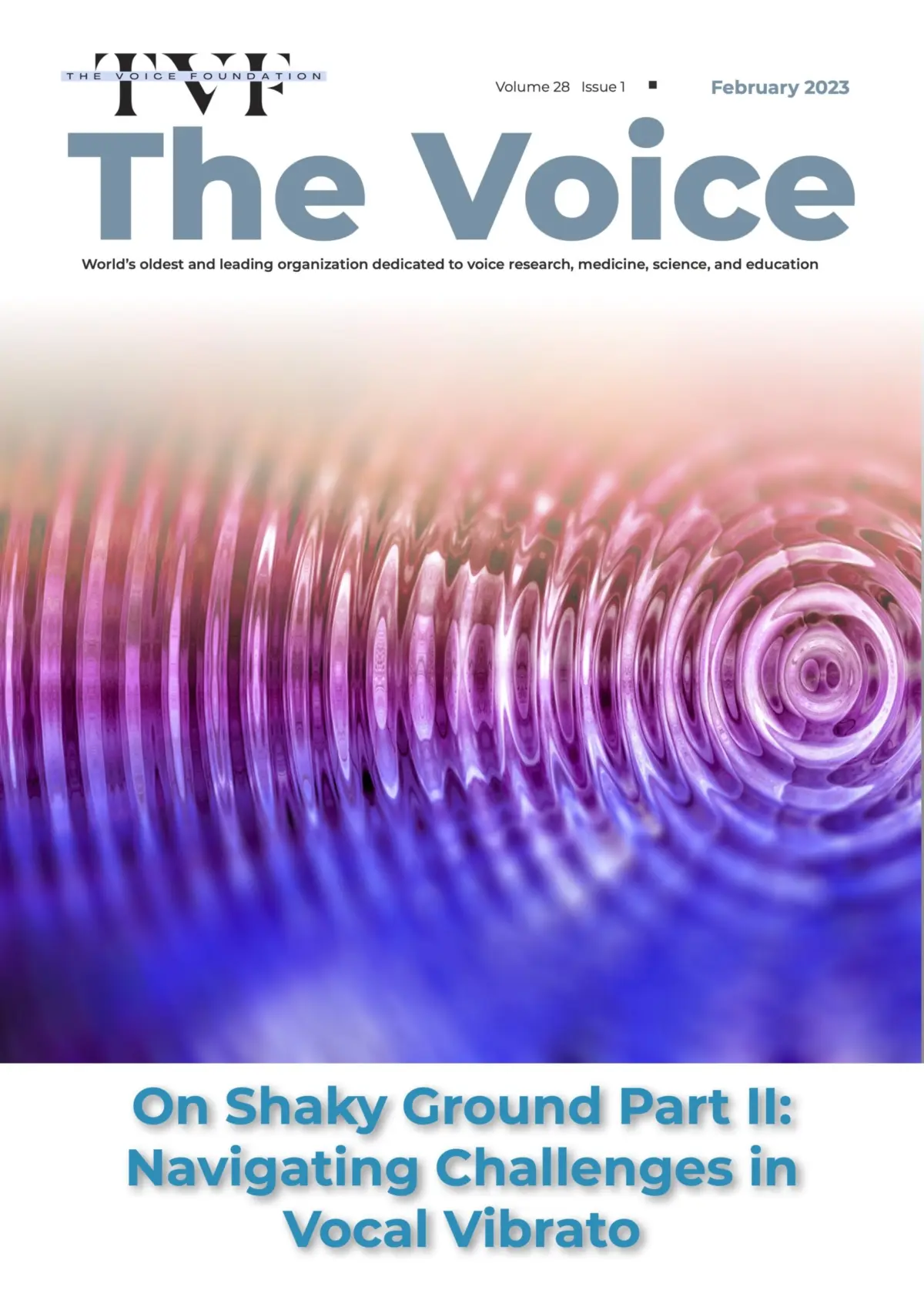

PHILADELPHIA, PA — In the ever-evolving landscape of vocal pedagogy, scientific research, and clinical otolaryngology, few publications hold the definitive weight of The Voice Foundation’s official periodical. On February 24, 2023, the organization officially published its eagerly awaited February 2023 Newsletter, authored and curated under the guidance of Ian DeNolfo.
At the center of this publication lies a deep, multidisciplinary exploration into one of the most enigmatic phenomena in human vocalization: vibrato. Entitled "On Shaky Ground Part II," this edition builds upon foundational discussions regarding vocal stability, oscillations, and physiological control. By weaving together empirical research, pedagogical methodologies, and clinical treatment perspectives, this issue serves as a critical bridge between laboratory science and applied vocal arts.
Executive Overview
The human voice is arguably our most complex biological instrument, requiring the instantaneous coordination of pulmonary pressure, laryngeal adjustments, and resonance shaping. Within this intricate system, vibrato—the periodic pulsation of pitch, intensity, or timbre—has long fascinated scientists, vocal coaches, and medical professionals alike. While celebrated by audiences as an expression of beauty and emotional depth, vibrato remains a subject of intense scientific inquiry regarding its neurological genesis, muscular execution, and clinical management when pathologies arise.
The February 2023 Newsletter of The Voice Foundation tackles these complexities head-on. "On Shaky Ground Part II" dives into the physiological mechanics and aesthetic applications of vibrato, examining how slight variations in laryngeal muscle tension can spell the difference between a resonant, healthy tone and vocal instability. By uniting perspectives from vocal pedagogy, speech-language pathology, and voice science, the publication provides professionals with an exhaustive manual for understanding how vibrato is taught, researched, and therapeutically treated.
Detailed Chronology: The Evolution of Vocal Vibrato Research
To fully appreciate the significance of the February 2023 release, it is essential to trace the historical and methodological trajectory that led to "On Shaky Ground Part II." For decades, the study of vibrato was largely subjective, dictated by the empirical observations of master singing teachers rather than objective data. However, the advent of advanced acoustic analysis, electromyography (EMG), and high-speed digital laryngeal imaging transformed the field.
Phase 1: Early Acoustic Observations (Mid-to-Late 20th Century)
In the early days of voice science, researchers sought to quantify vibrato by measuring its rate and extent. Seminal studies established that a healthy operatic vibrato typically oscillates at a rate of roughly 5 to 7 cycles per second (Hz), with a pitch fluctuation of approximately a quarter to a half-step. However, these early studies largely
observed the output of the voice without fully capturing the underlying neurological and muscular drivers.

Phase 2: The Interdisciplinary Shift (Late 20th to Early 21st Century)
As voice clinics emerged within major medical centers, otolaryngologists, voice scientists, and singing teachers began to collaborate more closely. Pathologies such as "tremolo" (an excessively fast or erratic vibrato) and "straight tone" or "wobble" (a slow, uncoordinated oscillation) were no longer viewed merely as bad habits, but as neurological or biomechanical phenomena requiring specialized clinical intervention.
Phase 3: "On Shaky Ground" and the Modern Synthesis (2023)
The release of "On Shaky Ground Part II" in February 2023 represents a maturation of this interdisciplinary dialogue. Rather than treating voice research, teaching, and medical treatment as isolated silos, the February 2023 newsletter synthesized these viewpoints into a unified framework. It addressed the exact moment where artistic expression intersects with muscular physiology—questioning how teachers can cultivate healthy vibrato without inducing strain, and how clinicians can rehabilitate voices when that delicate vibrato mechanism breaks down.
Supporting Context & Metrics: The Anatomy of Oscillation
Understanding the weight of the February 2023 publication requires looking at the quantitative and physiological frameworks that govern vocal oscillation.
The Mechanics of the Laryngeal Mechanism
Vibrato is fundamentally driven by periodic fluctuations in the intrinsic laryngeal muscles—most notably the cricothyroid and thyroarytenoid muscles—modulated by subglottic pressure and vocal tract resonances. When these systems operate in harmony, the result is a rich, dynamic oscillation.
| Dimension of Analysis | Focus Area | Key Observations & Metrics |
|---|---|---|
| Research Perspective | Acoustic & Neurological | Average healthy vibrato rate: 5.5 to 6.5 Hz; pitch fluctuation extent: $pm$ 50 to 100 cents. Investigates central nervous system oscillator models. |
| Teaching Perspective | Pedagogical & Functional | Focuses on breath management, release of excessive extrinsic tension, and dynamic neuromuscular coordination across diverse musical genres. |
| Treatment Perspective | Clinical & Pathological | Addresses voice disorders characterized by laryngeal dystonia, performance anxiety tremors, and muscular tension dysphonia (MTD). |
The Interplay Between Art and Science
In "On Shaky Ground Part II," the contributors emphasize that vibrato is not a static state, but a dynamic equilibrium. Singers often face "shaky ground" when striving for artistic expression under high-stress performance conditions. Increased sympathetic nervous system activation can lead to excessive laryngeal constriction, destabilizing the natural vibrato rate and resulting in an unwanted tremor or a forced straight tone. By exploring these metrics, the February 2023 newsletter provided both educators and voice therapists with the diagnostic language needed to identify whether a singer’s instability stems from faulty pedagogy, psychological pressure, or underlying medical pathology.
Official Statements and Editorial Insights
While Ian DeNolfo spearheaded the publication logistics for the February 2023 edition, the broader community of contributors and institutional leaders at The Voice Foundation continue to champion the necessity of cross-disciplinary dialogue in vocal health.
Although explicit individual quotes from the February 24 release remain integrated within the overarching educational documents of the Foundation, the institutional philosophy underpinning the newsletter is clear: Vocal excellence is inseparable from scientific literacy.
Historically, voice teachers and medical doctors operated in parallel universes—singers rarely consulted ENTs unless facing catastrophic voice loss, and doctors rarely understood the nuances of vocal registration or pedagogical terminology. Publications like the February 2023 Newsletter actively tear down these barriers. By presenting research, teaching strategies, and clinical treatments side-by-side, The Voice Foundation empowers stakeholders to speak a common language.
Furthermore, the choice of the title "On Shaky Ground" carries a powerful double meaning. On one hand, it addresses the literal acoustic and physiological instability of compromised vibrato; on the other, it metaphorically challenges traditional, dogmatic approaches to voice training that refuse to adapt to modern scientific discoveries.
Future Outlook: The Next Frontier in Voice Science and Pedagogy
As we look beyond the insights published in the February 2023 Newsletter, the implications for the future of vocal health, research, and education are profound. "On Shaky Ground Part II" is not merely an archival read, but a stepping stone toward several emerging trends in the vocal arts:
1. Integration of Artificial Intelligence and Acoustic Modeling
Researchers are increasingly utilizing machine learning algorithms to analyze vocal oscillations in real-time. By mapping the micro-fluctuations of professional singers against normative data published in forums like The Voice Foundation’s newsletter, future pedagogical tools could provide instant visual feedback to students struggling with vibrato regulation.
2. Tailored Clinical Interventions for Performing Artists
The convergence of voice science and laryngology means that treatments for vocal tremors and stability issues are becoming vastly more sophisticated. Rather than prescribing a one-size-fits-all approach to vocal rest or surgical intervention, modern laryngologists—informed by comprehensive research models—can collaborate with specialized speech-language pathologists and singing voice specialists (SVS) to rehabilitate the professional voice safely.
3. Broadening Pedagogical Standards
As educational resources like the February 2023 Newsletter become more widely accessible to universities, conservatories, and private studios, the pedagogical community is experiencing a shift toward evidence-based teaching. The old adage of "just sing it naturally" is being replaced by an anatomically informed understanding of breath, support, and laryngeal posture.
Conclusion
The Voice Foundation’s February 2023 Newsletter, featuring "On Shaky Ground Part II," stands as a milestone publication in the ongoing quest to understand, teach, and heal the human voice. By bridging the gap between empirical laboratory science, practical studio pedagogy, and advanced clinical treatment, the publication ensures that artists, researchers, and physicians remain united in their dedication to vocal health and excellence. As the field continues to advance, foundational texts such as this will continue to guide the next generation of vocal scientists and performers onto firmer, more scientifically validated ground.