
Executive Overview
By the close of the turbulent, paradigm-shifting 1970s, the contemporary jazz landscape had entrenched deep ideological battle lines. At the center of this critical crossfire stood ECM Records (Edition of Contemporary Music), the Munich-based imprint founded and steered by producer Manfred Eicher. To detractors—often traditionalists or hard-bop purists—the label’s output was easily, and lazily, dismissed through a reductive lens. Critics frequently hurled pejoratives such as "pastel prettiness," "chamber jazz," or "sterile European cool," projecting a blanket homogeneity onto a catalog they had frequently neglected to fully audit.
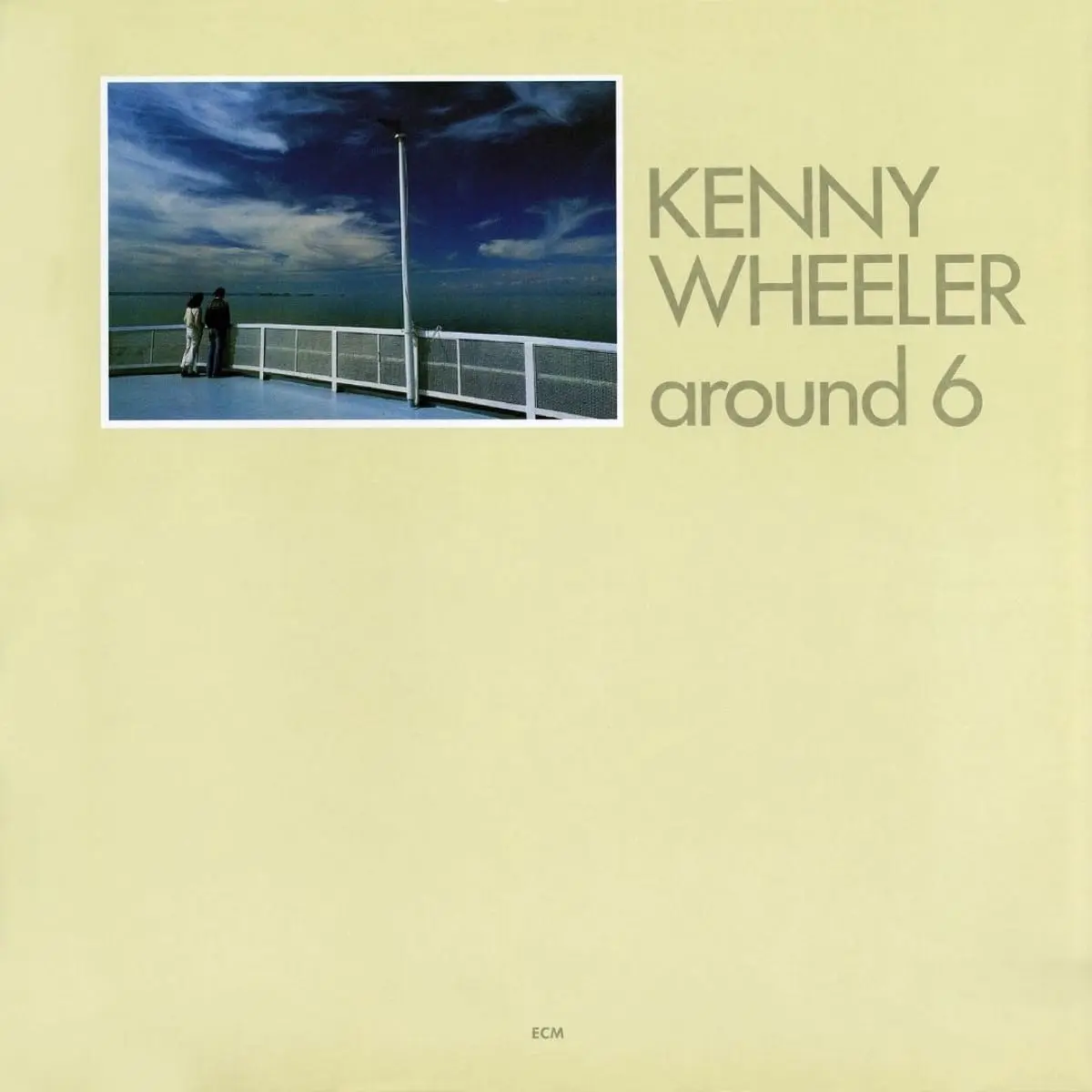
Yet, a rigorous examination of the label’s master tapes from that exact era reveals a profound subversion of those lazy tropes. A primary artifact of this vibrant, searching counter-narrative is Around 6, an exceptional album led by the revered Canadian-born, UK-based trumpeter and composer Kenny Wheeler. Recorded in Ludwigsburg, Germany, in August 1979 and released under the catalog number ECM 1156, Around 6 stands as a definitive rebuke of the "pastel" myth.
This comprehensive reassessment unpacks the historical, stylistic, and technical dimensions of Wheeler’s landmark recording. Far from a delicate, ambient soundscape, Around 6 captures an ensemble operating at the vanguard of creative improvised music. It seamlessly bridges the structural rigor of modern composition with the fiery, combustible energies of free jazz, rock-infused propulsion, and expansive spatial dynamics. Through an in-depth analysis of its tracklist, personnel, and production ethos, this article explores how Wheeler and his all-star transatlantic ensemble dismantled critical preconceptions and redefined the expressive boundaries of European jazz.
Detailed Chronology: The Genesis and Recording of Around 6
The ECM Landscape in 1979
To understand the significance of Around 6, one must first contextualize the state of Manfred Eicher’s label in 1979. Over the preceding decade, ECM had cultivated a distinct sonic signature defined by pristine acoustic separation, luminous reverb, and an understated, atmospheric gravitas. Landmark releases by Keith Jarrett (The Koln Concert), Pat Metheny (Bright Size Life), and Jan Garbarek had established a commercial and aesthetic template.
However, Eicher was never merely a curator of quiet reflection; he was an active collaborator in sonic exploration. The late 1970s marked a period where ECM increasingly served as a crucial bridge between American jazz luminaries and Europe’s rapidly maturing avant-garde. Kenny Wheeler, having established himself as a compositional heavyweight through his work with John Dankworth, Mike Gibbs, and the Globe Unity Orchestra, was uniquely positioned to bridge these worlds. His 1975 ECM debut as a leader, Gnu High, had already signaled his distinct voice; Around 6 (1979) represented a natural, yet bolder, evolution in scope, texture, and emotional intensity.
The Ludwigsburg Sessions (August 1979)
In August 1979, Wheeler convened a remarkable assembly of improvisers at Bauer Studios in Ludwigsburg, Germany—a location synonymous with the pristine engineering standards of the ECM catalog. The ensemble—consisting of Wheeler on trumpet and flugelhorn, Evan Parker on soprano and tenor saxophones, Eje Thelin on trombone, Tom van der Geld on vibraphone, Jean-François Jenny-Clark on double bass, and Edward Vesala on drums—was a masterclass in contrasting musical personalities.
Rather than writing passive, accommodating charts, Wheeler drafted a suite of compositions (Mai We Go Round, Solo One, May Ride, Follow Down, Riverrun, and Lost Woltz) designed to push these distinct instrumental voices to their absolute limits. The recording process, overseen by Eicher’s meticulous ear, prioritized dynamic contrast over sonic comfort, resulting in a session that was persistently restless, intellectually stimulating, and fiercely physical.
Musical Analysis: Track by Track through the "Pastel-Free" Zone
+-------------------------------------------------------------------------+
                    AROUND 6: TRACKLIST & RUNNING ORDER
+-------------------------------------------------------------------------+
  1. Mai We Go Round
  2. Solo One (Wheeler Solo)
  3. May Ride
  4. Follow Down
  5. Riverrun
  6. Lost Woltz
  Total Duration: 46:20 | Recorded: Ludwigsburg, August 1979
+-------------------------------------------------------------------------+
Solo and Spatial Command
The album’s engagement with space is immediately apparent in the tracks highlighting Wheeler’s unaccompanied playing, notably Solo One. Here, Wheeler showcases a majestic command of acoustic architecture. Far from the ambient noodling feared by critics, his phrasing on flugelhorn is geometrically precise, utilizing silence not as an empty void, but as an active, breathing component of the harmonic framework. The trumpet tone is simultaneously melancholic and steely, projecting a profound emotional vulnerability anchored by ironclad intonation.
Mai and the Rock-Infused Pulse
Moving away from any notions of fragile chamber etiquette, Mai We Go Round introduces a visceral, rockish pulse that serves as the rhythmic engine for the track’s intricate thematic development. The rhythm section—anchored by Jenny-Clark’s formidable upright bass and Vesala’s multifaceted percussion—drives the ensemble forward with an urgency more commonly associated with progressive rock or electric jazz fusion, albeit executed with entirely acoustic instrumentation.
Within this driving matrix, saxophonist Evan Parker unleashes a torrent of textural invention. Parker, universally renowned for his pioneering work in extended techniques, contributes breathtaking soprano multiphonics that slice through the dense ensemble textures like razor-blades.
Down: Dynamic Variance and Horn Mastery
The dynamically varied Down (listed on the discography as Follow Down) further upends the "prettiness" stereotype. Here, Parker transitions to his tenor saxophone for an outing of staggering intensity. His phrasing bypasses conventional post-bop idioms, instead exploring the raw physics of air and metal. The interplay between Parker’s torrential tenor outbursts and Wheeler’s soaring, plaintive brass lines creates a volatile dialogue, continually shifting the emotional center of gravity from aggressive catharsis to introspective suspension.
Ride and the Architecture of Texture
On May Ride, Wheeler demonstrates his genius for gradual structural development. The piece begins with sparse, pointillist gestures that systematically thicken in texture, building a cumulative emotional weight. This gradual density precipitates a brilliantly balanced solo outing for Swedish trombonist Eje Thelin. Thelin navigates Wheeler’s labyrinthine changes with a warm
, flexible tone and advanced harmonic thinking, proving that the European avant-garde of the era could marry uncompromising abstraction with deeply felt lyricism.
Riverrun: Bounce, High Spirits, and Rhythmic Fluidity
Providing a crucial counterweight to the album’s more intense and labyrinthine moments, Riverrun bursts forth with sheer bounce and high spirits. American-born vibraphonist Tom van der Geld sets a gorgeous, rolling opening mood, his mallets cascading across the instrument with crystalline clarity. The track benefits immensely from the nimble rhythmic foundation laid by Jenny-Clark and Vesala.
J.F. Jenny-Clark—whose legendary agility and woody, resonant bass tone made him a cornerstone of European improvised music—interlocks seamlessly with Vesala. While Vesala offers some cracking, highly textured percussion moments, his performance here occasionally walks a fascinating tightrope. To some critical ears, Vesala’s phrasing occasionally hovers in an ambiguous space between swing idioms and free-form abstraction. Yet, this very tension—this unwillingness to settle comfortably into a single genre box—exemplifies the exploratory spirit that defined the best of ECM’s late-70s output.
Supporting Context & Metrics: Re-Evaluating ECM’s 1979 Output
To fully grasp the weight of Around 6, it is instructive to look at the broader metrics and historical context of ECM Records during the twilight of the 1970s.
Production and Engineering Metrics
- Acoustic Environment: Recorded at Bauer Studios, Ludwigsburg, utilizing state-of-the-art analog recording chains.
- Dynamic Range: Unlike the heavily compressed, loudness-wars-era masters of contemporary pop and modern jazz, Around 6 preserves a massive dynamic range—transitioning seamlessly from whispered flugelhorn solos to full-ensemble crescendos without artificial limiting.
- Cross-Cultural Personnel: The sextet united musicians from four distinct nations (Canada, the UK, Sweden, Germany/US, and Finland), illustrating ECM’s role as an early incubator for borderless European-American creative exchange.
Comparative Release Context (1979)
| Album Title | Artist | Primary Aesthetic | Counter-Narrative to "Pastel Prettiness" |
|---|---|---|---|
| Around 6 | Kenny Wheeler | Advanced post-bop / Avant-garde | Rockish pulses, multiphonics, high-energy drive |
| Sons of the Sounds | Globe Unity Orchestra | Free jazz / Large ensemble | Chaotic, uncompromising collective improvisation |
| Facing You (Catalog anchor) | Keith Jarrett | Solo piano introspection | Highly emotional, blues-infused percussive intensity |
| Event Horizon | Terje Rypdal | Electric jazz-rock / Ambient | Overdriven guitars, heavy atmospheric distortion |
These metrics demonstrate that Eicher’s label was operating as a multi-faceted ecosystem where chamber jazz was merely one color on a vast, volatile palette. Wheeler’s Around 6 sat comfortably alongside freer, more aggressive projects, utilizing ECM’s signature acoustic clarity not to sanitize the music, but to illuminate its complex inner workings.
Official Statements and Critical Reception
The Critical Paradigm Shift
Historically, retrospective reviews of Around 6 have pointed out the lazy critical consensus that plagued Manfred Eicher’s enterprise in its first decade. Musicologists and jazz historians note that critics often confused transparency of production with lack of passion.
In a retrospective assessment of the album, jazz critic Brian Morton observed:
"By the end of the seventies, critics of ECM were pretty sure what to expect of the music produced by Manfred Eicher… One wonders what such critics would have made of the range of music evident in these typically intelligent—and passionate—Wheeler pieces, here reissued: of the majestic command of space in Solo or the rockish pulse in the development of Mai…"
This sentiment underscores a vital critical correction. The perceived "coolness" of an ECM recording was purely a byproduct of acoustic separation and spatial resonance, not an indicator of emotional detachment. Wheeler’s writing on Around 6 is fiercely intellectual yet blood-red with human feeling, demanding active, engaged listening rather than passive background appreciation.
Artist Intent and Ensemble Dynamics
While formal archival statements from the 1979 sessions are sparse—reflecting Eicher and Wheeler’s shared preference for letting the music speak for itself—subsequent interviews with participants like Evan Parker and Tom van der Geld confirm the high-stakes nature of these sessions. Wheeler’s scores were notoriously demanding, requiring improvisers to navigate complex, shifting meters while maintaining absolute tonal flexibility.
The resulting music was an exercise in collective trust. The interplay between Parker’s uncompromising free-jazz vocabulary and Wheeler’s lyrical, post-bop sensibilities created a dialectic that pushed every player past their comfort zones.
Future Outlook: The Enduring Legacy of Around 6
More than four decades after its initial release in August 1979, Around 6 remains a masterclass in modern compositional jazz and an essential touchstone for contemporary improvisers. As the boundaries between genres continue to dissolve in the 21st century, the radical hybridity of Wheeler’s writing feels increasingly prophetic.
Lessons for Contemporary Improvised Music
- The Integration of Form and Freedom: Around 6 proves that rigorous compositional architecture does not stifle free improvisation; rather, it provides a meaningful canvas against which spontaneous invention gains dramatic weight.
- Dynamic Integrity: In an era where modern streaming formats often encourage hyper-compressed, uniform volume levels, Wheeler’s work with Eicher stands as a timeless reminder of the expressive power of dynamic contrast—where silence and volume are weighted with equal importance.
- Transatlantic Synergy: The album anticipates the modern borderless jazz community, demonstrating the rich fruits of combining the harmonic sophistication of the British jazz scene with the avant-garde fearlessness of continental Europe.
Conclusion
Ultimately, Around 6 delivers a decisive verdict on the lazy caricatures once leveled against ECM Records. It is a session completely devoid of pastel timbres, offering instead a vibrant, richly textured, and emotionally volatile exploration of sound. Kenny Wheeler’s genius—supported by an extraordinary cast of avant-garde masters—ensures that Around 6 will continue to challenge, reward, and astonish listeners for generations to come.