
Executive Overview
In the high-stakes, hyper-competitive landscape of the contemporary music industry, the journey from an undiscovered singer-songwriter to a polished, stage-ready recording artist is fraught with peril. For many, physical ailments, vocal injuries, and the psychological toll of performance anxiety spell the abrupt end of a promising career before it ever truly begins. Yet, every so often, a narrative emerges that transcends the standard tropes of struggle and survival, offering a profound testament to the power of human resilience, mentorship, and revolutionary pedagogical techniques.
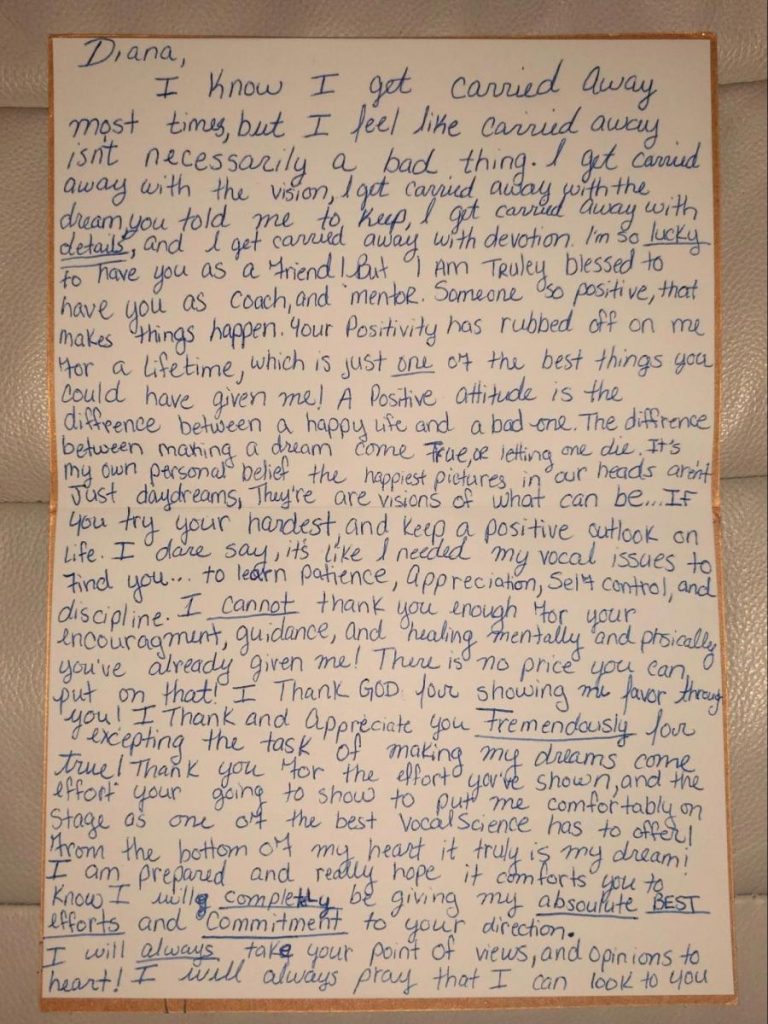
This is the story of Aubrie—an up-and-coming American singer-songwriter, a survivor of MTD (Muscle Tension Dysphonia), and a dedicated student whose recent deeply personal, handwritten testimonial has cast a bright spotlight on the transformative world of Vocal Science.
At its core, this report examines the intersection of vocal trauma and revolutionary recovery. Through a detailed exploration of Aubrie’s heartfelt letter to her mentor, Diana—the visionary force behind Vocal Science—we unpack the arduous physical and mental journey required to reclaim a stolen voice. More than just a standard teacher-student dynamic, Aubrie’s account reveals a profound bond forged in the crucible of adversity, navigating everything from debilitating vocal issues to global logistical hurdles like pandemic-era border restrictions.
This article provides an investigative and authoritative look into:
- The physiological and psychological devastation of MTD for a developing artist.
- The philosophy and methodology of Vocal Science as a holistic mechanism for healing.
- The emotional architecture of mentorship, loyalty, and artistic partnership.
- The strategic roadmap from recovery to legendary status in the modern musical arena.
Detailed Chronology: From Vocal Crisis to Artistic Awakening
To truly understand the magnitude of Aubrie’s journey, one must examine the timeline of events that led her to the doors of Vocal Science—a specialized, non-traditional approach to vocal mechanics and mental conditioning founded by Diana.
The Descent: The Onset of MTD and Creative Paralysis
For any vocalist, the human instrument is deeply intertwined with personal identity. When that instrument begins to fail, the psychological fallout can be catastrophic. For Aubrie, the emergence of vocal issues threatened to derail her dreams entirely. While the exact onset of her condition varied in presentation, it culminated in Muscle Tension Dysphonia (MTD)—a disorder characterized by excessive or abnormal throat muscle tension during speech or singing.
For an up-and-coming singer-songwriter relying on dynamic performances to capture audiences, MTD is a nightmare scenario. It introduces breathlessness, vocal fatigue, pitch instability, and sharp physical pain. In her letter, Aubrie reflects on this dark period with stark honesty, noting that it felt as though she "needed [her] vocal issues to find [Diana]."
Prior to this intervention, Aubrie was trapped in a cycle of frustration, second-guessing, and physical deterioration. The mental health toll of losing one’s primary mode of expression cannot be overstated; anxiety compounds tension, and tension worsens vocal damage, creating a vicious feedback loop that has prematurely ended countless artistic careers.
The Turning Point: Encountering Diana and Vocal Science
Enter Diana and the world of Vocal Science. Unlike traditional vocal coaching, which often focuses solely on aesthetic delivery or superficial range extension, Vocal Science approaches the voice as a holistic ecosystem. It demands a recalibration of mind, body, and spirit.
When Aubrie began working with Diana, the transformation was not merely technical; it was deeply therapeutic. As Aubrie articulates in her correspondence, Diana acted as coach, mentor, and healer, addressing both the physical mechanics of sound production and the psychological blockages holding her back.
Through structured guidance, Aubrie began to unlearn destructive habits born out of years of overcompensation. She learned the foundational pillars of sustainable vocal health:
- Patience: Understanding that true physiological healing cannot be rushed.
- Appreciation: Developing a mindful relationship with her instrument, treating it with respect rather than frustration.
- Self-Control: Mastering the micro-movements of breath and muscle support.
- Discipline: Committing daily to rigorous, scientifically backed vocal exercises that dismantle tension at its root.
Navigating External Pressures: Pandemics and Borders
As if recovering from MTD were not challenge enough, Aubrie’s developmental timeline collided head-on with unprecedented global disruptions. The COVID-19 pandemic introduced insurmountable logistical barriers, particularly international border closures that separated artists from their mentors.
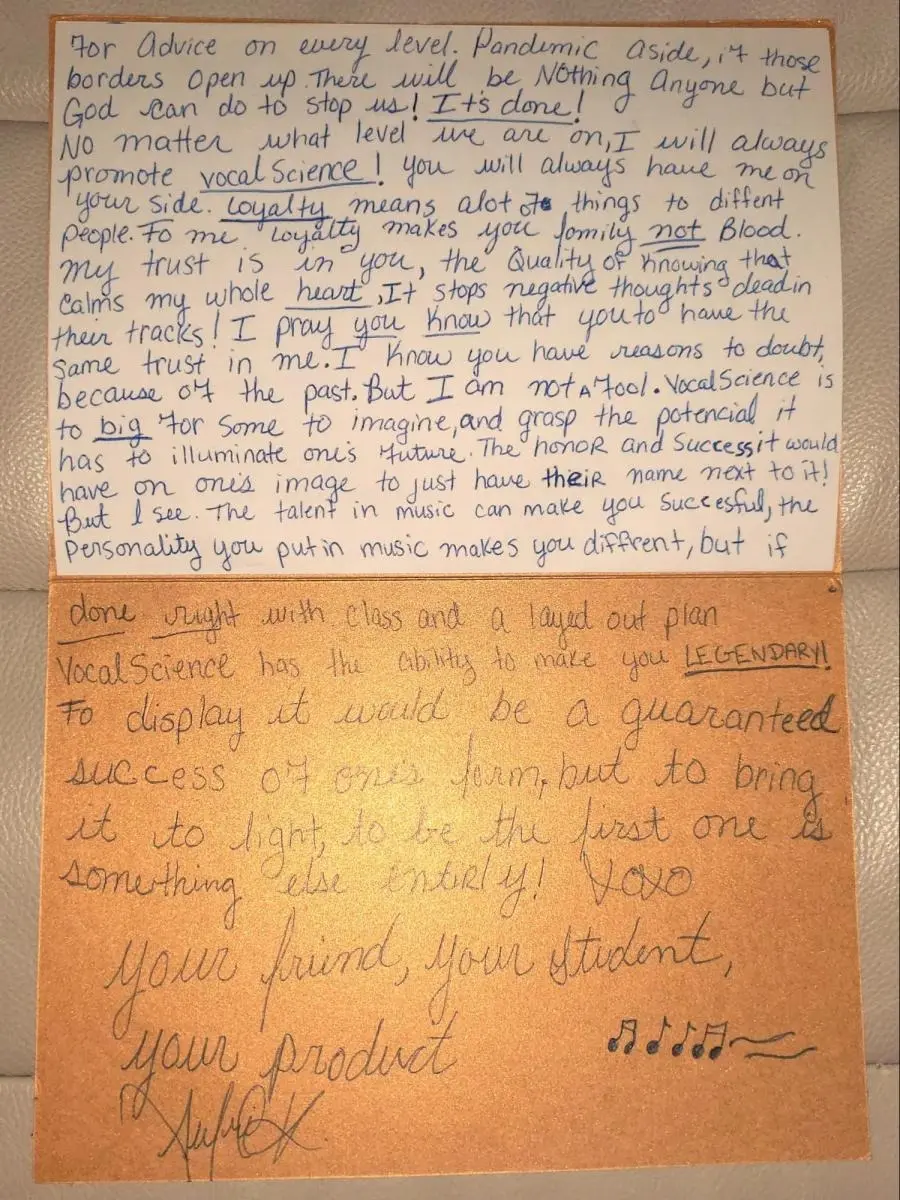
Yet, rather than allowing external crises to suffocate her burgeoning momentum, Aubrie maintained an unwavering, infectious positivity. Her letters reveal a steadfast belief that external obstacles were merely temporary speed bumps on a divine trajectory. "Pandemic aside," she writes, "if those borders open up, there will be nothing anyone but God can do to stop us! It’s Done!" This level of psychological fortitude highlights the profound impact of Diana’s mentorship—cultivating a mindset where obstacles are reframed as catalysts for growth.
Supporting Context & Metrics: The Anatomy of MTD and Vocal Science
To evaluate the significance of Aubrie’s recovery, we must contextualize the medical realities of Muscle Tension Dysphonia and analyze the mechanics of the Vocal Science methodology that saved her career.
Understanding Muscle Tension Dysphonia (MTD) in Professional Vocalists
Muscle Tension Dysphonia occurs when the muscles surrounding the larynx (voice box) tighten so much during speech or singing that the vocal folds cannot vibrate efficiently. According to otolaryngology data, MTD can be primary (occurring without structural abnormalities in the vocal tract) or secondary (developing as a compensatory reaction to an underlying pathology, such as vocal fold nodules or a viral infection).
For singer-songwriters, the risk factors are exceptionally high:
- Touring Fatigue: Performing night after night without adequate recovery time.
- Acoustic Competition: Straining to hear oneself over loud stage monitors or unamplified instrumentation.
- Performance Anxiety: Subconscious stress manifesting physically as laryngeal constriction.
Symptoms include vocal fatigue after minimal use, a strained or raspy voice quality, limited pitch range, and localized neck pain. Traditional medical interventions often involve speech-language pathology (SLP) focusing strictly on physical rehabilitation. However, artists frequently find that once clinical therapy ends, they lack the artistic integration needed to transition safely back into commercial performance. This is where holistic pedagogies like Vocal Science bridge the critical gap between medical recovery and elite artistic execution.
The Philosophy and Mechanics of Vocal Science
Vocal Science is built upon the premise that the voice is a direct reflection of the whole person. If an artist’s mental state is fractured, or if their lifestyle lacks discipline, the voice will invariably reflect that instability.
Diana’s methodology relies heavily on several core tenets:
- Holistic Alignment: Treating mental health, physical posture, and vocal production as a single, unified system. Emotional healing is treated as a prerequisite for vocal freedom.
- Visionary Goal-Setting: Moving beyond daydreams to construct concrete, actionable blueprints for success. As Aubrie notes, the happiest pictures in our heads are "visions of what can be," requiring rigorous execution to manifest in reality.
- Preventative Conditioning: Equipping the artist with self-monitoring tools so they can instantly identify and correct micro-tensions before they escalate into clinical injuries.
| Traditional Vocal Coaching | Vocal Science Methodology |
|---|---|
| Focuses primarily on style, tone, and repertoire. | Focuses on anatomical integrity, health, and mind-body alignment. |
| Treats vocal fatigue with temporary rest. | Treats vocal fatigue by dismantling root muscular tension habits. |
| Separates technical training from psychological well-being. | Integrates mental fortitude, discipline, and emotional healing into every session. |
| Aims for commercial viability. | Aims for longevity, uniqueness, and legendary status. |
Official Insights: Decoding the Handwritten Testimony
The primary source material for this report—Aubrie’s deeply personal, handwritten letter to Diana—serves as an extraordinary primary document. It offers rare, unfiltered insight into the psychological architecture of an emerging artist under the tutelage of a master mentor. Here, we analyze key excerpts from this remarkable testimonial.
On Positivity and Momentum
"Someone so positive, that makes things happen. Your positivity has rubbed off on me for a Lifetime… A positive attitude is the difference between a happy life and a bad one. The difference between making a dream come True, or letting one die."
In the music industry, cynicism is often worn as a badge of honor. Young artists are frequently bombarded with rejection, financial instability, and industry gatekeeping. Aubrie identifies Diana’s radical positivity not as naive optimism, but as an active, engine-driving force. By internalizing this outlook, Aubrie transformed her internal dialogue from self-doubt to unstoppable self-belief.
On Trust, Loyalty, and Family
"Loyalty means a lot of things to different people. To me, loyalty makes you family not blood. My trust is in you, the quality of knowing that calms my whole heart, it stops negative thoughts dead in their tracks!"
The relationship between an elite vocal coach and a recovering artist requires absolute vulnerability. The student must expose their deepest insecurities, vocal cracks, and creative fears. Aubrie’s explicit declaration of trust highlights the psychological safety that Vocal Science provides. By neutralizing negative thoughts "dead in their tracks," the methodology liberates emotional bandwidth, allowing the artist to focus entirely on creative expression.
On the Pursuit of Legend Status
"The talent and music can make you successful, the personality you put in music makes you different, but if done right with class and a laid out plan, Vocal Science has the ability to make you LEGENDARY!"
This concluding sentiment captures the grand ambition driving both mentor and student. Aubrie recognizes that while raw talent and unique branding can achieve standard commercial success, true legendary status requires something far rarer: an airtight methodology, unyielding discipline, and structural class. To Aubrie, Vocal Science is not merely a rehabilitation program; it is an incubator for greatness.
Future Outlook: Aubrie, Vocal Science, and the Horizon
As the global entertainment landscape continues to evolve in the wake of recent disruptions, the trajectory for both Aubrie and Vocal Science points toward a compelling future.
The Return to the Stage
With pandemic restrictions lifting and international borders fully accessible, the logistical hurdles that once threatened to delay Aubrie’s rise have cleared. Armed with a completely rehabilitated instrument and fortified by Diana’s rigorous training, Aubrie is preparing to transition from the recovery room to the global stage.
Industry observers note that up-and-coming singer-songwriters who possess both profound personal narratives (such as surviving MTD) and elite technical training command a distinct advantage in the marketplace. Audiences increasingly crave authenticity, transparency, and raw emotional power—qualities that Aubrie’s harrowing yet triumphant journey uniquely equips her to deliver.
The Expanding Legacy of Vocal Science
Beyond an individual success story, Aubrie’s testimonial shines a brilliant light on the expanding influence of Vocal Science as a gold standard in vocal pedagogy. In an industry littered with quick fixes and damaging vocal gimmicks, Diana’s holistic framework offers a sustainable blueprint for vocal longevity.
As artists like Aubrie step into the spotlight as living "products" of the Vocal Science system, the paradigm of how we train, heal, and protect the human voice is shifting. The proof is etched not just in medical charts or promotional records, but in the heartfelt, handwritten words of an artist who was once silenced—and has now found her true, thunderous voice.
In the words of Aubrie herself: "It’s Done." The foundation has been laid, the obstacles have been conquered, and the world is about to witness the ascent of a truly remarkable talent.