
Executive Overview
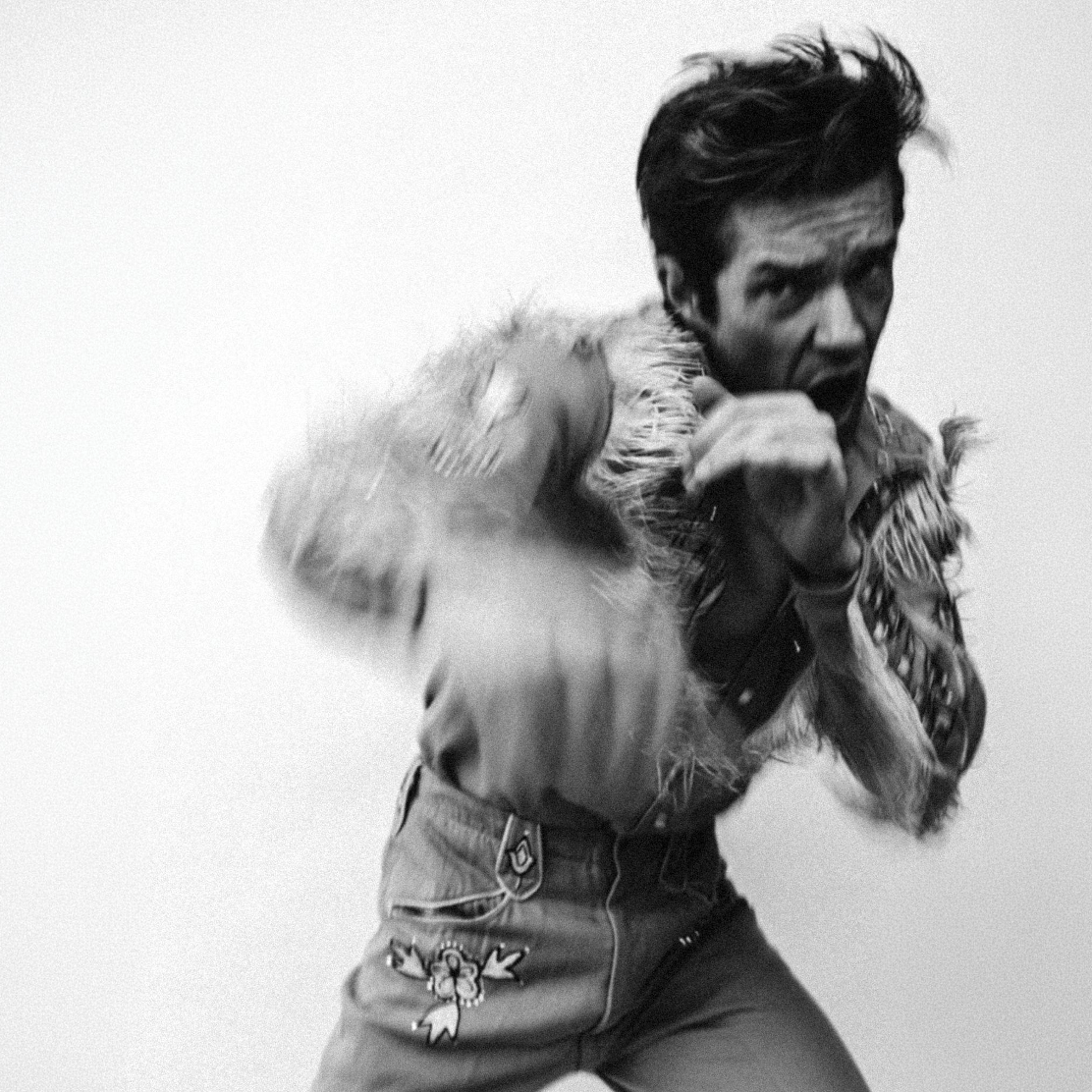
For over two decades, Brandon Flowers has commanded some of the largest stages in modern rock as the charismatic frontman of The Killers. Across a succession of stadium-filling anthems and critically acclaimed solo outings, Flowers has continually mined the complex tensions between his small-town upbringing in Nephi, Utah, and the dazzling, neon-drenched mythology of the Las Vegas Strip. Yet, his latest musical pivot represents a profound departure from the synth-soaked grandeur that initially rocketed him to international fame.
Released on August 21, Thrasher is a deeply personal, Nashville-recorded solo project that finds Flowers stepping away from the arena-rock machinery to embrace what he describes as his "father’s music." Imbued with the tactile imagery of rhinestones, sawdust, the American West, and heavy biblical weight, the album captures an artist interrogating his heritage, his theological commitments, and his own mortality.
Crucially, Thrasher has also sparked a broader conversation within faith-based music circles. Outlets like CCM Magazine have spotlighted the project, using it to pioneer a renewed editorial vision: engaging critically and discerningly with spiritually rich mainstream art. In an era where commercial Christian music is frequently segregated into rigid industrial marketing categories, Thrasher serves as a stark reminder that profound theological questioning, existential wrestling, and explicit references to Jesus Christ often appear far beyond the conventional borders of Christian radio.
Blending the organic immediacy of classic Music City recording sessions with Flowers’ signature lyrical preoccupation with sin, redemption, and grace, Thrasher is an arresting masterclass in bridging the sacred and the spectacular.
Detailed Chronology: From the Neon Strip to RCA Studio A
The Inherited Cassette Tape
To understand Thrasher, one must first trace the musical lineage that shaped Flowers’ early years. Far from the rigid genre silos of contemporary music consumption, Flowers grew up in a household where rock-and-roll theatricality and traditional country storytelling were two sides of the same cassette. The boundaries were porous, fluid, and deeply human.
When Flowers decided to lean into this foundational memory, he bypassed the hyper-processed, heavily edited mechanics of modern pop production. Instead, he packed his bags for Nashville, Tennessee, checking into the historic RCA Studio A. To capture the authentic grit and pulse of traditional country-western music, Flowers assembled an elite cadre of Music City session players—veteran musicians who tracked the songs live together in the same room.
This raw approach marked a deliberate stylistic pivot. It was a methodology Flowers had not utilized with a full ensemble since recording The Killers’ beloved 2006 sophomore album, Sam’s Town. The resulting sonic texture is jarring yet refreshing to contemporary ears trained on digital perfection: every string bend, drum strike, and acoustic strum carries the unfiltered warmth of a live performance.
A Journey Through the Tracklist
The sequencing of Thrasher moves listeners through a vivid gallery of American archetypes—gamblers, dreamers, runaways, and the marginalized.
- "Does It Ever Cross Your Mind?": The opening track immediately establishes the album’s warm, organic atmosphere. It unspools with the effortless, timeless swing of a classic Grand Ole Opry recording, delivered with an immediacy that tricks the listener into feeling as though they have known the melody for decades.
- "Paradise": Detonating out of the speakers with infectious energy, this track adopts the perspective of an aging Las Vegas casino valet, grounding the album’s grand spiritual themes in the gritty, mundane realities of the service industry.
- "Miss America": Easily one of the most emotionally devastating recordings in Flowers’ catalog, "Miss America" was directly inspired by his sister’s harrowing experiences with the cycle of abuse. Eschewing easy resolutions, the song confronts trauma head-on, juxtaposing harsh realities against a quiet, heartbreaking longing for a life where a "Mormon boy" might finally treat his sister with dignity and grace.
- "An American Dream": The album’s cinematic finale is a psychedelic trip through mortality. In the song, Flowers recounts a vivid dream about reaching the end of his earthly existence—complete with a Tesla and an unforgettable, mystical encounter with the King of Rock and Roll.
Supporting Context & Metrics: The Intersection of Faith and Mainstream Art
The Theology of Brandon Flowers
Flowers has never concealed his identity as a member of The Church of Jesus Christ of Latter-day Saints (LDS), even during the height of the indie-sleaze era of the early 2000s, when such public professions of faith frequently made artists cultural outliers. However, as Flowers has matured, his relationship with his religious upbringing has transformed from inherited dogma into an active, hard-won conviction.
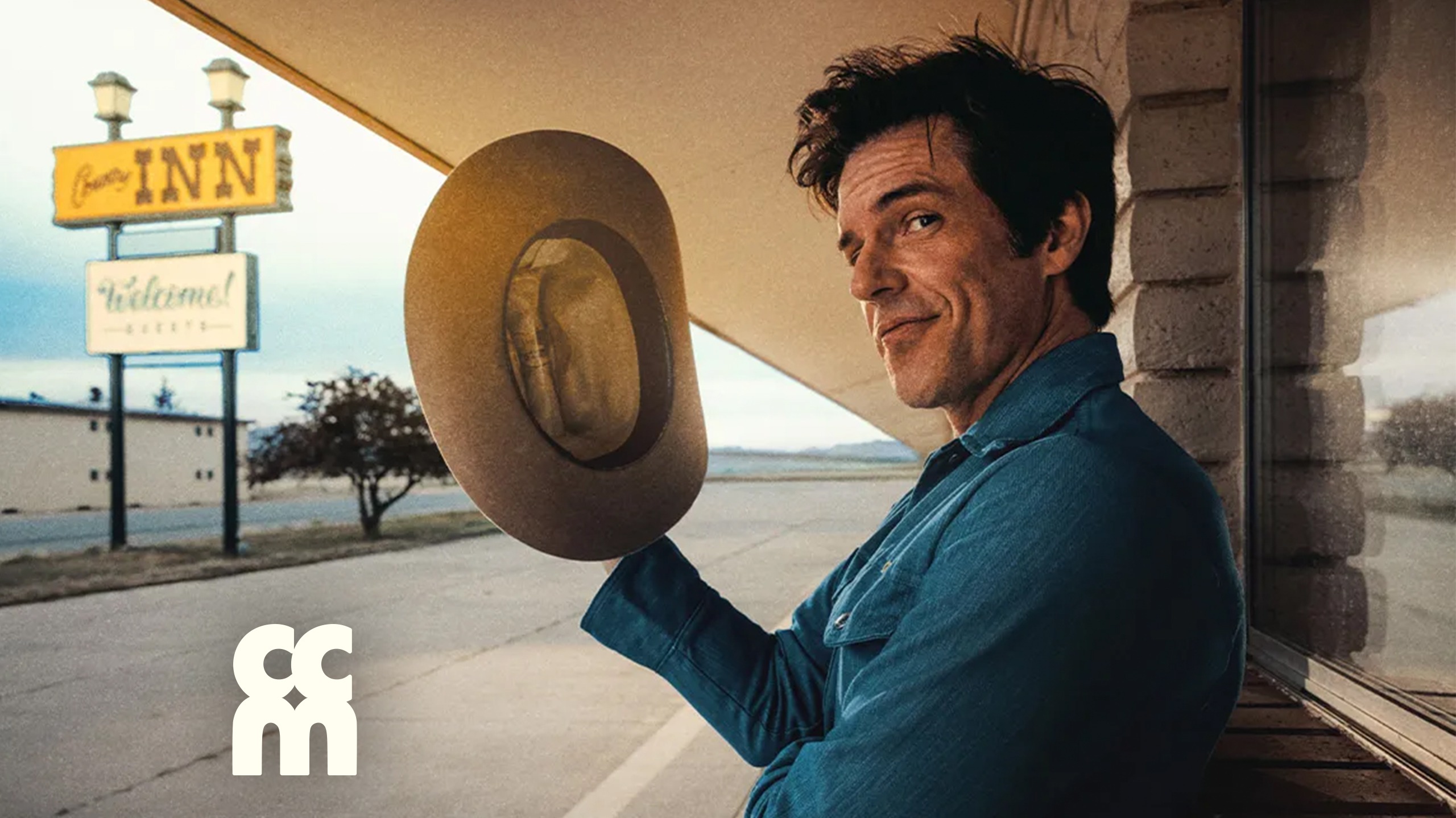
In recent interviews with prominent cultural publications, Flowers has reflected candidly on this evolution. Speaking with The Observer, he noted:
"Well, I have discovered you can be Mormon and cool. But it’s been a real journey. I was so young when we started. I was indoctrinated into this church, I understand that. But at some point, you’ve got to decide if it’s going to be your faith or not. That’s where the rubber meets the road. And I deepened my faith once I really committed to that road."
In a separate conversation with The Times, Flowers elaborated on his spiritual center, stating simply and directly:
"I really believe it. Faith has been a profound part of my life, and I’m drawn to Jesus Christ."
He also credited his father’s conversion when Flowers was six years old—noting how the sudden disappearance of alcohol and cigarettes from their home coincided with his father becoming "a better guy"—as a formative early glimpse of transformative grace.
A Benchmark for "Christian" Themes in Mainstream Music
For faith-based publications and audiences, Thrasher presents a fascinating cultural paradox. While Flowers’ theological framework differs in distinct ways from traditional evangelical or orthodox Christian systems, his body of work features more explicit, substantive references to Christ, heaven, and biblical morality than many releases explicitly marketed to contemporary Christian music (CCM) audiences.
Consider Flowers’ broader lyrical history:
- In The Killers’ career-defining smash "When You Were Young," he famously warned listeners about a "devil that doesn’t look like a church burning or a television show."
- In "Dying Breed," he celebrated the endurance and rarity of a lifelong, faithful marriage.
- In "Fire in Bone," he cleverly retold the emotional and spiritual narrative of the Prodigal Son.
Rather than treating faith as a decorative accessory or a marketing gimmick, Flowers weaves it into the very architecture of his songwriting. Thrasher elevates this commitment, proving that spiritual questions do not require a Christian-label distribution deal to possess profound emotional and theological resonance.
Official Statements and Editorial Framework
Expanding the CCM Conversation
The decision by CCM Magazine to review and analyze Thrasher marks a significant strategic and editorial shift. For decades, the Christian music industry has maintained a strict wall of separation between "mainstream" releases and music produced specifically for the faith-based market.
By choosing to cover select, high-caliber secular releases, the publication is actively redefining its mandate. This pivot is not an attempt to chase pop-culture trends or dilute the core mission that has defined the magazine for nearly 50 years. Instead, it is an intentional effort to broaden the cultural conversation around art, faith, and human experience.
To ground this shift historically, CCM Magazine consulted John Styll, the publication’s founder, regarding how early editorial teams navigated these very questions. Styll’s response provided a clarifying framework for the magazine’s current direction:
"We did not make a distinction between mainstream releases and Christian-market releases. We only reviewed mainstream albums when we thought there was a reason our audience would be—or should be—interested."
This philosophy underpins the modern coverage of Thrasher. The editorial stance is clear: acknowledging that spiritually meaningful art frequently surfaces in unexpected places does not require endorsing every lyric, theological nuance, or aspect of an artist’s personal worldview. Rather, it means trusting audiences to approach music with intellectual curiosity, emotional maturity, and spiritual discernment.
Content Advisory for Families
While Thrasher is a masterwork of modern songwriting, critics and reviewers have rightly noted that the album carries mature themes. The record contains mild profanity, alongside stark, unvarnished references to violence, generational abuse, and domestic trauma. However, these dark elements are never deployed for shock value or sensationalism; they function as narrative truths within stories of human brokenness and the desperate search for redemption. Parents and educators are advised that tracks like "Miss America" handle trauma with a raw directness that younger listeners may find difficult to process without guidance.
Future Outlook: The Legacy of "Gold and Silver, God and Glitter"
As Thrasher settles into the cultural zeitgeist, its release signals a potential evolution for Brandon Flowers’ solo trajectory. By shedding the towering synthesizers and pyrotechnic gloss of his stadium-rock past in favor of the dusty, organic textures of RCA Studio A, Flowers has proven that his creative voice is infinitely adaptable. He does not need laser lights or fog machines to command a listener’s complete attention; a live band, a vintage microphone, and a profound emotional truth are more than enough.
The album’s closing moments encapsulate this entire artistic journey. In "An American Dream," Flowers uses a surreal, near-death encounter with Elvis Presley—an artist similarly torn between the sacred gospel of his youth and the dazzling spectacle of secular fame—to pass the torch. When the King hands over the keys and offers his final piece of advice—"put it on Jesus"—it serves as a mission statement for the entire record.
Thrasher stands at a grand collision point of opposites: gold and silver, God and glitter, eternity and entertainment, Las Vegas neon and the stark dust of Utah. By fearlessly exploring the messy intersections of fame, family history, and deep-seated faith, Brandon Flowers has delivered an album that refuses easy categorization. For music critics, long-time fans of The Killers, and faith communities alike, Thrasher is a vital reminder that where art touches truth, the sacred is never very far away.