
Executive Overview
In the hyper-saturated landscape of modern music marketing, breaking through the noise requires more than just a routine social media announcement or a predictable tracklist drop. As digital algorithms grow increasingly homogenous and fan attention spans fracture across multiple platforms, artists and their creative teams are forced to reinvent the album rollout. Enter Texas rap powerhouse BigXthaPlug and his ingenious, highly coordinated campaign for his fourth studio album, Better Over Time.
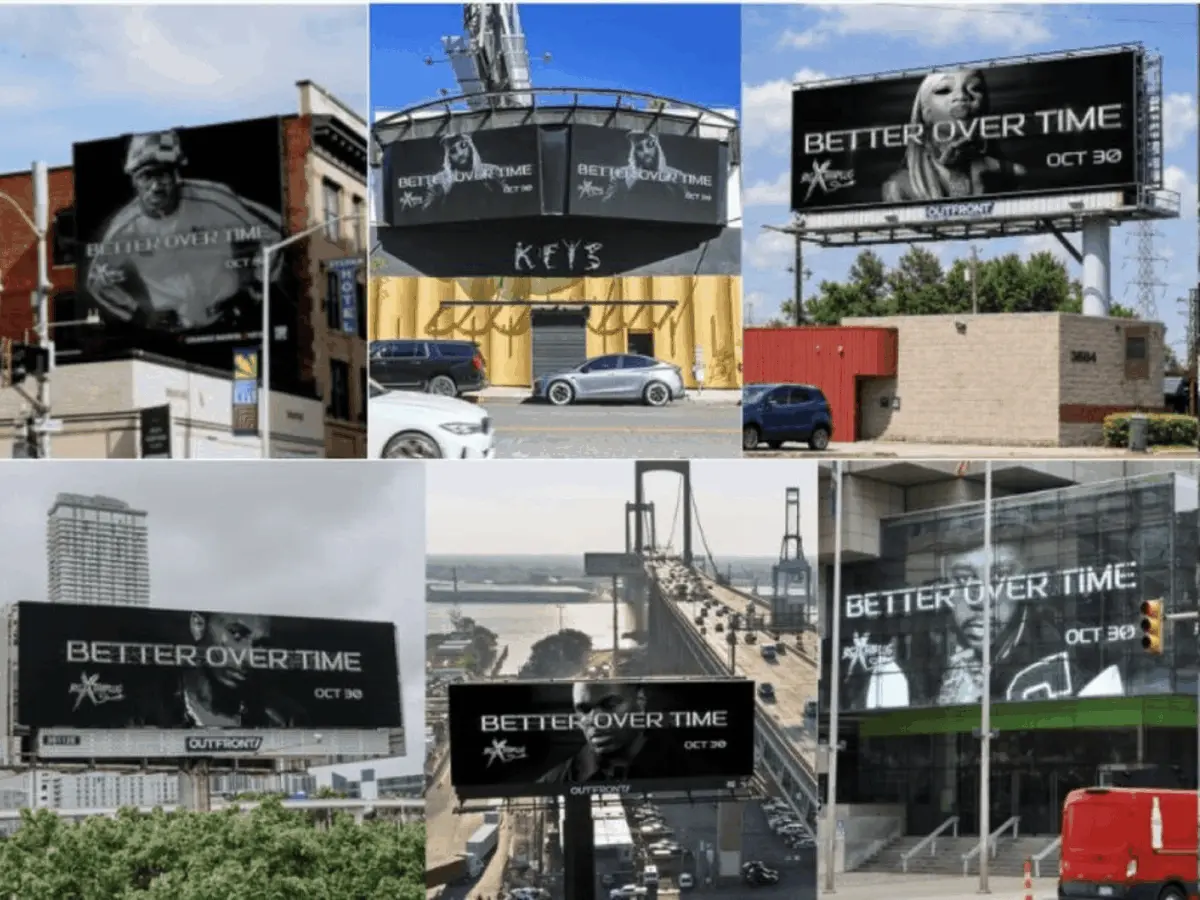
Released on October 30, Better Over Time was preceded by one of the most inventive and spatially grounded feature reveals of the decade. Eschewing the conventional text-based tracklist post on Instagram or X (formerly Twitter), BigXthaPlug’s marketing team deployed a decentralized physical campaign. They erected physical billboards for each guest artist exclusively in their respective hometowns—a strategic maneuver that bypassed standard digital saturation in favor of hyper-local resonance and global online speculation.
From Atlanta and Memphis to Los Angeles, Miami, Detroit, and beyond, these silent billboards appeared without explanation, sparking viral internet detective work. Coupled with a subtle, disruptive digital Easter egg—the temporary removal of the artist’s face from the cover art of three previous albums on major streaming services—the campaign transformed passive listeners into active investigators. This report offers a comprehensive examination of BigXthaPlug’s campaign, analyzing its mechanics, situating it within the broader history of creative music marketing, and exploring what this signals for the future of album rollouts in the streaming era.
Detailed Chronology: Unfolding the Better Over Time Mystery
The rollout for Better Over Time was a masterclass in slow-burn marketing, carefully paced to maximize intrigue, fan engagement, and organic social media amplification.
Phase 1: The Digital Disruption (The Streaming Purge)
Weeks before the official album announcement, observant fans scouring Spotify, Apple Music, and Tidal noticed something unsettling. BigXthaPlug’s signature visage had quietly vanished from the cover art of three of his seminal past projects. In its place were blank, fragmented, or altered spaces where his face once rested.
In the streaming age, where catalog art is rarely scrutinized once an album stabilizes in the charts, this subtle alteration immediately triggered speculation on Reddit, Discord, and fan-run Twitter update accounts. Was it a glitch? A hack? A re-branding exercise?
It was none of the above. It was the first breadcrumb in a meticulously plotted visual puzzle. When the cover art for Better Over Time was finally unveiled, it was revealed to be a striking collage composed of those very missing pieces—a visual synthesis of the artist’s past works culminating in his fourth studio era.
Phase 2: The Silent Hometown Takeover
While the streaming sleuths were busy cataloging the missing faces, BigXthaPlug’s team executed the physical arm of the campaign. Without warning, press releases, or social media breadcrumbs from the main account, massive billboards began popping up in major metropolitan hubs across the United States.
Each billboard featured bold typography and striking imagery signaling a feature appearance on the upcoming project, but with a brilliant regional twist: every guest artist’s billboard was placed strictly within their own hometown.
- Atlanta: Showcased Lil Yachty and Belly Gang Kushington.
- Memphis: Highlighted hometown hero GloRilla.
- Los Angeles: Featured pop powerhouse Ava Max alongside Leon Thomas.
- Miami: spotlighted Loe Shimmy.
- Dallas: Represented local ties with Ro$ama.
- Philadelphia: Unveiled Fridayy.
- Detroit: Confirmed BabyFace Ray.
Phase 3: Crowdsourced Discovery and Viral Amplification
The genius of the billboard phase lay in its utter lack of institutional signposting. There were no QR codes leading to landing pages, no album titles, and no release dates initially attached to the creative. Passersby simply encountered striking, out-of-context imagery of their local musical exports alongside BigXthaPlug’s branding.
Naturally, locals and fans whipped out their phones, snapped photographs, and uploaded them to social media with captions asking, "What is BigXthaPlug doing with [Artist Name]?"
What followed was a decentralized, crowdsourced puzzle. Fans across different states began communicating online, piecing together the regional clues to slowly compile the full guest feature roster long before the official tracklist was ever published by a music publication. By forcing the audience to do the heavy lifting of discovery, the campaign cultivated an intense sense of ownership and community among the fanbase.
Supporting Context & Metrics: The Evolution of Experiential Marketing
To fully appreciate the weight of BigXthaPlug’s strategy, it is essential to examine how physical experiential marketing has evolved in the music industry, particularly in an era dominated by digital algorithms and short-form video content.
The Death and Rebirth of the Traditional Tracklist
For years, the standard protocol for hip-hop album rollouts followed a predictable formula: announce the album title, drop a lead single, release a cinematic trailer, and, 48 to 72 hours before release, post a stylized graphic of the tracklist featuring a typed list of guest features. While efficient, this method has suffered from severe diminishing returns. Audiences have grown numb to standard social media graphics, often scrolling past them without a second thought.
In response, forward-thinking artists have turned physical spaces into interactive canvases.

- Charli XCX’s Brat Campaign: Ahead of her defining remix album, Charli utilized minimalist, disruptive lime-green billboards bearing cryptic text in major cities worldwide, creating an aesthetic movement that dominated global culture before confirming features iteratively.
- Dave in London: British rap heavyweight Dave notoriously used strategic billboard placements across London to tease and reveal high-profile features on his critically acclaimed projects, embedding the music directly into the urban geography of the city.
Why Hyper-Local Placement Matters
What sets BigXthaPlug’s campaign apart from standard billboard rollouts is the hyper-local precision of its execution. By placing artists in their hometowns, the campaign achieved two distinct psychological goals:
- Civic Pride and Amplification: Artists like GloRilla in Memphis or BabyFace Ray in Detroit carry immense cultural capital in their home markets. By honoring them on physical billboards in the very neighborhoods that birthed their careers, BigXthaPlug earned immediate local goodwill. Local media outlets, neighborhood blogs, and regional fanbases amplified the images organically, treating the billboards as points of local pride rather than mere corporate advertisements.
- Geographic Synergy: Rather than dumping all the promotional weight into a single media hub like New York or Los Angeles, the campaign distributed cultural touchpoints across the American musical map—from the dirty south of Atlanta and Memphis to the motor city of Detroit and the West Coast. This effectively decentralized the hype, creating simultaneous localized viral moments across multiple key demographics.
Industry Case Studies: Pushing the Boundaries of Billboard Activations
BigXthaPlug’s campaign joins a growing lineage of artists who have rejected traditional digital marketing in favor of immersive, physical, and interactive stunts. Examining broader industry precedents highlights the creative trajectory that modern music promotion is taking.
1. Making It Interactive: Black Country, New Road
When indie-rock critical darlings Black Country, New Road prepared to release Forever Howlong via label Ninja Tune, they bypassed passive viewing entirely. The label erected physical billboards equipped with a large, enticing red button.
Passersby and dedicated fans who tracked down the locations could press the button physically to illuminate the central star within the album’s artwork. This low-tech, highly tactile interaction triggered a wave of grassroots scavenger hunting within the band’s Discord server and Reddit community, proving that tangible engagement drives deep digital loyalty.
2. Going Big on Spectacle: Ghost
Swedish theatrical rock outfit Ghost is renowned for its elaborate world-building, with frontman Tobias Forge cycling through distinct personas (or "Papas") for each album cycle. To tease the dawn of a new era, the band’s management deployed a dramatic, cinematic activation in Las Vegas.
A massive billboard simply reading "V Is Coming" was erected, complete with mechanical effects that billowed thick purple smoke into the desert air. The entire spectacle was livestreamed globally to millions of fans, turning a standard album tease into a global theatrical event before the new character was officially unveiled.
Official Statements and Industry Reception
While major album rollouts are typically accompanied by calculated press releases and executive commentary, the early stages of the Better Over Time campaign thrived on deliberate silence. The silence from BigXthaPlug’s camp was strategic; it communicated trust in the intelligence of the audience.
Marketing analysts and music industry observers have widely praised the campaign as a masterclass in modern audience activation. In various marketing roundtables, executives have noted that campaigns requiring active decoding yield significantly higher engagement metrics than passive visual consumption.
When fans spend hours debating whether a missing face on Spotify or a billboard in Detroit signals a collaboration, they are investing cognitive capital into the artist’s brand. By the time Better Over Time officially hit streaming platforms on October 30, the psychological groundwork had been meticulously laid: the audience was not merely listening to an album; they were celebrating the conclusion of a massive, interactive scavenger hunt they helped solve.
Future Outlook: What BigXthaPlug’s Rollout Signals for 2027 and Beyond
As we look toward the future of music marketing, the success of campaigns like BigXthaPlug’s Better Over Time rollout offers several vital takeaways for upcoming artists, independent labels, and major streaming conglomerates alike.
1. The Decline of the Passive Scroll
As AI-generated content and automated digital advertising continue to flood social media feeds, users are developing a natural immunity to traditional digital ads. The return to physical, tactile, and location-based marketing—guerrilla billboards, pop-up installations, and interactive physical puzzles—represents a necessary pivot back to the real world. Physical spaces offer a permanence and credibility that transient social media posts simply cannot replicate.
2. The Rise of Decentralized Regional Marketing
Future hip-hop and pop rollouts will likely look beyond the traditional coastal music hubs (New York and Los Angeles). As BigXthaPlug demonstrated, leaning into the distinct regional identities of guest collaborators creates authentic localized hype that aggregates into a massive national narrative. Expect to see more artists deploying multi-city, hyper-targeted physical activations that honor the roots of their collaborators.
3. Gamification as a Core Strategy
The expectation of the modern music consumer has shifted. Fans no longer want to be spoon-fed tracklists and release dates; they want to feel like insiders, detectives, and participants in the creative process. Gamifying the album rollout—whether through streaming service Easter eggs, hidden physical billboards, or interactive web puzzles—will likely become a baseline expectation for major project releases moving forward.
Conclusion
BigXthaPlug’s Better Over Time has proven that imagination outweighs massive advertising budgets. By blending digital subversion with geographical homage, his team did not just announce an album—they created a cultural moment. As the industry continues to evolve in an increasingly digital world, BigXthaPlug’s clever rollout serves as a timely reminder that the most effective way to capture a listener’s attention is to make them part of the story.