As the holiday season approaches, churches, concert halls, and homes fill with the rich, triumphant sounds of traditional Christmas carols. Among these enduring compositions, "O Come, All Ye Faithful"—frequently recognized by its Latin title, “Adeste Fideles”—stands out as one of the most beloved and widely performed pieces in the global holiday repertoire. Whether echoing through grand cathedral arches during a midnight carol service or hummed softly by a living room fire, the melody captures the absolute essence of festive celebration.
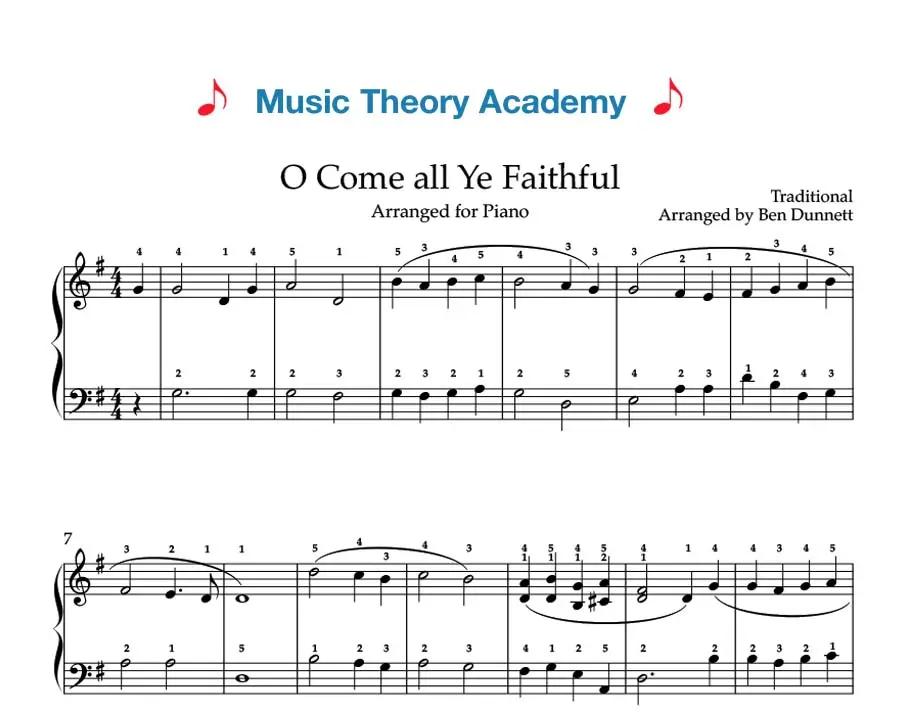
To help musicians of varying skill levels bring this masterpiece to life, composer, educator, and Music Theory Academy founder Ben Dunnett LRSM has curated two distinct piano arrangements. Ranging from an accessible beginner layout to a more nuanced, intermediate-level interpretation, these arrangements are designed to suit pianists at different stages of their musical journeys.
This comprehensive guide explores the rich history of the carol, breaks down the structural meaning of its traditional Latin and English lyrics, and provides detailed resources—including sheet music downloads, lyric sheets, and audio-visual references—to help you master “O Come, All Ye Faithful” this holiday season.
Detailed Chronology: The Evolution of “Adeste Fideles”
To truly understand and interpret a musical composition, one must examine its historical roots. The origins of “O Come, All Ye Faithful” are surprisingly complex, woven through centuries of manuscript sharing, liturgical evolution, and musicological debate.
1. Origins and Attribution (Mid-18th Century)
The traditional melody and original Latin lyrics are most commonly attributed to John Francis Wade (1711–1786), an English hymnist, music copyist, and Jacobite exile who lived in France. Wade produced several beautifully illuminated manuscripts containing Catholic devotional music, many of which were crafted for use at the English College in Douai, France.
The 1751 Manuscript: One of the earliest surviving and most reliable sources of the tune is found in a manuscript compiled by Wade around 1751.
Alternative Theories: While Wade is traditionally credited as the primary architect of the tune, music historians have occasionally debated whether he composed the piece from scratch or transcribed an already existing folk or liturgical melody floating around 18th-century Europe. Nevertheless, his name remains permanently tied to its popularization.
2. Translation into English (Mid-19th Century)
For nearly a century, the carol was sung primarily in its original Latin as “Adeste Fideles.” This changed dramatically in the mid-19th century when Frederick Oakeley, an English clergyman and hymn writer, translated the first and subsequent verses into English as “O Come, All Ye Faithful” for use at Margaret Street Chapel in London (and later at St. John’s Church, Islington).
Oakeley’s translation captured the soaring, majestic meter of the original Latin verse, making it accessible to a much broader Protestant and ecumenical English-speaking audience.
3. Musical Standardization (Late 19th Century)
The famous harmonization commonly sung today was heavily influenced by Vincent Novello, an English organist and composer who included the tune in his collections of sacred music in the early 19th century. Novello’s arrangement helped solidify the tune’s status in British cathedral traditions.
By the late Victorian era, the carol had firmly cemented itself as a staple of Nine Lessons and Carols services worldwide, cementing its position in the global holiday canon.
Supporting Context & Metrics: Exploring the Two Piano Arrangements
Ben Dunnett, a seasoned music teacher, examiner, and pianist with over two decades of experience in music education, has meticulously arranged “O Come, All Ye Faithful” to accommodate two distinct tiers of pianistic ability. Both versions draw directly from the traditional John Francis Wade melody featured on Dunnett’s holiday album, “10 Christmas Carols.”
Before selecting your path, you can preview the professional studio recording via the YouTube embed below or stream the track directly on Spotify to absorb the phrasing, tempo, and dynamic swells of the arrangement:
[ Embedded Media Reference: YouTube Performance of Ben Dunnett's "O Come, All Ye Faithful" Arrangement ]
Arrangement 1: The Easy Piano Version
Tailored for early-to-intermediate players, the easy arrangement strips away complex polyphonic textures while preserving the sweeping, majestic quality of the chorus.
Core Focus: Clean note reading, straightforward hand positioning, and steady rhythmic pacing.
Sing-Along Integration: Recognizing that carols are fundamentally communal experiences, a dedicated secondary layout includes the full vocal lyrics embedded directly into the sheet music. This allows pianists to seamlessly accompany themselves or a group of holiday carolers.
Arrangement 2: The Intermediate/Challenging Piano Version
For pianists looking to elevate their technique and deliver a rich, concert-hall-quality performance, Dunnett’s multi-page intermediate arrangement introduces fuller chordal accompaniment, sophisticated voice leading, and dynamic contrasts.
Core Focus: Advanced chord voicings, arpeggiated accompaniment figures, expressive rubato, and independent hand dynamics.
Study Recommendation: Pianists tackling this version are encouraged to listen to the studio recording on Spotify or watch the performance video multiple times to internalize the stylistic nuances before diving into the score.
In discussing the educational philosophy behind these arrangements, Ben Dunnett LRSM emphasizes the importance of balancing technical accessibility with expressive performance:
"Christmas carols carry a unique emotional and cultural weight. When we teach or arrange them, the goal isn’t merely to help a student press the correct keys in the correct order; it is to connect them to centuries of musical tradition. Whether a player is working through the simplified layout with lyrics or mastering the multi-page intermediate score, the ultimate objective is to make music that resonates with listeners and brings people together during the holiday season."
Dunnett’s extensive background as a music examiner ensures that every score published through the Music Theory Academy is pedagogically sound, encouraging healthy technical habits while rewarding musicality.
Deep Dive: Lyrics, Structure, and Theological Context
Originally penned in Latin as “Adeste Fideles,” the text of the carol is structured as a dramatic, progressive invitation to worship. Each verse shifts the singer’s perspective—from an earthly summons to Bethlehem, to theological reflection on the incarnation, to heavenly chorus praise.
Verse-by-Verse Breakdown
Verse 1: The Summons to Bethlehem
Focus: An urgent, joyful call to the faithful to journey to Bethlehem and behold the newborn King of Angels.
Latin Echo:“Adeste fideles laeti triumphantes…”
Verse 2: The Miracle of the Incarnation
Focus: A profound theological reflection on the divine nature of Christ, addressing the mystery of the Virgin birth (“Lo, He abhors not the Virgin’s womb”) and emphasizing Christ’s eternal, uncreated divinity.
Verse 3: The Heavenly Choir
Focus: Shifting the acoustic landscape upward, this verse calls upon angelic choirs and the citizens of heaven to break out in exultation and sing glory to God in the highest.
Verse 4: The Christmas Morning Greeting (Traditional Day-Only Verse)
Focus: Reserved traditionally for performance specifically on Christmas Day, this final verse greets the newly arrived Lord and celebrates the Incarnation directly: “Word of the Father, now in flesh appearing.”
The Universal Refrain
Every verse culminates in the iconic, soaring refrain that commands listeners to join in corporate adoration:
O come, let us adore Him, O come, let us adore Him, O come, let us adore Him, Christ the Lord!
Complete Lyrics Reference
For those practicing the vocal-piano integration or preparing a holiday service program, the complete English text is provided below:
Verse 1
O come, all ye faithful, joyful and triumphant!
O come ye, O come ye, to Bethlehem
Come and behold Him, born the King of Angels
Refrain
O come, let us adore Him,
O come, let us adore Him,
O come, let us adore Him,
Christ the Lord!
Verse 2
God of God, Light of Light,
Lo, He abhors not the Virgin’s womb
Very God, begotten, not created
Refrain
O come, let us adore Him…
Verse 3
Sing, choirs of angels, sing in exultation,
Sing, all ye citizens of heaven above!
Glory to God, in the highest
Refrain
O come, let us adore Him…
Verse 4
Yea, Lord, we greet Thee, born this happy morning,
Jesus, to Thee be glory given;
Word of the Father, now in flesh appearing!
Refrain
O come, let us adore Him,
O come, let us adore Him,
O come, let us adore Him,
Christ the Lord!
Future Outlook: Continuing the Tradition of Holiday Music Education
As digital resources continue to transform how musicians access sheet music and instructional media, platforms like the Music Theory Academy remain vital in bridging the gap between professional composition and accessible home learning. By providing free, high-quality PDF downloads paired with professional audio and video demonstrations, educators like Ben Dunnett ensure that classical holiday carols remain vibrant, living traditions for new generations of pianists.
Whether you are an adult learner returning to the instrument after years away, a piano teacher searching for engaging seasonal repertoire, or an intermediate player looking to refine your accompaniment skills, mastering “O Come, All Ye Faithful” offers a deeply rewarding musical experience. Download your preferred sheet music version today, set up your stand, and let the timeless majesty of this historic carol fill your home this holiday season.