
Executive Overview
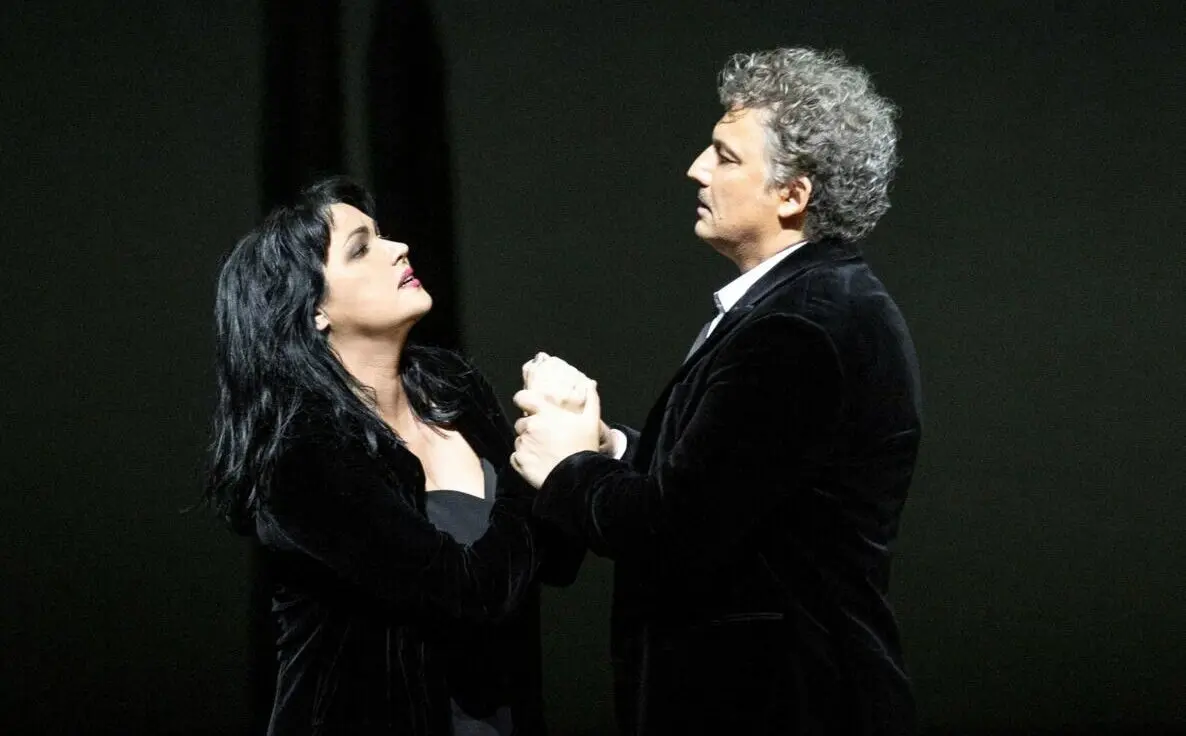
In a rare and prestigious pairing of operatic titanhood and orchestral refinement, conductor Riccardo Frizza is set to lead two high-profile concert performances of Giuseppe Verdi’s monumental masterpiece, Aida. Scheduled for September 6 and September 13, this trans-European musical event brings together an elite quartet of operatic superstars: soprano Anna Netrebko in the title role of the enslaved Ethiopian princess, tenor Jonas Kaufmann as the conflicted military commander Radamès, and baritone Luca Salsi as Amonasro, the fierce King of Ethiopia and Aida’s father.
The first of these performances will take place at the historic Teatro San Carlo in Naples—the oldest continuously active opera house in the world—offering audiences an intimate acoustic exploration of Verdi’s sweeping score within a storied neoclassical setting. One week later, on September 13, the artistic caravan moves northward to Bucharest to serve as the grand finale of the prestigious Masters of Classic festival, cementing the run as a major cultural milestone of the late-summer European classical music calendar.
While Aida is historically celebrated for its gargantuan theatrical spectacles—frequently associated with massive outdoor arenas, marching brass bands, live animals, and cinematic stage machinery—these upcoming concerts strip away the visual excess to focus on the core of Verdi’s genius: his orchestration, psychological nuance, and melodic transparency. According to Maestro Frizza, presenting Aida in a concert format offers a transformative experience for both performers and listeners. It provides an unfiltered window into a score that bridges monumental public pageantry with deeply intimate, tragic human drama.
This comprehensive report explores the logistical chronology of these high-stakes performances, investigates the artistic philosophy behind stripping down grand opera to its musical essence, details the stellar cast joining the tour, and evaluates the broader implications of concert-format opera within the contemporary classical music landscape.
Detailed Chronology and Performance Itinerary
The journey of this unique Aida production is meticulously planned across two culturally rich European cities, each offering a distinctly different acoustic and historical backdrop.
Leg 1: Teatro San Carlo, Naples (September 6)
The opening performance at the Teatro San Carlo on September 6 marks a homecoming of sorts for grand-scale Italian opera, performed within a venue that has hosted premieres and masterworks since 1737. In Naples, the cast will be rounded out by American mezzo-soprano Elizabeth DeShong taking on the role of the proud and vengeful Egyptian princess Amneris, and bass Alexander Köpeczi stepping into the authoritative shoes of Ramfis, the High Priest of Egypt.
The Teatro San Carlo’s famous horseshoe-shaped auditorium, renowned for its warm acoustics and opulent gold-and-blue interior, will force an acoustic intimacy upon the performers. Without the physical distractions of elaborate stage sets or wandering choruses, the audience’s attention will be channeled entirely through the vocal cords of Netrebko, Kaufmann, and Salsi, backed by the rigorous precision of Frizza’s baton.
Leg 2: Masters of Classic Festival, Bucharest (September 13)
Following the Neapolitan opening, the production travels to the Romanian capital to headline the closing night of the Masters of Classic festival. Bucharest has increasingly established itself as a vibrant hub for international classical music, attracting world-class artists to its concert halls.
For the Bucharest performance, the role of Amneris will be assumed by celebrated Russian mezzo-soprano Yulia Matochkina, bringing a fresh dramatic dynamic to the tragic love triangle alongside Netrebko and Kaufmann. The festival closing is anticipated to be a major media event, drawing critics, dignitaries, and passionate opera aficionados from across Eastern Europe to witness what is poised to be one of the definitive operatic interpretations of the year.
Supporting Context & Metrics: The Anatomy of Concert Opera
To fully appreciate the significance of Frizza, Netrebko, and Kaufmann tackling Aida in a concert format, one must examine the ongoing debate within the classical music industry regarding staged opera versus concert performances, as well as the unique structural demands of Verdi’s 1871 masterpiece.
The Great Debate: Staged Pageantry vs. Musical Essence
For decades, operatic purists and modern stage directors have locked horns over the staging of nineteenth-century masterworks. While directors often seek to reinterpret traditional works through contemporary, psychological, or politically charged lenses, concert performances offer a radical alternative: a return to the absolute supremacy of the musical text.
The grandeur of Aida is legendary. Commissioned to celebrate the opening of the Khedivial Opera House in Cairo (though delayed due to the Franco-Prussian War, eventually premiering at La Scala in Milan in 1871), the opera quickly became synonymous with architectural and visual excess. Mentioning the opera invariably conjures images of the pharaonic productions staged annually at the ancient Arena di Verona, complete with towering stone monuments, hundreds of extras, and literal horses and marching bands.

However, as Maestro Frizza points out, this monumentalism can sometimes obscure the delicate, microscopic genius of Verdi’s orchestration. When stripped of physical spectacle, Aida reveals itself as a work of staggering structural integrity. The concert format forces the audience to listen to the parola scenica—Verdi’s theatrical word—and appreciate the subtle interplay between woodwinds, brass, strings, and human voices. It transforms a historical military pageant into a deeply psychological chamber drama concerning love, duty, jealousy, and betrayal.
The Musical Architecture of Aida
Musically, Aida sits at a fascinating juncture in Verdi’s creative evolution. Written midway through his career—after the grand melodramas of his middle period and shortly before his late-career masterpieces, Otello (1887) and Falstaff (1893)—Aida displays a mastery of timbre and harmony that borders on the esoteric.
- The Orchestral Palette: Verdi utilizes a specialized orchestral palette to evoke the exoticism of ancient Egypt, employing veiled string textures, hypnotic wind motifs (such as the famous opening prelude played by the violins), and offstage brass bands to create a sense of spatial depth.
- The Dual Nature: The opera balances monumental public displays—such as the iconic Triumphal March in Act II—with moments of hushed, private lyricism, exemplified by the Nile Scene (Act III) and the suffocatingly intimate tomb scene that closes the opera.
- Vocal Demandingness: The title roles require voices of heroic stamina and exquisite pianissimo control. Aida must soar over the full orchestra in her high-lying phrases while possessing the breath control to sustain the ethereal descending lines of “O cieli azzurri”. Radamès requires a spinto or dramatic tenor capable of ringing high notes and profound, introspective reflection (“Celeste Aida”), while Amonasro and Amneris demand raw vocal power combined with agonizing emotional vulnerability.
Official Statements and Artistic Insights
In exclusive statements released ahead of the rehearsals, conductor Riccardo Frizza articulated his artistic vision for these upcoming performances, offering a profound look into his relationship with the score.
Reflecting on the passage of time since his last engagement with the piece, Frizza noted:
"It’s exactly three years since my last Aida, in a concert performance: an intense experience that brings the conductor face to face with the score which, since it is Verdi, is obviously perfect. And, as we’re talking about Aida, the composition (beyond perfect, bordering on sublime) takes on an incredible, inherent theatrical life of its own. The debate over concert performance versus staged opera is destined to last forever, to the great joy of theatres and artists, called upon to take part in what feels like a challenge."
Frizza expanded upon the necessity of stripping Aida down to its musical core, contrasting the intimate concert experience with the famous open-air productions of the past:
"Think of the legendary, pharaonic productions of ‘Aida’ at the Arena in Verona, and you will understand why Aida needs to be reduced to its essence whenever possible, revealing the musical beauty within the extravaganza, so evocative thanks to a prodigious palette of colours, allowing the singers (in this case, outstanding stars Anna Netrebko, Jonas Kaufmann and Luca Salsi) to make music alongside the musicians, I would say almost relishing the magnificent choral displays and triumphal marches, prelude to their moments of pure lyricism which are the hallmark of Aida."
Finally, the conductor summarized the unique synthesis of scale and intimacy that defines Verdi’s penultimate tragic masterpiece, pointing toward the composer’s theatrical genius:
"This opera is monumental and intimate at the same time, its theatricality is quintessential Verdi before the ultimate creative frenzy of ‘Otello’ and ‘Falstaff,’ with its esoteric perfume and sense of tragedy, and its parola scenica, supreme expression of the greatest man of theatre ever to come from Italy: in a word, ‘Aida.’"
Future Outlook and Industry Impact
As the classical music world looks toward the autumn season, the pairing of Frizza, Netrebko, Kaufmann, and Salsi for these Aida concert performances signals a growing trend toward high-concept, star-driven concert opera. In an era where mounting fully staged productions has become increasingly complex and economically volatile for regional institutions, curated concert performances featuring elite international casts offer an economically sustainable yet artistically uncompromising way to present masterworks.
Furthermore, these performances provide a rare opportunity to hear three of the most sought-after vocal artists of our generation inhabiting roles that define their respective voice types. Anna Netrebko’s transition into heavier Verdi repertoire continues to be one of the most closely watched trajectories in modern opera; Jonas Kaufmann remains the preeminent dramatic tenor of his era, bringing intellectual depth and vocal warmth to Radamès; and Luca Salsi stands as a pillar of Verdi baritone singing, anchoring the dramatic conflict with authority and grit.
With tickets in high demand across both Naples and Bucharest, the September 6 and September 13 performances are expected to draw international critics, stream listeners, and devoted operagoers alike. Beyond the glamour of the star-studded cast, these evenings will serve as a masterclass in conducting and orchestration, proving once again that when Verdi’s music is allowed to speak for itself, no spectacle on earth can rival the sheer power of the human voice and the symphonic score.