
NEW YORK CITY — As the United States edges closer to its historic semiquincentennial milestone, cultural institutions across the nation are beginning to formulate artistic responses to 250 years of history, struggle, and triumph. Among the first major classical music organizations in New York City to formally engage with this national reflection is the Modus Operandi Orchestra (MOO).
Under the visionary leadership of founder and Music Director Justin Bischof, the ensemble has announced a high-profile concert titled "Celebrating America at 250." Scheduled for November 19 at 6:30 PM at the prestigious Merkin Hall at Kaufman Music Center, the performance promises to weave together historical retrospection and contemporary commentary through an intentionally curated program of masterworks.
Featuring pieces by foundational American voices such as Aaron Copland and Samuel Barber, alongside contemporary innovator Jessie Montgomery and the perceptive European perspective of Antonín Dvořák, the concert aims to deconstruct and celebrate the multifaceted nature of the American sonic landscape. Renowned soprano Katherine Whyte is slated to headline the evening as the featured soloist in Barber’s deeply nostalgic Knoxville: Summer of 1915.
This comprehensive report examines the structural underpinnings of the upcoming concert, analyzes the historical and cultural significance of the selected repertoire, profiles the artists bringing the performance to life, and evaluates the broader operational impact of the Modus Operandi Orchestra within New York’s fiercely competitive classical music ecosystem.
Executive Overview
The classical music world occupies a unique cultural space when it comes to national commemorations. Unlike visual art or literature, which often rely on explicit narrative or historical iconography, orchestral music communicates through abstraction, emotional resonance, and inherited stylistic traditions. When the Modus Operandi Orchestra steps onto the stage at Merkin Hall on November 19, they will not merely be performing a collection of audience favorites; they will be interrogating the very notion of what constitutes "American" music.
The concert program is structured as a dialogue across generations and geographic origins:
- Aaron Copland: Representing the populist, pastoral, and democratic ideals of mid-20th-century America.
- Samuel Barber: Capturing the melancholic, intensely personal, and lyrical dimensions of domestic American life.
- Jessie Montgomery: Injecting contemporary urgency, rhythmic vitality, and diverse cultural narratives into the canon.
- Antonín Dvořák: Offering an indispensable external perspective, reflecting on how a 19th-century European master perceived the foundational folk materials of the New World.
At the helm is Maestro Justin Bischof, whose career has been characterized by ambitious programming, a commitment to vocal-orchestral synthesis, and a dedication to providing premier platforms for New York’s elite freelance musicians. Joined by soprano Katherine Whyte—whose sensitivity to text and timbre makes her an ideal interpreter of Barber’s masterwork—the ensemble is poised to deliver one of the season’s most intellectually stimulating and emotionally resonant symphonic events.
Detailed Chronology: The Genesis and Evolution of the Project
To understand the weight of "Celebrating America at 250," it is necessary to trace the developmental trajectory of both the program and the organization mounting it.
Conceptualization and Programming Strategy
The planning for "Celebrating America at 250" began more than a year in advance, emerging from discussions among MOO’s artistic leadership regarding how a freelance-driven orchestra could meaningfully contribute to the upcoming U.S. semiquincentennial. Rather than commissioning a sprawling, untested multi-movement work, Bischof opted for a curated mosaic approach. By pairing established pillars of the American repertoire with contemporary works and historical touchstones, the program allows listeners to hear familiar pieces through a newly sharpened lens.
The sequencing of the evening was meticulously debated. The goal was to avoid a chronological march through history, favoring instead a thematic juxtaposition. The juxtaposition of Montgomery’s contemporary rhythmic language against Copland’s wide-open harmonic intervals highlights the evolution of American modernism, while Dvořák’s historical observations serve as a bridge connecting European symphonic rigor with New World vernacular traditions.
Rehearsal Logistics and Preparation
The path to Merkin Hall is underpinned by rigorous preparation. Unlike major legacy institutions that benefit from weeks of multi-service rehearsals, independent and freelance-based orchestras like MOO operate under compressed, high-intensity schedules.
The rehearsal cycle for the November 19 concert commences weeks in advance, utilizing dedicated studio spaces across Manhattan. Because MOO brings together some of the finest freelance instrumentalists in the New York metropolitan area—many of whom perform regularly with major ballet, opera, and freelance symphonic pick-up bands—the baseline of technical proficiency is exceptionally high. This allows Bischof to bypass basic execution hurdles and focus immediately on stylistic unity, blend, and interpretive nuance, ensuring that the ensemble achieves a singular, cohesive voice by the time they take the Merkin Hall stage.
Supporting Context & Metrics: Repertoire, Artists, and Venue
A deep dive into the elements comprising the November 19 concert reveals a rich tapestry of art, talent, and institutional architecture.
The Repertoire Breakdown
-
Samuel Barber – Knoxville: Summer of 1915 (featuring soprano Katherine Whyte)
Composed in 1947 to a prose text by James Agee, this work is a masterclass in nostalgic atmosphere. Agee’s text captures a quiet, pre-World War I evening in Knoxville, Tennessee, viewed through the innocent eyes of a child. Barber’s luminous, diatonic yet harmonically complex orchestration cradles the vocal line with tenderness and an underlying, melancholic ache. Katherine Whyte’s casting as the soloist is particularly apt, given her reputation for vocal clarity, emotional transparency, and immaculate diction. -
Aaron Copland (Works to be announced / signature pastoral idioms)
Copland’s contributions to the program tap into the mythos of the American landscape. His use of open fourths and fifths, syncopated dance rhythms, and hymn-like melodies helped codify the sonic identity of the American West and rural heartland during the Depression and World War II eras. -
Jessie Montgomery
As one of the most performed and celebrated contemporary American composers, Montgomery brings a vital, modern perspective to the program. Her music frequently synthesizes elements of classical European traditions, vernacular American idioms, improvisation, and dance rhythms, reflecting the multicultural reality of 21st-century America. -
Antonín Dvořák
Dvořák’s inclusion in an American-themed concert is historically vital. During his tenure as director of the National Conservatory of Music in New York in the early 1890s, Dvořák famously urged American composers to look inward—specifically toward Native American melodies and African American spirituals—to build a distinct national school of classical music. His presence on this program honors the external catalyst that helped spark the American classical Renaissance.
The Artists: Justin Bischof and Katherine Whyte
- Justin Bischof: As founder and music director of the Modus Operandi Orchestra, Bischof has carved out a distinct niche in New York’s cultural scene. Known for his dynamic podium presence and deeply collaborative approach with artists, Bischof’s career spans symphonic, operatic, and choral domains. His ability to draw warm, transparent textures from pick-up and freelance ensembles has earned him the respect of musicians and critics alike.
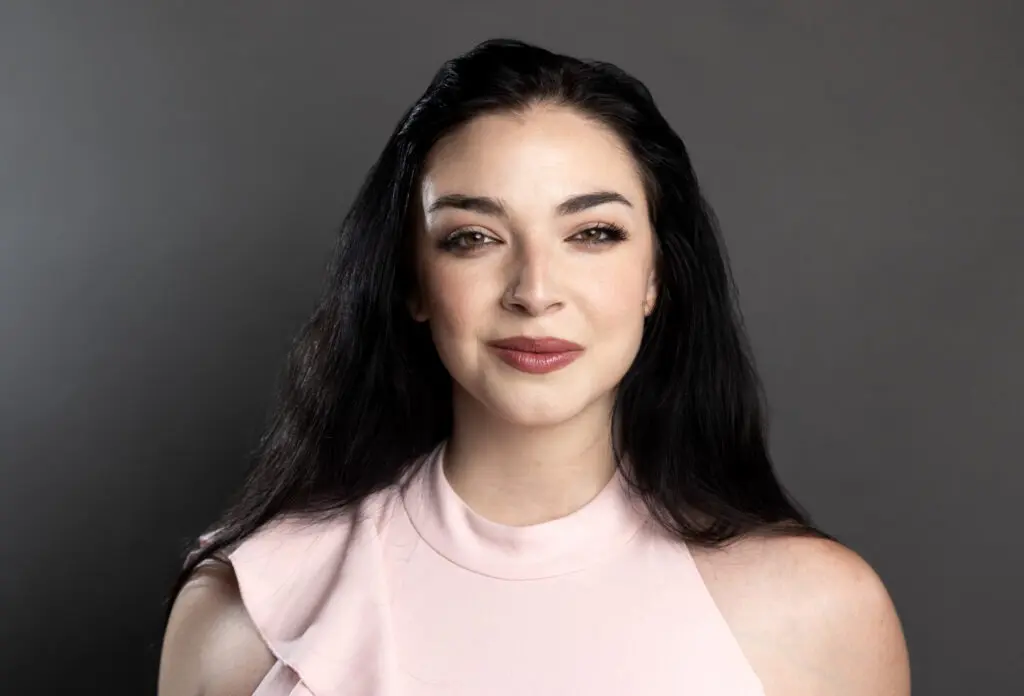
- Katherine Whyte: Canadian-American soprano Katherine Whyte has established an international reputation on both the opera stage and the concert platform. Acclaimed for her radiant tone and intelligent musicianship, Whyte has appeared with major North American and European orchestras, bringing a rare depth of interpretive insight to 20th-century and contemporary vocal literature.
The Venue: Merkin Hall at Kaufman Music Center
Located on the Upper West Side of Manhattan, Merkin Hall is universally praised by performers and audiences alike for its intimacy, warmth, and pristine acoustics. Seating just over 450 people, the hall provides an ideal environment for vocal-orchestral repertoire like Knoxville: Summer of 1915, allowing every nuance of Whyte’s soprano and Barber’s delicate orchestration to reach the listener without the acoustic dilution common in massive, barn-like concert spaces.
Official Statements and Institutional Vision
While formal press releases have outlined the broad strokes of the event, the philosophy guiding the Modus Operandi Orchestra speaks to a broader movement within contemporary classical music toward flexibility, community engagement, and artistic autonomy.
Although direct quotes regarding this specific program remain closely held within the administrative channels of MOO, the organization’s foundational mission statement provides a clear window into their motivations:
"The Modus Operandi Orchestra exists to break down the barriers between masterworks and modern audiences, offering New York City listeners uncompromising interpretations of symphonic, operatic, and choral literature. By harnessing the extraordinary depth of freelance talent available in this city, MOO champions artistic excellence, stylistic diversity, and the belief that live classical music must remain a vital, living dialogue with our shared history and culture."
Industry observers note that independent orchestras like MOO are uniquely positioned to spearhead semiquincentennial programming. Unburdened by the conservative board oversight and massive institutional overhead that can sometimes paralyze legacy orchestras, MOO can pivot quickly, curate boldly, and champion diverse voices such as Jessie Montgomery alongside canonical pillars with complete artistic freedom.
Future Outlook: The Role of Independent Orchestras in Cultural Milestones
As the United States approaches its 250th anniversary in 2026, the cultural sector is bracing for a wave of programming dedicated to the milestone. However, questions remain regarding how these commemorations will be funded, who will be represented, and whether the programming will transcend surface-level patriotism to offer genuine critique and reflection.
The Modus Operandi Orchestra’s "Celebrating America at 250" concert on November 19 serves as an important bellwether for how mid-sized and independent ensembles will handle this historic moment. By leaning into the contradictions of the American narrative—the pastoral beauty of Copland, the domestic melancholy of Barber, the multicultural dynamism of Montgomery, and the immigrant observations of Dvořák—MOO is setting a high standard for intellectual rigor.
Looking Ahead for MOO
Following the November 19 performance at Merkin Hall, MOO’s leadership plans to continue its season with additional explorations of choral-symphonic and operatic repertoire throughout the New York metropolitan area. The orchestra’s unique structural model—combining top-tier freelance instrumentalists with the specialized choral forces of the MOO Singers—positions them to tackle ambitious programming that few other mid-sized ensembles attempt.
As audiences increasingly seek authentic, intimate, and intellectually stimulating live arts experiences, the Modus Operandi Orchestra stands out as a nimble, forward-thinking force. Their upcoming concert is not merely a night of beautiful music; it is a thoughtful meditation on identity, memory, and the evolving sonic architecture of a nation.
Tickets and further information regarding the November 19 performance of "Celebrating America at 250" at Merkin Hall can be accessed through the official Kaufman Music Center box office or via the Modus Operandi Orchestra’s official digital portals.