
By Francisco Salazar
Published by OperaWire
Executive Overview
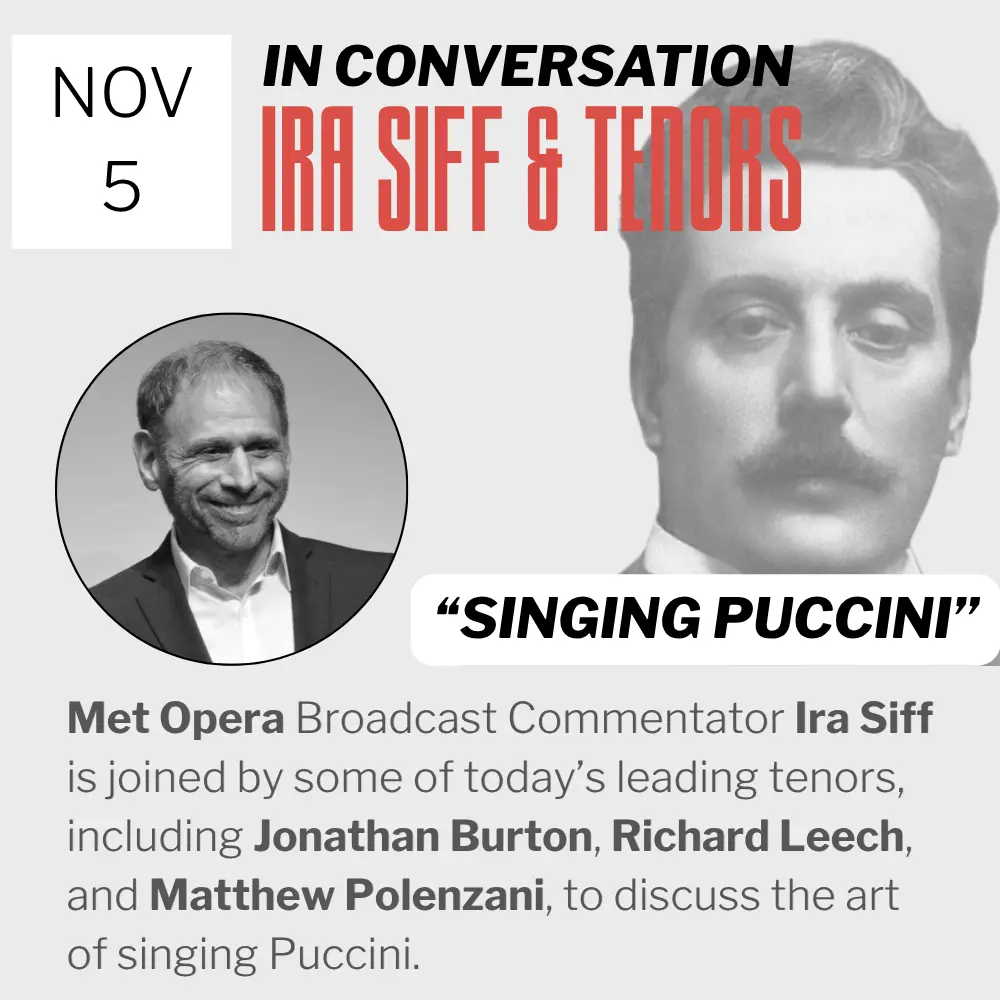
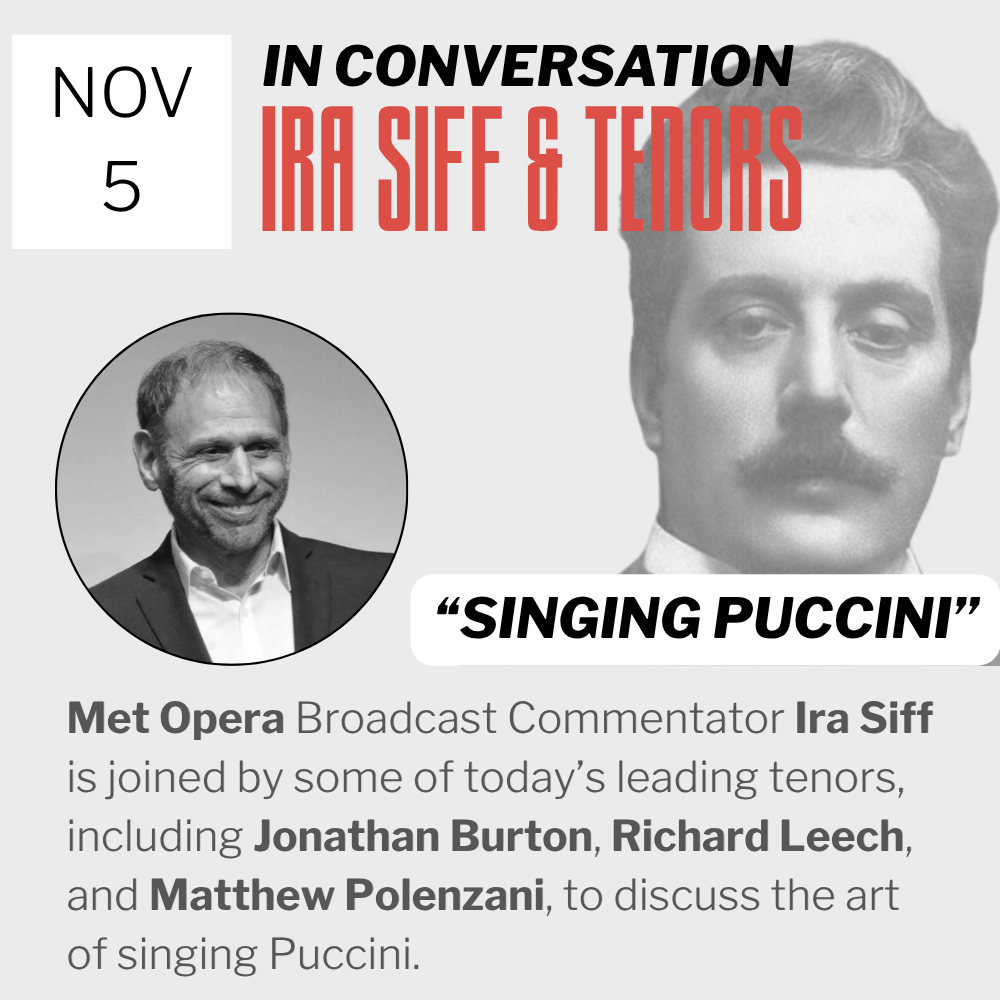
For opera aficionados, vocal enthusiasts, and students of classical music, the upcoming month brings a unique intellectual and artistic event. On November 5, the Jussi Björling Society—an organization dedicated to preserving the legacy and celebrating the unparalleled vocal artistry of the legendary Swedish tenor Jussi Björling—will host a high-profile, interactive webinar. This digital gathering promises an intimate, masterclass-level exploration into one of the most demanding and emotionally potent repertoires in all of classical music: the tenor roles of Giacomo Puccini.
At the helm of this prestigious panel is Ira Siff, renowned Metropolitan Opera Broadcast Commentator, stage director, and vocal critic whose encyclopedic knowledge of operatic history and vocal production is internationally celebrated. Siff will lead an engaging, multifaceted discussion alongside three extraordinary tenors of distinct generations and immense international acclaim: Jonathan Burton, Richard Leech, and Matthew Polenzani.
This virtual event, hosted via Zoom, is designed to transcend the traditional boundaries of a lecture, offering participants a rare window into the technical mechanics, stylistic nuances, and psychological demands of interpreting characters such as Rodolfo (La Bohème), Cavaradossi (Tosca), Calaf (Turandot), and Pinkerton (Madama Butterfly). In an era where digital programming has become a vital lifeline for global arts communities, the Jussi Björling Society continues to innovate by bridging the gap between legendary historical performance practices and modern vocal execution.
Beyond listening to these luminaries dissect the nuances of verismo phrasing, breath support, and Italian diction, attendees will be given the unique opportunity to submit questions in advance. Selected inquiries will be addressed directly by Siff and the panel during the live broadcast, fostering an interactive environment that encourages both seasoned scholars and emerging artists to engage deeply with the material.
Detailed Chronology: The Evolution of the Jussi Björling Society and the Genesis of the Puccini Masterclass
To fully appreciate the significance of the November 5 webinar, it is essential to trace the institutional history of the Jussi Björling Society and the trajectory that led to this milestone digital event.
The Legacy of Jussi Björling
Born Johan Jonsson Björling in 1911, Jussi Björling remains a towering figure in the pantheon of twentieth-century tenors. Renowned for his radiant timbre, crystalline diction, peerless breath control, and an aristocratic musicality that avoided vulgar emotional excess while maximizing dramatic impact, Björling set the gold standard for the Italian and French lyric-spinto repertoires. His interpretations of Puccini’s tragic heroes—characterized by a ringing, effortless upper register and an underlying vulnerability—continue to serve as the touchstone against which modern tenors are measured.
Founded to safeguard this monumental legacy, the Jussi Björling Society has historically organized archival exhibitions, published scholarly journals, and curated rare recordings. However, in recent years, the organization has expanded its mandate to include live educational programming. By connecting contemporary artists with the stylistic ethos of the past, the Society ensures that Björling’s aesthetic principles—purity of tone, absolute fidelity to the score, and emotional sincerity—remain alive in the twenty-first century.
Conceptualizing the November 5 Event
The genesis of the upcoming webinar lies in a growing desire among vocal pedagogues and cultural historians to examine how the demands of Puccini’s music have shifted across generations. Opera houses have grown in physical scale, orchestration has thickened, and contemporary staging demands have placed unprecedented physical and dramatic stress on the modern operatic voice.
Recognizing these challenges, the leadership of the Jussi Björling Society collaborated with Ira Siff to conceptualize a panel that could bridge historical perspective with real-time theatrical experience. Siff, whose career bridges decades of operatic observation and performance (including his legendary tenure as the co-founder and diva persona "Vera Galupe-Borszkh" of La Gran Scena Opera Company), was uniquely positioned to curate a panel representing the breadth of contemporary tenor singing.
The planning phase, which began in earnest during the late summer months, focused on selecting artists whose collective stage résumés cover the gamut of the Puccini canon. By pairing Richard Leech—a veteran of the world’s most prestigious stages whose career represents the golden age of late-twentieth-century Italianate singing—with Matthew Polenzani, a reigning king of the lyric tenor repertoire, and Jonathan Burton, a powerhouse emerging in heavier spinto and dramatic roles, the panel was engineered to offer contrasting yet complementary perspectives on vocal longevity, stylistic integrity, and dramatic interpretation.
Supporting Context & Metrics: Meet the Luminaries
The caliber of the November 5 webinar is defined entirely by its participants. Each panelist brings a distinct artistic background, a rigorous technical foundation, and decades of collective experience performing in the world’s leading opera houses.
Ira Siff: The Moderator and Historian
Serving as moderator, Ira Siff is an institution unto himself within the global opera community. Best known to millions of radio listeners as a commentator for the Metropolitan Opera Live in HD broadcasts and Saturday matinee radio transmissions, Siff possesses a rare combination of wit, deep historical scholarship, and an acute ear for vocal mechanics. His insights on the Met Broadcast Quiz and his pre-curtain lectures have educated generations of opera lovers. As a stage director and teacher, Siff has dedicated his post-performance career to mentoring young singers, making him the ideal facilitator for a discussion that aims to unpack the complex mechanics of the operatic voice.
Matthew Polenzani: The Lyric Master
Matthew Polenzani stands as one of the most celebrated and reliable lyric tenors of his generation. A fixture at the Metropolitan Opera—where he has sung hundreds of performances across an astonishing variety of roles—Polenzani’s career encompasses the major stages of the globe, including the Opéra de Paris, the Vienna State Opera, the Lyric Opera of Chicago, and the Houston Grand Opera.
While Polenzani is universally acclaimed for his Mozartian grace and bel canto elegance (having conquered roles such as Nemorino in L’elisir d’amore and the Duke of Mantua in Rigoletto), his venture into the Puccini canon—most notably as Rodolfo in La Bohème and Pinkerton in Madama Butterfly—has showcased his ability to marry vocal refinement with searing emotional intensity. Polenzani’s inclusion in the panel offers participants a masterclass in how a lyric tenor can scale his voice to meet the demands of verismo without sacrificing tonal beauty or structural health.
Richard Leech: The Legendary Italianate Voice
Representing the lineage of the grand lyric-spinto tenor is Richard Leech, an artist whose voice defined an era of operatic performance at the highest international level. During the 1980s, 90s, and 2000s, Leech was a commanding presence at the Metropolitan Opera, the Royal Opera House Covent Garden, Teatro alla Scala, and the Vienna State Opera.
Known for a darkly burnished, thrillingly expansive tone that could effortlessly pierce through heavy orchestrations, Leech achieved legendary status through his interpretations of Puccini, Verdi, and French romantic repertoire. His performances as Cavaradossi in Tosca and Rodolfo are etched into the memories of operatic purists worldwide. Leech’s presence on the panel provides an invaluable historical bridge, offering attendees deep insights into the physical stamina, psychological endurance, and vocal placement required to sustain heavy Italianate roles over a multi-decade international career.
Jonathan Burton: The Spinto Powerhouse
Rounding out the panel is Jonathan Burton, a tenor whose star has risen rapidly across North American and European stages. Burton has built a reputation for tackling some of the most demanding dramatic and spinto roles in the canon. Most recently, Burton earned widespread critical acclaim for his searing performances in the Metropolitan Opera’s towering production of Verdi’s Macbeth.
In addition to his triumphs at the Met, Burton has forged significant artistic relationships with the Santa Fe Opera, Atlanta Opera, and Opera Philadelphia, among others. As an artist actively navigating the rigorous demands of heavy dramatic and spinto literature—including Puccini’s most formidable challenges—Burton’s perspective will offer webinar participants a frontline view of the physical conditioning, breath management, and dramatic commitment required to portray Puccini’s tragic heroes on the modern stage.
Official Statements and Industry Impact
The announcement of the Jussi Björling Society webinar has sent ripples of excitement through the classical music community, generating commentary from educators, critics, and institutional leaders alike.
In a preliminary statement released by the Society’s programming committee, organizers emphasized the urgency of preserving vocal traditions through direct dialogue. "The art of singing Puccini is not merely a matter of vocal power; it is an intricate exercise in style, phrasing, and emotional honesty," the statement read. "By bringing together artists of the stature of Jonathan Burton, Richard Leech, and Matthew Polenzani, guided by the peerless intellect of Ira Siff, we are offering our members and the global public an unprecedented educational resource. This is an opportunity to look behind the curtain of the world’s greatest opera houses and understand the craft at its most fundamental level."
Industry analysts have also highlighted the timing of the event. As opera companies worldwide grapple with shifting audience demographics and the pressures of modern theatrical production, educational initiatives that demystify the vocal arts play a crucial role in cultivating the next generation of patrons and practitioners.
Furthermore, the interactive structure of the Zoom webinar—allowing participants from across the globe to submit questions for live discussion—underscores a broader industry trend toward democratization and community engagement. By breaking down the barriers between legendary performers and aspiring students, the Jussi Björling Society is reinforcing the communal, shared nature of operatic tradition.
Future Outlook: The Ongoing Evolution of Vocal Pedagogy and Digital Access
Looking ahead, the November 5 webinar serves as a case study for the future of classical music education and cultural preservation. As digital platforms continue to mature, specialized societies like the Jussi Björling organization are finding innovative ways to leverage technology, ensuring that geographical boundaries no longer inhibit access to world-class artistic mentorship.
The Future of Masterclasses and Digital Engagement
The success of previous virtual initiatives points toward an expanding landscape for digital operatic scholarship. Where masterclasses were once confined to physical conservatories or backstage green rooms, events like the upcoming Puccini webinar open the doors to a worldwide audience. Young singers in remote corners of the globe can now listen directly to veterans of the Metropolitan Opera and La Scala discussing the finer points of passaggio management, vowel modification, and dramatic intent.
Preserving the Verismo Tradition
As the operatic canon continues to evolve in the twenty-first century, the verismo works of Giacomo Puccini remain the lifeblood of international opera house box offices. Productions of La Bohème, Tosca, and Turandot introduce thousands of new listeners to the art form every year. However, the vocal health of the tenors who tackle these roles remains a perennial topic of concern among voice teachers and critics.
Events that analyze the technical mechanics of singing Puccini—balancing the need for visceral, theatrical release with the technical discipline required to preserve vocal longevity—are more vital than ever. By engaging tenors who represent different stages of career development and distinct vocal categories (lyric, lyric-spinto, and dramatic), the Jussi Björling Society is actively contributing to the preservation of healthy, sustainable vocal technique.
Conclusion
As November 5 approaches, anticipation continues to build across the classical music landscape. For anyone captivated by the soaring high notes, the achingly tender phrasing, and the dramatic high-wire act that defines Puccini tenor singing, this webinar represents an unmissable cultural event. Through the guiding wisdom of Ira Siff and the candid, expert reflections of Jonathan Burton, Richard Leech, and Matthew Polenzani, the timeless spirit of Jussi Björling’s artistry will undoubtedly echo brightly into the future.
Participants interested in attending the Zoom webinar and submitting questions for consideration are encouraged to visit the official Jussi Björling Society website for registration details and event guidelines.