
Executive Overview
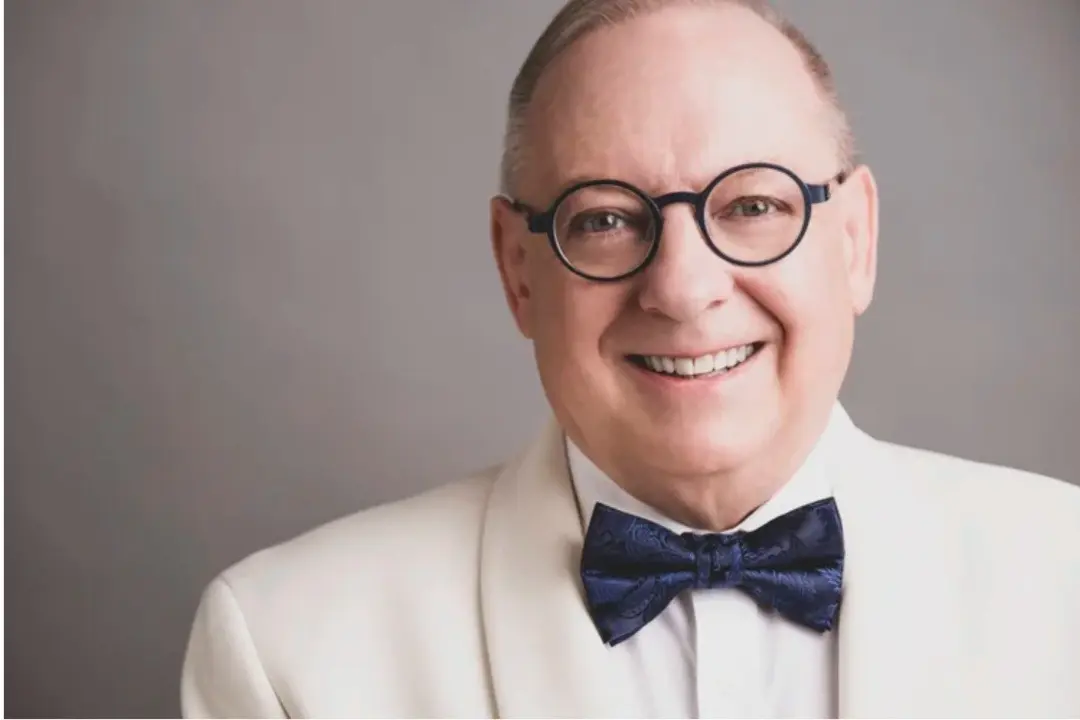
Entering his sixth decade on the podium, British-born conductor Nicholas McGegan remains
one of the world’s foremost authorities on Baroque and Classical repertoires. Renowned for stripping away academic stiffness to make centuries-old scores feel vibrantly contemporary, McGegan combines rigorous musicological scholarship with an infectious sense of wit, warmth, and theatrical pacing. Following a celebrated 34-year tenure as Music Director of the Philharmonia Baroque Orchestra & Chorale—where he now serves as Music Director Emeritus—alongside leadership roles with the International Handel Festival Göttingen and Sweden’s Drottningholm Court Theatre, McGegan continues to shape how modern audiences experience 18th-century masterpieces.
In November 2026, McGegan brings his distinct interpretative vision to the Filharmonia Narodowa, leading the Warsaw Philharmonic Orchestra and Choir in George Frideric Handel’s secular oratorio, L’Allegro, il Penseroso ed il Moderato. Joined by a stellar quartet of vocal soloists—Robin Johannsen, Fflur Wyn, Robin Tritschler, and Matthew Brook—McGegan will steer the modern Polish ensemble through one of Handel’s most imaginative, texturally rich, and structurally fascinating scores.
Ahead of this eagerly anticipated engagement, OperaWire sat down with McGegan for an expansive, wide-ranging discussion. The conductor explored the collaborative frictions of Handel and librettist Charles Jennens, the historical realities of 18th-century performance practice, the mechanics of sound-painting, and his upcoming, boundary-pushing programming at the prestigious Halle Handel Festival.
Detailed Chronology & Production Genesis
From Milton to Handel: The Literary Architecture of L’Allegro
Composed in the early 1740s—a critical historical juncture when Handel was turning his back on financially volatile Italian opera to pioneer English-language oratorios—L’Allegro, il Penseroso ed il Moderato stands apart from the typical biblical or mythological subjects of the era. Rather than relying on a conventional plot, the work is built upon the towering, dense poetic verse of John Milton, shaped and woven together by librettist Charles Jennens.
McGegan’s personal history with the piece runs deep, stretching back to 1987 before he directed the American premiere of Mark Morris’s iconic choreography to the score in 1991.
"It is one of Handel’s most imaginative works," McGegan reflects. "Unlike his usual librettos, which are sometimes merely ‘serviceable,’ this score pairs great music with great poetry, specifically the very academic English of John Milton. I grew up in England; Milton was part of our school education, so I knew the words even before the music."
The genius of Jennens’s libretto lies in its structural juxtaposition. By interleaving Milton’s twin poems—L’Allegro (representing the extroverted, sun-chasing partygoer) and Il Penseroso (the contemplative intellectual reading by candlelight)—Jennens created a dynamic psychological dialogue. The opening movements throw contrasting emotional states into sharp relief: bitter music demanding misery vanish makes way for joyous passages, only to be interrupted by calls for quiet reflection.
Furthermore, Jennens appended a third section (Il Moderato), featuring his own original poetry, to champion a philosophical synthesis.
"The idea is brilliant: you need balance," McGegan explains. "It’s almost Buddhist, really—finding the middle way. Don’t party all day long, don’t spend your whole life reading by candlelight either. It’s not a religious piece; it’s a moral oratorio."
Tailoring the Score for Modern Audiences
For the upcoming Warsaw performances, McGegan and the Warsaw Philharmonic will not be performing the complete, unabridged manuscript. Instead, they are trimming portions of Part Three.
Ironically, this editorial decision mirrors practices employed by Handel himself. While trimming the third section slightly diminishes the explicit moralizing of the work’s conclusion, it streamlines the dramatic arc for a modern concert hall audience, ensuring the evening concludes with an uplifting, energetic choral finale rather than drawn-out didacticism.
Supporting Context & Metrics: Performance Practice and Historical Realities
Sound-Painting and Orchestral Grandeur
The early 1740s marked a period of bold experimentation for Handel. Writing Messiah and L’Allegro within a year of each other, the composer capitalized on the expanded sonic palette available in London’s public theaters.
While Messiah famously exercises restraint—deliberately withholding bright brass instrumentation until specific textual moments like "the trumpet shall sound"—L’Allegro leans heavily into musical pictorialism (tonmalerei). Bird songs, hunting horns, and festive fanfares pervade the score. McGegan notes that this love for sonic imitation was a hallmark of the period, mirrored later in Haydn’s major oratorios The Creation and The Seasons (both of which similarly relied on British librettos rooted in Milton and James Thomson).
"Composers just loved imitating birds, hunting horns, and festive trumpets," says McGegan. "It’s a great excuse to unleash their imagination. At that moment [in the 1740s], Handel had practically abandoned opera and was going full-throttle into oratorios. With those compositions, he was showing off. Bigger orchestras, color, choirs on stage—he was just proving to everyone, ‘Look at what a brilliant composer I am.’"
Navigating the Personalities: Handel, Jennens, and Burney
The creative friction between Handel and his primary librettist, Charles Jennens, remains one of music history’s most fascinating partnerships. Jennens—immensely wealthy, deeply eccentric, and afflicted with depression—frequently treated the mercurial composer with an aristocratic condescension. He famously referred to Messiah as "my Messiah" and griped that Handel was too lazy to rewrite the overture.
Handel, for his part, was a man of fierce contrasts. Citing historian Charles Burney, McGegan notes that Handel likely suffered from cyclothymia or manic depression:
"Handel usually looked sullen, but when he smiled, it was like the sun suddenly coming out! He could sink into deep melancholy, yet when he was up, he was pure joy."
The cultural and linguistic divides of the collaboration also yielded legendary anecdotes. Because English was not Handel’s native tongue, early encounters with Milton’s poetry occasionally produced comedic mis-stressings. On one late-night composition session during the writing of Jephtha, a bewildered Handel climbed into a horse-drawn carriage, rode to his librettist’s estate, hurled stones at the window, and demanded an immediate explanation for the word "billows" before racing back to his writing desk.
The Science of Tempo: Barrel Organs and Metronomes
Determining accurate historical tempi for music predating Maelzel’s metronome often requires detective work. For L’Allegro, McGegan relies on a rare and invaluable primary source: a performance duration index created in 1762 by Handel’s amanuensis, John Christopher Smith, for automated barrel organs. Documenting 19 movements, this historical record provides concrete metrical anchors that validate modern performance speeds, proving that many fast passages were indeed intended to fly at breakneck velocity.
Official Statements & Expert Insights
Collaborating with Modern Ensembles
Directing a modern, non-period symphony orchestra like the Warsaw Philharmonic in Baroque repertoire requires careful preparation and tactical leadership. McGegan emphasizes the importance of bridging the stylistic gap through pre-arranged materials.
"I do my homework," McGegan asserts. "I always bring my own prepared orchestral parts—all computerized, clear, with exact bowings and written-out cadenzas. If they played Tchaikovsky last week, they obviously need a massive gear change… Plus, we have proper rehearsals scheduled, and they all have my email if any questions pop up before we meet."
Addressing historical orchestral seating layouts, McGegan issues a pragmatic warning against dogmatic application:
"Many modern orchestras like splitting First and Second Violins left and right. For Mozart and Haydn, that’s great. But for Handel? It’s a terrible idea! Handel often writes violins in unison—if they’re split across the stage, the players literally can’t hear each other. They must sit side-by-side."
Warsaw Expectations
Reflecting on his return to the Polish capital—having last visited in 2005 during the European Union’s historic ten-nation expansion tour—McGegan expresses enthusiasm for the Filharmonia Narodowa’s acoustic environment.
"It’s a concert hall and not a cavernous church," he notes. "Handel premiered the work at Covent Garden, so a drier acoustic helps with clarity. I’m really eager to see the Polish chorus get their teeth around Milton’s tricky English text. It’s going to be brilliant fun."
Future Outlook: Pushing Boundaries in Halle
Looking beyond his Warsaw engagements, McGegan’s calendar features innovative programming that promises to challenge traditionalist expectations. At the upcoming Halle Handel Festival, where he conducts the opening concert, artistic director Florian Amort has curated a striking juxtapositional experiment: pairing Handel’s stately Coronation Anthems with Sir Peter Maxwell Davies’s harrowing Expressionist masterwork, Eight Songs for a Mad King.
"It is literally Francis Bacon in sound!" McGegan enthuses, comparing Davies’s depiction of King George III’s psychological collapse to the visceral paintings of the British artist. "George III’s coronation actually used the very Coronation Anthems Handel wrote for his grandfather… Plus, Davies’s piece literally quotes ‘Comfort Ye’ from Messiah, but punctuated by hysterical shrieks! Some people will hate it, some will be deeply moved."
Through projects ranging from Milton’s elevated verse in Warsaw to avant-garde psychological soundscapes in Halle, Nicholas McGegan proves that early music interpretation is not a museum-bound exercise in preservation, but a living, breathing art form capable of endless surprise.