
Executive Overview
For music educators across the globe, the dawn of a new academic year represents a paradox of immense professional passion and overwhelming administrative burden. While August and September brim with the vibrant energy of returning students, eager ensembles, and the promise of artistic breakthroughs, they are equally notorious for drowning directors in a sea of logistical hurdles. Finalizing class rosters, establishing functional classroom routines, auditing summer learning loss, and navigating disconnected grading platforms routinely transform the start of the semester into a grueling administrative marathon.
Recognizing that a music educator’s true home is on the podium—not buried beneath mounds of paperwork or toggling between endless software tabs—MakeMusic has responded with a comprehensive, transformative suite of updates to MakeMusic Cloud. Engineered specifically to eliminate systemic classroom friction, slash grading timelines by hours each week, and optimize early-year diagnostic workflows, these new features empower teachers to start the academic year stronger than ever.
By bridging critical gaps in Learning Management Systems (LMS), overhauling gradebook analytics, introducing collaborative co-teaching capabilities, expanding holistic assessment vectors, and supplying instant, standard-aligned curriculum content, MakeMusic Cloud is redefining what digital support looks like for modern music classrooms. This report explores the core updates rolling out for the new school year, detailing how these innovations promise to reclaim valuable instructional time for band, choir, and orchestra directors everywhere.
Detailed Chronology: Developing the Back-to-School Feature Suite
The rollout of MakeMusic Cloud’s latest platform upgrades is the culmination of months of intensive research, user feedback analysis, and educational software development. The timeline of this release underscores MakeMusic’s commitment to addressing the real-world, daily pain points experienced by K-12 and collegiate music teachers.

Spring to Summer: Identifying the Administrative Bottleneck
As the previous academic year drew to a close, MakeMusic’s product and user experience teams conducted extensive surveys and focus groups with music educators nationwide. The findings were unanimous: while digital platforms had successfully digitized repertoire and practice tools, the administrative overhead required to manage digital classrooms was scaling upward.
- Teachers reported spending up to five hours a week simply copying grades from music-specific apps into school-mandated district gradebooks.
- Ensemble directors managing large programs expressed frustration over single-user classroom limitations, which prevented student teachers, sectional coaches, and assistant directors from sharing the workload equitably.
- Diagnostic assessments during the critical first three weeks of school were hindered by rigid assignment types that could only evaluate pitch and rhythm, ignoring foundational physical elements like posture, bow hold, and embouchure.
Mid-Summer: Feature Engineering and Integration Testing
Armed with qualitative and quantitative feedback from the field, MakeMusic’s software engineers prioritized a robust feature roadmap targeted squarely at the fall deployment window. Development focused on three core pillars: Seamless Interoperability, Holistic Evaluation, and Instant Instructional Readiness.
- Interoperability: Engineers refined deep LMS integrations, prioritizing automated Google Grade Passback to eliminate manual data entry.
- Evaluation: The product team designed dedicated Audio/Video and Multiple Choice assignment structures to capture physical technique and theoretical literacy alongside standard performance metrics.
- Curriculum: Content curators integrated pre-configured sight-reading templates aligned with major state standards (such as NYSSMA and Texas UIL) and established method books, alongside a new "pinnable" interface for class materials.
Late August / Early September: Official Platform Launch
The resulting feature suite went live just as teachers returned to their classrooms to set up their physical and virtual learning environments. Designed for immediate deployment with zero downtime for existing class structures, the platform updates arrived precisely when educators needed them most to navigate the chaos of back-to-school onboarding.
Supporting Context & Metrics: The Real Cost of Administrative Friction in Music Education
To fully appreciate the impact of MakeMusic Cloud’s latest updates, one must understand the unique administrative ecosystem of the music classroom. Unlike traditional academic subjects where multiple-choice tests or essay submissions dominate, music education requires a complex, multi-layered evaluation process.

The Grading Burden
Recent educational surveys indicate that the average secondary music educator oversees between 100 and 200 students distributed across various concert bands, marching units, jazz ensembles, and vocal groups. Evaluating a single performance assignment traditionally involves:
- Listening to or watching a student recording.
- Assessing intonation, rhythm, tone quality, and phrasing.
- Formulating constructive, individualized feedback.
- Entering scores into the platform.
- Transcribing those scores manually into institutional LMS platforms like Google Classroom, Canvas, or Schoology.
When multiplied across 150 students on a weekly basis, step five alone consumes hours of unpaid personal time. By introducing Google Grade Passback and enhanced LMS integration, MakeMusic Cloud effectively eliminates manual transcription, returning an estimated 3 to 5 hours of personal time to educators every single week.
Diagnostic Necessity vs. Prep Time
The first month of school is universally recognized as the most critical window for correcting poor technical habits acquired over the summer break. However, creating tailored diagnostic materials—such as sight-reading excerpts matching specific state festival standards or theory quizzes checking foundational note-reading—historically required hours of score-writing or internet searches.
MakeMusic Cloud’s integration of Sight Reading Templates pre-configured for state standards (NYSSMA, Texas UIL) and staple method books (Sing at First Sight, Habits of a Successful Musician, Sound Innovations) collapses preparation time from hours to mere seconds.

Breaking Down the Innovations: Core Features of the MakeMusic Cloud Update
The newly released MakeMusic Cloud toolset is divided into three distinct operational categories designed to transform teacher workflows from the ground up: streamlining administration and grading, expanding assessment parameters, and providing instant day-one content.
1. Streamlining Admin & Grading Workflows
Advanced LMS Integration & Google Grade Passback
Data entry fatigue is a primary contributor to educator burnout. MakeMusic Cloud has significantly upgraded its Learning Management System (LMS) connectivity. While integrations with major platforms like Canvas and Schoology have been smoothed out for frictionless onboarding, the crown jewel of this update is Google Grade Passback.
- How it works: The moment a student completes and submits an assignment within MakeMusic Cloud, their score is instantly and automatically synced to the educator’s Google Classroom gradebook.
- The Impact: Teachers no longer need to keep multiple browser tabs open on a Friday afternoon, manually cross-referencing and copying grades. The synchronization operates quietly in the background, ensuring data integrity without administrative overhead.
The Overhauled Gradebook Experience
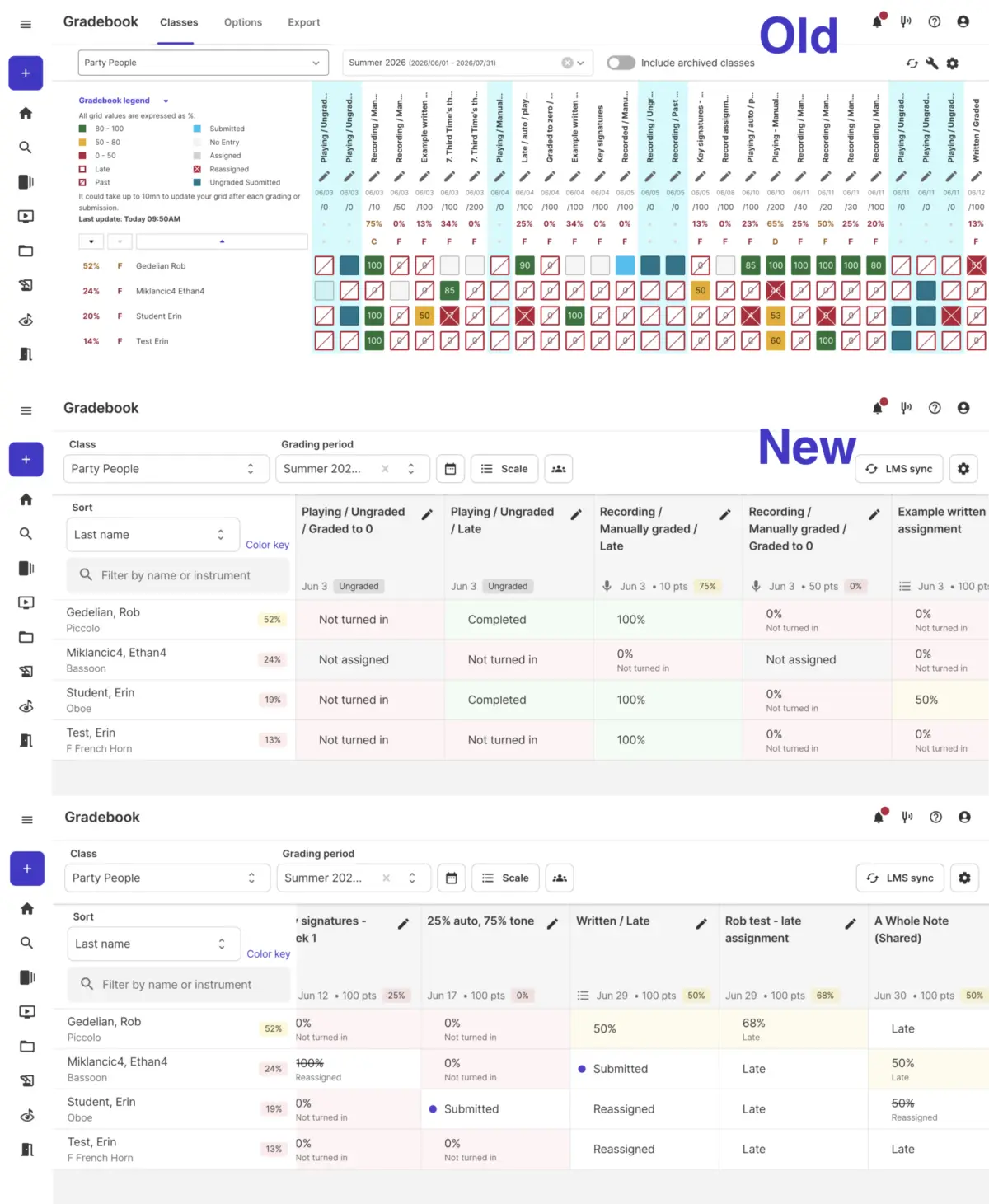
The MakeMusic Cloud gradebook has been rebuilt from the ground up to offer a cleaner, faster, and more intuitive visual interface.
- At-a-Glance Analytics: The new layout instantly surfaces performance trends, allowing directors to visualize class-wide mastery or spot individual outliers within seconds.
- Early Intervention: During the vulnerable first weeks of rehearsal, directors can immediately identify which students are thriving and which require targeted intervention, ensuring no learner falls through the cracks.
Collaborative Co-Teaching
Managing large, multi-faceted music programs is rarely a solo endeavor. Recognizing that band and choir directors often work alongside assistant directors, student teachers, and specialized sectional coaches, MakeMusic has introduced a dedicated Co-Teaching feature.

- Shared Responsibilities: Educators can seamlessly add co-teachers to their MakeMusic Cloud classes.
- Division of Labor: Assistant directors and coaches can assign targeted exercises, review student submissions, and enter grades alongside the primary director from day one, democratizing classroom management and lightening the load for head directors.
2. Assessing Playing and Literacy with Ease
Audio/Video and Multiple Choice Assignments
While automated pitch and rhythm scoring remain central to MakeMusic Cloud, music education requires evaluation that extends far beyond computer-generated metrics. The new Audio/Video and Multiple Choice assignment types bridge this gap.
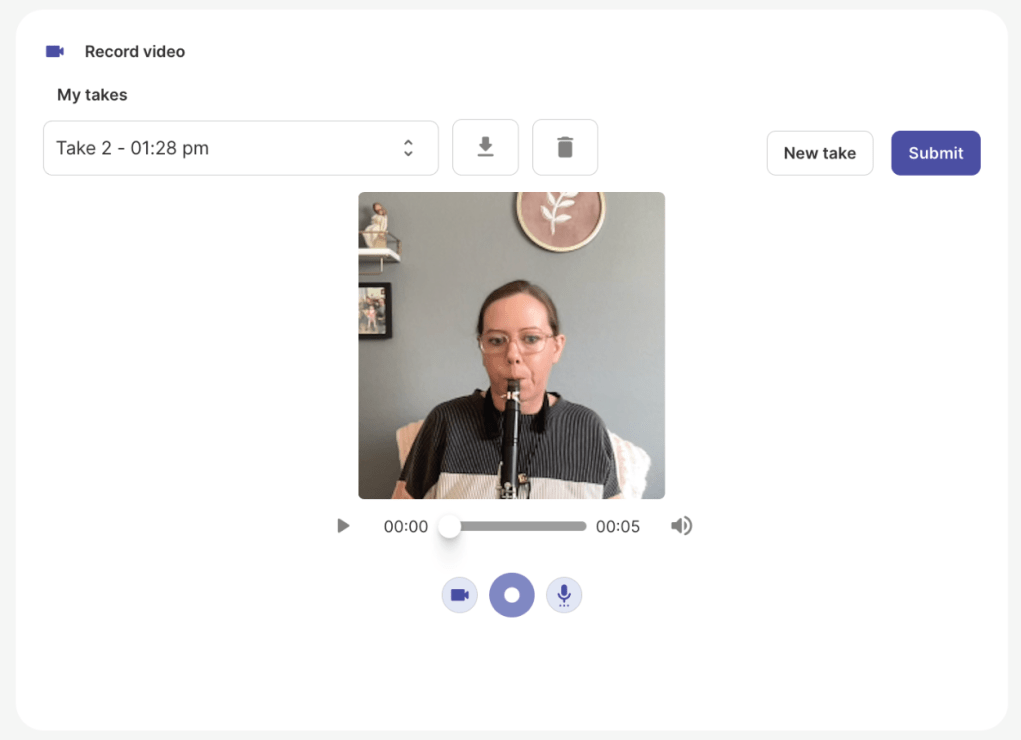
- Technical Posture Check: Instructors can assign video-only or AV submissions, requiring students to record themselves so directors can inspect physical fundamentals—such as embouchure, instrument posture, bow holds, or percussion stick grips—that cannot be captured by audio-only algorithms.
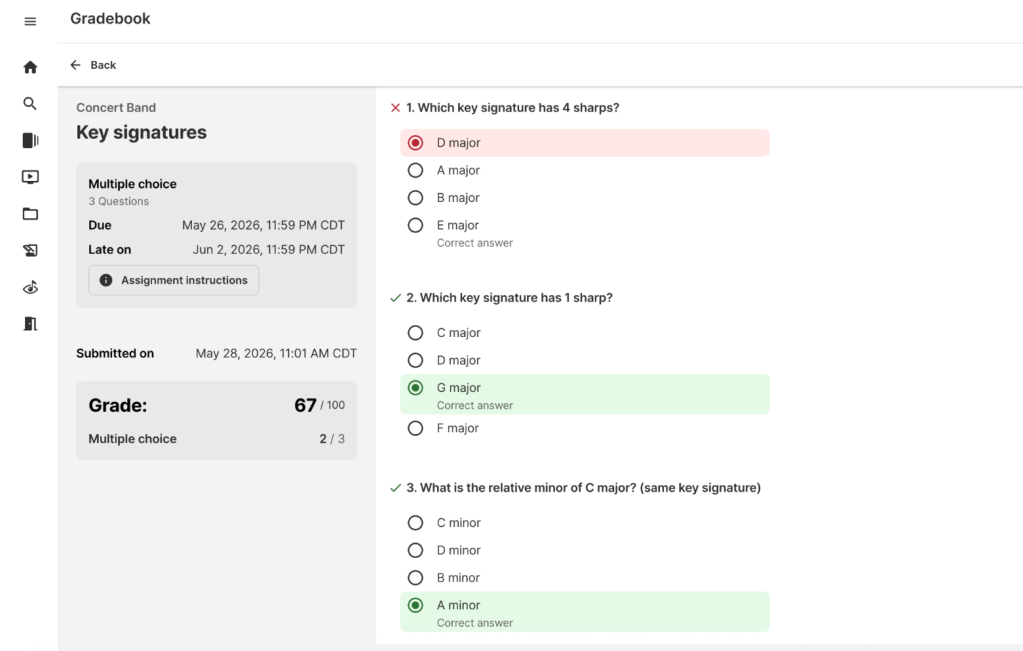
- Literacy Quizzes: Multiple-choice assignments allow teachers to test rapid note recognition, key signature identification, and musical symbol retention.
- Versatility: These assignment types are ideally suited for non-catalog repertoire, marching band stand tunes, or informal get-to-know-you playing tests during the opening weeks of the term.
Integrated Theory Worksheets
Musical literacy is the bedrock of lifelong musicianship. To ensure theory instruction is never sidelined by performance pressures, MakeMusic Cloud has embedded ready-to-use Theory Worksheets directly into the platform interface. Teachers can assign, collect, and grade comprehensive theory modules without needing to print physical handouts or manage external document portals.
3. Instant Content for Day One
Pre-Configured Sight-Reading Templates
Diagnostic sight-reading is a standard practice for assessing ensemble readiness at the start of a term, but generating appropriately leveled material is notoriously time-consuming. MakeMusic Cloud now provides a robust library of expertly crafted sight-reading templates.
- Standard-Aligned: Templates are pre-configured to meet rigorous state festival standards, including NYSSMA and Texas UIL.
- Method Integration: Templates seamlessly incorporate exercises from widely adopted pedagogical texts such as Sing at First Sight, Habits of a Successful Musician, and Sound Innovations.
Pinned Method Books and Playlists
Longtime users of MakeMusic Cloud have long requested greater flexibility in organizing their digital libraries. The new platform update introduces the ability to pin multiple method books and playlists directly to a specific class.
- Top-of-Mind Resources: Pinned items remain prominently displayed, ensuring students can instantly access their core texts without digging through nested menus.
- Expanded Catalog Support: Teachers can now pin Bethany Main’s newly released Choir Up! alongside existing texts like Sing at First Sight. Furthermore, books from The Foundations Series are now fully pinnable, allowing educators to build comprehensive, multi-text curricula tailored to their exact pedagogical philosophy.
Official Statements and Industry Perspectives
Although specific executive quotes were not embedded in the immediate press release, the overarching philosophy of MakeMusic’s product deployment reflects a profound alignment with modern educational demands.
Industry analysts and educational technologists note that software solutions in the post-pandemic era must prioritize time-reclamation over feature bloat. By focusing engineering efforts on workflow automation—specifically Google Grade Passback and co-teaching logistics—MakeMusic is addressing the primary drivers of teacher attrition: administrative fatigue and isolation.
Veteran music educators participating in early beta testing of the new MakeMusic Cloud suite have praised the platform’s ability to restore balance to their professional lives. Several directors noted that the removal of manual grade transcription alone has transformed their Friday afternoons from administrative nightmares into manageable closing routines, allowing them to leave school at a reasonable hour and focus their remaining energy on artistic planning.
Future Outlook: The Evolution of Digital Music Pedagogy
As K-12 and higher education institutions continue to navigate hybrid learning environments and budgetary pressures, software tools that maximize instructional efficiency while safeguarding pedagogical integrity will become increasingly indispensable.
MakeMusic Cloud’s latest feature rollout signals a clear trajectory for the future of digital music education. By continuing to refine the intersection of automated assessment, seamless district-level integration (LMS and grade passbacks), and expansive, standard-aligned curricula, MakeMusic is positioning its platform not merely as a practice tool, but as an indispensable central operating system for modern music programs.
For educators seeking to reclaim their weekends, eliminate redundant data entry, and secure a streamlined start to the school year, the message from MakeMusic is clear. By logging into MakeMusic Cloud today, teachers can instantly configure their classes, activate co-teaching protocols, deploy standard-aligned sight-reading diagnostics, and step onto the podium with absolute confidence.
To explore the new features and set up your classes for the upcoming term, educators can log in directly at MakeMusic Cloud.