
Executive Overview
In the landscape of instrumental and vocal music education, few skills are as universally prized—or as stubbornly difficult to teach effectively—as sight reading. Educators have long understood that strong sight-reading proficiency is the bedrock of musical independence. Students who can effortlessly decode unfamiliar notation learn new repertoire at an accelerated pace, navigate rehearsals with minimized friction, and step into festival adjudication rooms with poised confidence rather than creeping dread. More importantly, independent reading literacy serves as the ultimate passport to lifelong musicianship. It is the vital skill that empowers students to continue making music long after they have graduated and left the structured environment of the classroom, whether they are joining a local community wind ensemble, contributing to a house of worship choir, or improvising in a weekend garage jam session with friends.
Yet, despite its undeniable importance, sight reading has historically been one of the most frustrating components of music instruction for both teachers and students. Traditional pedagogy dictates that reading fluency only improves through consistent, methodical practice with unfamiliar musical material. The pedagogical bottleneck, however, has always been resource scarcity. Standard method books—while invaluable for laying down foundational technique—contain a finite number of exercises. Once a student plays or sings through a particular page two or three times, the cognitive dynamic shifts fundamentally. They cease to actively read the musical notes on the page; instead, they rely on auditory memory, spatial muscle memory, or cognitive recall to reproduce the exercise. The core objective of reading fresh notation is effectively defeated.
Enter MakeMusic, a pioneer in digital music learning technology, which has officially announced the launch of its groundbreaking Correlated Sight Reading Generators. Designed as an advanced extension of the platform’s popular Sight Reading Studio, these innovative templates are engineered to solve the perennial teacher dilemma of content exhaustion. By seamlessly mapping onto the curriculum of widely adopted, trusted method books, these generators provide educators and students with an infinite, on-demand supply of fresh, leveled sight-reading exercises. This release marks a watershed moment in music pedagogy, promising to drastically reduce lesson preparation time while fundamentally altering how students engage with notation at school and at home.
Detailed Chronology: The Evolution of Sight Reading Pedagogy and Digital Innovation
To fully appreciate the significance of MakeMusic’s latest offering, it is necessary to examine the historical trajectory of music reading instruction and the technological milestones that paved the way for automated sight-reading generation.
The Era of Static Print and Manual Labor
For generations, music educators operated in an analog paradigm. Teachers seeking to supplement standard method books with additional sight-reading material faced a staggering amount of manual labor. This often involved sitting at a piano with manuscript paper, manually transposing melodies, or utilizing specialized computer notation software to hand-write dozens of micro-exercises tailored to specific developmental milestones—such as introducing a new note on the treble staff, a dotted-quarter rhythm, or a flat accidental.
This manual process consumed countless hours of unpaid teacher preparation time every single week. Alternatively, educators relied on anthologies of sight-reading excerpts. While these anthologies offered convenience, they were rigid. They rarely aligned precisely with the pedagogical sequence of the specific method book a school district had adopted. A teacher might find a fantastic rhythm exercise in an anthology, only to realize it required students to use a syncopated pattern they would not encounter in their primary method book for another three months. This structural disconnect often relegated sight reading to an isolated, disjointed chore rather than a natural, integrated extension of daily learning.
The Digital Shift and the Rise of Sight Reading Studio
As music education gradually embraced digital tools over the past two decades, software solutions began addressing the mechanical hurdles of practice. Digital audio workstations, interactive notation displays, and practice assessment platforms emerged to help students practice more efficiently. However, while these tools excelled at tracking pitch and rhythm accuracy for assigned repertoire, the generation of dynamically leveled, pedagogically sound sight-reading material remained rudimentary.
MakeMusic’s development of Sight Reading Studio represented a major leap forward, offering teachers the ability to generate customized sight-reading exercises based on specific parameters such as key signature, time signature, rhythm complexity, and range. While revolutionary, Sight Reading Studio previously required educators to manually configure these parameters from scratch to match their curriculum. For busy band directors, orchestra leaders, and choral conductors managing multiple ensembles and hundreds of students, configuring custom parameters for every single lesson remained an administrative hurdle.
The Breakthrough: Correlated Generators
Recognizing the gap between customizable software and real-world classroom workflows, MakeMusic’s pedagogical and engineering teams embarked on a mission to bridge the two worlds. The result is the new suite of Correlated Sight Reading Generators.
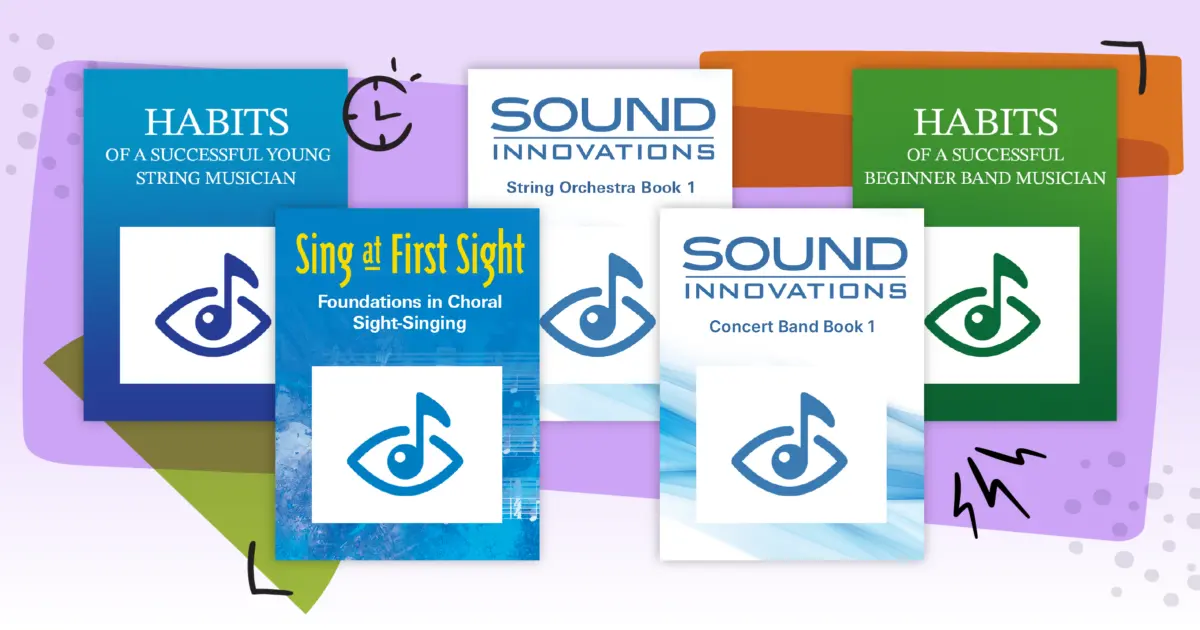
Rather than forcing teachers to translate their method book’s table of contents into software parameters, MakeMusic has done the heavy lifting behind the scenes. By pre-building Sight Reading Studio templates that align lesson-by-lesson with trusted, industry-standard method books, the platform has effectively automated the synchronization between core instruction and supplemental practice. Educators can now open their digital library, locate the exact page or lesson they covered in class that day, and instantly deploy an unlimited stream of structurally identical yet musically distinct sight-reading examples.
Supporting Context & Metrics: The Pedagogical Necessity of Infinite Practice
The deployment of automated, correlated sight-reading generation is not merely a matter of administrative convenience; it is firmly rooted in cognitive science and music education research.
Cognitive Load and the Danger of Rote Memorization
Cognitive psychologists specializing in music acquisition note that human working memory relies heavily on pattern recognition. When a developing musician encounters a musical phrase for the first time, their brain must perform complex, simultaneous decoding operations: identifying clefs, translating visual symbols into spatial fingerings or vocal pitch placements, calculating rhythmic durations, and executing the motor response.
When a student repeats the same exercise multiple times, the brain offloads the visual decoding process to long-term memory. The student is no longer reading; they are recalling. While repetition is crucial for technical mastery and tone production, it completely undermines the neurological workout required to improve sight-reading fluency.
By providing an infinite pool of variable exercises that adhere strictly to the parameters of a specific lesson, MakeMusic’s correlated generators ensure that students are perpetually forced to engage their active visual-decoding faculties. Every single click yields a fresh array of notes and rhythms that respect the exact boundaries of the student’s current technical capabilities—no more, no less.
Reclaiming Instructional Time
Time is arguably the most precious and constrained commodity in modern arts education. According to professional surveys of K-12 music educators, teachers routinely spend between three to five hours every week on out-of-class administrative tasks, lesson planning, and materials preparation.
By eliminating the need to search for, scan, copy, or compose supplemental reading material, the Correlated Sight Reading Generators return hours of valuable time to the educator. This reclaimed time can be redirected toward high-impact pedagogical activities, such as:
- Providing individualized coaching to struggling students during sectionals.
- Conducting deeper artistic interpretation work with full ensembles.
- Developing creative composition and improvisation modules.
- Reducing educator burnout and fostering a healthier work-life balance.
Official Statements and Industry Impact
The educational community has responded to the rollout of MakeMusic’s new templates with considerable enthusiasm, viewing the feature as a direct answer to the practical challenges of daily music instruction.
"For decades, the great paradox of music education has been that the very materials designed to teach reading ultimately prevent true reading through rote repetition," notes a lead curriculum advisor for MakeMusic. "Teachers knew this, and they spent countless weekend hours desperately trying to invent fresh exercises that matched their lesson plans. With our new correlated sight-reading templates, we have closed the loop between method books and dynamic generation. We are giving teachers their prep time back while ensuring students never run out of fresh challenges."
Industry analysts and veteran educators alike emphasize that the tool’s true power lies in its seamless integration. Because the templates follow the established pedagogical sequencing of trusted method books, sight reading is no longer treated as an isolated, anxiety-inducing test preparation drill. Instead, it transforms into an organic, daily extension of the core curriculum.
"When students realize that their sight-reading practice uses the exact same notes and rhythms they just learned in lesson three, the psychological barrier drops," shares a middle school band director who participated in the early beta testing phase. "It eliminates the fear of the unknown. They walk into class knowing the software will support them right where they are, and they see their own reading fluency skyrocket within weeks."
Future Outlook: The Next Frontier in Digital Music Literacy
As educational technology continues to evolve at a rapid pace, innovations like MakeMusic’s Correlated Sight Reading Generators signal a broader shift toward hyper-personalized, automated learning pathways in the performing arts.
The Integration of Adaptive Artificial Intelligence
Looking ahead, the logical evolution of correlated generation technology points toward adaptive, AI-driven learning systems. Future iterations of these tools could dynamically analyze a student’s real-time performance data—identifying specific rhythmic errors, pitch hesitations, or interval struggles captured through microphone evaluation—and automatically adjust the subsequent generated exercise to target those precise weaknesses.
If a student consistently stumbles over dotted-eighth-sixteenth note figures in lesson twelve, the generator could intelligently weave those specific rhythmic configurations into the next fresh sight-reading excerpt, offering personalized remediation without requiring manual intervention from the teacher.
Expanding the Pedagogical Ecosystem
Furthermore, MakeMusic’s successful deployment of method-correlated templates opens the door for broader publishing partnerships. As more method book publishers recognize the value of digital integration, the ecosystem of correlated tools is expected to expand, encompassing specialized jazz methodologies, advanced orchestral method series, and contemporary vocal training curriculums.
Empowering Lifelong Musicianship
Ultimately, the grand vision behind tools like the Correlated Sight Reading Generators extends far beyond the walls of the secondary school classroom. By removing the friction, anxiety, and resource scarcity traditionally associated with learning to read music, platforms like MakeMusic are helping to cultivate a generation of confident, self-sufficient musicians.
Whether a student goes on to perform in a premier professional symphony orchestra, leads a local church worship team, or simply enjoys sight-reading through chamber music books with friends on a Sunday afternoon, the foundational literacy built through frictionless, daily practice remains the common denominator. By streamlining the teaching process and supercharging student engagement, MakeMusic has established a powerful new benchmark for how digital tools can support and elevate the timeless art of musical expression.
Get Started Today
For educators eager to reclaim their preparation hours and elevate their students’ reading fluency, accessing the new tools is straightforward:
- Log In: Access your account by navigating to the official MakeMusic Cloud portal.
- Explore: Browse the comprehensive library to locate the correlated sight reading templates.
- Sync: Select the exact method book series you currently teach, navigate to your active lesson, and generate an unlimited supply of fresh, leveled sight-reading exercises for your students today.