
Executive Overview
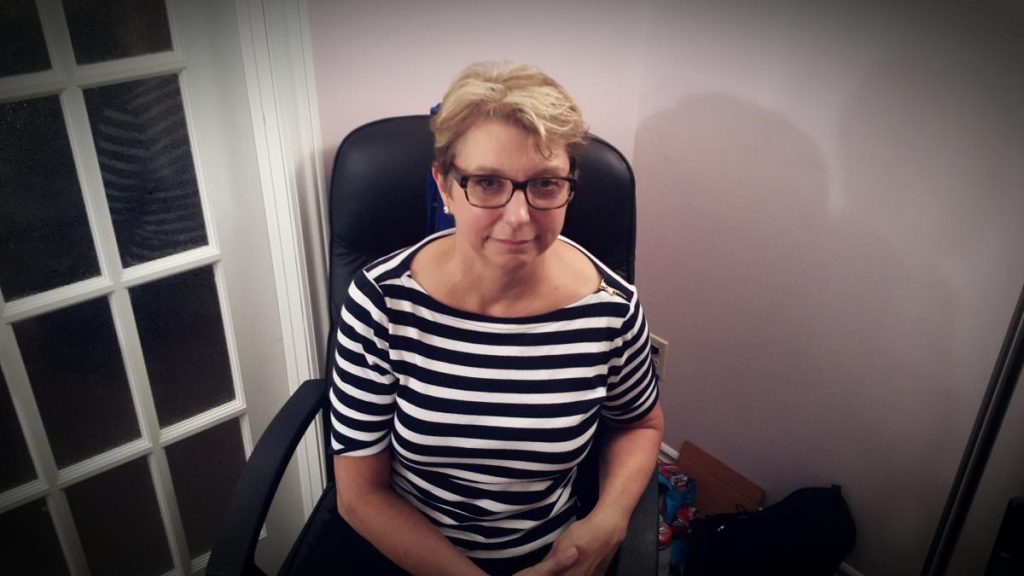
In the realm of vocal rehabilitation and performance arts, few narratives capture the delicate intersection of anatomical resilience, specialized methodology, and sheer human willpower quite like the journey of Mary Ellen Stoll. For decades, Stoll—a retired manager for the Government of Ontario hailing from Brockville—harbored a quiet, seemingly unattainable ambition: to learn how to sing and, ultimately, to perform within a choral ensemble. That aspiration, however, was heavily overshadowed by a medical history that began in her early twenties.
Diagnosed with a vocal cord nodule at age 22, Stoll underwent conventional surgical intervention. Yet, rather than restoring her natural capacities, the procedure left her with a permanently compromised speaking voice—brittle, strained, and lacking the resonant projection she once possessed. For forty years, this impairment served as an invisible barrier, dictating the boundaries of her self-expression.
It was not until her retirement at age 62, facing a renewed abundance of personal time following a high-stress professional career, that Stoll decided to challenge the status quo. Her initial inquiry with a local Brockville choir director yielded a sobering reality check: before any ambitions of choral performance could be entertained, her underlying speaking voice required urgent, foundational rehabilitation. This directive set into motion a rigorous, multi-year pedagogical journey anchored in the proprietary Vocal Science™ method.
Driving over four hours each way through every seasonal hazard imaginable—including treacherous winter conditions—Stoll committed herself to an intensive regimen of voice repair. This article chronicles her transformative trajectory from post-surgical vocal damage to vibrant choral integration, examining the physiological principles, methodological frameworks, and profound personal triumphs that turned an "impossible dream" into a resounding reality.
Detailed Chronology: A Multi-Decade Journey to Voice Restoration
The Genesis of Impairment: Early Diagnosis and Surgery
The root of Mary Ellen Stoll’s vocal struggles dates back to her youth. At just 22 years of age, Stoll was confronted with a medical diagnosis that would alter her relationship with her own voice: a nodule had developed on her vocal cord. In an era where surgical options for delicate vocal pathologies were often invasive and less refined than modern microsurgery, Stoll underwent an operation designed to excise the growth.
While the medical objective of removing the nodule was achieved, the functional consequence was severe. The surgery left residual trauma on her vocal anatomy, permanently altering her timbre, reducing her dynamic range, and depriving her of her natural speaking voice. For the next four decades, Stoll navigated a professional career as a government manager while quietly adapting to a compromised instrument. She managed her daily communications, but the vibrant, resonant voice she felt belonged inside her remained locked away, suppressed by the mechanical limitations imposed by her surgical history.
The Catalyst of Retirement and the Reality Check
The turning point arrived in the spring of 2016. Approaching her retirement at age 62, Stoll found herself stepping away from a high-stakes, stressful career with the Government of Ontario. With newfound time and space in her life, she decided it was time to confront her lifelong secret desire: to learn how to sing and join a community choir.
Seeking to make this dream a tangible reality, Stoll approached the director of a local barbershop-type choir in Brockville. Upon listening to her speak, the director immediately identified a profound structural vulnerability in her voice. He informed her bluntly that she could not join the chorus until she fundamentally repaired her speaking voice, which bore the heavy, damaged echoes of her decades-old surgery.
Rather than accepting this as a permanent closed door, Stoll utilized the internet to research advanced vocal specialists. Her search led her to the creator of the Vocal Science™ method. After an initial telephone consultation, Stoll committed to the endeavor, packing her bags and driving over four hours to the studio for her very first intensive voice repair session.
The Rigorous Path of Rehabilitation
What followed was a meticulous, grueling, yet ultimately rewarding pedagogical process. Working closely with her vocal coach, Stoll embarked on a rehabilitation program that bypassed traditional, superficial singing lessons and focused instead on the foundational mechanics of human speech.
The strategy was uncompromising: before any notes could be sung, the speaking voice had to be rebuilt from the ground up. Utilizing specialized speech exercises meticulously coupled with specific body movements, the training targeted the core components of vocal production: proper structural support, anatomical placement, and optimal airflow projection.
This was not a passive endeavor. It required unyielding dedication, acute body awareness, and massive energy expenditure from both coach and client. Winter after winter, across multi-hour drives from Brockville to the studio, Stoll persevered through adverse weather conditions and moments of deep frustration. The work was demanding, but the methodology was precise. Slowly, the mechanical strain melted away, replaced by a crystalline clarity and precise word pronunciation.
The Triumph of Integration: Entering the Choir
With her speaking voice fundamentally restored and structurally reinforced, Stoll reached the crucial milestone of Part 2: the return to the choir director. Upon hearing her newly rehabilitated voice, the director registered an immediate, night-and-day transformation. The breathy, strained quality was gone, replaced by a resonant, healthy tone. The director gave her the green light: continue her vocal development, and the chorus doors would open.
Stoll maintained her training regimen, seamlessly integrating the Vocal Science™ techniques into her daily life. Her dedication culminated in official acceptance into the Brockville choir. Since that milestone, she has not only remained an active, contributing member of the ensemble but has also participated in numerous musical competitions and public performances—singing harmoniously and fearlessly alongside her peers.
Supporting Context & Metrics: The Anatomy of Voice Repair
Understanding Vocal Cord Nodules and Surgical Aftermath
Vocal cord nodules are benign, callus-like growths that typically form on the middle third of the vocal folds as a result of chronic phonotrauma—habitual misuse, overuse, or strain of the voice. While surgical removal is a common medical recommendation, surgery alone rarely corrects the underlying biomechanical habits that caused the nodule in the first place. Without post-operative vocal rehabilitation, patients often develop compensatory muscle tension patterns, squeezing their throat muscles to produce sound, which leads to chronic fatigue, breathiness, and loss of range.
In Stoll’s case, forty years of compensatory speaking habits had deeply ingrained this vocal trauma. Reversing this required a systemic re-education of her neuromuscular pathways, teaching her body how to produce sound without relying on harmful muscular constriction.
The Mechanics of the Vocal Science™ Method
The methodology employed in Stoll’s recovery diverges significantly from conventional speech therapy or standard vocal coaching. Rooted in the principle of "voice by design," the technique treats the human voice as an integrated, holistic mechanism where every part of the anatomy—from pelvic support to cranial resonance—must work in absolute synergy.
Key components of this approach include:
- Holistic Structural Support: Shifting the workload of sound production away from the delicate vocal folds and distributing it across the entire torso and respiratory musculature.
- Anatomical Placement: Training the speaker or singer to direct sound waves toward optimal acoustic resonators in the skull and facial mask, maximizing volume and clarity with minimal physical effort.
- Kinesthetic Integration: Utilizing targeted body movements during speech exercises to break ingrained muscle memory and encourage natural breath support.
- Pain-Free Phonation: Enforcing strict physiological parameters that ensure zero friction, strain, or discomfort on the vocal anatomy, thereby safeguarding long-term vocal health.
Historical Precedents and Industry Recognition
The complexity and rigor of this specialized approach have long been subjects of public and media interest. As noted in historical archives, the rigorous nature of these vocal rehabilitation techniques was highlighted as early as 1999, when the Toronto Star published an investigative feature on the studio titled "Not As Easy As It Sounds." The headline underscores a fundamental truth of advanced vocal coaching: true voice repair is an athletic and neurological discipline that demands profound commitment, patience, and expert guidance.
Official Statements and Personal Reflections
Reflecting on the remarkable transformation of her client and friend, the architect of Stoll’s vocal rehabilitation shared deep admiration for her tenacity:
"This story is about one of my very dear clients, and now friend, Mary Ellen Stoll of Brockville, Ontario. Mary Ellen came to me sometime in Spring of 2016… Her secret desire always was to learn how to sing and, perhaps, even join a choir—especially since she’s got some free time via her retirement from a very stressful job."
The transformation was far from superficial, extending deep into Stoll’s overall well-being. By mastering the mechanics of her voice, she reclaimed agency over her physical expression:
"Once the ‘impossible dream’ came true, it gave my dear client and friend health of voice—not to mention the health in general. It also gave her the knowledge of a completely new application of the speaking and singing voice while using the voice by design—concurrently complying with all of the components of the Vocal Science™ method and technique!"
Upon achieving her objective, Stoll’s journey earned a resounding celebratory send-off from her mentors and peers:
"Way to go Mary Ellen! Keep on singing Girl! Best of voice and best of health now, in the New Year—and ALWAYS!"
Future Outlook: Legacy, Inspiration, and Lifelong Vocal Health
Mary Ellen Stoll’s journey from a post-surgical vocal casualty at age 22 to a thriving, competitive choir singer in her sixties offers a profound blueprint for anyone facing seemingly insurmountable physical or artistic barriers. Her story challenges the cultural misconception that vocal damage incurred decades prior is an irreversible life sentence, or that retirement marks the closing chapter of personal reinvention.
As vocal pedagogy continues to evolve, the integration of holistic methods like Vocal Science™ demonstrates that the human voice possesses a remarkable capacity for neuro-muscular adaptation and structural healing when approached with scientific precision and relentless dedication. Stoll’s ongoing participation in choral performances stands as living proof that with the right structural framework, expert guidance, and personal grit, even the most deeply rooted obstacles can be overcome.
For aging professionals transitioning into retirement, Stoll’s narrative serves as an inspiring call to action: to unearth long-forgotten passions, challenge physical limitations, and embrace new dimensions of self-expression. Mary Ellen Stoll continues to raise her voice in harmony—proving that the dream was never impossible after all.