
Executive Overview
As Harry Styles prepares to draw the curtain on a monumental 30-night residency at New York City’s iconic Madison Square Garden, Spotify is stepping in to ensure the
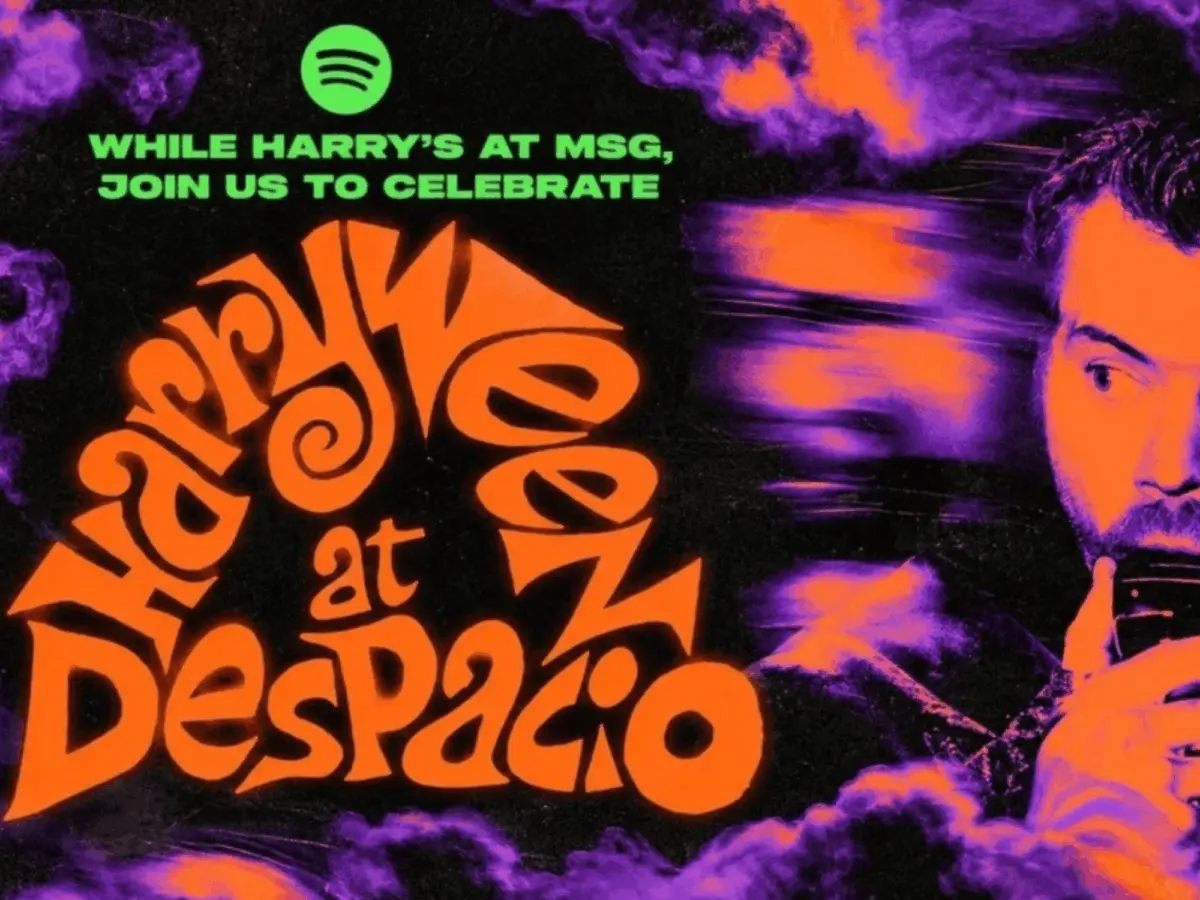
celebration extends far beyond the arena’s walls. On October 31, coinciding with the final night of the historic run and the festivities of Halloween, the streaming giant will host “Spotify Presents: Harryween”—a free, immersive dance party staged at a mystery venue in New York City.
Curated collaboratively by Styles, Spotify, and Despacio—the legendary audiophile sound system engineered by James Murphy of LCD Soundsystem alongside David and Stephen Dewaele of Soulwax—the event is designed to pay homage to the rich disco and dance soundscapes of Styles’ recent album, Kiss All The Time. Disco, Occasionally.
Rather than following the industry-standard playbook of tying digital service provider (DSP) activations strictly to new album release weeks, this partnership introduces a novel paradigm: anchoring experiential marketing to a major tour milestone and seasonal holiday. By prioritizing superfans through targeted platform data—initially rolling out exclusive RSVP invites via Spotify before opening remaining slots to the general public through the ticketing platform DICE—the initiative serves as a blueprint for how artists and streaming platforms can collaborate to maximize fan engagement, capture long-tail streaming momentum, and convert live-music milestones into high-impact cultural moments.
Detailed Chronology: From Madison Square Garden to the Dance Floor
The genesis of “Harryween” is deeply intertwined with the sheer scale of Harry Styles’ live touring power. A 30-night residency at Madison Square Garden is a rare feat in contemporary pop music, representing weeks of sustained cultural saturation in one of the world’s most competitive entertainment markets. As the residency approaches its grand finale on October 31, demand for tickets has vastly outstripped supply, leaving thousands of loyal devotees eager to mark the occasion.
Recognizing an opportunity to capture this pent-up energy, Spotify conceptualized a satellite event that would serve both as a consolation for fans unable to secure arena seats and as a vibrant community gathering. The timeline of the event’s rollout demonstrates a sophisticated data-driven approach:
- Early-Access Targeting: Leveraging first-party data, Spotify identified Styles’ top listeners on the platform. These superfans received early RSVP invitations, reinforcing loyalty by rewarding high-frequency streaming behavior with tangible, real-world access.
- Public Access Phase: To ensure community inclusivity and broaden the event’s reach, remaining slots were distributed to the public via the ticketing platform DICE, managing high demand through a secure, mobile-first lottery and reservation system.
- The Halloween Convergence: By aligning the final night of the residency with October 31, the organizers successfully tapped into the cultural pull of Halloween. This seasonal crossover not only provides a built-in aesthetic and dress code for attendees but also amplifies the theatricality of the evening.
- The Despacio Collaboration: By integrating Despacio—hailed by audiophiles for its towering McIntosh amplifiers, vinyl-only playback format, and immersive circular dancefloor design—the event transcends a standard pop-star afterparty, positioning itself as a high-art nightlife experience that appeals to electronic and dance music purists alike.
Supporting Context & Metrics: Redefining DSP Activation Timelines
Historically, the relationship between digital streaming platforms and major recording artists has followed a strict chronological formula. The vast majority of DSP-led activations, pop-ups, and fan-facing events are concentrated around album release cycles. Notable recent examples include Spotify’s high-profile New York activation for BTS centered on their music release week, as well as the launch of Spotify’s London Listening Lounge, which is specifically tuned for intimate, in-room playback sessions with artists promoting new material.
“Harryween,” however, breaks this mold by demonstrating that tour milestones and residency closers are just as potent as release dates.
The Streaming Bump Phenomenon
In the modern era of music consumption, live tours consistently generate significant "streaming bumps"—measurable spikes in catalog consumption as fans re-familiarize themselves with an artist’s discography before attending a show, or stream tracks on-demand in the immediate aftermath. By orchestrating a major cultural activation on the final night of a 30-night run, Spotify and Styles are engineering a secondary wave of momentum designed to extend this streaming lifecycle long after the physical lights of Madison Square Garden go down.

The Power of Crossover Curation
A critical differentiator for this event is the absence of the artist himself. While traditional listening lounges and release parties rely heavily on the physical presence of the artist to drive attendance and media coverage, “Harryween” delegates the heavy lifting of the night’s atmosphere to Despacio. This transforms the event into a standalone cultural happening. By embedding the sonic DNA of James Murphy and Soulwax into the heart of the activation, the event successfully bridges the gap between mainstream pop fandom and underground dance music culture, expanding the addressable demographic far beyond Styles’ core demographic.
Strategic Takeaways for Artist Teams and Music Industry Professionals
For artist managers, label executives, and independent creators looking to innovate their marketing strategies, the Spotify-Styles-Despacio collaboration offers several critical lessons:
1. Treat Tour Milestones as Primary Campaign Moments
Too often, live tours are viewed by marketing teams as isolated from digital promotion. “Harryween” proves that final nights, milestone anniversaries, and residency closers carry immense narrative weight. Artist teams should look at their routing schedules to identify natural crescendo points—such as a hometown show, a legendary venue finale, or a milestone 50th show—and build satellite activations around them. These can range from localized listening sessions and exclusive fan meet-ups to branded afterparties in key regional markets.
2. Leverage Seasonal Synergy
The timing of an event can exponentially increase its organic marketing potential. By landing on Halloween, the event solved half of its marketing hurdles: attendees naturally wanted to dress up, media outlets had a compelling seasonal peg for coverage, and social media platforms were primed for visual, costume-driven content. Aligning tour milestones with cultural touchstones—such as holidays, fashion weeks, or major film festivals—provides a ready-made conceptual framework that resonates with consumers.
3. Harness First-Party Data for Superfan Rewards
The use of Spotify’s internal data to distribute early-access invites highlights the increasing importance of rewarding core listeners. In an ecosystem saturated with noise, converting passive streams into active real-world community experiences fosters fierce loyalty. Artist teams should work closely with their DSP partners to ensure that top listeners are consistently prioritized for experiential perks, turning digital metrics into tangible currency for the most dedicated fans.
Future Outlook: The Evolution of Experiential Music Marketing
As the live music sector continues to face economic headwinds, rising production costs, and hyper-competitive ticketing landscapes, the integration of physical events with digital streaming infrastructure is entering a new maturity phase.
The success of “Harryween” suggests that the future of music marketing lies in hybrid ecosystems where digital platforms act as curators of physical space, and physical tours serve as content engines for digital platforms. We are likely to see an increase in brand-backed, artist-curated satellite events that take place independently of the main stage, decoupling the artist’s physical presence from the experiential brand they represent.
Furthermore, as audiophile culture experiences a mainstream renaissance—exemplified by the massive cult following surrounding sound systems like Despacio—future artist collaborations will increasingly lean into bespoke, high-fidelity sonic experiences rather than standard commercial spaces.
Ultimately, the collaboration between Harry Styles, Spotify, and Despacio is more than just a clever Halloween party; it is a forward-looking case study in how to sustain cultural momentum, honor community loyalty, and turn the end of a tour into the beginning of an entirely new marketing playbook.