
Executive Overview
For decades, the standard narrative surrounding educational technology has positioned digital tools as either revolutionary saviors or cold replacements for human educators. Nowhere is this tension felt more acutely than in the K-12 music classroom. Standing before a room of thirty students—where half the ensemble is wrestling with squeaking reeds and the other half forgot their instruments entirely—a music teacher listening to an ed-tech seminar about "classroom transformation" experiences a very specific kind of professional disconnect. The underlying, often unspoken anxiety haunting music educators today is simple and profound: If educational software gets sophisticated enough, do schools still need me?
Recent industry shifts, however, suggest a fundamentally different paradigm. Rather than serving as an algorithmic usurper of the podium, technology is carving out a new identity as an administrative co-pilot and tireless sectional coach. Platforms like MakeMusic Cloud and curated digital marketplaces are not designed to replace the nuanced, intuitive artistry of a human instructor. Instead, they target the invisible administrative tonnage—grading repetitive practice logs, hunting down out-of-print repertoire, and assessing endless individual performance scales—that slowly burns out passionate educators.
This comprehensive report investigates how modern music educators are reclaiming their classrooms, leveraging intelligent digital frameworks to handle repetitive mechanical drills while rededicating their expertise to mentorship, inspiration, and genuine musical connection.
Detailed Chronology: The Evolution of Music Ed-Tech
To understand where music education stands today, it is essential to trace how technology has quietly infiltrated—and ultimately reshaped—the rehearsal hall over the past several decades.
1. The Analog Era and the Administrative Grind (Pre-2000s)
Historically, the life of a music teacher was defined by heavy physical labor. Educators spent their evenings manually copying sheet music, filing physical octavo scores, listening to thirty-five individual tape or cassette recordings of the exact same eight measures for grading, and chasing down students who swore they practiced their concert scales. The "all-in" badge of honor required teachers to sacrifice personal time to logistics, blurring the line between administrative clerk and artistic director.
2. The Digitization of Sheet Music (2000s–2010s)
The turn of the century introduced notation software (such as Finale and Sibelius) and early digital audio workstations (DAWs). While these tools allowed for cleaner scores and basic MIDI playback, they primarily served as composition and publishing aids rather than interactive classroom partners. Teachers still bore the brunt of individual assessment, spending valuable rehearsal minutes listening to students one-by-one while the rest of the ensemble sat idle.
3. The Rise of Interactive Assessment and Cloud Platforms (2010s–Present)
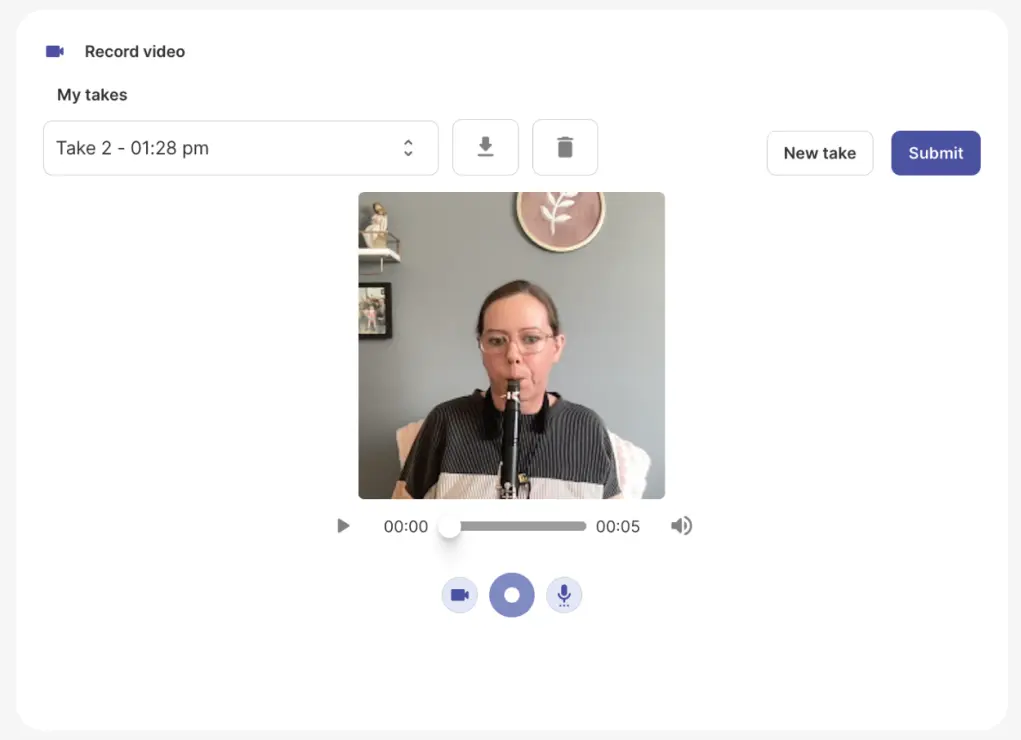
The emergence of cloud-based music education platforms fundamentally altered the landscape. Tools like MakeMusic Cloud introduced real-time feedback loops, allowing students to practice at home with algorithmic guidance that highlighted pitched or rhythmic errors instantly. This shifted the paradigm from post-hoc grading to real-time, formative coaching. Today, the focus has evolved past mere digitization toward intelligent workflow integration—automating repetitive practice tracking so teachers can focus on advanced interpretation, expression, and human mentorship.
Supporting Context & Metrics: The Burnout Crisis and the Role of Automation
The conversation surrounding educational technology cannot be separated from the broader crisis of teacher retention. Music educators, in particular, face a unique set of stressors: intense public performances, large class sizes, budget constraints, and the sheer volume of individualized assessment required for instrumental and vocal instruction.
The Anatomy of Educator Burnout
According to national education surveys, a significant percentage of teacher attrition is driven not by student behavioral issues or low pay alone, but by "administrative creep"—the accumulation of non-instructional duties that erode the joy of teaching. In music education, these tasks manifest as:
- The Repetitive Grading Loop: Listening to dozens of students play the same fundamental exercises to assign a grade.
- Logistical Friction: Chasing practice logs, managing sheet music distribution, and verifying whether students practiced or merely stared at their instrument cases.
- Repertoire Sourcing: Spending hours searching for grade-appropriate arrangements that fit specific ensemble instrumentation, only to find them out of print or cost-prohibitive.
Shifting the Burden to Digital Co-Teachers
When deployed effectively, software acts as a tireless sectional coach. By handling the repetitive, high-frequency "reps" of scale practice, rhythm verification, and pitch matching, digital platforms free up hundreds of hours annually.
| Traditional Classroom Workflow | Modern Tech-Integrated Workflow |
|---|---|
| Manual grading of individual student playing tests after hours. | Automated, real-time assessment and instant feedback delivered to the student at home. |
| Guesswork regarding student home-practice habits. | Data-driven dashboards displaying exact practice metrics and trouble spots. |
| Hours spent hunting for physical, out-of-print arrangements. | Instant access to vast digital libraries tailored to specific ensemble levels. |
| Rehearsal time wasted on individual fundamental corrections. | Rehearsal time dedicated to phrasing, blend, intonation, and artistic expression. |
Official Perspectives and Industry Insights
Leading voices in music pedagogy and educational technology emphasize that the core of music education is fundamentally relational, rendering fears of complete automation unfounded.
"The job has never been about transmitting raw information. The hard part of teaching is the human being standing in front of the music stand, and that is you. Technology cannot read the emotional climate of a rehearsal room, nor can it inspire a student to push past self-doubt through sheer force of empathy."
Industry developers behind platforms like MakeMusic Cloud echo this philosophy. Rather than positioning software as a substitute maestro, the goal is to streamline the machinery of practice so that the human educator can shine.
- The Reps vs. The Magic: As instructional designers often summarize, technology should handle the "reps"—the mechanical repetition required for muscle memory and technical proficiency—while the teacher handles the "magic"—the interpretation, emotional resonance, and mentorship that transforms a student from a mechanical player into an expressive artist.
- Data-Informed Instruction: By utilizing objective data gathered from student practice sessions, teachers arrive at rehearsals equipped with actionable insights rather than assumptions. They know precisely which measures tripped up the low brass section, allowing them to target instruction efficiently.
Future Outlook: The Next Horizon in Music Pedagogy
Looking ahead, the integration of technology in the music classroom is poised to deepen, focusing less on flashy gimmicks and more on seamless, invisible support systems.
1. Hyper-Personalized Repertoire and Adaptive Learning
Future iterations of classroom tech will likely lean heavily into adaptive learning models, automatically adjusting difficulty levels or suggesting supplementary exercises based on a student’s unique acoustic profile. This ensures that advanced students are appropriately challenged while struggling learners receive scaffolded support without slowing down the entire ensemble.
2. Bridging the Gap Between Home and School
The historical divide between the classroom and home practice has long been a barrier to ensemble cohesion. Digital cloud ecosystems are bridging this gap by creating transparent communication channels where practice is guided, monitored, and supported outside of school hours. Students no longer practice their mistakes into muscle memory in isolation; they practice with intelligent guardrails.
3. Re-centering the Human Element
Ultimately, the future of the music classroom is profoundly human. As administrative burdens, manual grading, and logistical friction are absorbed by intelligent software, teachers are rediscovering why they entered the profession in the first place.
The bottom line remains clear: Technology in the music classroom is not a threat to music educators; it is a threat to the paperwork, the guesswork, and the late-night logistics that drive good teachers away. By letting software manage the machinery of practice, educators are empowered to do what they do best—shape the musicians, mentors, and music-lovers of tomorrow.