
Executive Overview
The intersection of entertainment, technology, and artistic expression has reached a watershed moment. While entertainment juggernaut Hybe continues to post record-breaking financial quarters driven by its powerhouse stable of human superstars, a quieter yet seismic shift is fundamentally rewriting the blueprint of South Korea’s musical export engine. According to data revealed at the 2026 Seoul Music Forum, a staggering one in four new K-Pop acts debuting in the market is now virtual in some significant form.
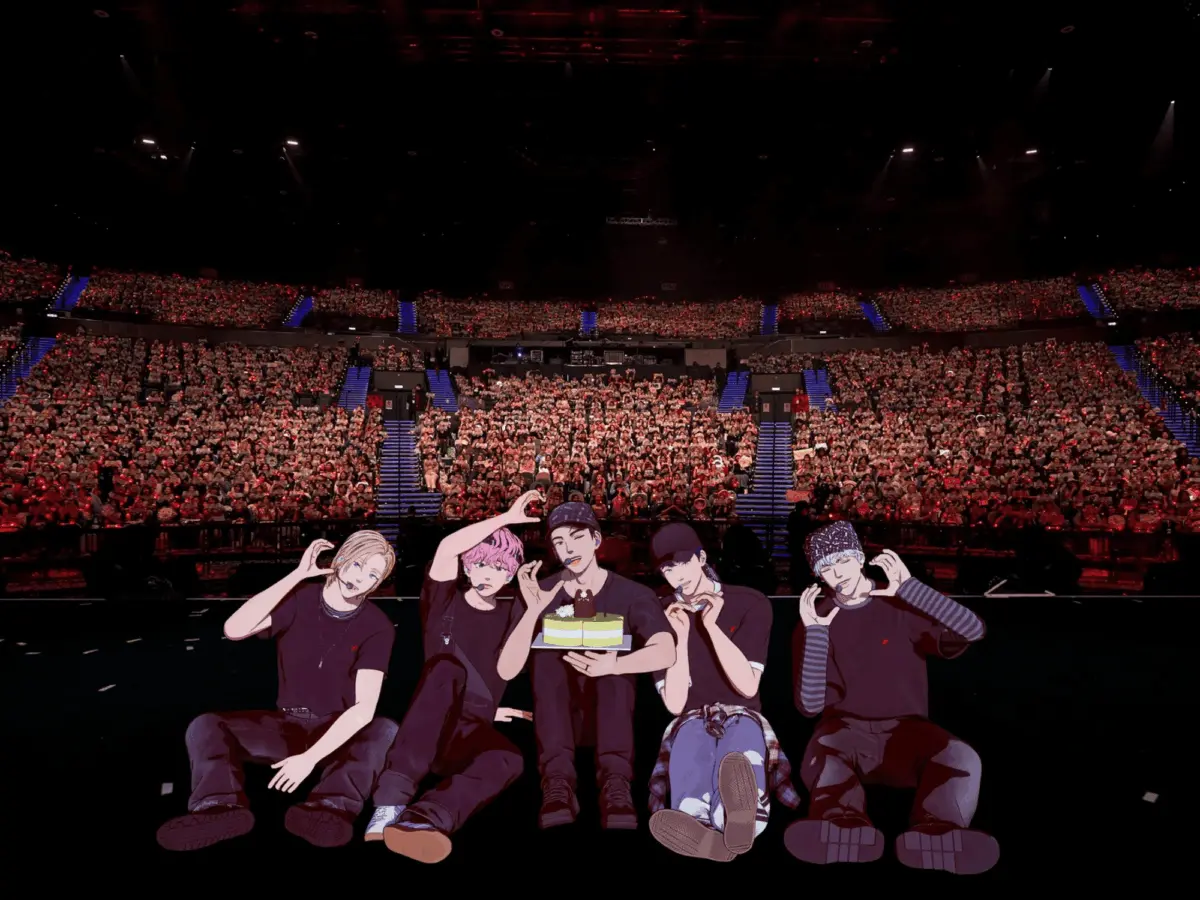
This startling statistic, brought to light by music critic Lim Hee-yun and detailed through joint research by brand and innovation studio Crosscurrent founder Josh Jordan, shatters traditional perceptions of pop stardom. No longer a futuristic novelty or a niche internet subculture, virtual idols have transitioned into the mainstream commercial core of the world’s most dynamic pop industry. Spearheaded by digital boy bands like Plave—whose anime-inspired avatars mask the identities of seasoned human performers—the virtual idol phenomenon is capturing the imagination of millions, driving massive revenues, and forcing the global music industry to redefine what it means to be an "idol" in the age of artificial intelligence and advanced digital rendering.
Detailed Chronology: The Evolution of Korea’s Virtual Wave
To understand how one in four debut acts became virtual, one must trace the rapid evolution of digital integration within the South Korean entertainment ecosystem. The journey from rudimentary computer-generated imagery (CGI) to sophisticated, real-time interactive avatars has accelerated dramatically over the past decade.
Phase 1: Novelty and the Early Experiments (Late 1990s – 2010s)
South Korea’s flirtation with virtual musicians is not entirely new. As early as 1998, the country saw the debut of Adam, widely considered Korea’s first digital pop star. Created by CyberProject, Adam could sing and appear in music videos, but the technology of the era was severely limiting. Rendering required massive computing power, real-time interaction was impossible, and the uncanny valley effect alienated mainstream listeners. For nearly two decades, virtual avatars remained a technological curiosity rather than a viable commercial threat to human talent.
Phase 2: The Metaverse Boom and VTubing (2020 – 2024)
The COVID-19 pandemic catalyzed a digital revolution in live entertainment. As global touring ground to a halt, entertainment agencies began heavily investing in virtual spaces, augmented reality (AR), and virtual production. Concurrently, the global explosion of VTubing (Virtual YouTubers) popularized anime-style digital avatars driven by real-time motion-capture technology. Entertainment companies realized that virtual idols offered a distinct advantage: they never tired, were immune to traditional celebrity scandals, and could scale effortlessly across global digital platforms without the physical constraints of international travel.
Phase 3: Mainstream Breakthrough and the 2026 Inflection Point (2025 – Present)
By 2026, the technology matured past the uncanny valley. Real-time motion capture, AI-assisted rendering, and sophisticated voice modulation converged to create digital artists that felt remarkably human, emotionally resonant, and culturally relevant.
The turning point was crystallized at the 2026 Seoul Music Forum. Presentations by brand strategist Josh Jordan and esteemed music critic Lim Hee-yun provided empirical evidence of this shift. According to their comprehensive data tracking the first nine months of 2026, 10 out of the 45 newly debuting idol groups in Korea incorporated virtual elements, alongside a remarkable one-quarter of all solo acts. What was once an experimental side-project for tech-adjacent startups has now been embraced by the mainstream music industry as a primary vehicle for pop culture creation.
Supporting Context & Metrics: The Anatomy of the Virtual Boom
The numbers coming out of the Crosscurrent and Seoul Music Forum research paint a vivid picture of an industry undergoing structural transformation. The data challenges long-held assumptions about fandom loyalty, which has historically been predicated on intimate, personal connections with human artists.
Breaking Down the Numbers
- The Debut Ratio: In the first nine months of 2026 alone, 22.2% of all new idol group debuts (10 out of 45) featured virtual members or core concepts.
- Solo Dominance: Approximately 25% of all new solo music acts entering the Korean market utilized virtual avatars or digital personas as their primary public-facing identity.
- Audience Engagement: Leading virtual acts are no longer confined to animated music videos. They command tens of thousands of concurrent viewers on livestreams, host interactive television interviews, and sell out virtual and hybrid concert tickets globally.
The Human Element Behind the Pixels
A common misconception among casual observers is that these virtual acts are entirely synthetic creations generated by artificial intelligence. While AI plays a role in workflow optimization, voice processing, and background rendering, the heartbeat of the modern virtual K-Pop wave remains firmly human.
As Josh Jordan noted in his analysis on Crosscurrent’s Substack, successful virtual groups like Plave rely on real human performers stationed beneath the digital avatars. Rumored to be industry veterans—often former members of disbanded human groups or highly trained underground vocalists—these performers bring decades of artistic discipline, comedic timing, and musical intuition to their digital alter egos.
This hybrid model creates a fascinating dynamic: fans fall in love with the flawless, impossibly handsome, anime-inspired aesthetics of the virtual character, while forming deep emotional bonds with the authentic wit, vulnerability, and vocal talent of the hidden human artist. Through their digital identities, groups like Plave conduct live television interviews, stream unscripted gaming and chatting sessions on platforms like Twitch and YouTube, and perform complex choreography via real-time motion capture for massive audiences.
Official Statements and Industry Insights
The rapid normalization of virtual acts has sparked intense debate among music critics, entertainment executives, and cultural sociologists. The Seoul Music Forum served as the primary battleground for discussing "humanism in the AI age."
Perspectives from the Forum
Music critic Lim Hee-yun, whose presentation delivered the headline-grabbing one-in-four statistic, emphasized that the rise of virtual idols is not a rejection of humanity, but rather an evolution of escapism—a core pillar of K-Pop fandom culture.
"Fans are seeking perfection, narrative depth, and uncompromised creative execution," industry analysts at the forum noted. "Virtual idols offer a pristine canvas where the fantasy never has to be broken by human fatigue or public scrutiny."
Meanwhile, Josh Jordan’s research highlights the strategic advantage Asian entertainment markets hold in exporting these concepts globally. While Western markets have occasionally experimented with virtual influencers (such as Lil Miquela) or digital avatars of real musicians (like Abba Voyage), the K-Pop industry is uniquely structured to manufacture, market, and sustain narrative-driven fictional groups with the same rigorous training systems applied to human trainees.
The Agency Dilemma: Balancing Human and Virtual Portfolios
Major agencies are currently navigating a dual-track business model. Traditional powerhouses like Hybe continue to reap record-breaking financial rewards from global touring, physical album sales, and merchandise associated with human superstars like BTS and SEVENTEEN. However, the risk profile of human stars—encompassing mandatory military service in South Korea, health breaks, and unpredictable public scandals—makes virtual portfolios an increasingly attractive hedging strategy for CFOs and investors.
Future Outlook: What Lies Ahead for Virtual Pop Stardom?
As we look toward the remainder of the decade, the boundary between "real" and "virtual" entertainment will continue to blur into irrelevance. Several key trends are poised to dictate the next chapter of the virtual K-Pop phenomenon:
1. Technological Convergence and Extended Reality (XR)
The maturation of spatial computing, Apple Vision Pro integrations, and next-generation augmented reality will allow fans to invite virtual idols directly into their living rooms. Holographic home concerts and fully interactive fan-meetups in virtual spaces will transform passive listening into active, spatial participation.
2. AI-Assisted Autonomy vs. Human Direction
As generative artificial intelligence improves, the industry will face ethical and artistic questions regarding the degree of automation in virtual acts. While purely AI-generated idols (those without human motion-capture performers) are emerging, consumer sentiment currently favors the "hybrid" model—where human emotion and comedic timing anchor the digital shell. Balancing AI efficiency with authentic human soul will be the ultimate differentiator for successful entertainment agencies.
3. Global Export and Localization
K-Pop’s virtual blueprint is rapidly expanding beyond Seoul. Agencies are already researching localized virtual idols designed to appeal to Western, Latin American, and Southeast Asian markets, utilizing multilingual voice modulators and culturally tailored storylines.
Conclusion
The finding that one in four new K-Pop acts is now virtual is more than a mere statistical curiosity; it is a prophetic glimpse into the future of global pop culture. By merging traditional idol training, anime aesthetics, cutting-edge motion-capture technology, and hidden human artistry, South Korea’s entertainment sector has once again proven its unmatched capacity for reinvention. As these digital stars step out of the computer screen and into the mainstream spotlight, the music industry is forced to acknowledge a new reality: the future of pop stardom may not be flesh and blood after all, but it has never felt more alive.