
Executive Overview
The landscape of jazz criticism relies heavily on historical reverence, continuously balancing the preservation of foundational canons with the raw, unpredictable spontaneity that originally birthed the genre. This dual mandate is brought into sharp relief when examining contemporary institutional tributes against the timeless, benchmark recordings of the mid-20th century.
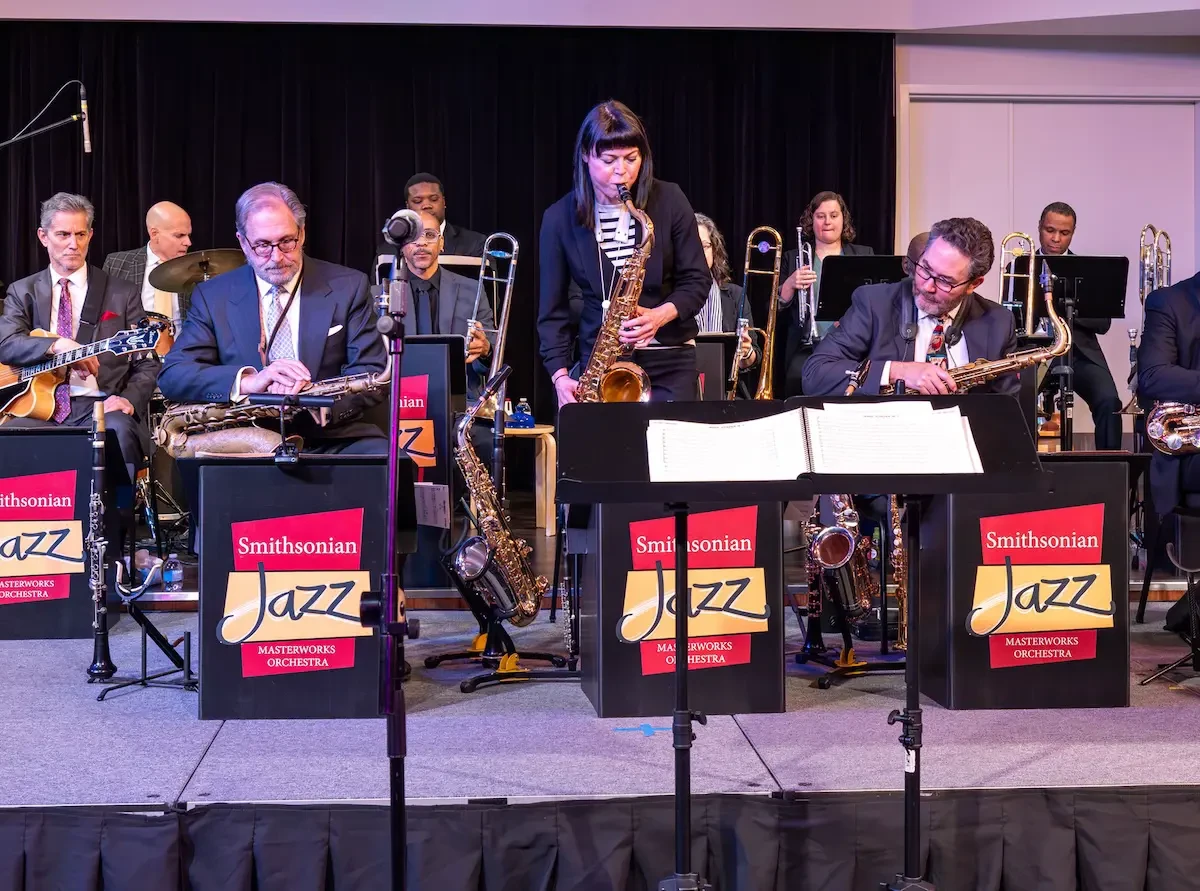
This report provides a critical analysis of two distinct pillars of recorded jazz: the recent live-concert release Ellington Masterworks by the Smithsonian Jazz Masterworks Orchestra (SJMO), recorded live at MCG Jazz in Pittsburgh under the artistic direction of Charlie Young; and a fresh vinyl reissue of Sonny Rollins’s iconic 1956 Prestige masterwork, Tenor Madness.
While the SJMO offering demonstrates immense technical proficiency and a scholarly dedication to preserving the rich orchestral legacy of Edward Kennedy "Duke" Ellington, it invites a broader critical debate regarding the functional necessity and emotional resonance of institutional tribute performances. Conversely, the historical permanence of Sonny Rollins’s Tenor Madness—bolstered by his historic studio summit with John Coltrane and the peerless Miles Davis rhythm section—illustrates the irreplaceable potency of lightning-in-a-bottle improvisation. By juxtaposing these two releases, we gain valuable insight into how modern ensembles attempt to codify a tradition that was fundamentally born out of fluid reinvention, and why historical masterworks continue to set the gold standard for jazz expression.
Detailed Chronology
To fully understand the weight of these recordings, one must trace their trajectories across the timeline of jazz history, moving from the mid-1950s crucible of hard bop to the modern archival and institutional preservation movements of the 21st century.
The Crucible of 1956: The Genesis of Tenor Madness
- March 22, 1956: Sonny Rollins enters the studio in Hackensack, New Jersey, accompanied by pianist Richie Powell, bassist George Morrow, and drummer Max Roach. Among the results of this session is the delicate, swinging interlude Count Your Blessings, capturing the telepathic interplay of a working rhythm section that would soon be tragically altered.
- May 24, 1956: Rollins returns to Rudy Van Gelder’s Hackensack studio for a legendary session. Joined by a stellar supporting cast featuring Red Garland on piano, Paul Chambers on bass, and Philly Joe Jones on drums—the definitive Miles Davis rhythm section of the era—Rollins records the tracks that will form the backbone of the album. Crucially, this session features the historic tenor saxophone summit between Rollins and John Coltrane on the title track, Tenor Madness.
- Late 1950s to 1960s: Following these sessions, Rollins enters a period of intense personal and musical exploration, marked by his famous practice sessions on the Williamsburg Bridge, subsequent landmark recordings for Blue Note (such as Live at the Village Vanguard), RCA (The Bridge), and his mid-60s tenure with Impulse! (Alfie, East Broadway Rundown).
The Evolution of Ellington Tributes and Archival Preservation
- February 1975: Just under a year after the passing of Duke Ellington, guitarist Kenny Burrell records his deeply personal tribute album, Ellington Is Forever, utilizing a 10- to 12-piece ensemble featuring jazz royalty such as Jimmy Smith, Thad Jones, and Joe Henderson. Burrell’s project establishes a standard for post-mortem reverence, highlighting the difficulties and triumphs of reinterpreting Ellington’s vast songbook.
- April 6, 2024: The Smithsonian Jazz Masterworks Orchestra takes the stage at MCG Jazz in Pittsburgh, Pennsylvania. Under the direction of Charlie Young, the ensemble performs a curated program of complex Ellington compositions, including The Flaming Sword, Tattooed Bride, Ad Lib on Nippon, and Jack the Bear.
- 2024–2026: The release of the SJMO performance on A-Train / MCG Jazz sparks critical discourse within the jazz community. Reviewers grapple with the eternal question facing archival orchestras: how to successfully translate historical genius into contemporary live performance without losing the raw, grease-and-grit essence of the original iterations.
Supporting Context & Metrics
Evaluating these releases requires looking closely at the personnel, recording environments, and compositional frameworks that define each project.
Personnel and Repertoire Breakdown
| Release Title | Primary Ensemble / Soloist | Key Collaborators / Section Members | Recording Venue & Date | Featured Repertoire Highlights |
|---|---|---|---|---|
| Ellington Masterworks | Smithsonian Jazz Masterworks Orchestra | Charlie Young (Dir.), Steve Wilson, Scott Silbert (saxes), Kenny Rittenhouse (tpt), Tony Nalker (p), Ken Kimmery (drums) | MCG Jazz, Pittsburgh, PA (April 6, 2024) | The Flaming Sword, Tattooed Bride, Ad Lib on Nippon, Jack the Bear |
| Tenor Madness | Sonny Rollins | John Coltrane (ts), Red Garland (p), Paul Chambers (b), Philly Joe Jones (d), Max Roach (d) | Van Gelder Studio, Hackensack, NJ (Spring 1956) | Tenor Madness, When Your Lover Has Gone, Paul’s Pal, Count Your Blessings |
Stylistic Analysis: Institutional Precision vs. Raw Discovery
The Smithsonian Jazz Masterworks Orchestra operates with the structural rigor of a classical philharmonic, designed to curate, preserve, and present America’s classical music to contemporary audiences. However, jazz as an idiom inherently resists static museum-piece curation.
When analyzing the SJMO’s reading of Ad Lib on Nippon—originally captured during Ellington’s 1966 Far East Suite sessions—critics note a distinct disparity. While the 2024 Pittsburgh performance showcases brilliant technical execution and clean ensemble blend, it occasionally lacks the spontaneous "zing," grease, and idiosyncratic grit that Ellington’s hand-picked orchestras injected into their daily performances. Duke’s orchestra was tailored to specific, highly individualized tonal personalities (such as Cootie Williams, Johnny Hodges, and Harry Carney). Replicating that sound requires more than immaculate sight-reading; it demands an internalized, lived-in swing.
Conversely, Sonny Rollins’s Tenor Madness represents the absolute peak of hard bop spontaneity. The album’s title track captures a legendary twelve-minute dialogue between two titans who were actively redefining their instruments. Far from being a calculated museum exhibition, the session documents a live-wire exchange where the rhythm section—Garland, Chambers, and Jones—reacts in real time to the shifting harmonic and rhythmic impulses of the soloists.
Official Statements & Critical Perspectives
The ongoing discourse surrounding jazz preservation and tribute projects has drawn varied commentary from critics, historians, and musicians alike.
"Throughout, the arrangements and playing are fine but needed more diversified zest, more sheer ‘zing’, grease and grit to intimate the essence of Ellington… The overall impression is one of a studied devotion to a magic that remains magnetic and life-transforming in its own historical right. So as I said, exactly what is the point of any such devotion?"
— Jazz Journal Editorial Review on the Smithsonian Jazz Masterworks Orchestra
This critique highlights the central philosophical paradox of jazz repertory orchestras. While institutions like the SJMO perform a vital public service by keeping complex, unperformed charts alive in concert halls, they run the perpetual risk of smoothing out the rough edges that gave the music its initial revolutionary edge.
In stark contrast, reflections on the historic 1956 Rollins-Coltrane sessions emphasize the effortless, competitive yet cooperative camaraderie of the hard bop era. As jazz lore dictates, when Coltrane jokingly suggested Rollins had been "playing" with him during their marathon tenor exchange, it underscored a creative environment driven by mutual challenge and relentless forward momentum.
Future Outlook
As jazz moves further into the 21st century, the tension between archival preservation and radical reinvention will only intensify. Several key trends are set to shape the future of jazz recording, performance, and historiography:
- The Evolution of Repertory Orchestras: Ensembles like the Smithsonian Jazz Masterworks Orchestra face the ongoing challenge of evolving from reverence-based preservation societies into vibrant, interpretive spaces. Future iterations of these orchestras will likely need to encourage greater soloist latitude and take bolder harmonic risks to capture the true spirit of their historical subjects.
- Audiophile Reissues and Historical Reclamation: The continuous demand for high-grade vinyl and CD reissues—exemplified by releases like Jazz Wax’s packaging of Tenor Madness—proves that modern listeners crave tangible connections to the analog golden age of jazz. Record labels will continue to scour the vaults for alternate takes, radio broadcasts, and pristine session tapes.
- Pedagogical Integration: As jazz education becomes increasingly institutionalized within universities and conservatories, young musicians must navigate the fine line between academic perfection and emotional authenticity. The lessons learned from comparing studio masterworks with live repertory tributes will inform how the next generation approaches the Great American Songbook and original compositions alike.
Ultimately, while institutional tributes provide a valuable anchor for historical education, it is the raw, unscripted breakthroughs of the past—typified by Rollins, Coltrane, and Ellington’s original road-tested units—that will forever define the beating heart of jazz innovation.