For decades, the age-old adage of the entertainment industry has remained immutable: video didn’t kill the radio star, and despite the panicked prognostications accompanying every technological leap, automation won’t spell the definitive end of the human disc jockey either. Yet, as artificial intelligence rapidly matures, its footprint within the audio broadcasting landscape is expanding from a theoretical novelty into tangible, production-ready reality. While mainstream streaming platforms like Spotify have long captured headlines with their personalized AI DJ features, a new wave of experimental concepts is quietly bubbling beneath the surface of the audio industry.
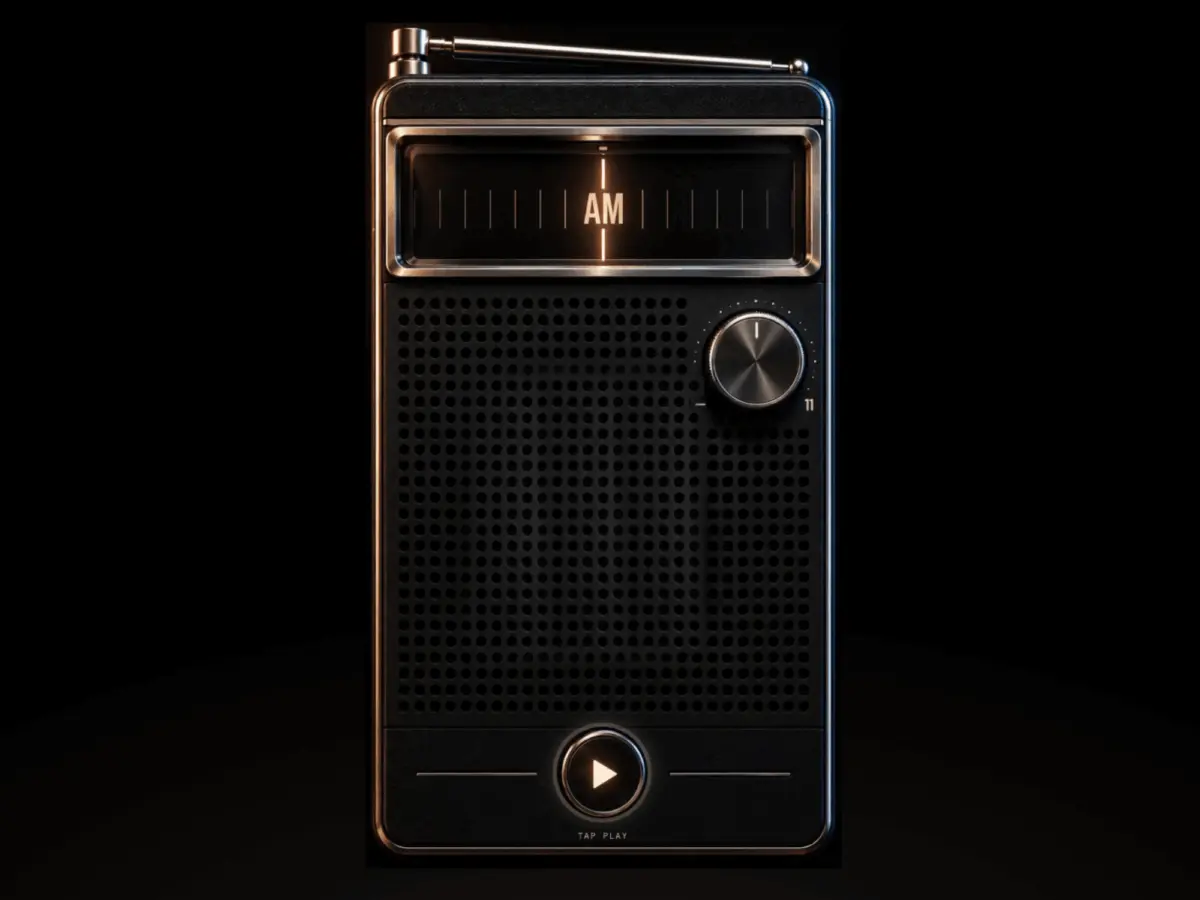
Among the latest innovations turning heads is A.I.Radio, a compelling new technical prototype developed by digital audio veteran Chris Williams—formerly the general manager and chief product officer at iHeartRadio, and currently an advisor to Super Hi-Fi. Far from a fully funded, venture-backed startup trying to upend the market overnight, A.I.Radio serves as a fascinating proof-of-concept. It highlights how generative voice synthesis, dynamic music curation, and advanced machine learning algorithms can converge to create a listening experience that blurs the line between traditional broadcast radio and hyper-personalized streaming.
This article explores the intersection of artificial intelligence and traditional broadcasting, evaluating how industry veterans are experimenting with next-generation audio tools, the technical mechanics driving modern AI radio prototypes, and what this technological shift means for the future of human talent behind the microphone.
Detailed Chronology: From Analog Amps to Algorithmic Airwaves
To understand where radio is heading, we must first examine how the medium has evolved alongside computing technology. The journey from human-only broadcast booths to AI-assisted audio curation is a story decades in the making.
The Analog Golden Age and Early Automation (1920s–1990s)
For the better part of the 20th century, radio was a thoroughly human enterprise. Disc jockeys—affectionately known as DJs—served as cultural gatekeepers, selecting tracks, taking listener calls, delivering local news, and injecting personality into the airwaves. By the late 20th century, terrestrial radio began introducing basic automation systems (such as Voice Tracking), allowing stations to pre-record DJ segments or syndicate broadcasts across multiple markets, reducing operational costs while maintaining the illusion of live, local engagement.
The Digital Streaming Disruption (2000s–2010s)
The rise of digital streaming platforms like Pandora and Spotify fundamentally altered consumer expectations. Rather than relying on a radio programmer to dictate the playlist, listeners demanded personalized curation powered by collaborative filtering and audio analysis algorithms. Terrestrial radio found itself forced to adapt, launching digital companion apps, podcast networks, and visual radio integrations to stay competitive in a fragmented media ecosystem.
The Rise of Generative Voice and AI Curation (2020s–Present)
As large language models (LLMs) and neural text-to-speech (TTS) engines reached near-human levels of expressiveness, the audio tech sector began testing generative AI in earnest.
February 2023: Spotify introduced its viral "AI DJ" feature, utilizing a synthetic voice modeled after real host Xavier "X" Jernigan to introduce music blocks, offer trivia, and dynamically comment on listening habits.
Late 2024 to 2026: Audio innovators began pushing past simple algorithmic playlists toward fully realized, autonomous broadcast environments. Enter figures like Chris Williams, who leveraged his deep institutional knowledge from iHeartRadio to build the A.I.Radio prototype—demonstrating that the future of radio might not be purely human or purely algorithmic, but a sophisticated hybrid.
Supporting Context & Metrics: The State of Modern Audio Consumption
To fully grasp why industry leaders are investing time and capital into AI radio experiments, one must analyze the broader economic and behavioral shifts within the audio landscape.
Changing Consumer Demands
Modern listeners expect hyper-personalization across all media forms. According to recent digital media industry reports:
Over 65% of audio consumers prefer streaming services or curated digital radio over traditional linear formats when given the choice of background music.
However, core broadcast radio still commands massive weekly reach globally, particularly during morning and evening commutes, proving that the format of a guided radio show retains immense psychological and cultural value.
The challenge for broadcasters has always been scalability: human hosts cannot be dynamically localized or personalized for millions of individual listeners simultaneously. Generative AI offers a direct technical solution to this limitation.
The Economics of Audio Production
Traditional radio broadcasting involves significant overhead—studio rentals, talent acquisition, syndication licensing, and live production infrastructure. AI-driven prototypes like A.I.Radio and Super Hi-Fi’s technology stack aim to lower these barriers significantly. By automating smooth song transitions, real-time voice generation, and dynamic ad insertion, media companies can theoretically launch highly targeted, niche digital stations at a fraction of traditional operating costs.
Official Statements & Industry Perspectives
The emergence of AI within radio has sparked intense debate among creators, executives, and technologists. While some view generative tools as an existential threat to broadcast jobs, industry leaders like Chris Williams frame them as evolution rather than replacement.
"We are looking at a paradigm shift where static audio streams transform into living, breathing auditory environments," notes industry analysis regarding the deployment of generative tools in broadcast.
While Chris Williams has positioned A.I.Radio as a lean, exploratory prototype rather than a corporate product launch, his pedigree—spanning major leadership roles at iHeartRadio and advisory positions at Super Hi-Fi—grants the experiment significant credibility. Super Hi-Fi itself has long championed the use of AI to automate the "magic" of radio, offering software that handles transitions, production elements, and voice tracking seamlessly.
Critics and labor advocates, meanwhile, maintain a cautious stance. Major union concerns across the entertainment and media sectors continue to center on voice rights, the preservation of authentic human emotion in broadcasting, and the economic displacement of working voiceover artists and regional radio hosts. Industry stakeholders widely agree that while AI can replicate the cadence of a DJ, it cannot replicate lived human experience, spontaneous local community connection, or genuine cultural commentary.
Future Outlook: Will AI Replace the Disc Jockey?
Looking ahead, what can listeners and industry professionals expect from the convergence of artificial intelligence and radio broadcasting?
Hyper-Personalized Formats: Rather than a single broadcast beamed out to an entire geographic region, future radio stations will likely feature dynamic streams that adapt their voice tracks, music selections, and commercial breaks to the individual preferences, real-time location, and mood of the listener.
Co-Pilot Models for Human Talent: Rather than outright eliminating human DJs, AI tools will increasingly act as creative co-pilots. Hosts can use generative systems to quickly draft scripts, pull real-time trivia about tracks, or automatically generate localized weather and traffic summaries, allowing them to focus entirely on personality, entertainment, and deep fan engagement.
The Rise of Experimental Prototypes: Projects like Chris Williams’ A.I.Radio serve as testbeds for what is technologically possible. As these prototypes mature, traditional broadcasters and digital-first startups alike will race to integrate these capabilities into commercial applications.
Conclusion
The Buggles were right in spirit
if not in technical accuracy: technology transforms mediums rather than destroying them entirely. Just as television did not kill radio, artificial intelligence will not eradicate the human disc jockey. Instead, it is acting as a powerful catalyst, redefining how audio is produced, personalized, and delivered across the airwaves. As innovators continue to refine prototypes like A.I.Radio, the boundary between listener and broadcaster will continue to dissolve, ushering in a fascinating new era for the world of sound.