
Executive Overview
The boundaries separating the interactive gaming landscape, traditional music marketing, and virtual artistry are dissolving at an unprecedented pace. Epic Games has officially launched its latest Fortnite mini-season, an expansive, four-week narrative and gameplay event titled "Treasure Hunters." Kicking off on November 1, the event represents a massive evolution in how popular culture and high-profile recording artists interface with digital worlds. Rather than relying on static, single-night virtual concerts—a format that pioneered the digital music space during the early 2020s—Epic Games is weaving music stars directly into the core gameplay ecosystem of its Battle Royale mode.
What makes "Treasure Hunters" uniquely fascinating is its eclectic lineup of captains, blending real-world hip-hop royalty with global pop culture phenomena and synthetic vocalists. Spanning four distinct weekly rollouts, the event features human heavyweights A$AP Rocky and Lil Uzi Vert, alongside virtual icons Hatsune Miku and Kasane Teto.
This multi-tiered campaign is not isolated within Fortnite Festival, the platform’s dedicated rhythm-game spin-off. Instead, it takes center stage within the primary, highly competitive Battle Royale experience. Players navigating the newly altered Island will encounter custom-branded Points of Interest (POIs), exclusive weapon variants like "Rocky’s Shock Rocket," specialized naval vessels, and an ongoing narrative that fuses high-seas adventure tropes with contemporary street culture and anime aesthetics—most notably highlighted by the inclusion of One Piece crossover powers.
As record labels, management firms, and artists search for high-conversion alternatives to traditional streaming promotion and physical touring logistics, Fortnite has cemented its status as the premier digital amphitheater for global music releases. This report provides an in-depth analysis of the "Treasure Hunters" mini-season, mapping out its rollout schedule, exploring the strategic implications of blending human and virtual artists, and evaluating the long-term future of music integration within the metaverse.
Detailed Chronology & Rollout Schedule
The "Treasure Hunters" campaign is structured as a staggered, four-week episodic narrative designed to sustain player engagement and maintain a steady rhythm of media coverage. Each week introduces a new "captain" who brings their own distinct crew, dedicated map territory, and specialized arsenal to the Fortnite ecosystem.
[November 1: Season Launch]
       │
       ├──► Week 1-2: A$AP Rocky & Straw Hats (Battleships, Shock Rockets, Custom Shop Items on Nov 5)
       │
       ├──► Week 2-3: Lil Uzi Vert (In-Game Arrival & Custom Shop Items on Nov 12)
       │
       └──► Week 3-4: Cap’n Hatsune Miku & Kasane Teto (Virtual Duo Arrival & Custom Shop Items on Nov 14)
Week 1: Setting Sail with A$AP Rocky and the Straw Hats
The campaign officially went live on November 1, immediately plunging players into an ocean-faring, loot-hunting thematic landscape. Epic Games wasted no time establishing the tone: "Players will explore a new Island, fight with One Piece powers and search for mysterious loot on the greatest adventure of all time."
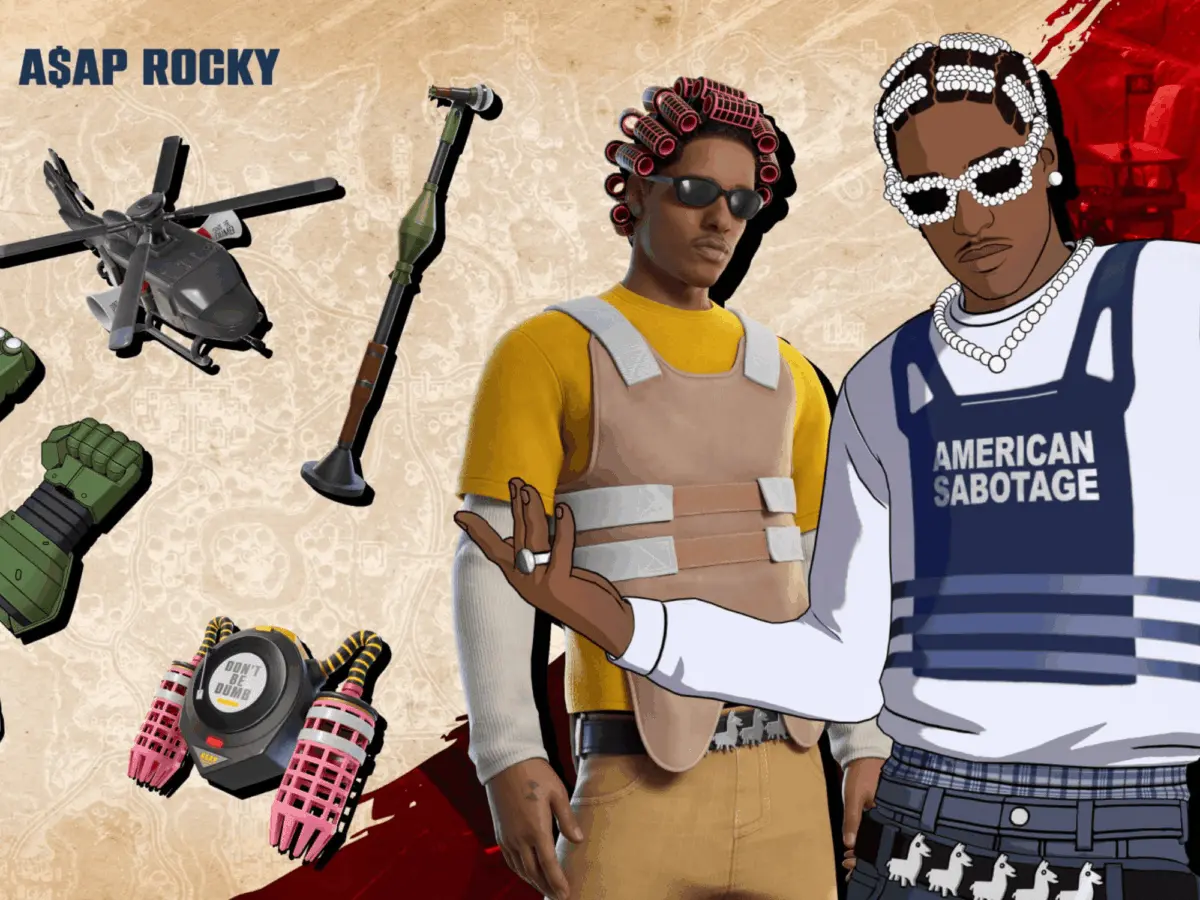
A$AP Rocky anchors the opening salvo of the mini-season. Known for his trendsetting fashion, boundary-pushing visual art, and avant-garde hip-hop soundscapes, Rocky’s integration goes far beyond a standard character skin. Players exploring the updated map encounter custom-branded naval architecture, including an A$AP Rocky battleship that serves as a focal point for tactical skirmishes. Furthermore, Epic introduced "Rocky’s Shock Rocket," a high-impact, custom-themed weapon engineered to shake up the competitive meta.
To capitalize on the in-game momentum, A$AP Rocky’s dedicated digital storefront collection is scheduled to drop on November 5. This drop will feature signature outfits, back blings, pickaxes, and emotes designed in collaboration with the artist’s creative collective, allowing fans to fully embody the rapper on the battlefield.
Week 2: The Arrival of Lil Uzi Vert
Following the initial cultural shockwave generated by A$AP Rocky, the spotlight shifts to Philadelphia-born rap superstar Lil Uzi Vert. Renowned for his high-energy delivery, deep-rooted affinity for anime, sci-fi aesthetics, and gaming culture, Uzi represents a seamless cultural fit for the Fortnite universe.
While Epic Games has kept specific gameplay mechanics for Uzi’s week under wraps, industry insiders anticipate a heavy emphasis on hyper-mobility items, neon-drenched visual design, and customized performance emotes. Lil Uzi Vert’s custom shop items are slated for release on November 12, giving players a week to digest the preceding content before introducing a fresh wave of cosmetic acquisitions.
Weeks 3 & 4: The Virtual Takeover with Hatsune Miku and Kasane Teto
Perhaps the most culturally significant aspect of the "Treasure Hunters" mini-season is its embrace of synthetic vocal technology. Arriving under the banner of "Cap’n Hatsune Miku and Kasane Teto," this dual-act integration bridges the gap between Eastern and Western digital music markets.
Hatsune Miku—the world-famous Vocaloid developed by Crypton Future Media—is no stranger to gaming collaborations, having starred in rhythm franchises like Project DIVA and mounted high-profile holographic concert tours worldwide. However, her integration into Fortnite’s Battle Royale map alongside Kasane Teto marks a major milestone.
Kasane Teto, originally created as an April Fool’s joke in 2008 using UTAU software before achieving official Vocaloid/SynthV status, has steadily built a passionate global cult following. Her inclusion alongside Miku highlights Epic Games’ deep understanding of niche internet music subcultures and modern youth demographics. The virtual duo and their corresponding shop items will officially deploy on November 14, rounding out the core captain roster for the season.
Supporting Context & Metrics: The Economics of the Metaverse
To fully understand the weight of the "Treasure Hunters" event, one must examine the macro-economic reality of music consumption within modern gaming. Over the past five years, interactive virtual spaces have transformed from auxiliary marketing channels into primary revenue and discovery engines for major record labels.
The Shift from Passive Listening to Active Participation
Traditional music marketing relies on linear distribution: an artist drops a single, shoots a music video, services the track to radio playlists, and books a tour. While these methods remain vital, audience attention spans have fractured. Younger demographics—specifically Generation Z and Generation Alpha—spend a staggering amount of their leisure time inside immersive video game environments like Fortnite, Roblox, and Minecraft.
By embedding artists directly into the gameplay loop, Epic Games achieves what traditional media cannot: high-frequency, long-duration exposure. When a player spends three hours a day over a four-week period running past an A$AP Rocky battleship, utilizing a branded rocket launcher, or listening to localized emotes, the psychological reinforcement dwarfs a standard 30-second digital ad impression.
Comparative Engagement Metrics: Virtual Concerts vs. Immersive Mini-Seasons
| Metric / Dimension | Traditional Virtual Concert (e.g., 2020-2021 Era) | Immersive Mini-Season Integration (2026 "Treasure Hunters") |
|---|---|---|
| Duration | 15–30 minutes (Single Event) | 4 weeks (Continuous Engagement) |
| Environment | Isolated temporary map or mode | Integrated directly into core Battle Royale |
| Monetization | Limited to event-window outfit sales | Phased, multi-artist storefront drops over a month |
| Gameplay Impact | Mostly passive viewing or simple dancing | Active combat items, custom POIs, and narrative quests |
| Artist Retention | Single artist focus | Collaborative ecosystem featuring multiple human and virtual acts |
This data illustrates a clear strategic pivot by Epic Games and participating music labels. While milestone virtual concerts proved that digital audiences would show up en masse, multi-week narrative integrations provide sustained economic returns and deeper fan loyalty.
Official Statements and Industry Perspectives
The announcement of the "Treasure Hunters" mini-season has generated substantial commentary from gaming analysts, music industry executives, and the artists themselves.
In its official press release and community briefs, Epic Games emphasized the collaborative nature of world-building for this update:
"Players will explore a new Island, fight with One Piece powers and search for mysterious loot on the greatest adventure of all time," Epic stated. "Each week, a new captain arrives in Battle Royale with their own crew and POI: the Straw Hats and A$AP Rocky lead the way, followed by Lil Uzi Vert, Cap’n Hatsune Miku and Kasane Teto."
Industry observers have pointed out that the inclusion of Japanese virtual idols alongside American hip-hop icons demonstrates the globalization of the Fortnite platform. Music Ally analysts noted that while human artists like A$AP Rocky and Lil Uzi Vert utilize the platform to maintain cultural relevance and drive immediate merchandise and streaming bumps, virtual acts like Hatsune Miku and Kasane Teto use Fortnite as a bridge to mainstream Western markets that may not be intimately familiar with synthesizer culture.
Furthermore, merchandising partners and digital fashion houses have lauded Epic Games’ infrastructure for skin design. The ability to render high-fidelity streetwear—such as A$AP Rocky’s signature avant-garde looks—allows fashion brands to test digital-first apparel lines before committing to expensive physical manufacturing runs.
Future Outlook: What "Treasure Hunters" Signals for the Future of Music
As the "Treasure Hunters" mini-season unfolds through November, its success or failure will establish a vital blueprint for the entertainment industry moving forward. Several key trends are expected to emerge in the wake of this campaign:
1. The Normalization of Mixed-Reality Rosters
The seamless blending of human superstars (A$AP Rocky, Lil Uzi Vert) with synthetic characters (Hatsune Miku, Kasane Teto) proves that modern audiences do not draw hard conceptual lines between physical and virtual performers. Future digital festivals and game crossovers will likely lean even harder into mixed rosters, where AI-generated artists, virtual avatars, and human musicians share equal billing.
2. Deepening Narrative Integration over Standalone Concerts
The era of simply dropping a pop star onto a floating digital stage for a 20-minute set is giving way to deeper narrative integrations. Labels are realizing that players want agency; they want to wield weapons, explore custom environments, and unlock rewards that tie back to an artist’s personal brand identity and aesthetic universe.
3. The Expansion of Global Crossovers
By pairing Western hip-hop culture with Japanese anime motifs (such as the One Piece crossover elements mentioned in the update) and Vocaloid music traditions, Epic Games has created a hyper-globalized cultural melting pot. This cross-pollination of genres and geographic markets sets a new standard for international brand partnerships.
Conclusion
Epic Games’ Fortnite has long since ceased to be "just a video game." With the launch of the "Treasure Hunters" mini-season, it has firmly established itself as a primary cultural nexus where fashion, gaming, anime, and music converge. For artists like A$AP Rocky, Lil Uzi Vert, Hatsune Miku, and Kasane Teto, the digital Island is no longer just a place to perform—it is a canvas to build worlds, engage fans, and write the next chapter of music history.