
Executive Overview
The New York theatrical landscape has a new haunting on its hands. Danny Robins’ smash-hit supernatural thriller, 2:22 – A Ghost Story, has officially crossed the Atlantic, opening its doors at the historic Off-Broadway Lucille Lortel Theatre. Following a phenomenal trajectory that included seven distinct West End engagements and two massive U.K. tours, the production arrives in Manhattan carrying substantial international buzz, a star-studded cast, and a scheduled open-ended booking currently extending its ghostly grip through January 17, 2027.
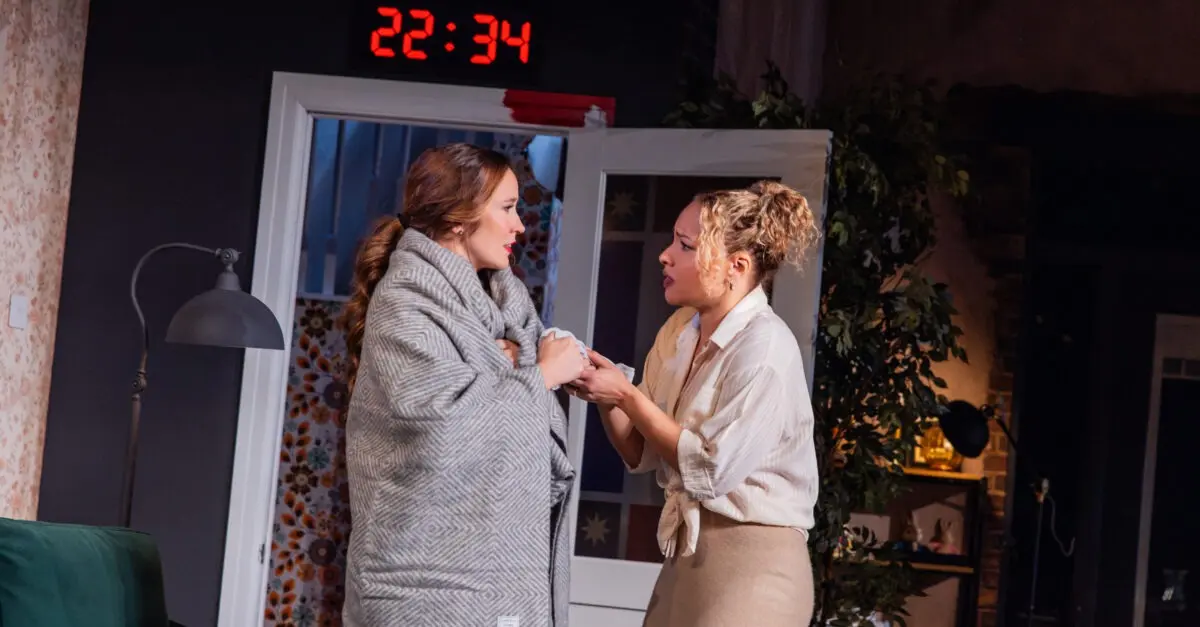
Directed jointly by Matthew Dunster (Hangmen, The Hunger Games: On Stage) and Gabriel Vega Weissman (Guards at the Taj), the New York iteration blends sophisticated psychological drama with visceral, jump-scare theater. The narrative centers on a high-stakes dinner party where rational skepticism clashes directly with the paranormal. Jenny, convinced that her newly renovated home is plagued by unexplained, spectral phenomena, finds herself at odds with her disbelieving husband, Sam. As they welcome old friends for an evening of food, wine, and mounting tension, the debate transforms into a desperate, midnight-to-morning vigil. Can the dead truly walk among the living? As the clock ticks toward 2:22 AM, the characters are forced to confront an unsettling presence closing in around them—one that demands definitive, terrifying proof.
The transfer is supported by an impressive creative team and a stellar ensemble cast featuring recognizable names from American television, film, and British theater. As the reviews roll in from major cultural critics across New York City, the theater world is watching closely to see how this contemporary British phenomenon translates to an intimate Off-Broadway setting. This comprehensive report explores the origins of the production, the artistic framework of the New York premiere, the critical reception, and the commercial outlook for one of the most successful contemporary ghost stories in recent theatrical history.
Detailed Chronology: From London’s West End to Off-Broadway
The journey of 2:22 – A Ghost Story is a masterclass in contemporary theatrical momentum. Conceived by writer, journalist, and broadcaster Danny Robins—best known for his chart-topping BBC podcast The Battersea Poltergeist—the play was designed to subvert the traditional, dusty tropes of the theatrical thriller. Instead of Victorian castles or cobweb-laden manors, Robins set his story in a sleek, hyper-modern, half-renovated London home, bridging the gap between millennial domesticity and ancient, unexplained dread.
The West End Phenomenon
The play originally premiered in the West End in the summer of 2021 at the Noël Coward Theatre, quickly becoming a hot ticket through a clever casting strategy that regularly rotated high-profile actors into the roles. Over the course of its record-breaking run, the production inhabited multiple iconic London venues, including the Gielgud, Criterion, Apollo, and Duke of York’s theatres.
Pop stars, soap actors, television icons, and serious stage heavyweights cycled through the production, creating a recurring news cycle that kept the show perpetually relevant. Across its seven West End engagements and two extensive national tours of the United Kingdom, 2:22 – A Ghost Story cemented its reputation as a modern theatrical event—a play where audiences were actively implored on social media not to spoil the shocking final twist.
The New York Transatlantic Leap
The decision to bring the production to New York’s Lucille Lortel Theatre marks a significant evolution in its global lifecycle. Moving from massive commercial houses in London to an iconic Off-Broadway venue allows for a more intimate, psychological staging where the audience sits close enough to feel the claustrophobia of the central couple’s domestic dispute.
Preparations for the New York bow involved assembling a cross-pollinated creative team capable of marrying British atmospheric pacing with American theatrical sensibilities. Directors Matthew Dunster—who helmed the original West End staging—and Gabriel Vega Weissman embarked on a rigorous rehearsal process in Manhattan to calibrate the production for the Lucille Lortel space. With performances officially underway and an aggressive booking schedule locked in through January 2027, the production has signaled its intent to become a long-running staple of the downtown theater scene.
Supporting Context & Metrics: Production Infrastructure and Creative Forces
A successful theatrical transfer of this scale requires meticulous logistical planning, a top-tier design team, and a formidable producing apparatus. 2:22 – A Ghost Story boasts an infrastructure designed to maximize both psychological tension and technical precision.
The Creative Engine
At the helm of the production are directors Matthew Dunster and Gabriel Vega Weissman. Dunster’s extensive experience with the material ensures that the atmospheric DNA of the West End original remains intact, while Weissman brings a nuanced understanding of American staging rhythms to the collaboration.
The physical world of the play is constructed by an award-winning design collective:
- Set Design: Anna Fleischle crafts the cutting-edge, half-renovated home that serves as the battleground for the characters’ beliefs. The set acts almost as an additional character, shifting in emotional weight as the night progresses.
- Costume Design: Cindy Lin provides contemporary wardrobe choices that reflect the socioeconomic anxieties, lifestyle choices, and personal identities of the characters.
- Lighting Design: Lucy Carter utilizes precise, shifting illumination to manipulate shadows, build suspense, and disorient both the characters and the audience.
- Sound Design: Ian Dickinson, working for Autograph Sound, engineers an immersive auditory landscape where floorboards creak, baby monitors hum, and inexplicable bumps in the night resonate through the theater.
- Illusion Design: Chris Fisher oversees the specialized theatrical magic required to pull off the script’s startling supernatural moments without breaking dramatic immersion.
The Ensemble Cast
The Off-Broadway transfer relies heavily on the chemistry and star power of its four-person ensemble, which blends prominent screen talent with seasoned stage veterans:
- Anna Camp as Lauren: Known widely for her standout work in HBO’s True Blood, the film franchise Pitch Perfect, and stage productions like Time and the Conways, Camp brings a sharp, neurotic edge to the role of the dinner guest caught in the crossfire.
- Jasmine Cephas Jones as Jenny: The Emmy and Grammy Award winner—celebrated for her originating roles in Broadway’s cultural phenomenon Hamilton as well as her acclaimed work in Blindspotting—anchors the emotional core of the play as the mother convinced her house is haunted.
- Finn Jones as Sam: Making his highly anticipated New York stage debut, the star of Marvel’s Iron Fist and HBO’s Game of Thrones portrays the hyper-rational, often abrasive husband whose skepticism forms the primary intellectual roadblock of the play.
- Martin Marquez as Ben: A distinguished West End stage star whose credits include Billy Elliot The Musical and television’s Hotel Babylon, Marquez rounds out the quartet as the working-class partner of Lauren, bringing a grounded, blue-collar perspective to the supernatural debate.
Production and Management Structure
Behind the scenes, the production is heavily backed by seasoned commercial producers. Wagner Johnson Productions—comprising executive producers John Johnson, Sue Wagner, and Jillian Robbins—serves as the general manager and driving force behind the New York run. They are joined by lead producers Tristan Baker and Charlie Parsons for Runaway Entertainment, Isobel David, and Kater Gordon, operating by special arrangement with the Lucille Lortel Theatre. Casting is expertly managed by David Caparelliotis and Joe Gery of Caparelliotis Casting.
Official Statements and Critical Reception
As standard for high-profile theatrical openings, the curtain rising at the Lucille Lortel Theatre brought an immediate wave of critical evaluation from New York’s premier outlets. While the debate over ghosts, logic, and marital politics played out on stage, theater critics weighed in on how well the British import adapted to its new cultural and physical environment.
The Critical Landscape
Major critics across the city have dissected the production’s pacing, performances, and structural tricks:
- Jerry Portwood (1 Minute Critic): Offered an energetic appraisal of the play’s ability to deliver direct thrills, noting how the intimate Off-Broadway venue enhances the visceral nature of the jump scares.
- Thom Geier (Culture Sauce): Focused heavily on the strength of the ensemble, highlighting the palpable tension generated between Finn Jones’s stubborn skepticism and Jasmine Cephas Jones’s grounded vulnerability.
- Gillian Russo (New York Theatre Guide): Explored the thematic layers beneath the supernatural premise, emphasizing that 2:22 is as much about class, relationships, and modern anxieties as it is about things going bump in the night.
- Frank Scheck (New York Stage Review): Addressed the intellectual sparring matches of the dinner guests, drawing wry parallels to classic American psychological dramas while evaluating the play’s distinct brand of British pop-thriller energy.
- Charles Isherwood (The Wall Street Journal): Provided a rigorous examination of the play’s dual nature as both a chilling ghost story and a domestic comedy of manners, analyzing how well the central mystery holds up under close scrutiny.
(Note: Certain reviews require reader subscriptions or account creation to access full text, reflecting the high journalistic demand surrounding the opening.)
Creative Intentions
While Robins has remained tight-lipped regarding the exact mechanics of the play’s famous twist ending—a secret zealously guarded by both the creative team and audiences alike—interviews surrounding the production’s genesis highlight his desire to write a play that speaks directly to modern secular audiences.
"We live in an age where science and rationalism dominate, yet millions of people still harbor secret beliefs in the unexplained," Robins noted during early promotional tours for the West End staging. "I wanted to write a play where smart, modern, skeptical people are forced to sit down and confront the possibility that the universe is far stranger than their university degrees taught them."
The directors and cast have echoed these sentiments, emphasizing that the supernatural elements of 2:22 only work because the underlying human relationships feel completely authentic, messy, and real. The arguments about parenting, career ambitions, class backgrounds, and intellectual superiority form the bedrock upon which the supernatural terror is built.
Future Outlook: Sustaining the Haunting in New York City
With its booking calendar officially secured through January 17, 2027, 2:22 – A Ghost Story has established a formidable multi-year runway at the Lucille Lortel Theatre. This extended scheduling horizon is rare for a contemporary play in the Off-Broadway sector, signaling immense confidence from the producing team regarding the show’s commercial viability and word-of-mouth potential.
Market Positioning and Audience Appeal
The production occupies a unique niche in the New York theatrical ecosystem. While Broadway is currently dominated by massive musical revivals, jukebox bios, and high-capital dramatic imports, Off-Broadway has historically served as the premier incubator for edgy, conversation-generating thrillers. 2:22 bridges the gap between commercial entertainment and intellectual puzzle-solving, making it an ideal destination for groups, date nights, and theatergoers seeking an alternative to traditional dramatic fare.
Furthermore, the production’s strategy of utilizing recognizable television and film stars—evidenced by the current casting of Anna Camp, Jasmine Cephas Jones, and Finn Jones—ensures a steady pipeline of diverse audiences who might not otherwise frequent Off-Broadway venues. As the run progresses, industry watchers anticipate future cast rotations similar to the West End model, which could continually revitalize interest and drive repeat ticket sales.
The Legacy of Modern Thrillers
As theater audiences increasingly seek out interactive, high-concept, and visceral experiences, 2:22 – A Ghost Story stands poised to influence how contemporary thrillers are written and marketed. By weaponizing modern domesticity against ancient dread, Danny Robins has tapped into a universal anxiety about the spaces we inhabit and the histories buried beneath our floorboards.
For now, the lights are dimmed at the Lucille Lortel Theatre, the wine is poured, and the clock is ticking down. As audiences file into Greenwich Village to witness the debate unfold, one thing is certain: whatever is waiting at 2:22 AM has officially found a permanent home in New York City.