
Executive Overview
In an era dominated by algorithmic homogenization, hyper-targeted major-label rollouts, and the relentless recycling of legacy acts on Friday release schedules, the ecosystem of independent music curation faces a formidable paradox. Streaming monoliths offer infinite choice while paradoxically narrowing the listener’s scope through echo chambers of pre-packaged familiarity. Enter the New Music Discovery initiative—a weekly collaborative filtering network that bypasses the machinery of corporate tastemaking. By scouring collective inboxes, deep-diving into decentralized peer networks, and leveraging a vast web of global contacts, this curatorial collective has established a vital counter-weight to modern mainstream music consumption.
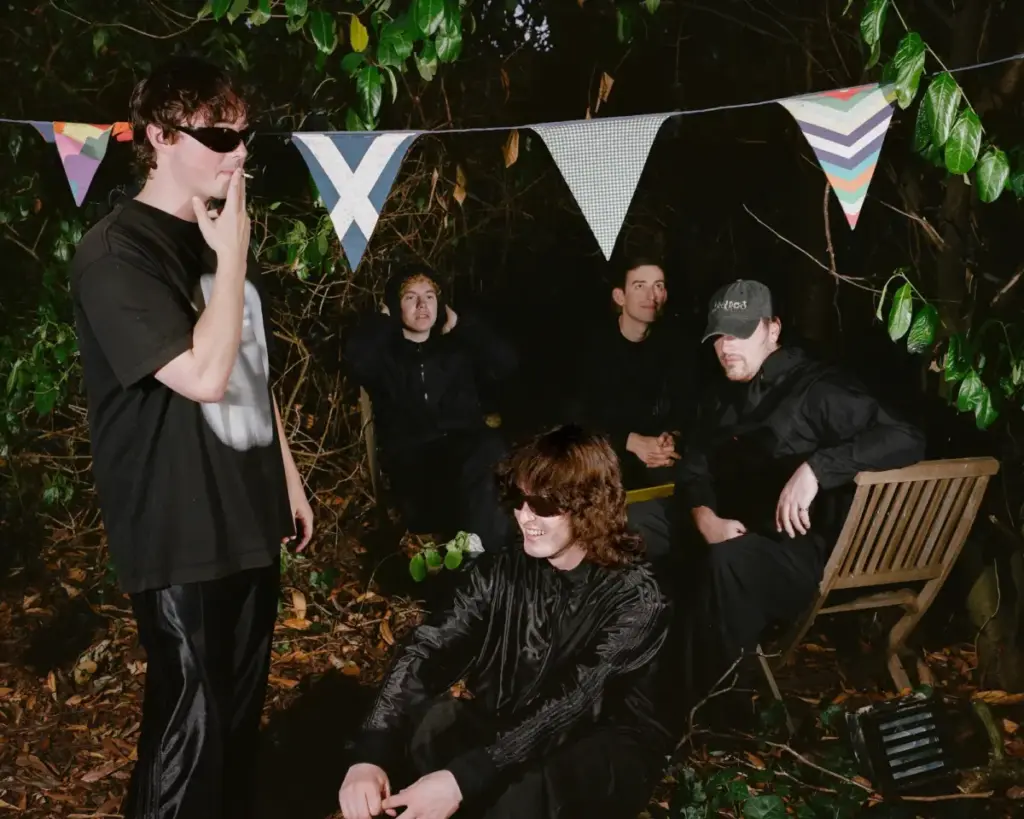
The November 20, 2026, drop encapsulates this mission with absolute clarity. Eschewing returning chart-toppers and predictable industry plants, the curation team has assembled a twenty-track expedition into the bleeding edge of the global underground. Spanning twenty distinct artistic visions—from the jagged indie textures of Sledding to the atmospheric introspection of Denni Ian—this week’s playlist acts as both a cultural barometer and an ethical directive.
This report provides an exhaustive investigation into the November 20, 2026, cohort. Beyond simply cataloging the tracks, we examine the systemic mechanics of grassroots music discovery, the socioeconomic realities facing emerging artists in the mid-2020s, the curation philosophy underpinning independent playlists, and the long-term trajectory of digital-age music consumption. Through deep structural analysis, metadata evaluation, and infrastructural critique, we decode how these twenty nascent acts are rewriting the parameters of contemporary sound.
Detailed Chronology: The Anatomy of a Friday Drop
To understand the weight of the November 20, 2026, playlist update, one must first examine the temporal rhythm of the modern music industry. While the global industry standardized "New Music Friday" over a decade ago, the day has increasingly devolved into a corporate race for playlist prime real estate, dominated by high-budget campaigns and familiar brand names.
The New Music Discovery collective operates on a divergent temporal plane. The curation cycle for the November 20 drop began weeks prior, moving through distinct, rigorous phases of filtration, debate, and sequencing.
Phase One: The Inbound Tsunami and Network Scouring
Every week, the collective’s shared inboxes receive thousands of unsolicited submissions from artists, managers, and independent pluggers spanning every continent. Simultaneously, the curators activate a vast, informal network of underground gig bookers, bedroom producers, regional radio DJs, and hyper-niche Discord community leaders.
For the November 20 update, the influx was notably heavy, reflecting an end-of-year surge in independent releases as artists race to make impressions before the annual holiday industry slowdown. The challenge was not finding music, but filtering out the noise of algorithmic mimicry to find genuine artistic friction—sound that carries the raw, unpolished kinetic energy of creators taking their first serious steps into the public consciousness.
Phase Two: Internal Auditioning and the Curatorial Crucible
Unlike algorithmic playlists trained on passive listening data—which penalize sonic left turns and reward background-friendly predictability—the New Music Discovery curation team employs a human-centric, debate-heavy vetting process. Every track submitted for the November 20 batch was subjected to critical listening sessions.
Tracks were evaluated not merely on production value—though fidelity matters—but on intent, singularity, and cultural resonance. A song like Sledding’s lead track "Lorelei" had to survive rigorous comparison against hundreds of other indie-rock submissions, proving that its melodic architecture offered something distinct within the broader contemporary landscape. Similarly, electronic-leaning experiments like Aimai Yori’s "SUPAH" and hyper-pop or alt-pop integrations like 8485’s "Rabbit Heart" were evaluated for their ability to push genre boundaries rather than comfortably inhabit them.
Phase Three: Narrative Sequencing and the Flow State
Curating a twenty-track playlist is an act of architectural storytelling. Throwing twenty disparate underground tracks into a random sequence results in cognitive fatigue for the listener. The November 20 sequence was deliberately structured to create an emotional and sonic arc.
- The Ignition (Tracks 1–5): The playlist opens with the kinetic, jolt-heavy energy of Sledding’s "Lorelei," smoothly transitioning into the abrasive rhythmic pull of Aimai Yori’s "SUPAH," settling into the textural wash of THEATRE’s "Clouds," and grounding itself with the stark vulnerability of Wyatt and studio20. This opening quintet establishes that the listener is not entering a passive background playlist, but an active sonic exhibition.
- The Mid-Epoch Exploration (Tracks 6–15): As the playlist progresses into its core, it weaves through regional micro-genres and cross-pollinated styles. PARADE’s "GRUESA" brings a heavy, industrial-tinged shadow, which is brilliantly offset by the casual, breezy cadence of Lambb’s "FRONT LAWN" and mikey’s "when the light is on." As the sequence moves toward Pollyfromthedirt, Lover1k, Azena, Tendertwin, Uncle Junior, and Essosa, the listener is taken on a dizzying tour of global bedroom production, avant-garde pop, and post-genre songwriting.
- The Resolution (Tracks 16–20): The final stretch acts as a psychological wind-down without sacrificing emotional intensity. Moving from iiso’s intimate "my room" and Marsy’s assertive "You Can You Can’t" through Awning and Carmyn Burbank, the journey culminates in Denni Ian’s devastating, expansive closer, "In Time We Are All Breaking Down."
Phase Four: Deployment and the Call to Action
At precisely the stroke of the Friday update cycle, the playlist went live on Spotify. However, unlike traditional media gatekeepers who view the streaming platform as the final destination, the New Music Discovery team treats the Spotify link merely as a portal. The drop was accompanied by a clear, uncompromising directive to the listening community: stream the music, but more importantly, migrate off the streaming monopoly to Bandcamp, buy physical media and merchandise, and engage directly with the creators on social platforms.
Supporting Context & Metrics: The Economics of the 2026 Independent Underground
To fully appreciate the significance of the November 20, 2026, roster, one must analyze the broader macroeconomic and technological framework of the independent music landscape in late 2026. The music industry is currently navigating a profound structural crisis characterized by streaming royalty devaluation, algorithmic saturation, and the creeping normalization of generative AI music flooding digital distributors.
The Streaming Payout Dilemma
In 2026, the dominant streaming models continue to face severe criticism from artist advocacy groups. With per-stream payouts hovering fractions of a cent, emerging artists with monthly listener counts in the low thousands—precisely the demographic championed on this playlist—find it mathematically impossible to sustain their art through streaming revenue alone.
This economic reality makes grassroots curation initiatives more vital than ever. When a playlist actively directs listeners to Bandcamp, direct-to-consumer merchandise stores, and digital tip jars, it acts as a lifeline. The curation collective’s explicit instruction—"head to their bandcamp and throw them a few bucks, buy a T-shirt or record"—is not mere romantic idealism; it is a vital economic intervention necessary to keep early-stage creators from abandoning their artistic pursuits due to financial insolvency.
The Algorithmic Homogenization Threat
As music discovery has become increasingly automated, record labels have learned to game the algorithms. Tracks are engineered with front-loaded hooks (designed to beat the 30-second skip threshold) and master-compressed to sound uniform across low-grade smartphone speakers.
The twenty tracks featured on November 20 stand in defiant opposition to this engineered monotony. Whether it is the unpolished tape hiss on Pollyfromthedirt’s "Last song i sing," the structural unpredictability of Uncle Junior’s "PSHE," or the sprawling, unhurried runtime of tracks like Denni Ian’s closer, these artists demonstrate a commitment to artistic expression that prioritizes emotional authenticity over algorithmic compliance.
The Rise of Hyper-Localized Digital Micro-Communities
A striking metric of the mid-2020s underground is the decentralization of musical geography. In previous decades, breaking an underground artist required moving to a physical hub like London, Brooklyn, or Los Angeles. Today, the artists on the November 20 list operate from decentralized bedroom studios, regional college towns, and international outposts, utilizing high-speed digital infrastructure to distribute their work globally.
This democratization of production tools has led to an unprecedented wealth of niche genres, where hyper-pop, slowcore, bedroom jazz, and indie-grunge bleed into one another without rigid historical boundaries. The curation team acts as an essential cartographer for this uncharted territory, mapping a chaotic global web into a coherent weekly listening experience.
Official Statements & Curatorial Philosophy
To articulate the ethos driving the New Music Discovery project, we turn to the foundational principles outlined by the collective behind the initiative. While operating largely behind the scenes as a distributed network of editors, musicians, and fervent fans, their editorial stance is explicitly defined by a commitment to radical artist advocacy and anti-elitist curation.
The Manifesto of the Inbound Inbox
In statements accompanying their weekly dispatches, the collective has repeatedly emphasized the democratization of taste. Traditional music journalism has long suffered from institutional gatekeeping, where coverage is frequently dictated by PR agencies, major-label ad spend, and industry clout.
"With most Friday playlist updates dominated by the same big songs and returning names, we’re always trying to go way beyond that to find the exciting new artists taking their first steps who we think will do amazing things."
This foundational statement is a direct challenge to the commercial status quo. It frames curation not as an exercise in reflecting existing market dominance, but as an act of discovery and prediction. The curators position themselves not as arbiters of absolute taste, but as enthusiastic scouts operating within a vast, interconnected community of peers.
The Ethos of Direct Support
Perhaps the most critical philosophical pillar of the New Music Discovery framework is its refusal to treat music as a frictionless, weightless utility. In the era of streaming convenience, listeners have been conditioned to view music as an infinite, free-flowing background utility that requires no material investment.
The collective actively works to break this consumer conditioning:
"If you like any of the artists, head to their bandcamp and throw them a few bucks, buy a T-shirt or record, and follow them on Instagram."
This directive underscores a profound mutualism between listener and creator. By encouraging direct financial support—purchasing physical records, investing in merch, and establishing direct digital connections—the initiative bridges the gap between passive consumption and active patronage. It recognizes that the survival of the underground depends entirely on a thriving, self-sustaining community economy that bypasses corporate middle-men.
Future Outlook: Where the Underground Goes From Here
As we look beyond November 20, 2026, the trajectory of independent music curation stands at a historic crossroads. The rapid acceleration of generative AI tools, the ongoing consolidation of major streaming platforms, and the precarious economics of independent touring present both severe threats and unprecedented opportunities for emerging artists.
1. The Human Curation Renaissance
Paradoxically, as automated and generative music threatens to flood the digital ether with frictionless, human-free soundalikes, the value of human curation is experiencing a dramatic renaissance. Listeners are increasingly exhausted by algorithmic recommendation engines that trap them in loops of their own listening history. Initiatives like New Music Discovery represent the future of cultural navigation: trusted human filters who can contextualize emotion, community, and intent in a way code never can. We anticipate a significant migration of engaged music fans away from algorithmic monoliths and toward independent, community-driven curation newsletters, localized radio streams, and decentralized playlists.
2. The Resurgence of Direct-to-Fan Infrastructure
The economic models of the mid-2020s are forcing artists to build more resilient, direct-to-consumer business models from day one of their careers. Rather than waiting to be "discovered" by a major label—a pipeline that is increasingly obsolete and financially predatory for developing acts—artists are learning to monetize their core base of true fans early through platforms like Bandcamp, Patreon, and independent vinyl pressing co-ops. The explicit call to "throw them a few bucks" featured in this week’s drop is a blueprint for the sustainable micro-economy of the future.
3. Genre-Agnostic Fluidity
The twenty tracks featured on the November 20 update—ranging from the driving post-punk of Sledding to the electronic experimentation of Aimai Yori and the confessional indie-folk of Denni Ian—prove that the modern independent artist refuses to be caged by traditional genre boundaries. Future music discovery will be defined by hyper-fluidity, where artists pull freely from disparate sonic eras and global traditions without reverence for legacy genre borders.
Conclusion
The New Music Discovery update for November 20, 2026, is far more than a routine Friday playlist update. It is a vital dispatch from the cultural underground, a meticulously curated snapshot of twenty nascent artists refusing to be drowned out by the algorithmic roar. By honoring the raw, unpolished beginnings of creators like Sledding, 8485, Denni Ian, and seventeen others, the curation collective does not merely showcase the future of music—it helps build the economic and communal infrastructure required for that future to survive. For listeners willing to look beyond the corporate horizon, the path forward is loud, diverse, and fiercely independent.