
Executive Overview
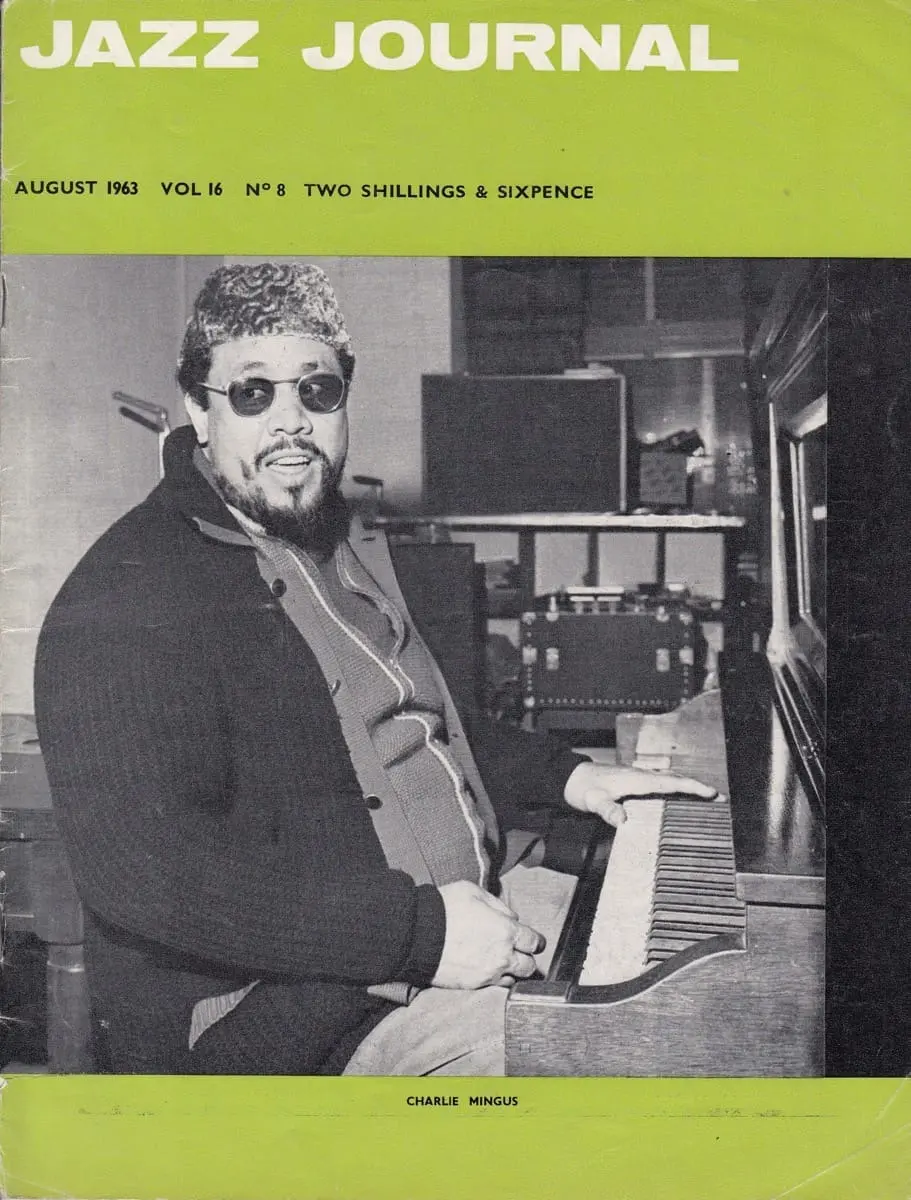
In the sprawling, richly textured tapestry of mid-century American jazz, few epochs gleam as brightly as the late 1950s. This period represented a crucible of creative friction where the rigid boundaries of bebop fractured, giving way to the unbridled explorations of hard bop, modal jazz, and avant-garde expression. Within this landscape of profound artistic transformation, two landmark recordings stand out as pillars of the genre: Charles Mingus’s Mingus Ah Um (1959) and Horace Silver’s Silver’s Blue (1956).
Though born from distinctly different compositional philosophies—Mingus steering a loose, volatile, and deeply emotional collective known as the Jazz Workshop, and Silver anchoring the infectious, rhythm-heavy, and rhythm-and-blues-infused architecture of hard bop—both albums captured the raw, beating heart of a generation.
This comprehensive retrospective examines the historical genesis, structural intricacies, and enduring cultural resonance of these two monumental releases. Drawing upon comprehensive discographical data, musician lineages, and the socio-political undercurrents of the era, we unpack how Mingus Ah Um and Silver’s Blue transcended their contemporary recording studios to become foundational texts for modern music.
Detailed Chronology
Charles Mingus and the Road to Mingus Ah Um (1957–1959)
By the late 1950s, Charles Mingus was already an established force of nature in New York City’s jazz underground. With an astonishing discography numbering well over a hundred sessions as a leader, Mingus was a relentless innovator who chafed against the commercial constraints of the recording industry. His creative vision crystallized around a core philosophy: jazz as a living, breathing, and spontaneous conversation driven by collective emotion rather than static orchestration.
The years immediately preceding 1959 were particularly fertile. In 1957, Mingus delivered Tijuana Moods, a vibrant travelogue born from a trip across the Mexican border. This was followed closely by Blues & Roots in 1958 (released in 1960), a visceral masterclass steeped in the sanctified sounds of the black church and the secular grit of the rural blues. Together with Mingus Ah Um, recorded in New York City on May 5 and May 12, 1959, these three albums achieved legendary status, earning rare five-star ratings in the All Music Guide to Jazz.
The sessions for Mingus Ah Um relied heavily on the Jazz Workshop, a rotating collective of fiercely individualistic musicians who possessed the rare psychological flexibility required to navigate Mingus’s demanding charts. Veterans Dannie Richmond (drums) and Jimmy Knepper (trombone) anchored all three foundational albums. They were joined by a stellar cast including Booker Ervin, John Handy, Horace Parlan, and Willie Dennis on various tracks.
Notably, the sessions also captured the final recorded moments of the brilliant, yet enigmatic, Curtis Porter (who also performed under the moniker Shafi Hadi). Porter’s contributions to Mingus Ah Um mark his final formal studio recording under his own name or as a primary sideman, though his fiery alto and tenor saxophones can also be heard on the 1959 film soundtrack for John Cassavetes’ Shadows.
Horace Silver: From Sideman to Hard Bop Pioneer (1950–1956)
Horace Silver’s ascent to the upper echelons of jazz royalty began not in the smoky clubs of Manhattan, but on the bandstands of Connecticut. In December 1950, saxophonist Stan Getz, seeking a local rhythm section while booked as a single at the Sundown Club, heard Silver’s trio. So profoundly impressed was Getz that he immediately hired the entire group to tour with him for the next eighteen months. During this intense period of apprenticeship, Getz recorded three of Silver’s early compositions—Penny, Potter’s Luck, and Split Kick (a clever contrafact of There Will Never Be Another You).
Once established in the hyper-competitive New York jazz circuit, Silver became an in-demand collaborator, performing and recording with luminaries such as Lou Donaldson, Terry Gibbs, Bill Harris, Coleman Hawkins, and Lester Young. His institutional footprint expanded dramatically in 1954 when he co-founded the legendary Jazz Messengers alongside drummer Art Blakey.
The sessions for Silver’s Blue—recorded across two distinct dates on December 2, 1955, and July 2 and 17, 1956—occurred just two months after Silver officially severed his partnership with Blakey to strike out as a bandleader in his own right. The timing could not have been more auspicious. Around the time of these recordings, jazz critic Leonard Feather canvassed 120 leading musicians for a major poll to crown the "new star" on the piano. Horace Silver emerged victorious at the top of the ballot, outdistancing contemporary powerhouses Hampton Hawes and Dave McKenna.
Supporting Context & Metrics
The Rhythm & Blues Roots of Mingus’s Collective
A critical, yet frequently overlooked, dimension of Mingus Ah Um is the foundational training of its sidemen. Mingus deliberately enlisted performers who were intimately familiar with the most basic, visceral harmonies of American roots music. John Handy, Booker Ervin, Dannie Richmond, and Curtis Porter had all begun their professional musical lives grinding it out on the rigorous R&B circuit.
This background imbued their performances with an unpolished, highly communicative urgency. When Mingus pushed the ensemble into complex meters or unconventional structural forms, his sidemen did not rely on academic detachment; instead, they translated the demands of the chart through the emotional lens of the blues and gospel traditions.
The Compositional Anatomy of Mingus Ah Um
The 57-minute runtime of Mingus Ah Um unfolds as a masterclass in thematic variety and structural daring:
- "Better Git It In Your Soul": A brilliantly descriptive title for a hard-driving, ecstatic gospel romp set in an unusual 6/4 time signature. Serving as a spiritual successor to Mingus’s earlier Wednesday Night Prayer Meeting, the track features Booker Ervin tearing through two blistering choruses, visibly and audibly spurred on by Mingus’s own soulful exhortations and the rhythmic hand-clapping of the ensemble.
- "Goodbye Pork Pie Hat": An aching, deeply mournful elegy dedicated to tenor saxophonist Lester Young, who had passed away just two months prior to the recording sessions. John Handy delivers a career-defining performance, wringing profound emotional resonance from his instrument.
- "Boogie Stop Shuffle": An ambitious, high-velocity composition built upon four distinct, interlocking themes. It showcases blistering solos from Booker Ervin and pianist Horace Parlan, all tightly cushioned by roaring ensemble riffs.
- "Open Letter To Duke": Opening as a themeless, uptempo blowing vehicle for Ervin and Handy, the track executes a breathtaking, dramatic tempo shift into a lush, Johnny Hodges-style ballad, complete with soaring glissandos from Handy.
- "Fables Of Faubus": Mingus’s biting, sardonic critique of Orval Faubus, the notoriously segregationist governor of Arkansas. Columbia Records executives famously censored the recording, barring Mingus from singing his scathing lyrical indictment out of fear of political retaliation. (The vocal version was eventually captured and released in 1960 on the Candid label).
- "Pussy Cat Dues" and "Jelly Roll": Trombonist Jimmy Knepper, who anchored the ensemble arrangements throughout the LP without always receiving ample solo space, delivers an absolute gem on "Pussy Cat Dues" that rivals the expressive phrasing of jazz titan Jack Teagarden. On "Jelly Roll," Knepper’s trombone bookends the piece over Mingus’s authentic, old-style slapped bass, while John Handy channels a street-corner busker before erupting into a glorious, modern bebop chorus.
Horace Silver’s All-Star Lineup on Silver’s Blue
The personnel roster for Silver’s Blue reads as a roll call of hard bop royalty. With the exception of legendary drummers Kenny Clarke and Art Taylor, the album functions almost as an extension of the Jazz Messengers lineage:
- Title Track ("Silver’s Blue"): A slow, brooding call-and-response blues that serves as the quintessential hard bop manifesto, showcasing the tight-knit telepathy of the rhythm section.
- "To Beat Or Not To Beat": Built upon a classic Rhythm changes chart, this track features sparkling, inventive work from trumpeter Joe Gordon, whose brilliant career was tragically cut short in a Los Angeles fire in 1963. Gordon’s delicate use of a cup mute also imparts an intimate, nocturnal quality to the timeless standard "How Long Has This Been Going On?"
- Donald Byrd’s Contributions: The ubiquitous Donald Byrd—who recorded on an astonishing two dozen distinct sessions in the calendar year of 1956 alone—delivers some of his most inspired playing of the era on the shimmering rendition of "The Night Has A Thousand Eyes".
- Hank Mobley: Often hailed as the middleweight champion of the tenor saxophone for his understated, perfectly proportioned tone and seemingly endless flow of melodic ideas, Mobley anchors tracks like "Shoutin’ Out" and the winsome "Hank’s Tune" with absolute authority.
Official Statements and Archival Reflections
Reflecting on the cultural impact of these recordings, jazz historians and participating artists alike have long underscored their transformative power.
In contemporaneous interviews, Charles Mingus frequently emphasized that his compositions were not static notes on paper, but reflections of his personal life, political outrage, and spiritual beliefs. Speaking of the censorship surrounding Fables Of Faubus, Mingus noted in later archival transcripts:
"They said it was too hot for the public, too controversial. But the music itself tells the story. You don’t need words to describe tyranny; you just need to play with enough truth that people feel it in their bones."
Similarly, Horace Silver’s transition from sideman to bandleader was marked by a distinct philosophy regarding accessibility and rhythm. Silver frequently stated that hard bop was designed to reconnect jazz with its popular audience without compromising artistic integrity:
"I wanted to write music that had church roots, blues roots, and jazz roots all mixed together. It had to swing hard, but it also had to have a melody that people could hum on their way home from the club."
Musicologists reviewing the Pan Am Records reissue of Silver’s Blue and the Number One Essentials release of Mingus Ah Um have continually praised the pristine remastering processes that allow modern listeners to experience the acoustic intimacy of the original 1950s Rudy Van Gelder and Columbia studio sessions.
Future Outlook: The Enduring Relevance in Modern Jazz
As we look toward the future of acoustic jazz preservation and education, the artistic blueprints laid down by Charles Mingus and Horace Silver remain profoundly instructive. In an era dominated by digital production, algorithmic curation, and hyper-polished studio perfection, the raw, unadulterated human interplay captured on Mingus Ah Um and Silver’s Blue serves as a vital corrective.
Contemporary jazz ensembles increasingly look to the mid-century hard bop and avant-garde models not merely as historical artifacts to be preserved behind glass, but as active languages to be reinterpreted. The structural daring of Mingus—seamlessly blending gospel, classical counterpoint, and unbridled blues—foreshadowed the genre-agnostic landscape of twenty-first-century improvised music. At the same time, Silver’s precision-engineered groove architecture remains the bedrock upon which contemporary funk-jazz and neo-soul are built.
Ultimately, Mingus Ah Um and Silver’s Blue are much more than stellar entries in a comprehensive discography. They are living documents of human expression—sonic testaments to a time when artists used their instruments to bear witness to their world, challenge injustice, and celebrate the unyielding joy of the human spirit. For both the seasoned jazz aficionado and the curious newcomer, returning to these masterpieces is not just an act of historical appreciation, but an essential pilgrimage into the very soul of American music.