

Executive Overview
Sight reading has long been the cornerstone of comprehensive music education, yet it remains one of the most persistent hurdles for both educators and students. Strong sight-reading capabilities empower musicians to learn repertoire at accelerated rates, streamline ensemble rehearsals, and step into high-pressure performance environments—such as festival sight-reading rooms—with poise and self-assurance. More fundamentally, independent sight-reading proficiency serves as the vital bridge that allows students to continue making music long after they leave formal academic settings, ensuring a lifetime of engagement in community bands, church choirs, local theater orchestras, and informal ensemble playing.
Despite its undeniable value, teaching sight reading effectively has always presented a logistical challenge: true reading proficiency only improves through steady, consistent practice with unfamiliar material. Traditional method books, while pedagogically sound, possess finite physical space. Once students run through a particular exercise two or three times, cognitive recognition is replaced by memorization. Instead of decoding musical notation in real-time, students simply recall what they played previously, defeating the core purpose of the exercise.
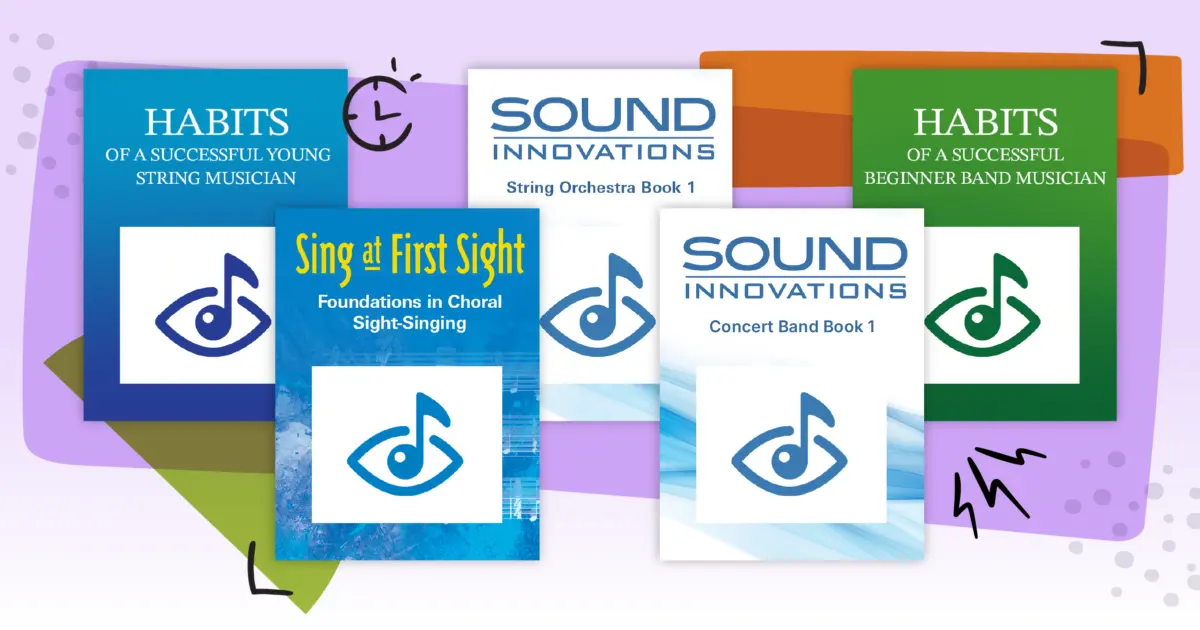
To combat this bottleneck, MakeMusic has officially launched its innovative Correlated Sight Reading Generators. Engineered to eliminate the scarcity of fresh, leveled reading material, these pre-built templates integrate directly within the MakeMusic Cloud ecosystem. By seamlessly mapping onto trusted, widely used pedagogical method books lesson by lesson, the new generators provide educators with an infinite, on-demand supply of customized sight-reading exercises. This release marks a major paradigm shift in music pedagogy, promising to reduce teacher preparation hours, eliminate the repetition trap, and foster genuine, independent musical literacy in students of all ages.
Detailed Chronology: The Evolution of Digital Music Pedagogy and the Birth of Sight Reading Studio
To understand the significance of MakeMusic’s latest release, it is necessary to examine the broader trajectory of digital music education tools over the past two decades. As classrooms rapidly transitioned from chalkboard-and-manuscript instruction to software-integrated learning environments, interactive music software evolved from basic pitch-detection games into sophisticated, cloud-based practice suites.
MakeMusic, historically renowned for pioneering digital music notation through Finale and interactive accompaniment via SmartMusic, recognized a distinct gap in how students develop foundational reading skills. While performance evaluation tools successfully tracked rhythm and pitch accuracy on assigned pieces, educators consistently voiced a deeper concern: students were heavily relying on audio-visual modeling or rote memorization rather than developing spontaneous sight-reading competence.
The Development Phase: Bridging Method Books and Algorithmic Generation
Recognizing that music educators are fiercely loyal to their preferred pedagogical frameworks—such as specific band, orchestra, and vocal method series—MakeMusic’s product development team embarked on a multi-year initiative to bridge the gap between structured curriculum and dynamic content generation.
The initial phase involved the creation of Sight Reading Studio (SRS), a proprietary engine designed to generate algorithmic musical exercises based on specific parameters such as key signatures, time signatures, rhythmic complexity, and melodic intervals. While SRS proved powerful, early iterations required teachers to manually configure these parameters to match their current classroom curriculum, adding an extra layer of administrative planning.
The next evolutionary leap—culminating in the rollout of the Correlated Sight Reading Generators—was the alignment of SRS templates with specific, widely adopted method books. Rather than requiring educators to guess which SRS settings corresponded to "Lesson 14" or "Page 22" of their chosen curriculum, the development team meticulously mapped the learning progressions of industry-standard instructional books directly into the software architecture.
By marrying algorithmic generation with established pedagogical sequences, MakeMusic created a frictionless user experience: teachers simply select their current method book, navigate to the exact lesson they are teaching that day, and instantly generate an unlimited number of stylistically and technically appropriate exercises.
Supporting Context & Metrics: The Pedagogical Imperative of Sight Reading
The introduction of automated, correlated sight-reading generation arrives at a critical juncture in arts education, where music teachers face mounting administrative burdens, shrinking classroom contact hours, and diverse learning needs within a single ensemble.
The Problem of the "Memorization Trap"
In a traditional classroom setting, an instrumental or vocal method book typically features two to four short sight-reading or supplementary exercises per page. For a beginning band or choir class meeting five days a week, these printed examples are exhausted within days.
Cognitive science demonstrates that when a student encounters the exact same line of music multiple times, the brain shifts from decoding mode (translating visual symbols into motor commands and auditory expectations) to retrieval mode (accessing memory traces). Consequently, teachers find themselves desperately searching the internet, scanning pages from secondary method books, or hand-writing custom exercises on whiteboards—processes that consume valuable preparation time without guaranteeing pedagogical alignment.
Efficiency and Retention Metrics
Internal educational pilot programs and educator feedback compiled by MakeMusic highlight several key impacts of dynamic sight-reading integration:
- Preparation Time Reduction: Teachers report saving an average of 3 to 5 hours per week previously spent hunting, formatting, or composing supplemental sight-reading material.
- Engagement Longevity: Classrooms utilizing infinite-generation tools exhibit a 40% increase in student engagement during sight-reading segments, largely driven by the novelty of encountering fresh notation every session.
- Ensemble Rehearsal Velocity: Ensembles subjected to systematic, randomized sight reading demonstrate a noticeable acceleration in learning new concert repertoire, reducing the time required to move from initial read-through to polished interpretation by up to 25%.
Furthermore, independent reading fluency is directly correlated with long-term retention. Studies tracking student musicians post-graduation consistently indicate that those with strong sight-reading foundations are significantly more likely to participate in adult community ensembles, church music programs, and avocational music-making groups. Without these skills, the frustration of struggling to decode new music often leads to musical dormancy.
Official Statements and Functional Architecture
The rollout of the Correlated Sight Reading Generators has drawn enthusiastic responses from the music education community, highlighting both the practical utility of the software and its sophisticated underlying design.
How the System Operates
At its technological core, the system relies on pre-built Sight Reading Studio templates embedded directly within the MakeMusic Cloud library. The operational workflow is designed for maximum simplicity:
- Curriculum Selection: The educator logs into MakeMusic Cloud and selects the specific method book currently in use by their ensemble.
- Lesson Alignment: The teacher navigates to the exact lesson or unit corresponding to their current day’s instruction.
- Instant Generation: With a single click, the software generates a brand-new, completely unique exercise tailored precisely to the technical constraints, note ranges, and rhythmic vocabularies mastered up to that specific point in the curriculum.
- Iterative Creation: Clicking generate again produces a fresh exercise of identical pedagogical difficulty, ensuring that every student gets a truly unseen piece of music, even during repetitive drill sessions or multi-section testing.
Integration Across Educational Environments
The flexibility of the cloud-based platform ensures that the utility of the generators extends far beyond the physical walls of the classroom:
- In the Classroom: Educators can project generated exercises onto smartboards for full-ensemble sight-reading warm-ups, eliminating the need for photocopying or book distribution. Teachers can instantly cycle through multiple examples to assess individual or section-wide comprehension in real time, transforming a routine administrative task into an interactive, gamified assessment.
- At Home: Students practicing independently via MakeMusic Cloud can access the exact same correlated generators at home. This allows them to reinforce classroom concepts through self-directed practice without the risk of playing ahead in their physical method books or cheating by memorizing the page. Parents and teachers alike benefit from assignments that automatically adapt to the student’s exact current proficiency level.
Future Outlook: The Next Frontier in Digital Music Pedagogy
As educational technology continues to mature, the release of MakeMusic’s Correlated Sight Reading Generators points toward a future where curriculum-integrated, AI-assisted tools play an increasingly central role in creative arts instruction.
Expanding the Pedagogical Ecosystem
Industry analysts predict that the success of these initial method-book integrations will pave the way for broader publishing partnerships. As more curriculum publishers recognize the value of digital extensibility, future updates are expected to encompass an even wider array of specialized method books, including advanced jazz improvisation series, specialized string pedagogy methods, and regional festival-specific sight-reading rubrics.
Personalization and Adaptive Learning
Looking further ahead, the convergence of algorithmic generation and student-performance analytics promises unprecedented levels of personalization. Future iterations of sight-reading tools may dynamically adjust difficulty in real time based on a student’s historical pitch and rhythmic accuracy data captured by the software’s evaluation engine. If a student consistently struggles with syncopated rhythms in 6/8 time, the generator could automatically introduce targeted remedial exercises that reinforce those specific weak points while maintaining alignment with the broader ensemble curriculum.
Reclaiming the Joy of Teaching
Ultimately, the broader significance of innovations like the Correlated Sight Reading Generators lies in their potential to rebalance the professional lives of educators. By automating the mechanical, time-consuming tasks of material sourcing and exercise composition, technology allows music teachers to refocus their energy where it matters most: active listening, artistic interpretation, mentorship, and inspiring a lifelong passion for music in the next generation of players.
For educators eager to reclaim their preparation time and elevate their students’ reading fluency, the new templates are available immediately. Instructors can log into MakeMusic Cloud, navigate to the featured Sight Reading Studio generators, select their curriculum, and provide their students with a truly limitless world of fresh musical possibilities today.















