

Executive Overview
In the modern music classroom, few skills are as universally prized—and as notoriously difficult to teach consistently—as sight reading. Educators have long understood that strong sight-reading capabilities form the bedrock of musical independence. Students who master the skill learn new repertoire at an accelerated pace, navigate rehearsals with higher efficiency, and approach adjudications, festivals, and auditions with composure rather than anxiety. More importantly, independent music-reading proficiency ensures that students continue to engage with music long after graduation, seamlessly transitioning into community bands, church choirs, local theater orchestras, and informal ensemble playing.
Yet, a persistent bottleneck has plagued music pedagogy for generations: the scarcity of fresh, appropriately leveled material. Traditional method books, while structured and pedagogically sound, offer a finite number of exercises. Once a student plays through a page two or three times, active cognitive note-reading degrades into rote memorization. Educators are subsequently forced into a weekly administrative grind—composing custom exercises, scouring the internet for leveled supplemental materials, or frantically transposing melodies to match their current curriculum.
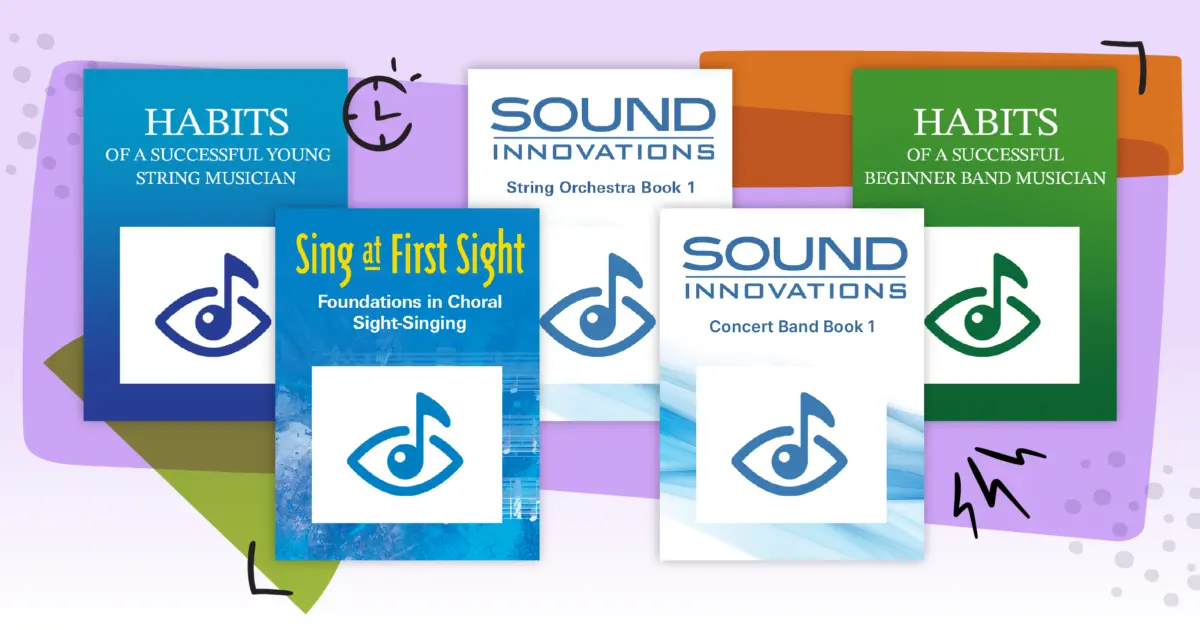
Addressing this enduring challenge head-on, MakeMusic has officially launched its new line of Correlated Sight Reading Generators. Integrated directly into the MakeMusic Cloud platform via Sight Reading Studio, these pre-built templates align lesson-by-lesson with trusted, widely used pedagogical methods. By dynamically generating an infinite supply of brand-new, skill-matched exercises on demand, MakeMusic’s latest innovation eliminates prep time, banishes rote memorization from the classroom, and transforms sight reading from an administrative headache into a seamless, daily musical habit.
Detailed Chronology: The Evolution of Sight Reading Pedagogy and Technology
To fully appreciate the impact of MakeMusic’s new generators, it is essential to examine the historical trajectory of how sight reading has been taught, practiced, and mechanized over the last century.
The Era of Static Print (Pre-Late 20th Century)
For decades, music instruction relied exclusively on printed ink-on-paper. Method books such as Essential Elements, Tradition of Excellence, and Standard of Excellence revolutionized band and orchestral instruction by providing structured, sequential learning paths. However, these texts suffered from an unavoidable physical limitation: page real estate. Publishers could afford to include only a handful of sight-reading examples per unit. Once a young clarinetist or violinist exhausted those four or five exercises, the pedagogical value of that specific page for sight reading was effectively spent. Teachers were left to write supplementary measures on chalkboards or whiteboards—a time-consuming process that often resulted in illegible notation or poorly paced difficulty curves.
The Rise of Digital Notation and Software
As music notation software (like Finale and Sibelius) matured in the 1990s and 2000s, educators gained the ability to generate their own practice materials digitally. While this was a vast improvement over handwritten manuscripts, it still required significant technical proficiency and hours of off-clock preparation. Teachers had to manually input notes, check ranges, ensure rhythm complexity matched specific grade levels, and export files.
The introduction of interactive platforms like SmartMusic (now MakeMusic Cloud) began to change the landscape by offering vast digital libraries of accompaniment tracks and assessment tools. However, while students could practice assigned pieces with real-time feedback, generating unseen material on the fly that precisely mirrored a specific curriculum remained an elusive goal.
The Birth of Sight Reading Studio and Automated Generation
Recognizing the acute need for dynamic practice tools, MakeMusic previously introduced Sight Reading Studio, a feature designed to create endless streams of sight-reading examples based on parameters such as key signature, time signature, rhythm difficulty, and instrument range. While powerful, teachers still faced a transitional hurdle: configuring these custom generators required manual calibration to match the exact scope and sequence of the specific method book they were using in class. A teacher using a popular band method had to mentally translate lesson concepts into software settings.
The Breakthrough: Correlated Sight Reading Templates
The release of the new Correlated Sight Reading Generators represents the culmination of this technological evolution. By bridging the gap between automated generation and established pedagogical frameworks, MakeMusic has effectively automated the alignment process. Developers and music educators mapped the exact sequencing of top-tier method books directly into the platform’s backend infrastructure.
Now, when an educator opens the platform, they no longer need to reverse-engineer software parameters to match Lesson 14 of their curriculum. They simply navigate to their method book, select Lesson 14, and click "Generate." The software instantly produces an infinite variety of exercises that respect the exact technical boundaries—such as restricted note ranges, specific rhythms, and introduced accidentals—of that precise moment in the student’s learning journey.
Supporting Context & Metrics: The Pedagogical and Administrative Impact
The release of these generators arrives at a critical juncture for arts education. Across school districts nationwide, music educators face mounting administrative burdens, shrinking instructional minutes, and diverse student learning curves within a single ensemble.
The Cognitive Science of Sight Reading
Cognitive research underscores the danger of repeated exposure to static musical examples. When a student encounters a piece of music multiple times, the brain shifts from decoding visual symbols (note reading) to retrieval memory (remembering motor patterns and pitch sequences). True sight reading—the cognitive act of processing unfamiliar visual stimuli and translating it instantly into physical execution—ceases to occur once a piece is memorized.
By providing an infinite loop of unique exercises that strictly adhere to a controlled vocabulary of previously learned notes and rhythms, the new generators ensure that genuine sight-reading cognition is perpetually engaged. Students cannot memorize what they have never seen before, forcing them to rely on interval recognition, rhythmic counting, and structural analysis every single time they open an exercise.
Reclaiming Instructional Time: The Administrative Drain
Time is arguably a music educator’s most precious and scarce commodity. A comprehensive internal survey of instrumental and vocal directors indicates that music educators spend an average of 3.5 to 5 hours per week searching for, curating, transposing, or manually writing supplemental sight-reading material. Multiplied across a 36-week academic year, this equates to roughly 140 to 180 hours—the equivalent of nearly four full working weeks—spent entirely on preparatory paperwork rather than direct student interaction, ensemble polishing, or individualized mentoring.
By automating this workflow through pre-built curriculum correlations, MakeMusic’s tool effectively hands those hours back to the educator. The impact on workflow is immediate:
- Zero Prep Time: Elimination of manual notation entry or photocopier runs.
- Instant Differentiation: Ability to instantly generate easier or more advanced variants for students requiring remediation or enrichment.
- Seamless Continuity: Sight reading is no longer treated as an isolated, dreaded Friday test, but rather as an organic, five-minute daily extension of the day’s core lesson.
Practical Application: Inside the Classroom and At Home
The true measure of any educational technology is its utility in real-world environments. The correlated sight-reading templates have been engineered for flexibility across multiple deployment scenarios, transforming both whole-group classroom instruction and independent home practice.
In the Classroom: Dynamic Ensemble Engagement
Integrating sight reading into a large ensemble setting (such as a 70-piece concert band or a high school choir) has historically been logistically fraught. Projecting static exercises can lead to students whispering answers or leaning on neighbors who read faster.
With the new correlated templates, classroom dynamics shift:
- Whole-Class Warm-Ups: Directors can project a freshly generated, lesson-aligned exercise onto a smartboard or screen at the start of rehearsal. Because a new version can be generated with a single click, students cannot cheat by looking ahead or memorizing the board.
- Sectional Work: While the director works with brass on tone production, woodwinds can independently access their own correlated sight-reading prompts on individual devices, reinforcing specific technical passages from the current method book unit.
- Formative Assessment: Teachers can quickly gauge whether the ensemble has truly mastered a rhythmic concept (e.g., syncopation or dotted quarter-eighth notes) by generating a targeted exercise and listening as students sight-read it aloud together or individually via device submission.
At Home: Empowering Independent Practice
Practice habits outside of school often falter because students lack clear direction or grow bored with repetitive exercises. The integration of correlated templates into MakeMusic Cloud’s home interface bridges this gap:
- Guided Reinforcement: When practicing at home, a student can open their current method book lesson within the platform and immediately access custom-tailored sight-reading prompts that match their exact skill level. There is no guesswork about what is "too hard" or "too easy."
- Immediate Feedback and Accountability: Students can record themselves playing the generated exercises, allowing them to hear their own execution against the correct pitches and rhythms.
- Building Confidence: By practicing unfamiliar material in a low-stakes, self-paced environment at home, students systematically dismantle the psychological barrier of "sight-reading anxiety," walking into festival sight-reading rooms and auditions fully prepared.
Official Statements and Industry Perspective
The launch of the Correlated Sight Reading Generators has generated significant enthusiasm within the broader music education community, highlighting a shared commitment to solving persistent pedagogical pain points through intelligent software design.
"Strong sight readers learn music faster, rehearse more efficiently, and walk into the festival sight reading room with confidence instead of dread," noted a MakeMusic product development spokesperson during the launch rollout. "Even more important, reading independently is what lets students keep making music long after they leave our classrooms—whether that’s in a community band, a church choir, or a garage jam with friends."
Music educators who participated in early beta testing cycles have been particularly vocal about the time-saving and instructional benefits of the new templates:
- "Before these generators, finding sight reading that matched where my beginning band was at week nine of our method book was an absolute chore," shared a middle school band director with over twenty years of classroom experience. "Now, I click the lesson, I project the exercise, and we are sight-reading music that uses only the exact five notes we’ve learned so far. It has completely changed our daily routine."
- "The death of rote memorization is the biggest win here," noted a high school choral director. "Students can’t fake it anymore. Every time we pull up a template, it’s a brand-new intellectual challenge that forces them to actually look at the notation."
Future Outlook: The Next Frontier in Music Technology
As educational technology continues to converge with cognitive science and automated workflows, the release of MakeMusic’s correlated sight-reading templates points toward a broader, highly promising future for music pedagogy.
Predictive Customization and AI Integration
Looking ahead, industry analysts project that features like these will continue to evolve through machine learning and adaptive algorithms. Future iterations of curriculum-correlated tools may soon analyze an individual student’s performance data in real time—identifying specific weak points (such as trouble with flat key signatures or compound meters) and dynamically tailoring subsequent generated sight-reading exercises to target those exact developmental gaps.
Bridging the Gap Between Formal Education and Lifelong Music-Making
Ultimately, the grand vision behind tools like Sight Reading Studio and its new correlated templates extends far beyond K-12 classrooms and festival ratings. By equipping students with fluent, fearless, and independent sight-reading abilities, music educators are imparting a permanent, lifelong literacy.
As automated tools shoulder the administrative weight of lesson prep, teachers are liberated to focus on what matters most: inspiring artistic expression, cultivating emotional resonance, and fostering a deep, enduring love for making music. With MakeMusic’s latest innovation, the path from novice note-reader to independent, lifelong musician has never been clearer—or more accessible.
Getting Started
Music educators and students eager to experience the new system can access the platform immediately:
- Log in to your account via the MakeMusic Cloud Home Portal.
- Explore the newly updated library to locate the Correlated Sight Reading Templates.
- Select your specific method book, navigate directly to your current classroom lesson, and provide your students with fresh, engaging sight-reading material today.















