
Executive Overview
For decades, the pantheon of electric guitar has been populated by towering figures whose styles were instantly recognizable, yet few ever achieved the singular, sui generis status of Jeff Beck. While contemporaries like Eric Clapton and Jimmy Page forged legendary paths through British blues-rock, Beck continually dismantled his own foundations, building an idiosyncratic musical language that bridged the visceral urgency of rock with the harmonic and rhythmic sophistication of jazz.
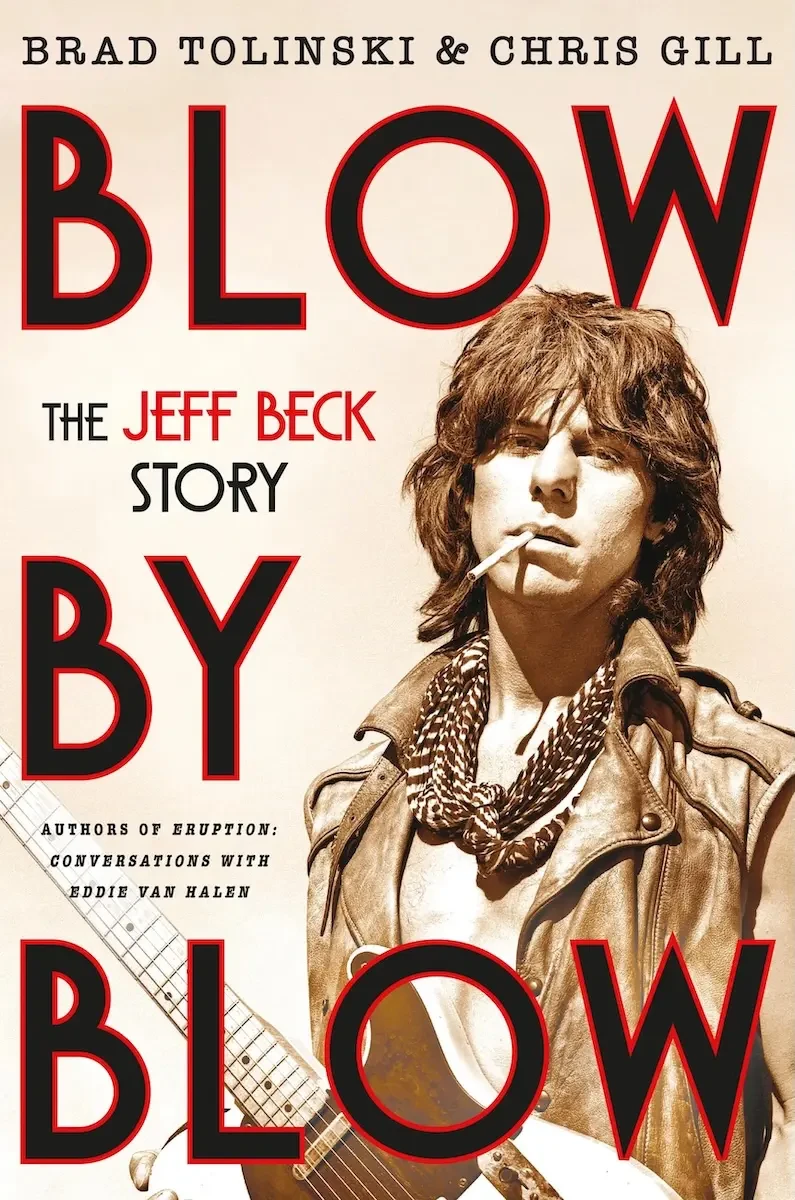
Enter Blow By Blow: The Jeff Beck Story (Michael Joseph, 2026), a rich, flowing, and deeply contextualized biographical work penned by veteran guitar and rock specialists Brad Tolinski and Chris Gill. Arriving in the wake of definitive literary explorations such as Annette Carson’s Jeff Beck: Crazy Fingers (2001) and Martin Power’s Hot Wired Guitar: The Life Of Jeff Beck (2014), Tolinski and Gill’s 387-page hardcover volume carves out its own vital space within "Beckology." Taking its title from Beck’s acclaimed, George Martin-produced mid-1970s fusion masterwork, the book looks past mere biographical timelines to examine the intuitive, emotional, and genre-defying mechanics of a truly restless innovator.
This review unpacks the core revelations of Blow By Blow, contextualizing Beck’s complex relationship with jazz, his deep-seated avant-garde sensibilities, and his peerless physical command of the instrument. Furthermore, it interrogates how Tolinski and Gill evaluate the pivotal milestones of a career that spanned from the avant-pop experimentalism of the Yardbirds to late-era collaborations with Johnny Depp, offering a definitive portrait of a musician who forever altered the vocabulary of the electric guitar.
Detailed Chronology: From the Yardbirds to the Fusion Era
To understand Jeff Beck is to understand a musician perpetually running away from commercial pigeonholing. Blow By Blow meticulously details this lifelong flight from convention, tracing Beck’s evolution from his formative London days through his explosive mid-career reinventions.
The Avant-Garde Roots: The Tridents and the Yardbirds
Long before he was heralded as a guitar god, Beck was absorbing sounds far outside the traditional blues vernacular. Tolinski and Gill capture this early experimental streak, noting how Beck’s initial stylistic markers drew inspiration not just from bluesmen like Buddy Guy, but from the exploratory, disruptive cadences of modern jazz and early free-form pioneers.
In the book, Beck himself characterizes this early trajectory, drawing parallels that might startle casual rock fans:
"Before the Yardbirds invited me to join, I was already moving toward avant-garde and experimental music — a bit like Eric Dolphy and Roland Kirk. I’m not comparing myself to them musically, but the essence of what I was doing involved creating the strangest sounds I could. That’s when Eric came down to see me and realised where his job was going."
This radical approach revolutionized the Yardbirds, turning pop-rock arrangements into vehicles for feedback, sonic manipulation, and lightning-fast scalar excursions. Yet, true to form, Beck’s tenure was notoriously brief, setting a precedent for a career defined by sudden departures and artistic rebirths.
The Pivot to Instrumental Fusion
The mid-1970s marked the definitive turning point in Beck’s career, steering him away from vocal-led blues-rock bands (such as the Jeff Beck Group and Beck, Bogart and Appice) and toward the expansive instrumental landscapes of jazz-rock fusion.
A central anchor of this transition—and a focal point in Tolinski and Gill’s study—is Beck’s interpretation of Charles Mingus’s Goodbye Pork Pie Hat. Originally recorded in 1959 as a blues-spun threnody for Lester Young on Mingus’s Mingus Ah Um, the track was brilliantly reimagined by Beck on his George Martin-produced 1976 album, Wired. Tolinski and Gill capture the transformative nature of this performance, writing:
"[Beck’s] performance was dazzling […] a dynamic slow burn of jazz and blues that was unmistakably his own. This track marked a turning point — the moment he transitioned from his blues-rock roots with the Yardbirds, the Jeff Beck Group and Beck, Bogart and Appice to the iconoclastic, expressive style that defined the rest of his career."
This fusion era was heavily informed by contemporary breakthroughs in jazz. As Martin Power detailed in Hot Wired Guitar, Beck was deeply inspired by the rhythmic displacement of Billy Cobham’s Spectrum and John McLaughlin’s pioneering fretwork with Miles Davis (specifically on Right Off from A Tribute to Jack Johnson) and the Mahavishnu Orchestra. Beck’s subsequent 1990s collaboration with McLaughlin on John Lewis’s Django (featured on McLaughlin’s The Promise) solidified his technical and conceptual standing among the elite practitioners of improvised music.
Supporting Context & Metrics: The Jazz Sensibility and Physicality
A recurring analytical thread in Blow By Blow—and one that separates this book from standard rock biographies—is an honest evaluation of Beck’s complex relationship with jazz.
"Not a Jazzer, But…"
While purists often debated whether Beck belonged in the jazz conversation, his peers had no doubts. In the documentary Still On The Run: The Jeff Beck Story, Eric Clapton—who frequently invited Beck to perform at his annual Crossroads Guitar Festivals—succinctly noted: "Not that many rock players ‘get’ jazz. But Jeff does!"
Beck himself was famously defensive about the "jazz" label, frequently insisting he was merely a blues musician working with "elaborated blues with progressive rock overtones." Yet, as critics and authors have consistently pointed out, his poetics, his harmonic fearlessness, and his avoidance of standard pentatonic boxes were thoroughly jazz-infused.
Blow By Blow explores Beck’s admiration for towering jazz drummers like Elvin Jones, whom Beck would watch obsessively whenever he played London’s Ronnie Scott’s Jazz Club. This affinity for polyrhythmic intensity forged a visceral connection between Beck’s playing and the broader jazz-avant-garde continuum. As Tolinski and Gill astutely observe:
"While Beck sounded nothing like Jimi Hendrix or John Coltrane, he shared their ability to convey a visceral physicality in his soloing."
Harmonic Sophistication and the Barney Kessel Connection
Beyond raw volume and speed, Beck’s playing possessed a linear grace and chromatic dexterity that mirrored the bebop guitar masters of an earlier generation. Tolinski and Gill, alongside earlier biographers, highlight Beck’s astonishing guest solo on Stevie Wonder’s 1971 track Looking For Another Pure Love (from Talking Book). The solo’s smooth linear architecture and sophisticated chromatic passing tones evoke the spirit of jazz guitar great Barney Kessel, proving that Beck’s ear was attuned to advanced harmonic concepts long before he recorded Blow By Blow.
Official Statements and Critical Perspectives
Blow By Blow: The Jeff Beck Story does not shy away from critically assessing the twilight years of Beck’s storied career, though reviewers note occasional gaps in musical depth.
While the authors provide welcome contextualization for Beck’s final studio offering—his 2022 collaboration with actor and guitarist Johnny Depp on the album 18—some critics, such as jazz journalist and historian contributors, have argued that more space could have been dedicated to analyzing his live masterclasses.
Specifically, many enthusiasts feel that Performing This Week: Jeff Beck at Ronnie Scott’s (the 2008 residency released in 2009) deserved deeper musicological unpacking. That legendary week-long residency was described by Beck himself as the happiest time of his career. It was originally released with jazz-oriented sleeve notes by veteran music writer Charles Shaar Murray—a figure frequently cited throughout Tolinski and Gill’s book. Despite minor analytical omissions regarding late-era live recordings, the critical consensus remains that Blow By Blow is an indispensable addition to the library of any serious guitar student or rock historian.
Future Outlook: The Enduring Legacy of "Beckology"
With Jeff Beck’s passing in January 2023, the global music community was forced to confront the reality that there will never be another player quite like him. He used his tremolo bar, volume knobs, and finger-picking technique (having famously abandoned the guitar pick early in his career) to make his Fender Stratocaster weep, wail, and sing with an uncannily human inflection.
Publications like Blow By Blow: The Jeff Beck Story ensure that Beck’s restless artistic spirit continues to be studied, contextualized, and revered. By framing him not merely as a rock icon, but as an intuitive improviser who walked comfortably among jazz titans, Tolinski and Gill have provided a blueprint for how modern guitar history ought to be written.
As new generations of musicians discover the breathtaking dynamic range of Blow By Blow, Wired, and his late-career triumphs, books like this will serve as essential navigational charts. They remind us that the electric guitar is not merely a blunt instrument of rock-and-roll rebellion, but a limitless canvas for harmonic and emotional exploration—a canvas that Jeff Beck painted upon better than anyone else.
Book Publication Details
- Blow By Blow: The Jeff Beck Story
- Authors: Brad Tolinski & Chris Gill
- Publisher: Michael Joseph
- Publication Year: 2026
- Format: Hardcover (Hb)
- Length: 387 pages (including 20 black-and-white photographs, seven illustrations, and a comprehensive index)
- Pricing & ISBN: £30 | ISBN: 978–0-241-76717-7