
Executive Overview
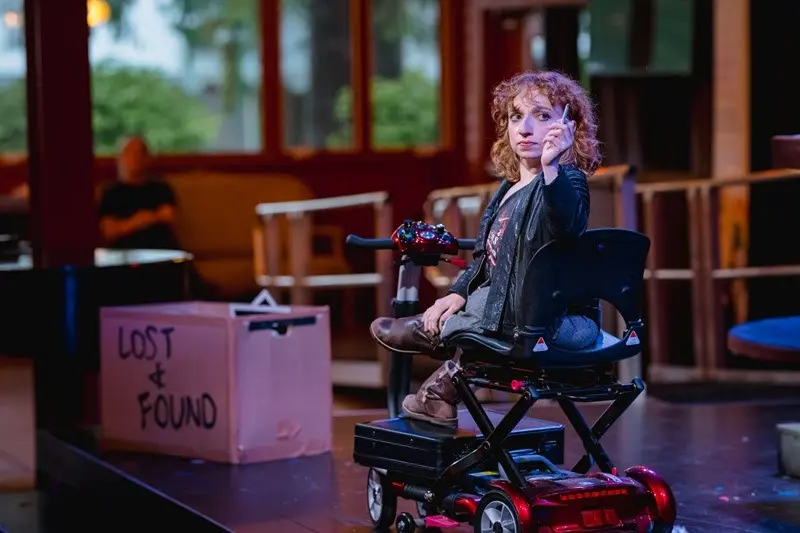
In an unprecedented collaboration that highlights the boundless potential of regional arts integration, four of New York State’s most prestigious musical and theatrical institutions are joining forces. The Glimmerglass Festival, Opera Saratoga, Finger Lakes Opera, and the Seagle Festival have officially announced the New York City premiere of Kurt Weill, Bertolt Brecht, and Elisabeth Hauptmann’s enduringly subversive musical comedy, Happy End.
Scheduled for Thursday, November 12, 2026, at 7:30 p.m., the landmark performance will take place at Merkin Hall within the renowned Kaufman Music Center. This high-profile showcase serves as the triumphant grand finale of an extensive regional tour spanning eight distinct venues across Upstate New York and Western Massachusetts.
Rather than functioning as a standard regional transfer, this production of Happy End represents a watershed moment for the performing arts ecosystem in the Northeastern United States. By pooling physical, financial, and artistic resources, these four organizations have achieved a scale of production that none could have realized in isolation. Featuring a newly minted English-language book by Glimmerglass dramaturg Kelley Rourke, Michael Feingold’s celebrated American lyrical adaptations, and a dynamic musical partnership with the jazz virtuosos of the Manhattan School of Music, this production breathes vibrant, modern life into a 1929 classic.
Under the baton of conductor and pianist Rob Ainsley—who also serves as the Artistic and General Director of The Glimmerglass Festival—and under the visionary theatrical direction of Mary Birnbaum, General and Artistic Director of Opera Saratoga, the production promises to deliver a masterclass in cross-genre storytelling. Bolstered by a stellar cast of rising vocal talents, this milestone event underscores the resilience, adaptability, and boundless creativity of the modern American opera community.
Detailed Chronology & Production Genesis
The Roots of Collaboration
The genesis of this momentous collaboration dates back to strategic conversations among artistic leadership across Upstate New York’s cultural sector. Recognizing the post-pandemic financial pressures facing regional theater and opera companies, leaders from The Glimmerglass Festival, Opera Saratoga, Finger Lakes Opera, and the Seagle Festival began exploring models of resource-sharing. Instead of viewing one another as competitors for philanthropic dollars and audiences, these institutions identified an opportunity for synergy.
The choice of Happy End as the vehicle for this partnership was no accident. Originally premiering in Berlin in 1929, the work represents the final major collaboration between composer Kurt Weill, playwright Bertolt Brecht, and collaborator Elisabeth Hauptmann following the massive success of The Threepenny Opera. Despite containing some of Weill’s most sublime, jazz-infused numbers—including the immortal "Bilbao Song," "Mandalay Song," and "Surabaya Johnny"—the original production famously flopped, overshadowed by structural issues in its book and turbulent political dynamics in Weimar Germany.
Over the decades, Happy End has achieved cult status among musicologists and theater historians, but complete staged productions remain rare. Recognizing its untapped potential for contemporary American audiences, the four co-producing companies commissioned a streamlined, high-impact English concert version. This version strips away the unwieldy melodrama of the original German book while preserving the anarchic wit, social critique, and musical brilliance of the score.
The Regional Tour and Road to Manhattan
Before claiming the stage at Merkin Hall, the production underwent a rigorous developmental lifecycle. The ensemble embarked on a grueling yet exhilarating tour across eight venues throughout New York State and Western Massachusetts. This tour served multiple critical functions: it allowed the cast and creative team to refine the pacing of the production, test the resonance of Kelley Rourke’s new English book in diverse acoustical environments, and build grassroots enthusiasm among regional audiences who rarely see inter-organizational cooperation on this scale.
The tour acted as an artistic crucible. Performing in spaces ranging from intimate historic theaters to modern university concert halls, the cast—comprising Ana Karneža, Christine Taylor Price, Gregory Feldmann, Lisa Marie Rogali, Jonathan Pierce Rhodes, Bradley Bickhardt, Jason Zacher, William Raskin, and Lauren Torey—honed a razor-sharp ensemble dynamic.
By the time the production crosses the threshold of Kaufman Music Center on November 12, 2026, it will arrive battle-tested, cohesive, and fully realized. Running without an intermission, the fast-paced 75-to-90-minute format is meticulously designed to match the kinetic energy of Weill’s jazz-cabaret idiom, ensuring that New York City audiences experience the work with maximum theatrical punch.
Supporting Context & Metrics: Anatomy of a Regional Alliance
To fully grasp the significance of the upcoming Merkin Hall premiere, one must examine the operational metrics and cultural geography that make this alliance so remarkable.
[The Glimmerglass Festival]
[Opera Saratoga]          ---> [Inter-Organizational Synergy] ---> [The Upstate-NYC Cultural Bridge]
[Finger Lakes Opera]      -->  [Resource Pooling]             --> [*Happy End* New York City Premiere]
[Seagle Festival]         /
The Co-Producing Institutions
- The Glimmerglass Festival: Located on the shores of Otsego Lake near Cooperstown, New York, Glimmerglass is internationally renowned for its innovative staging of operatic and musical theater repertoire, attracting tens of thousands of visitors annually.
- Opera Saratoga: Operating out of the Capital Region, Opera Saratoga has a rich history of championing American opera, nurturing young artists, and bringing adventurous programming to communities across Upstate New York.
- Finger Lakes Opera: Serving the western and central regions of the state, FLO has experienced explosive growth, establishing itself as a vital hub for regional vocal performance and community engagement.
- Seagle Festival: Based in Schroon Lake in the Adirondacks, Seagle Festival is America’s oldest summer opera/musical theater training program, renowned for launching the careers of countless professional performers.
Financial and Logistical Scaling
Mounting a touring operatic production across state lines is an immense financial undertaking. By distributing production costs, marketing expenses, and artist fees across four distinct organizational budgets, the consortium successfully mitigated the financial risk inherent in modern theatrical production.
Furthermore, the integration of instrumentalists from the Manhattan School of Music’s jazz program establishes a vital pipeline between elite academic training and professional performance. This collaboration not only enriches the sonic texture of Weill’s score—which demands a hybrid ensemble fluent in both classical precision and jazz syncopation—but also provides emerging instrumentalists with high-profile professional credits on a major metropolitan stage.
Artistic Framework
- Composer: Kurt Weill
- Original Playwrights: Bertolt Brecht & Elisabeth Hauptmann
- American Lyricist: Michael Feingold
- New English Book: Kelley Rourke
- Conductor/Pianist: Rob Ainsley
- Director: Mary Birnbaum
- Featured Ensemble: Ana Karneža, Christine Taylor Price, Gregory Feldmann, Lisa Marie Rogali, Jonathan Pierce Rhodes, Bradley Bickhardt, Jason Zacher, William Raskin, and Lauren Torey
Official Statements & Industry Perspectives
The announcement of the Happy End premiere has sent ripples of excitement through the North American classical music and theater sectors. Industry leaders have been quick to praise the collaborative spirit driving the initiative.
In an official press release distributed ahead of the tour, Rob Ainsley, Artistic and General Director of The Glimmerglass Festival, emphasized the profound collaborative nature of the enterprise:
"This production of Happy End shows what can happen when the Upstate New York opera community comes together to make something that no one organization could have made on its own."
Ainsley’s dual role as both conductor and pianist places him at the musical heart of the performance, anchoring the jazz-infused rhythms of the score while guiding the vocalists through Weill’s demanding harmonic landscapes.
Meanwhile, Mary Birnbaum, General and Artistic Director of Opera Saratoga and the production’s director, has focused heavily on the theatrical urgency of the piece. In preparatory notes regarding the staging, Birnbaum noted that Happy End offers a startlingly modern reflection on capitalism, morality, and systemic hypocrisy—themes that resonate as powerfully in the 2020s as they did in the waning days of the Weimar Republic. By pairing Brecht’s biting satire with Hauptmann’s underappreciated narrative framing (historically obscured due to the patriarchal dynamics of mid-20th-century theater publishing), Birnbaum’s direction seeks to reclaim the work as a feminist and socio-political masterwork.
Critics and institutional partners have similarly lauded the project as a viable blueprint for the future of regional arts organizations. In an era where funding streams for the arts face increasing volatility, the ability of four distinct entities to pool their administrative, artistic, and marketing capital offers a compelling counter-narrative to institutional contraction.
Future Outlook: A New Paradigm for Regional Collaboration
As the performing arts landscape continues to evolve in the wake of significant economic and cultural shifts, the success of Happy End may well be studied for decades as a turning point in regional arts administration.
Reimagining Regional Interdependence
For generations, regional opera and theater companies operated under a hyper-localized mandate: produce work within home venues, build local donor bases, and maintain operational independence at all costs. While this model fostered deep community roots, it also left individual companies vulnerable to economic downturns, shifting philanthropic priorities, and the escalating costs of mounting large-scale productions.
The Glimmerglass-Saratoga-Finger Lakes-Seagle alliance demonstrates that artistic ambition need not be curtailed by geographical or financial isolation. By creating a scalable touring model that bridges Upstate New York’s vibrant cultural hubs with New York City’s premier presentation spaces, these organizations have forged a sustainable pathway for ambitious programming.
What Lies Ahead for the Consortium
While the immediate focus of all four institutions remains firmly fixed on the November 12, 2026, performance at Merkin Hall, discussions are already underway regarding potential future collaborations. Industry insiders speculate that the success of this multi-organization touring model could pave the way for joint commissions of new American operas, shared educational initiatives, and expanded touring circuits that bring world-class vocal art deeper into underserved rural and semi-urban communities throughout the Northeast.
Furthermore, the integration of young artists and students—exemplified by the inclusion of Manhattan School of Music jazz instrumentalists and an elite cast of rising vocal stars—ensures that the pipeline for future talent remains robust and dynamic. These artists are not merely performing a historical artifact; they are actively participating in the reinvention of how musical theater and opera can be produced in the 21st century.
Conclusion
When the houselights dim at Merkin Hall on the evening of November 12, 2026, audiences will experience far more than just a sparkling rendition of Kurt Weill and Bertolt Brecht’s Happy End. They will witness the tangible realization of community over competition, artistic daring over administrative caution, and the unstoppable creative force of Upstate New York’s premier cultural institutions working in perfect harmony.