
Executive Overview
In an era where the traditional boundaries of geographic location, language, and cultural classification are rapidly dissolving in the global music marketplace, music distribution and artist services giant Believe has made a strategic and forward-thinking play. Believe India has officially announced the launch of BL/UR, a brand-new pop imprint specifically engineered to bridge the gap between domestic Indian sounds and the global stage.
The introduction of BL/UR marks a significant milestone in the company’s regional expansion strategy, arriving on the heels of its three established, language-specific sub-labels: Neue (focused on Punjabi music), Mahra Tora (dedicated to Haryanvi sounds), and Think Indie (championing Tamil music). However, unlike its predecessors, BL/UR is staunchly language-agnostic. Its core mission is to cultivate a fresh, modern sonic identity that defies traditional pigeonholing, providing a platform for a rising wave of artists who refuse to choose between being distinctly local and universally global.
Strategically timed to coincide with the twentieth anniversary of Believe’s global headquarters, the launch of BL/UR is far more than a routine corporate expansion. It is a calculated statement of intent about the future of South Asian music. By capitalizing on an emerging generation of creators whose musical vocabulary is informed by both rural Indian roots and borderless internet culture, BL/UR aims to redefine what contemporary Indian pop sounds like to international listeners.
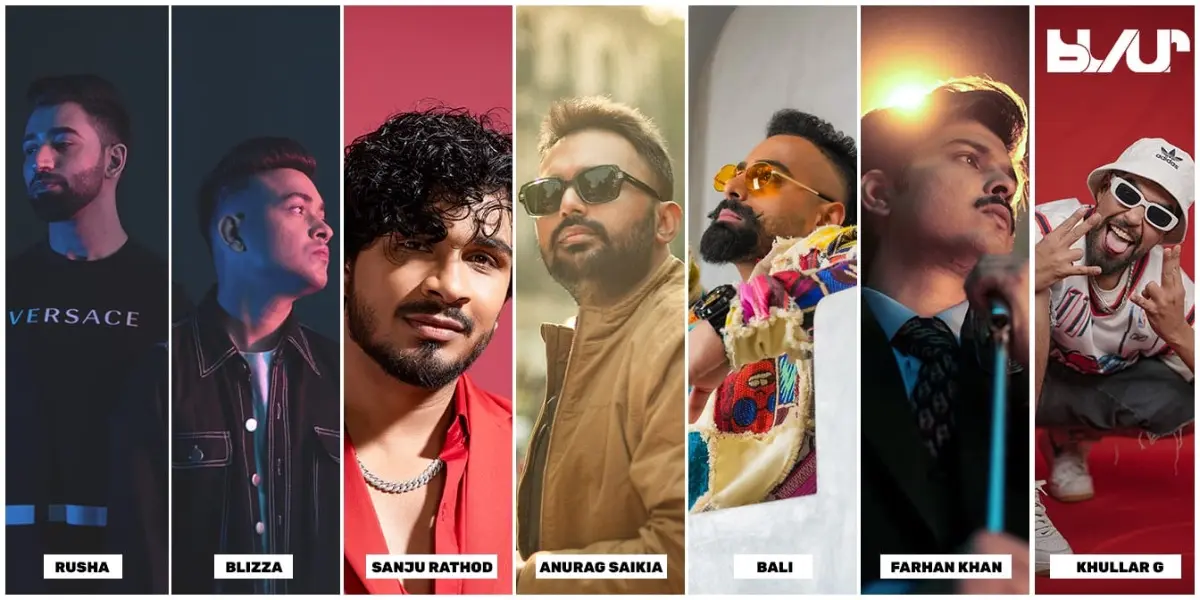
Supported by an impressive initial roster featuring chart-topping Marathi pop sensation Sanju Rathod, celebrated Hindi composer Anurag Saikia, electronic pioneers Rusha & Blizza, and dynamic hip-hop acts like Farhan Khan, Bali, and KhullarG, BL/UR is positioned to become a dominant cultural force in the modern music economy.
Detailed Chronology and Launch Context
The genesis of BL/UR can be traced through the evolution of India’s digital music consumption over the past decade. As high-speed internet penetration surged across Tier-2 and Tier-3 cities and beyond, audiences were exposed to a simultaneous influx of hyper-local folk traditions and global streaming aesthetics. This digital convergence birthed a unique demographic of young artists who grew up listening to traditional regional folk songs alongside Western electronic dance music, American hip-hop, K-pop, and Latin urban music.
Recognizing this seismic shift, Believe India began structuring its localized imprint strategy to capture these splintering sub-genres. The success of Neue, Mahra Tora, and Think Indie proved that targeted, genre- and language-specific development could yield massive domestic engagement. Yet, executives noted a parallel trend: a burgeoning group of artists whose work naturally blended these linguistic and cultural references into a cohesive, cosmopolitan pop framework. These artists did not fit neatly into a single regional bucket. They required an ecosystem that could handle their diverse influences without diluting their unique cultural markers.
The official rollout of the imprint took place on Friday, August 21, timed precisely with the global celebrations marking two decades since Believe’s founding. Rather than rolling out the label as a quiet pilot project, Believe India backed BL/UR with a powerhouse opening salvo of releases and high-profile artist signings. The marquee release accompanying the launch announcement was "Badeela," the lead single from composer Anurag Saikia’s upcoming EP, Pardesi. This release served as a textbook example of BL/UR’s artistic thesis: a sophisticated blend of traditional Rajasthani folk elements with contemporary, globally-oriented production values.
Supporting Context & Metrics: The Roster and Market Impact
To understand the weight of BL/UR’s market entry, one must examine the proven commercial track records of its initial roster. Believe has not built this label on speculative talent alone; it has corralled some of the most dynamic, high-performing disruptors in the modern Indian music landscape.
Sanju Rathod: The Marathi Pop Phenomenon
Among the crown jewels of BL/UR’s launch roster is Marathi pop singer Sanju Rathod. Rathod is no stranger to monumental commercial success, having previously dominated the digital space with breakout singles like "Gulabi Saadi" and "Shaky." These tracks did not merely perform well locally; they ascended to the very top of YouTube’s Top Music Videos chart for India, proving that regional language tracks with modern pop production can achieve pan-Indian and cross-border virality. Under the BL/UR banner, Rathod is slated to release his debut album, a project anticipated to push Marathi pop further into the mainstream global consciousness.
Anurag Saikia: Cinematic Sensibility Meets Global Pop
Joining Rathod on the roster is acclaimed Hindi composer Anurag Saikia. Saikia has built a stellar reputation for bridging cinematic composition with contemporary songwriting. His recent contribution to the third season of the popular web series Mismatched—the hauntingly melodic track "Ishq Hai"—captured the public imagination, climbing all the way to No. 1 on Spotify’s Top Songs chart in India. With his new EP Pardesi, and its lead single "Badeela," Saikia is exploring the intersections of Rajasthani folk music and modern electronic soundscapes, offering a masterclass in how indigenous Indian music can be packaged for international ears without losing its authenticity.
Expanding into Electronic and Hip-Hop Frontiers
BL/UR’s vision is not limited to traditional singer-songwriter pop or folk fusions. The imprint has also secured major signings in the electronic and hip-hop spheres:

- Rusha & Blizza: This forward-thinking electronic music duo is known for their heavy, bass-driven soundscapes that seamlessly integrate traditional Indian instrumentation with global club music aesthetics. Their addition to BL/UR signals the label’s commitment to the instrumental and electronic dance music (EDM) markets.
- Farhan Khan, Bali, and KhullarG: Recognizing the explosive growth of South Asian hip-hop, BL/UR has brought in Urdu rapper and singer Farhan Khan, alongside prominent Hindi MCs Bali and KhullarG. By incorporating lyric-driven, socially resonant, and rhythmically complex hip-hop artists into a "pop" imprint, Believe India is consciously redefining the boundaries of what constitutes mainstream pop music in the region.
Official Statements and Industry Vision
The leadership at Believe has been vocal about the philosophical underpinnings of the BL/UR imprint, framing it as a necessary evolution in artist development for the South Asian market.
Akhila Shankar, Believe’s Director of Artist Services for India and South Asia, emphasized the changing psychological landscape of the modern Indian musician.
"A new generation of Indian artists is growing up without looking at identity as local or global," Shankar noted during the label’s unveiling. "Their influences move seamlessly across genres and cultures, and their music reflects that. BL/UR was created to develop artists defining this new chapter."
Echoing this sentiment, Vivek Raina, Managing Director for Believe in India and South Asia, contextualized the launch within the broader framework of the company’s global longevity and future ambitions.
"The future of Indian pop will be shaped by the freedom to draw inspiration from everywhere while remaining unmistakably Indian," Raina stated. "As we mark Believe’s twentieth anniversary, BL/UR represents where we see Indian music heading next — a new generation of artists drawing from diverse cultural and global influences to create a sound that’s distinctly contemporary, distinctly Indian, and built for a global audience."
These executive statements highlight a clear strategic pivot: moving away from the old-guard model of dividing the Indian music market into rigid, isolated linguistic territories, and moving toward a holistic, fluid ecosystem that treats Indian culture as a dynamic, exportable modern commodity.
Future Outlook: What BL/UR Means for the Global Music Economy
The launch of BL/UR arrives at a pivotal juncture for the global music industry. Streaming data consistently demonstrates that listeners around the world are increasingly receptive to music in non-English languages. Hits from Latin America, South Korea, Nigeria, and Punjab have shattered historical language barriers on global charts.
However, India’s vast linguistic and cultural diversity has often made it a complex puzzle for international expansion. While Punjabi pop and Bollywood soundtracks have historically paved the way, millions of listeners in other regional segments have remained siloed within domestic ecosystems. By establishing BL/UR as a language-agnostic incubator, Believe India is creating a reliable pipeline to export diverse Indian sounds—whether Marathi pop, Rajasthani-infused folk, or Urdu hip-hop—through a unified global marketing and distribution apparatus.
Furthermore, BL/UR’s multi-genre approach (encompassing pop, electronic music, and hip-hop) positions Believe to capture maximum value from changing consumption habits. As playlist-driven listening habits continue to eclipse traditional album-era mentalities, fans are less concerned with genre purity and more drawn to mood, production quality, and authentic storytelling.
In the months and years ahead, the success of BL/UR will likely serve as a litmus test for the scalability of cross-cultural artist development in emerging markets. If artists like Sanju Rathod, Anurag Saikia, Rusha & Blizza, and Bali can successfully leverage this platform to break out of domestic bubble markets and capture global audiences, it will encourage other major and independent labels to rethink their regional strategies.
Ultimately, BL/UR is more than just a new sub-label logo on Spotify release radar pages. It is a calculated architectural blueprint for the future of Indian music—one where the lines between local traditions and global pop ambitions are permanently blurred, allowing South Asian creativity to resonate louder and clearer on the world stage than ever before.