
By Francisco Salazar
Published by OperaWire
Executive Overview
In the grand tapestry of classical music and opera, few artists achieve the legendary status enjoyed by mezzo-soprano Denyce Graves. Renowned globally for her definitive, smoldering portrayals of the title role in Georges Bizet’s Carmen and the heart-wrenching resilience of Serena in George Gershwin’s Porgy and Bess, Graves has spent decades captivating audiences in the world’s most prestigious opera houses, from the Metropolitan Opera to the Vienna State Opera.
However, as the landscape of classical performing arts undergoes a profound cultural and structural transformation, Graves has pivoted her immense passion and institutional knowledge toward a new, monumental calling: safeguarding and reinventing the future of opera.
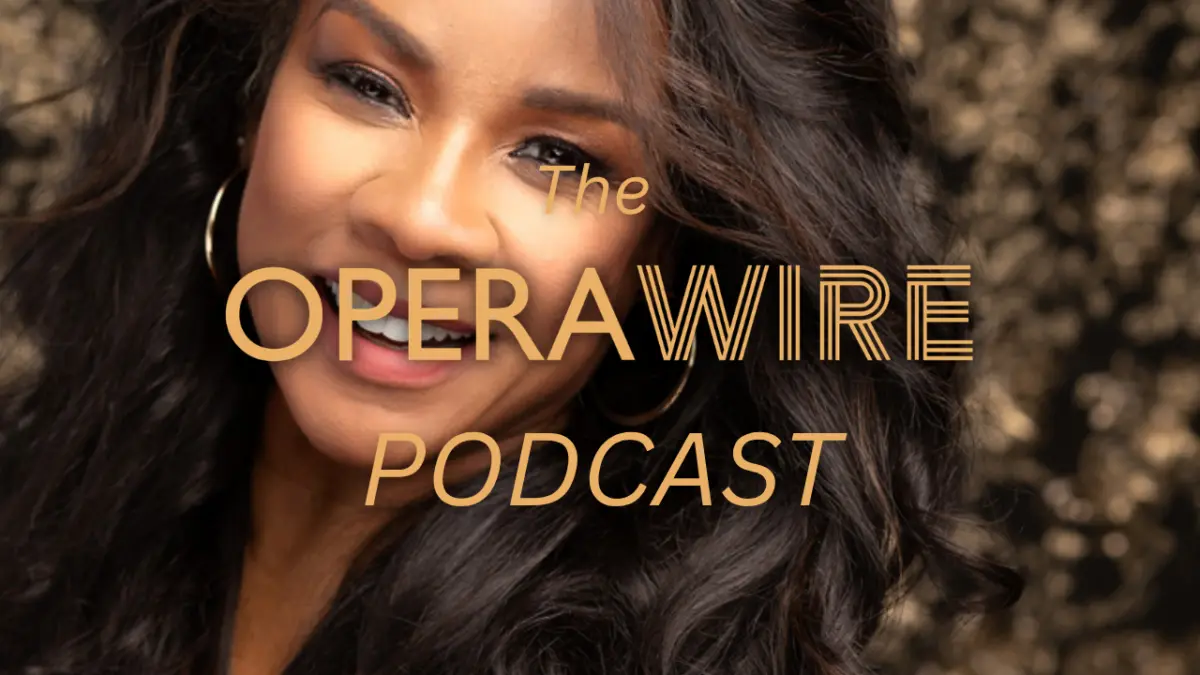
On Episode 18 of the OperaWire Podcast, hosts David and Francisco Salazar sat down with the iconic singer for an expansive, deeply revealing conversation. The dialogue transcended a standard retrospective, evolving instead into an urgent manifesto on arts education, inclusivity, and institutional responsibility. At the core of the discussion is the Denyce Graves Foundation, an ambitious non-profit organization established to identify, nurture, and launch the next generation of diverse operatic talent.
Beyond her philanthropic endeavors, Graves offered rare insight into her recent evolution as a stage director—highlighting her compelling vision behind mounting Carmen from behind the scenes—and addressed the bittersweet reality of stepping away from performing, punctuated by her reflective farewell to the stage in Porgy and Bess.
This report provides an in-depth exploration of Graves’ multifaceted mission, analyzing the mechanics of her foundation, her artistic transition from performer to visionary director, and what her enduring legacy means for the future of the lyric arts.
Detailed Chronology: From the Stage to the Vanguard of Mentorship
To understand the urgency and depth of the Denyce Graves Foundation, one must first trace the trajectory of an artist who broke formidable barriers in a historically exclusive discipline. Born in Washington, D.C., Graves navigated a rigorous classical training pipeline at the Oberlin Conservatory of Music and the New England Conservatory of Music before making her explosive international breakthrough in the early 1990s.
The Making of an Icon
Graves’ career has been defined by a rare combination of vocal opulence, dramatic ferocity, and magnetic stage presence. Her signature role, Carmen, became her global calling card. She inhabited the Gypsy factory worker with such psychological nuance and visceral intensity that critics and audiences alike often proclaimed her the definitive Carmen of her generation. Her performances at the Metropolitan Opera, Royal Opera House Covent Garden, San Francisco Opera, and Paris Opéra cemented her place in the operatic pantheon.
Yet, as Graves scaled the peaks of international stardom, she remained acutely aware of the systemic barriers facing young artists of color and those from marginalized socioeconomic backgrounds. The classical music ecosystem has long struggled with equity, access, and representation. Recognizing that talent is distributed universally, but opportunity is not, Graves began formulating a structural countermeasure.
The Genesis of the Denyce Graves Foundation
During her conversation on the OperaWire Podcast, Graves elaborated on the origin story of her eponymous foundation. It was born not merely out of a philanthropic impulse, but from a profound sense of stewardship. Having traversed the grueling landscape of professional opera, Graves recognized that the traditional pathways to success—characterized by expensive auditions, prohibitive coaching costs, and elite networks—were increasingly untenable for a diverse pool of emerging artists.
The foundation was conceptualized as a holistic incubator. Rather than simply offering one-off masterclasses or short-term financial aid, the organization builds comprehensive developmental bridges. It focuses on identifying exceptional vocal talent, providing rigorous artistic mentorship, offering career management guidance, and—crucially—reclaiming and celebrating the historical contributions of African American and historically underrepresented classical musicians who were systematically erased from the mainstream canon.
Transitioning to Direction and the Final Bow
As Graves builds the infrastructure for the next generation, she is simultaneously orchestrating a deliberate, graceful exit from active performance. On the podcast, she discussed her recent foray into stage direction, notably helming productions of Carmen. Directing allowed Graves to channel decades of interpretive authority into shaping the dramatic universe from the other side of the footlights. Directing Carmen gave her a unique vantage point: empowering younger singers to find their own authentic interpretations without merely mimicking past traditions.
The conversation ultimately turned toward the poignant reality of finality. Graves candidly addressed her decision to step away from performing, choosing George Gershwin’s Porgy and Bess as her swan song. Saying goodbye to the stage through a work deeply rooted in the African American cultural experience—a masterpiece that demands immense emotional and vocal vulnerability—served as a fittingly profound punctuation mark for a legendary performing career.

Supporting Context & Metrics: The State of Diversity and Education in Opera
Graves’ foundational work does not exist in a vacuum; it arrives at a critical juncture for the global opera industry. To fully appreciate the weight of the Denyce Graves Foundation, one must examine the broader socio-economic and demographic realities currently facing the classical performing arts.
The Access Gap in Classical Training
According to recent studies by arts advocacy groups such as OPERA America, the financial threshold for entering a professional operatic career has risen dramatically over the past two decades. Young singers must routinely invest tens of thousands of dollars into undergraduate and graduate conservatories, followed by uncompensated or low-stipend young artist programs, audition travel, coaching, and headshots.
- Financial Barriers: The average cost of a single major regional opera audition tour (including flights, lodging, and collaborative pianist fees) can exceed $5,000 per season.
- Demographic Disparities: While progress has been made in recent years, BIPOC (Black, Indigenous, and People of Color) artists remain underrepresented in major soloist roles on premier international stages, often facing structural biases in repertoire casting and vocal typecasting.
- The Mentorship Deficit: Institutional pipelines often fail to provide culturally competent mentorship that addresses the specific psychological and professional hurdles faced by diverse artists entering predominantly white institutions (PWIs).
How the Denyce Graves Foundation Counters These Metrics
The foundation’s programmatic architecture directly targets these systemic friction points:
- Direct Financial Relief & Grants: Alleviating the crippling debt associated with audition seasons and specialized training.
- Comprehensive Artist Development: Providing masterclasses, psychological counseling for performance anxiety, and branding/media training tailored to the modern classical musician.
- Historical Reclamation Projects: Unearthing and programming works by forgotten Black composers and performers, thereby expanding the pedagogical canon taught in conservatories.
By combining financial pragmatism with artistic excellence, Graves is attempting to rewrite the economic and cultural formulas that govern the opera world.
Official Statements & Insights from the Podcast
The dialogue between David Salazar, Francisco Salazar, and Denyce Graves yielded profound insights into the philosophy of artistry and education. Below are thematic extracts capturing the essence of Graves’ worldview as articulated on Episode 18.
On the Mission of the Foundation
"We cannot simply sit back and watch an art form we love struggle to connect with the richness of our broader society. The talent is out there—it is brilliant, it is fierce, and it is waiting. What our young people need are bridges, not walls. The Denyce Graves Foundation is about building those bridges so that no voice is lost simply because the pathway was too obstructed to navigate." — Denyce Graves
On Directing Carmen and Empowering the Next Wave
"When you step behind the table to direct a work like Carmen, you realize your job isn’t to recreate your own performance. It is to look into the eyes of a young artist and help them mine their own soul for the truth of that character. Opera survives not by fossilizing the past, but by allowing each new generation to tear open the score and find their own blood beating inside the music." — Denyce Graves
On Saying Goodbye to the Stage with Porgy and Bess
"Porgy and Bess is sacred ground. To say goodbye to performing through a work that carries such cultural weight, such community, such profound sorrow and soaring joy, felt like the only appropriate way to bow. You want your final moments on that stage to matter—to say something true about who we are and what this art form has demanded of us." — Denyce Graves
Future Outlook: The Legacy of Denyce Graves
As Episode 18 of the OperaWire Podcast demonstrates, Denyce Graves is not merely resting on her laurels as a global opera icon. Her transition from the stage to mentorship and direction represents a masterclass in how legendary artists can actively shape the institutional future of their craft.
What Lies Ahead for the Foundation
Looking forward, the Denyce Graves Foundation is poised to scale its operations significantly. Plans are underway to expand its fellowship cohorts, forge deeper partnerships with major opera houses and conservatories, and launch national concert series highlighting historical repertoire recovered by foundation researchers. The goal is clear: to establish a self-sustaining ecosystem where diversity of talent is matched by equity of opportunity.
The Evolution of Opera Direction
Furthermore, Graves’ emergence as a sought-after stage director signals a new chapter in theatrical interpretation. By bringing her decades of performance psychology into the rehearsal room, she is helping to modernize operatic staging—ensuring that productions are dramatically airtight, emotionally honest, and resonant with contemporary audiences.
Conclusion
Denyce Graves’ journey—from a young singer with a dream in Washington, D.C., to an international superstar, and now to a transformative educational and directorial visionary—serves as an inspiring blueprint for the arts. Through the Denyce Graves Foundation and her ongoing artistic stewardship, she is ensuring that the curtain never falls on opera’s potential, but rather rises on a more inclusive, vibrant, and brilliant era.
To watch or listen to the full conversation with Denyce Graves, stream Episode 18 of the OperaWire Podcast via YouTube or major podcast streaming platforms.