
Executive Overview
When Rockstar Games drops a new media asset, the entertainment industry stops to take notes. However, the debut of the 27-minute "extended look" trailer for Grand Theft Auto VI—broadcast exclusively via Netflix before landing on YouTube—was not merely a routine marketing drop; it was a cultural watershed. Showcasing the sun-drenched, neon-lit chaos of the fictional state of Leonida (Rockstar’s satirical, hyper-detailed love letter to Florida), the footage paired high-octane gunfights, high-speed police chases, and high-stakes criminal enterprises with an unexpectedly eclectic musical backdrop.
Alongside predictable heavy-hitters like Birdman, Lil Wayne, Kodak Black, Sexyy Red, and Tay Keith came a sprawling cross-generational array of artists. Rock and pop staples such as Depeche Mode, Phil Collins, Prefab Sprout, Def Leppard, the Bellamy Brothers, and the dance-punk outfit !!! all rubbed shoulders within the game’s dense acoustic ecosystem. Most shockingly, the video featured British pop veteran Sir Cliff Richard’s 1976 melancholic classic, "Devil Woman," underscoring the eccentric, darkly comedic juxtaposition that has long defined the Grand Theft Auto franchise.
As the countdown ticks toward the game’s anticipated release date of November 19—following a series of calculated development delays—the scale of GTA VI continues to defy comprehension. Industry estimates suggest that parent company Take-Two Interactive has poured between $1 billion and $1.5 billion into the title’s development and marketing thus far, making it arguably the most expensive entertainment project in human history.
Beyond its staggering budget and breathtaking graphical fidelity, GTA VI is weaponizing music as a core narrative engine rather than a mere background amenity. With dedicated in-game music studios, meticulous cultural localization, and a groundbreaking fictional pop duo named Real Dimez, Rockstar is setting a new benchmark for how interactive entertainment and the global music industry intersect.
Detailed Chronology: From First Teaser to Netflix Exclusive
To fully understand the gravity of the latest trailer, one must chart the slow-burn rollout that Rockstar Games has orchestrated for GTA VI.
The Long Road to Leonida
The initial announcement trailer, released in late 2023, broke global viewership records within hours, confirming years of leaks by setting the game in a modern, satirical Miami and its surrounding swamps and keys. It introduced Lucia, the franchise’s first female protagonist in decades, alongside her male partner in crime, framing a contemporary Bonnie and Clyde narrative that immediately captured the global zeitgeist.
However, delivering a world of this magnitude has not been without friction. Take-Two Interactive and Rockstar faced internal adjustments and external pressures, pushing the initial launch window out to allow the development team to polish the sprawling open-world sandbox. Throughout this radio silence, speculation ran rampant among the gaming community, with analysts scrutinizing every quarterly earnings call for clues regarding the game’s commercial viability and production budget.
The Netflix Partnership and the 27-Minute Drop
The premiere of the 27-minute gameplay deep-dive via Netflix marked a novel distribution strategy. By leveraging the streaming giant’s massive global subscriber base, Rockstar bypassed traditional gaming showcases to position GTA VI squarely as a prestige television event.
The video functioned as a comprehensive sizzle reel of the game’s systems, showcasing advanced artificial intelligence, dynamic weather systems, dense crowd behaviors, and, above all, the auditory tapestry of Leonida. It was within this extensive footage that fans dissected the tracklist, tracking the transition from underground Overtown house parties to the opulent, bottle-service-heavy lounges of South Beach. The inclusion of Sir Cliff Richard’s "Devil Woman" over a montage of high-speed vehicular carnage crystallized the franchise’s signature tonal whiplash—pairing innocent pop nostalgia with utter systemic mayhem.
Supporting Context & Metrics: The Billion-Dollar Ecosystem
The Financial Scale of Take-Two’s Gamble
A $1.5 billion investment is a watershed moment for the video game industry, eclipsing the budgets of even the most expensive Hollywood blockbusters. To put this figure into perspective, GTA VI costs more than many multi-year studio franchise sweeps. Yet, industry analysts remain bullish on Take-Two’s return on investment.
The preceding title, Grand Theft Auto V (released originally in 2013 across the PlayStation 3 and Xbox 360 generations), stands as the most profitable entertainment product of all time, generating over $8 billion in revenue and selling upwards of 200 million copies. Crucially, GTA Online continues to pull in staggering recurring revenues, boasting nearly 10 million weekly active users and earning close to $13 million daily even a decade after its launch.
Weaving Music into the Narrative Fabric
Historically, the GTA soundtrack lived on radio stations accessed while driving. Players could flip between West Coast hip-hop, classic rock, talk radio, and underground electronica. While these stations remain a staple, GTA VI elevates music from a passive collectible to an active narrative participant.
Exclusive previews granted to select cultural publications—such as Dazed‘s embargoed deep-dive—revealed that the game features fully realized physical locations dedicated to the music industry. Chief among these is a functional, explorable music studio nestled within the heart of Leonida. This location serves as a narrative nexus where players will interact with producers, engineers, and artists, blending the criminal underworld with the cutthroat realities of the modern music business.
Official Statements and Creative Vision
The ambition driving GTA VI stems from a deeply researched understanding of modern Florida’s cultural melting pot. In an exclusive interview, Rockstar’s Senior Vice President of Narrative, Rupert Humphries, shed light on the creative motivations steering the studio’s writers and world-builders.
"We love Miami music, particularly Miami bass, going through to more recent Miami artists like Kodak Black and Sexyy Red," Humphries explained to Dazed.
"We were also really interested in how the hip-hop scene in Miami exists in house parties in Overtown, clubs like Booby Trap on the River, and then high-end places on South Beach where bottles can cost thousands of dollars. We needed characters who could take us through those worlds."
This commitment to authenticity extends beyond genre curation. Rockstar is examining the socio-economic disparities and vibrant subcultures that define contemporary South Florida. By embedding these local nuances into the narrative quests and environmental design, the developers are constructing a living, breathing social satire that reflects the complexities of modern American life.
The Rise of Real Dimez
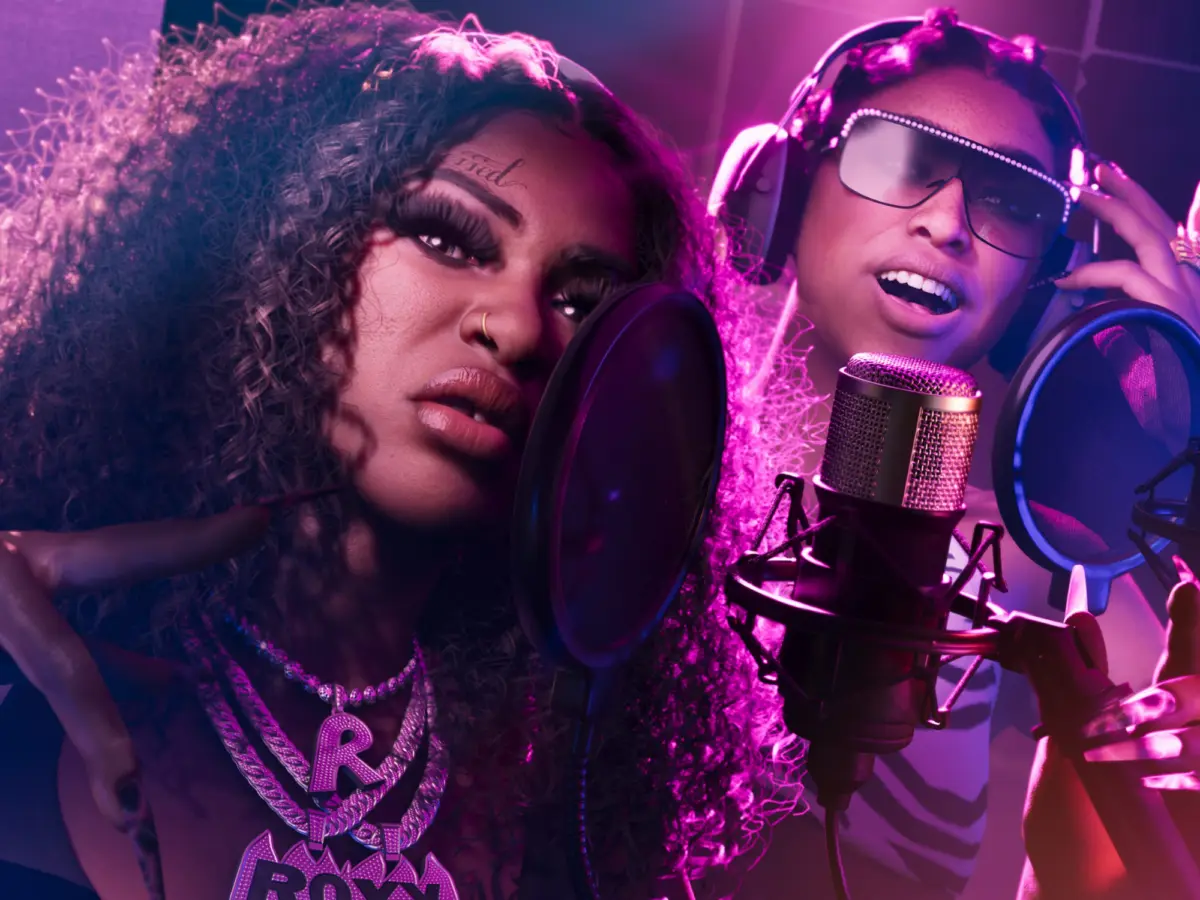
Perhaps the most intriguing musical innovation revealed in the recent trailer is the introduction of Real Dimez, a fictional pop duo characterized as "rising stars" within the game’s universe.
Unlike traditional background artists, Real Dimez’s trajectory will be tracked dynamically via in-game viral social media feeds, mirroring the influencer-obsessed culture of the 2020s. This raises tantalizing questions for industry watchers:
- Will Real Dimez feature full-length original tracks playable on in-game radio stations?
- Will Rockstar release these tracks on real-world streaming services like Spotify and Apple Music, effectively blurring the line between virtual pop stars and real-world charting acts (much like virtual bands such as Gorillaz or K/DA from League of Legends)?
Rockstar has remained tight-lipped regarding these specifics, but the concept signals an aggressive push toward transmedia storytelling.
Future Outlook: UGC, Creator Economies, and Beyond 2027
While the recent extended look heavily emphasized the single-player cinematic campaign—centering on Lucia and her partner—Rockstar has maintained strict radio silence regarding plans for an official successor to GTA Online. However, industry watchers need only look at recent corporate maneuvers to forecast the game’s long-term future.
Chasing the Roblox and Fortnite Creator Economies
Reports surfaced late last year indicating that Rockstar’s parent company has been actively courting elite creators from platforms like Roblox and Fortnite, alongside veteran GTA community modders and content creators. The discussions reportedly center around the potential to build custom, user-generated experiences (UGC) housed directly inside the GTA VI ecosystem.
As traditional single-player campaigns conclude, modern AAA titles survive—and perpetually monetize—through persistent online ecosystems and creator-driven economies. If Rockstar successfully integrates a robust UGC toolkit into GTA VI, it could transform the game from a fixed narrative experience into an infinite platform for virtual concerts, custom game modes, and branded musical activations.
The Road Ahead
With the release date officially locked in for November 19, anticipation has reached a fever pitch. Yet, industry analysts suggest that the ecosystem surrounding GTA VI will continue evolving well past launch day, with major content drops, online mode expansions, and potential creator economy rollouts extending deep into 2027 and beyond.
For now, the gaming and music worlds are left digesting the surreal imagery of a $1.5 billion criminal epic soundtracked by everyone from contemporary Miami trap stars to 1970s soft-rock royalty. If Grand Theft Auto VI succeeds in harmonizing its astronomical budget with this level of fearless cultural satire, it won’t just be the biggest video game of the decade—it will redefine what a modern cultural blockbuster looks like.