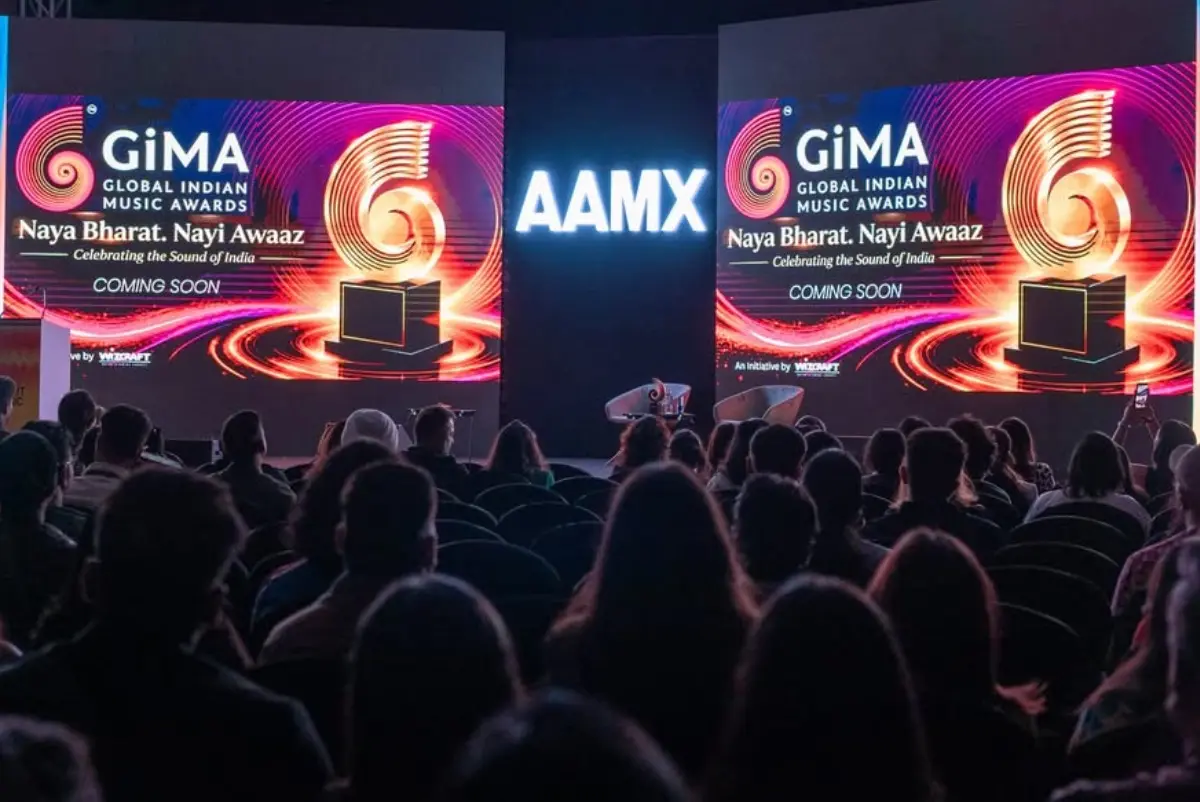

After an influential run that abruptly paused nearly a decade ago, the Global Indian Music Academy (GiMA) Awards are officially staging a high-profile comeback. Promoted by renowned event management powerhouse Wizcraft Entertainment Agency, GiMA is set for a grand return in 2027, completely reimagined for the modern era. Originally launched in 2010 to serve as the definitive benchmark for excellence across the subcontinent’s rich and diverse musical tapestry, the academy went on indefinite hiatus following its sixth successful iteration in 2016.
Now, the blueprint has been entirely rewritten. The forthcoming iteration of GiMA is shedding its identity as a traditional, one-night-only annual broadcast gala to emerge as an all-encompassing, digital-first music culture platform. In an era dictated by hyper-personalized streaming algorithms, viral social media moments, and borderless digital communities, Wizcraft is pivoting to mirror how modern audiences consume, discover, and celebrate audio art.
The revitalized property is designed to bridge historical divides within the South Asian soundscape. By integrating mainstream Bollywood film tracks with the burgeoning non-film, regional, traditional, independent, and emerging sonic movements, GiMA 2027 intends to function as a year-round ecosystem. The initiative will roll out original music releases, dedicated creator podcasts, and extensive live experiences—including intimate workshops and major concert tours—all culminating in a star-studded, global awards ceremony as its grand finale.
Announced by Wizcraft co-founder Sabbas Joseph during a keynote presentation at the prominent All About Music conference, the revival carries ambitions akin to its sister property, the International Indian Film Academy (IIFA) Awards. Just as IIFA successfully exported Bollywood cinema to global capitals from Madrid to New York, GiMA aims to position Indian music at the absolute forefront of the international cultural zeitgeist, providing indigenous creators with the infrastructure, platform, and global audiences they deserve.
Detailed Chronology: From Inception to Hiatus and the Road to 2027
To understand the magnitude of GiMA’s impending return, it is essential to trace the historical timeline of the institution, mapping its rise, its sudden dormancy, and the multi-year planning behind its modern rebirth.
[2010] Inaugural GiMA Awards launched in Mumbai
  │
[2011–2015] Expansion of categories (Indie, Classical, Regional)
  │
[2016] Sixth Edition held; sudden indefinite hiatus begins
  │
[2024–2025] Conceptualization of the "digital-first" ecosystem
  │
[2026] Official resurrection announced at the All About Music conference
  │
[2027] Scheduled grand return of the reimagined GiMA Awards
2010–2015: The Golden Era of the Academy
When Wizcraft Entertainment Agency first conceptualized the Global Indian Music Academy Awards in 2010, the Indian music landscape was heavily dominated by playback singing for Hindi cinema (Bollywood). GiMA was explicitly engineered to disrupt this monopoly by establishing an academy-driven peer-reviewed voting system, mirroring Western institutions like the Grammys.
The early ceremonies brought together legendary maestros, contemporary film composers, and independent artists under one roof. Categories were meticulously carved out to honor Carnatic and Hindustani classical music, regional folk traditions, ghazals, and Sufi tracks alongside blockbuster film scores. For six consecutive years, GiMA served as the gold standard of industry validation, recognizing the technical brilliance of sound engineers, lyricists, composers, and performers alike.
2016: The Sudden Hiatus
Following the completion of its sixth edition in 2016, the music industry was stunned by the abrupt suspension of the franchise. While Wizcraft never explicitly cited a single catalyst for the pause, industry analysts point to a shifting media landscape during the mid-2010s. The rapid ascension of streaming platforms (such as JioSaavn, Gaana, and the early entry of Spotify and Apple Music into India), coupled with falling television viewership for traditional award shows and rising production costs, made the legacy gala model increasingly unsustainable. The academy went quiet, leaving a substantial void in the market for a unified, cross-genre national music awards body.
2024–2026: The Conception of GiMA 2.0
Behind closed doors at Wizcraft, strategic conversations regarding the revival began to pick up steam in the post-pandemic era. The Indian music market had undergone a radical structural transformation: independent Punjabi hip-hop was dominating global charts, electronic dance music festivals were selling out across metros, and regional language tracks were finding viral traction globally via short-form video apps.
Recognizing that a carbon copy of the 2016 ceremony would fail to resonate with Gen-Z and Millennial consumers, Wizcraft’s leadership—spearheaded by Sabbas Joseph—conceptualized a completely new paradigm. Instead of an isolated event, GiMA was redesigned as a 365-day cultural movement. The culmination of these strategic shifts was formally unveiled to the global industry during a landmark presentation at the All About Music conference in late 2026, setting the stage for the 2027 rollout.
Supporting Context & Metrics: The Boom of Modern Indian Music
The decision to relaunch GiMA is underpinned by explosive economic and cultural metrics within the contemporary Indian music industry. No longer viewed merely as an appendage to the film industry, Indian music is emerging as a standalone global powerhouse.
The Streaming Explosion and Revenue Growth
According to recent industry reports by the Indian Music Industry (IMI) and IFPI, India ranks among the top music streaming markets globally by volume, boasting hundreds of millions of active monthly users. Monetization, while historically sluggish due to low subscription penetrations, has seen steady institutional growth driven by advertising-supported tiers, synchronized licensing deals, and sync placements in global media.
| Metric / Indicator | Historical Context (2016) | Current Market Status (2026) |
|---|---|---|
| Primary Consumption Model | Physical media & basic telecom ringback tones | On-demand ad-supported & premium streaming |
| Dominant Genre Share | Over 80% Bollywood / Film Music | Diversified (Significant rise in Indie Pop, Hip-Hop, Regional) |
| Global Reach | Diaspora-focused, localized impact | Borderless streaming footprints, international crossovers |
| Platform Strategy | Television broadcast-centric | Digital-first, omnichannel, interactive ecosystem |
The Rise of the Independent Creator
One of the most profound shifts necessitating GiMA’s new avatar is the democratization of music production and distribution. In 2016, breaking into the mainstream required securing a playback contract with a major film production house or signing an exclusive deal with legacy labels like T-Series, Sony Music India, or Universal Music Group.

Today, bedroom producers in Kerala, hip-hop collectives in Delhi, and folk-fusion artists in Rajasthan can independently distribute their art via aggregators like DistroKid, TuneCore, or Believe, building massive fanbases entirely via social media algorithms. GiMA’s new framework directly addresses this shift by ensuring that non-film and independent creators receive equal footing alongside traditional film composers.
Official Statements & Industry Perspectives
The announcement of GiMA’s return has sent ripples of excitement across labels, management agencies, and independent artist circles. The strategic vision laid out by Wizcraft emphasizes inclusivity, globalization, and cross-genre integration.
The Vision from Wizcraft
Unveiling the reboot at the All About Music conference, Wizcraft co-founder Sabbas Joseph drew a direct parallel to the company’s most successful global export:
"Just as the International Indian Film Academy (IIFA) Awards transformed into a global celebration of Indian cinema, GiMA aims to become the definitive platform championing Indian music across the world."
Elaborating on the core mission of the platform, official press announcements distributed by Wizcraft highlighted the structural goals of the initiative:
"GiMA aims to bring about greater integration across genres and open up the Indian music landscape by promoting Indian talent on a global platform, providing artists and creators with opportunities to showcase their voices, realise their ambitions and reach new audiences."
Industry Reception and Expectations
Independent artists and veteran executives alike have praised the digital-first approach. Speaking on condition of anonymity, a senior executive at a leading international music publisher operating in Mumbai noted: "The old model of gathering executives in a plush Mumbai auditorium to hand out trophies for movie songs that came out eighteen months prior is dead. If GiMA is truly building a digital-first culture platform that nurtures talent year-round via workshops, live concerts, and original content drops, it has the potential to become the true Grammy equivalent of South Asia."
Creators of regional and traditional music have similarly expressed optimism. For years, classical and folk artists lamented that mainstream awards shows relegated their categories to non-televised afternoon slots. By integrating these genres into a continuous digital narrative, GiMA promises authentic representation that respects the depth and heritage of India’s musical roots.
Future Outlook: What to Expect Leading Up to 2027
As the industry looks ahead to the official calendar drops slated for next year, several key questions and anticipated milestones define the road to the 2027 GiMA Awards:
1. International Expansion and Destination Events
Given Sabbas Joseph’s explicit comparison to the IIFA Awards model, industry speculators are closely watching to see if GiMA will adopt a traveling international format. IIFA famously staged its grand celebrations in cultural hubs such as London, Dubai, Toronto, Bangkok, and Tampa, leveraging local tourism boards and global diaspora populations to maximize impact. Whether GiMA 2027 will host its inaugural return ceremony abroad—or establish a flagship homecoming in India before going global—remains one of the most anticipated announcements for the coming months.
2. The Rollout of the Digital Ecosystem
Ahead of the physical awards gala, Wizcraft is expected to begin deploying the ancillary pillars of the new platform. This includes the scheduled release of original collaborative tracks, creator-centric podcast series exploring the mechanics of modern songwriting, and live music workshops designed to mentor up-and-coming talent in tier-2 and tier-3 Indian cities.
3. Voting Academies and Transparent Governance
With the reinvention of the brand comes the critical task of rebuilding the Academy itself. Industry stakeholders will be watching closely to see how the voting body is constituted, ensuring that an equitable balance of producers, songwriters, independent artists, critics, and business executives guide the nomination and selection processes.
Conclusion
The resurrection of the Global Indian Music Academy Awards represents far more than the simple revival of a dormant brand; it is a vital structural evolution for the South Asian music industry. By acknowledging the digital realities of modern music consumption and committing to the elevation of independent, regional, and traditional sounds alongside mainstream cinema, GiMA is positioning itself to be the undisputed heartbeat of Indian music for decades to come. All eyes are now fixed on 2027 as the curtain prepares to rise on a bold new chapter for Indian audio culture.