
By David Salazar
Published by OperaWire
Executive Overview
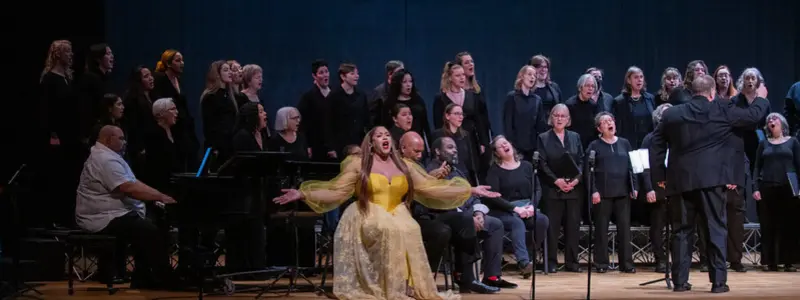
In an era where the socio-political landscape for transgender and gender-nonconforming individuals remains fraught with legislative hurdles, cultural polarization, and persistent threats to bodily autonomy and safety, the arts continue to serve as a vital crucible for healing, remembrance, and political resistance. This November, Boston’s renowned LGBTQ+ and allied classical chorus, Coro Allegro, is set to anchor this cultural resistance with a landmark performance.
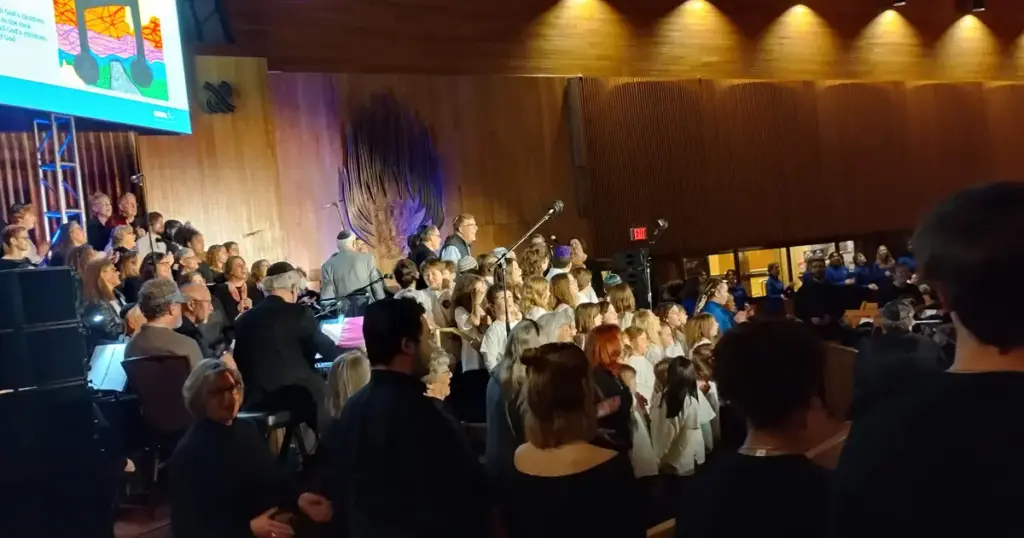
Under the visionary leadership of Artistic Director David Hodgkins, Coro Allegro will present the Boston premiere of composer and cellist Andrew Yee’s deeply moving Trans Requiem. Scheduled for November 22 at the historic Church of the Covenant in Boston’s Back Bay, the performance intentionally coincides with the solemn weekendobservance of the Transgender Day of Remembrance (TDOR).
The afternoon program—commencing at 3:00 p.m.—promises to be a monumental intersection of classical tradition and contemporary social justice. Alongside Yee’s Trans Requiem, the concert will feature Ola Gjeilo’s luminous Sunrise Mass. Furthermore, the afternoon will serve as a moment of civic and artistic recognition, highlighted by the presentation of Coro Allegro’s prestigious Pinkham Award to Giselle Byrd, Executive Director of The Theater Offensive and co-chair of the Boston Trans Day of Remembrance vigil.
This comprehensive report examines the structural makeup of the upcoming concert, the creative genesis and profound cultural significance of Andrew Yee’s Trans Requiem, the institutional lineage of Coro Allegro within Boston’s cultural ecosystem, and the broader socio-political implications of staging trans-centered classical works in the contemporary United States.
Detailed Chronology & Event Blueprint
The logistical and artistic framework for the November 22 production has been meticulously curated to honor the weight of Transgender Day of Remembrance weekend. TDOR, globally observed annually on November 20, honors the memory of transgender people whose lives were lost to acts of anti-transgender violence. By aligning the concert with this somber milestone, Coro Allegro bridges the gap between traditional liturgical mourning and modern secular-spiritual advocacy.
The Venue: Church of the Covenant
The choice of the Church of the Covenant as the host venue is deeply symbolic. Located at 67 Newbury Street, the church is nationally recognized not only for its stunning Tiffany-glass interior and Gothic Revival architecture but also for its long-standing history of progressive social activism, LGBTQ+ inclusion, and community sanctuary. Its acoustics provide a soaring, cathedral-like resonance that is ideal for both the intimate grief of Yee’s composition and the sweeping, celestial harmonies of Gjeilo’s Sunrise Mass.
Program Breakdown and Artistic Personnel
The 3:00 p.m. performance is structured into two distinct yet emotionally resonant halves:
- Ola Gjeilo’s Sunrise Mass: Opening the program, Norwegian-born composer Ola Gjeilo’s four-movement work offers a breathtaking, cinematic journey from earth to heavens. Scored for chorus and string orchestra, the mass moves from nebulous, atmospheric textures (The Spheres) to transcendent lyrical heights (Sunrise), establishing a foundational atmosphere of universal light, rebirth, and spiritual contemplation.
- Andrew Yee’s Trans Requiem: The centerpiece of the afternoon, this Boston premiere represents a radical reimagining of the traditional Requiem Mass. Rather than praying solely for the repose of the dead in abstract theological terms, Trans Requiem calls out the specific, systemic violence faced by transgender individuals, transforming grief into an active, defiant demand for justice and remembrance.
The performance boasts an extraordinary roster of guest artists:
- Andrew Yee: The two-time Grammy Award-winning cellist and composer (widely celebrated as a founding member of the Dover Quartet) brings virtuosic depth and deeply personal artistic investment to the performance, weaving the cello’s resonant, human-like voice through the fabric of the requiem.
- Breanna Sinclairé: A pioneering soprano whose barrier-breaking career has redefined the boundaries of opera and classical music as the first transgender woman to sing the national anthem at a professional sporting event and perform major operatic roles. Her voice provides an ethereal, soaring emotional core to the work.
- Sam Crosby-Schmidt: An acclaimed tenor known for his expressive interpretations of both early and contemporary classical repertoire, whose vocal warmth and dramatic intensity anchor the ensemble’s tenor line.
The Pinkham Award Presentation
A vital tradition of Coro Allegro’s concert season is the bestowal of the Pinkham Award, named in honor of the late composer Daniel Pinkham. The award recognizes individuals or organizations whose work has made profound contributions to new music, LGBTQ+ visibility, and social justice.
This year, the honor will be presented to Giselle Byrd. As Executive Director of The Theater Offensive—a Boston-based institution dedicated to presenting queer and trans art of color—and co-chair of the Boston Trans Day of Remembrance vigil, Byrd has spent decades on the front lines of community organizing, artistic liberation, and grassroots advocacy. The award underscores the unbreakable bond between artistic creation and community activism.
Supporting Context & Metrics: The Ecosystem of Coro Allegro
To fully understand the magnitude of the upcoming premiere, one must examine the institutional architecture of Coro Allegro and the intricate financial and community networks that make such ambitious programming possible.
Coro Allegro: A Legacy of Courage and Musical Excellence
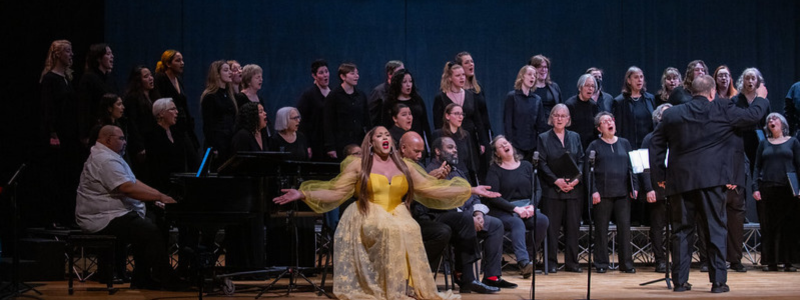
Founded in 1991, Coro Allegro has spent over three decades establishing itself as one of the premier LGBTQ+ and allied choruses in the United States. Under the baton of Artistic Director David Hodgkins—who has guided the ensemble with rigorous artistic standards and unwavering thematic courage—the chorus has commissioned numerous works, championed underrepresented composers, and built bridges between the mainstream classical establishment and marginalized communities.
Coro Allegro’s repertoire frequently explores intersections of faith, identity, social justice, and historical memory. By pairing standard choral masterpieces with cutting-edge contemporary works by queer and BIPOC creators, the chorus challenges audiences to confront uncomfortable truths while offering aesthetic consolation.
Funding, Grants, and Institutional Backing
Mounting a premiere of this scale requires substantial financial and institutional backing. The November 22 production is supported by a robust coalition of cultural foundations, state arts agencies, and community allies:
- Choral Arts New England: Through the Alfred Nash Patterson Lorna Cooke deVaron Grant, which specifically supports innovative choral projects and the advancement of high-level choral performance in New England.
- The Boston Foundation: Utilizing resources from the Free For All Endowment Fund, reflecting a commitment to democratizing access to high-art experiences across Boston neighborhoods.
- State and Municipal Agencies: Direct support from both the Massachusetts Cultural Council and the Boston Cultural Council, validating the project’s civic and cultural importance.
- Community Partners: A broad grassroots coalition comprising The Theater Offensive, Arlington Street Church, Old Cambridge Baptist Church, the Church of the Covenant, and Gays for Patsy. This diverse network of religious, cultural, and political organizations demonstrates the deep solidarity underpinning the production.
Official Statements and Artistic Perspectives
While formal press statements surrounding the event emphasize the healing and commemorative power of the music, the underlying narrative is one of urgent artistic intervention.
Artistic Director David Hodgkins has consistently framed Coro Allegro’s mission not as passive entertainment, but as active cultural stewardship. In previous reflections on the chorus’s programming, Hodgkins has emphasized that classical music is a living, breathing document of human experience—one that must reflect the struggles, triumphs, and grief of contemporary marginalized populations if it is to remain relevant.
Andrew Yee’s conceptualization of Trans Requiem stems from a deeply personal and collective urgency. As a non-binary and queer musician navigating the elite spheres of classical performance, Yee recognized a profound silence within the classical canon regarding the epidemic of violence directed at transgender individuals, particularly trans women of color. By adapting the structure of the Requiem—traditionally a prayer for the dead—Yee constructs a musical monument that insists on the dignity, humanity, and sacred worth of those whose lives have been prematurely extinguished by bigotry.
Furthermore, Giselle Byrd’s recognition via the Pinkham Award highlights the symbiotic relationship between institutional performance spaces and grassroots community leadership. In statements regarding her work with The Theater Offensive, Byrd has frequently underscored that art created by and for queer and trans people of color is not merely a political statement, but an act of survival and world-building.
Future Outlook: The Expanding Horizon of Trans Representation in Classical Music
The Boston premiere of Trans Requiem arrives at a critical historical juncture. As classical music institutions across North America grapple with questions of equity, diversity, and inclusion (EDI), programming decisions are increasingly scrutinized. For decades, the canon remained stubbornly insular, dominated by dead European masters. However, the emergence of works like Trans Requiem signals a permanent structural shift: contemporary classical music is no longer afraid to engage with the bleeding edge of social reality.
The Ripple Effect on Choral Societies Nationwide
The courage displayed by Coro Allegro in programming this work serves as a blueprint for other musical organizations across the country. Choral societies, symphony orchestras, and chamber ensembles are watching closely. The success of the November 22 premiere—measured not only in ticket sales and critical acclaim, but in the depth of community healing it fosters—will likely inspire subsequent regional performances of Yee’s work, cementing Trans Requiem in the permanent canon of 21st-century choral literature.
Art as a Bulwark Against Legislative Hostility
Against a backdrop where state legislatures nationwide continue to introduce and pass restrictive bills targeting transgender healthcare, public presence, and civil rights, cultural events like the Trans Requiem take on heightened importance. They provide a physical, acoustically charged gathering space where grief can be collectivized, resilience can be shared, and solidarity can be visibly enacted.
As the notes of Gjeilo’s Sunrise Mass fade into the soaring rafters of the Church of the Covenant on November 22, and as the cello of Andrew Yee sounds the opening strains of the Trans Requiem, Boston will bear witness to a rare and powerful alchemy: the transformation of sorrow into song, and the reaffirmation that art, in its highest calling, refuses to let the vulnerable be forgotten.
Event Details At-a-Glance
- What: Boston Premiere of Andrew Yee’s Trans Requiem, paired with Ola Gjeilo’s Sunrise Mass and the presentation of the Pinkham Award to Giselle Byrd.
- Who: Coro Allegro, Artistic Director David Hodgkins, cellist/composer Andrew Yee, soprano Breanna Sinclairé, and tenor Sam Crosby-Schmidt.
- When: Sunday, November 22, at 3:00 p.m. (Trans Day of Remembrance weekend).
- Where: Church of the Covenant, 67 Newbury Street, Boston, MA.
- Tickets & Information: Available through Coro Allegro’s official box office and digital channels.