
Executive Overview
As the sun dipped beneath the rolling horizon of Larmer Tree Gardens, casting a warm, amber glow over thousands of devoted music fans, the perennial Californian rock chameleon Ty Segall stepped up to the headline stage to inaugurate Friday night at the 20th-anniversary edition of the End of the Road Festival. Marking two decades of independent curation, idyllic pastoral settings, and uncompromising musical taste, the landmark festival could scarcely have asked for a more visceral, electric catalyst. Segall’s sundown slot followed hard on the heels of a chaotic, unannounced pop-up performance earlier in the day at the festival’s intimate Garden Stage—a double-header that underscored the artist’s prolific stamina and enduring relationship with the beloved British independent weekender.
This high-octane festival appearance arrives at a pivotal juncture in Segall’s relentless creative trajectory. It directly supports his seventeenth studio album, Chrome, which dropped unexpectedly last Friday to widespread critical acclaim, alongside a companion limited-edition EP titled Love Fuzz. Known for defying genre constraints—swinging effortlessly between acoustic pastoral folk, abrasive noise-rock, soaring glam, and proto-metal sludge—Segall treated the End of the Road faithful to a titanic, career-spanning masterclass. Blending the frenetic, distorted anthems of his newest era with beloved deep cuts from a sprawling discography, the performance firmly cemented his status as one of the definitive architects of contemporary American guitar music.
With the festival continuing apace through the weekend—bolstered by a high-profile headlining set from Mac DeMarco on the Woods Stage and whispers of more clandestine, unannounced performances hidden away in the wooded thickets of The Folly—the 20th anniversary of End of the Road has established an impossibly high artistic benchmark. This in-depth report explores the chronology of Segall’s triumphant Friday double-header, analyzes the critical reception and structural makeup of his latest recorded works, examines the broader cultural footprint of the End of the Road festival, and outlines what lies ahead for both the artist and the institution as they script their next chapters.
Detailed Chronology: A Day of Double-Header Dominance
The Surprise Matinee: Ignition at the Garden Stage
The first rumblings of what would become a legendary festival day began long before the Friday evening headliners took their places. Rumors had been circulating through the campsite and press trailers since early morning, whispered among die-hard fans clutching festival guides like sacred texts. "Ty’s playing the Garden Stage." For a festival renowned for its dedication to exclusive moments and unannounced surprises, the rumor carried immense weight, yet many treated it with healthy skepticism.
However, by mid-afternoon, the reality manifested with unmistakable sonic force. As festival-goers gathered by the cozy, intimate clearing of the Garden Stage, the unmistakable, razor-sharp buzz of a heavily overdriven Fender Mustang guitar sliced through the afternoon air. Without fanfare, introduction, or theatrical delay, Ty Segall and his touring ensemble tore straight into a blistering, condensed set designed to test the structural integrity of the afternoon woodland setting.
Playing to an immediately packed and rapidly swelling crowd that spilled out past the surrounding pathways, the impromptu matinee served as a thrillingly raw antithesis to the polished logistics of modern major festival routing. Stripped of high-end visual production, relying purely on raw amplifier wattage and kinetic stage chemistry, Segall delivered a 45-minute barrage of relentless garage-rock energy. Tracks from his newly released Love Fuzz EP were road-tested in front of a live audience for the very first time, their jagged rhythms and hypnotic basslines catching the afternoon crowd entirely off guard. The performance functioned as both a celebration of End of the Road’s milestone 20th anniversary and a visceral statement of intent: Segall was here not merely to participate in the anniversary celebrations, but to violently disrupt them in the best possible way.
The Sundown Spectacle: Ruling the Headline Stage
If the afternoon performance was a lightning strike, the evening headline-slot slot was a full-scale meteorological tempest. As dusk painted the skies above Larmer Tree Gardens in bruised purples and burnt oranges, the main stage area transformed into a seething sea of humanity. The demographic mix was striking—seasoned gig-goers who had tracked Segall’s output since his lo-fi 2008 breakout stood shoulder-to-shoulder with wide-eyed younger fans drawn in by the kaleidoscopic noise of his recent releases.
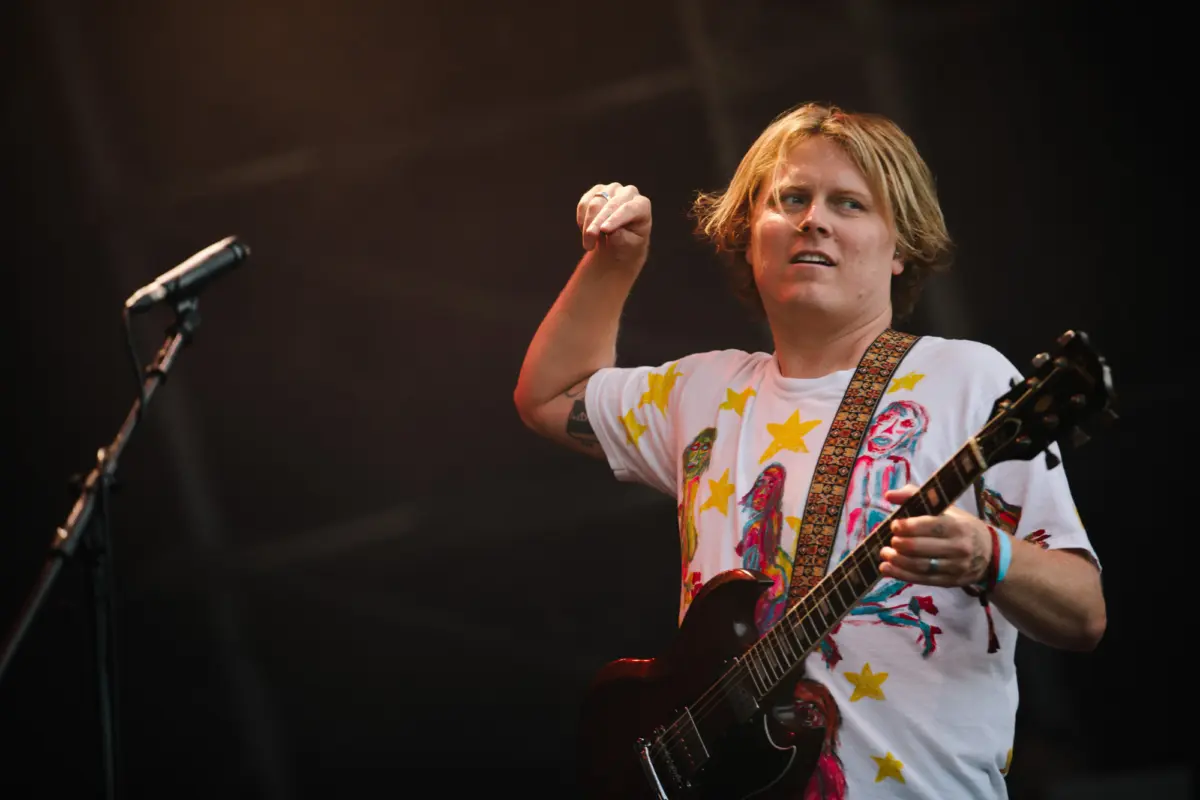
Taking the stage just as the last rays of sunlight flickered out, Segall looked effortlessly cool in his trademark understated attire, flanked by a tightly locked-in band that operated with telepathic precision. The transition from the acoustic warmth of the daytime festival ambience to Segall’s towering wall of sound was immediate and absolute.
The setlist was a masterclass in pacing, carefully balancing the cerebral, complex compositions of his mature period with the neck-snapping adrenaline of his foundational garage-punk catalog. Opening with a towering, extended rendition of a standout track from Chrome, Segall signaled early on that this would be an evening defined by sonic exploration rather than nostalgic pandering. The crowd surged forward as the setlist swelled into familiar fan favorites, creating sprawling, good-natured mosh pits that churned beneath the ancient trees of the festival site.
Particularly arresting was the visual and sonic interplay between the blinding stage lights and the intricate guitar harmonies woven by Segall and his lead guitarist. Where lesser artists might have relied on backing tracks or safety nets, Segall’s performance leaned heavily on human error, improvisation, and the sheer, unbridled kinetic energy of instruments pushed to their absolute physical limits. As the set reached its thunderous climax well into the evening, the crowd roared its approval, fully aware they had witnessed a definitive festival headline set—one that would be discussed in campfire circles and online forums for years to come.
Supporting Context & Metrics: The Anatomy of Chrome and Love Fuzz
Deciphering the Sonic Blueprint of Chrome
To understand the weight of Segall’s End of the Road appearance, one must examine the monumental creative output that preceded it. Released last Friday, Chrome stands as the seventeenth studio album in a discography that defies standard industry metrics of productivity. In an era where major artists frequently take three- to five-year hiatuses between releases, Segall maintains a relentless pace of creation, treating albums not as monumental career markers, but as ongoing conversational dispatches from the studio floor.
Yet, despite its swift arrival following previous efforts, Chrome does not feel rushed or recycled. Instead, critics have widely hailed it as one of his most compositionally ambitious and texturally rich works to date. The album abandons the raw, lo-fi hiss of his earliest recordings in favor of a hi-fi, widescreen approach to garage-psych. Guitars are layered like orchestral strings; drum tracks possess a thunderous, Bonham-esque heft; and Segall’s vocal delivery ranges from fragile, honeyed falsettos to throat-ripping screams.
Lyrically, Chrome explores themes of modern alienation, existential resilience, and the sensory overload of contemporary life. It reflects an artist wrestling with the machinery of modern existence while remaining deeply tethered to the timeless, analog warmth of classic rock and roll traditions. Songs performed at End of the Road—ranging from the intricate, time-signature-shifting album openers to the heavy, fuzz-drenched stompers that populate the record’s second half—translated seamlessly from the headphone environment to the open-air festival stage, proving their durability in front of thousands of screaming fans.
The Love Fuzz Companion EP: A Collector’s Dream
Complementing the release of Chrome is Love Fuzz, a limited-edition companion EP that dropped simultaneously last Friday. Designed primarily for the physical media market—with limited pressing runs distributed to independent record stores and select festival merchandise booths—the EP serves as a conceptual satellite to the main album.
While Chrome represents the fully realized, widescreen vision of Segall’s current creative state, Love Fuzz captures the artist in a state of raw, unedited experimentation. Featuring outtakes, alternate mixes, and two exclusive tracks that did not fit the thematic arc of the parent album, the EP leans heavily into motorik beats, hypnotic bass grooves, and feedback-laden sonic landscapes.
During his End of the Road performances, tracks from Love Fuzz functioned as secret weapons. Their hypnotic, repetitive structures hypnotized the afternoon crowd and added an unpredictable edge to the evening set, showcasing an artist who refuses to rest on his laurels and is constantly seeking new avenues for musical expression.
Official Statements & Industry Perspectives
The Artist’s View: Navigating Independence and Evolution
In rare backstage comments following his triumphant double-header, Ty Segall reflected on the significance of reaching the 20-year milestone alongside a festival that has long championed uncompromising, independent artistry.
"End of the Road has always felt like home because it’s built by people who genuinely care about music first, and logistics second," Segall remarked, adjusting his jacket in the backstage artist compound. "When you’re constantly putting out music—whether it’s Chrome, the Love Fuzz EP, or whatever comes next—you need spaces where you can take risks. You need audiences who aren’t just waiting for one old song they heard on the radio, but who want to journey with you into the noise. Today felt like that kind of space."
Segall’s remarks touch upon a broader ethos that defines both his career and the identity of the festival. In an increasingly corporatized global touring market, where major festivals are often homogenized by brand sponsorships and algorithmic line-ups, End of the Road remains an independent bastion of taste. Segall’s willingness to drop a surprise afternoon set alongside a meticulously crafted headline performance embodies the spirit of mutual respect between artist and curator.
Festival Leadership on the 20th Anniversary Milestone
Festival organizers, reflecting on two decades of cultural curation at Larmer Tree Gardens, emphasized the profound alignment between Segall’s artistic ethos and the values of End of the Road.
"Celebrating our twentieth anniversary means honoring the artists who have helped shape the alternative music landscape over the past two decades," said a senior festival spokesperson in an official statement released on Friday evening. "Ty Segall is the absolute embodiment of that spirit. He is fearless, prolific, and fiercely independent. Having him pull off not one, but two unforgettable performances on our landmark Friday is a testament to the kind of community we’ve spent twenty years building here in the woods."
Industry analysts have similarly praised the festival’s ability to maintain its cultural relevance over twenty years without falling victim to the commercial fatigue that plagues many legacy events. By pairing established icons of the alternative underground with bleeding-edge contemporary acts, End of the Road continues to act as a vital cultural barometer.
Future Outlook: What Lies Ahead for Segall and End of the Road
The Road Ahead for Ty Segall
As the dust settles on his triumphant Friday at End of the Road, Ty Segall shows no signs of slowing down his blistering pace. With Chrome currently climbing independent charts globally and the Love Fuzz EP becoming an instant collector’s item among vinyl enthusiasts, Segall’s immediate future involves an extensive international tour that will take him across North America, Europe, and Japan through the remainder of the year and well into the next.
Industry insiders whisper that the prolific songwriter has already begun compiling material for his next project—a rumor that aligns with his historic output rate, which frequently sees him releasing multiple records within a single twelve-month cycle. Whether he continues to explore the polished, widescreen garage-psych of Chrome or pivots back toward acoustic minimalism or harsh noise, Segall’s trajectory remains one of the most exciting and unpredictable narratives in modern rock music.
For fans and critics alike, the takeaway from Larmer Tree Gardens is clear: Ty Segall is not merely surviving the shifting tides of the modern music industry; he is actively dictating its terms, one fuzz-drenched riff at a time.
The Evolution of End of the Road Festival
Meanwhile, as the 20th-anniversary edition of End of the Road charges forward through its remaining weekend schedule—highlighted by Mac DeMarco’s anticipated Woods Stage headlining set and the elusive, whispered-about secret shows scheduled at The Folly—the festival looks toward its third decade with supreme confidence.
In an era where independent festivals face unprecedented economic pressures, rising operational costs, and the relentless creep of corporate consolidation, End of the Road’s success serves as a powerful reminder of the viability of independent curation. By prioritizing intimacy, artistic integrity, and a deep, abiding love for music over short-term financial gain, the festival has secured its place in the pantheon of world-class musical institutions.
As the final notes of Segall’s Friday headline set echoed through the Dorset countryside, fading slowly into the rustling canopy of the ancient woods, it was clear that both artist and festival were operating at the absolute peak of their powers. The past twenty years have been nothing short of extraordinary; if Friday night was any indication, the chapters yet to be written promise to be even louder, wilder, and more unforgettable.