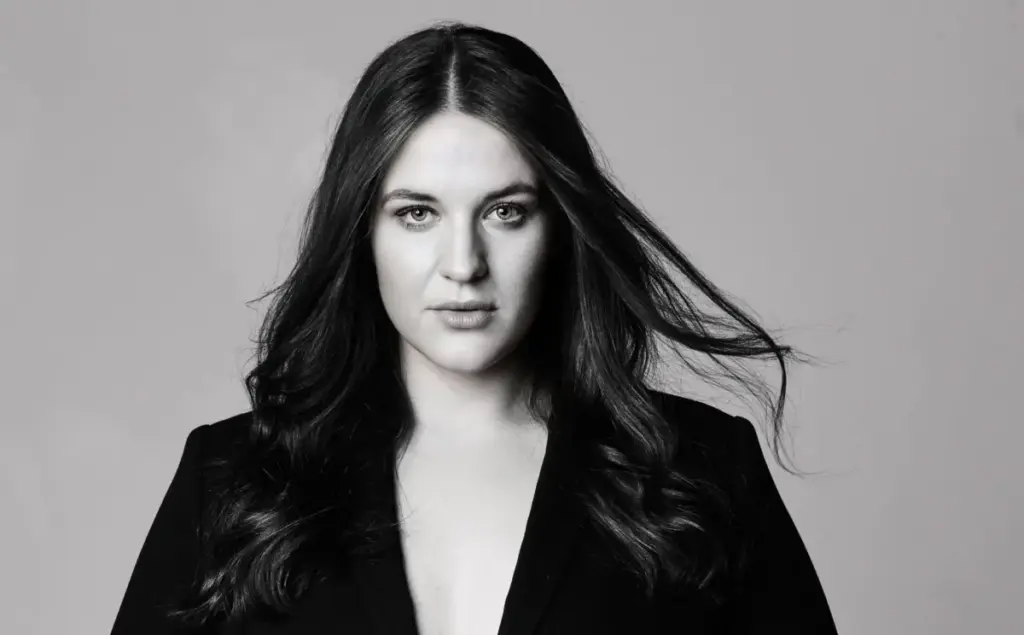
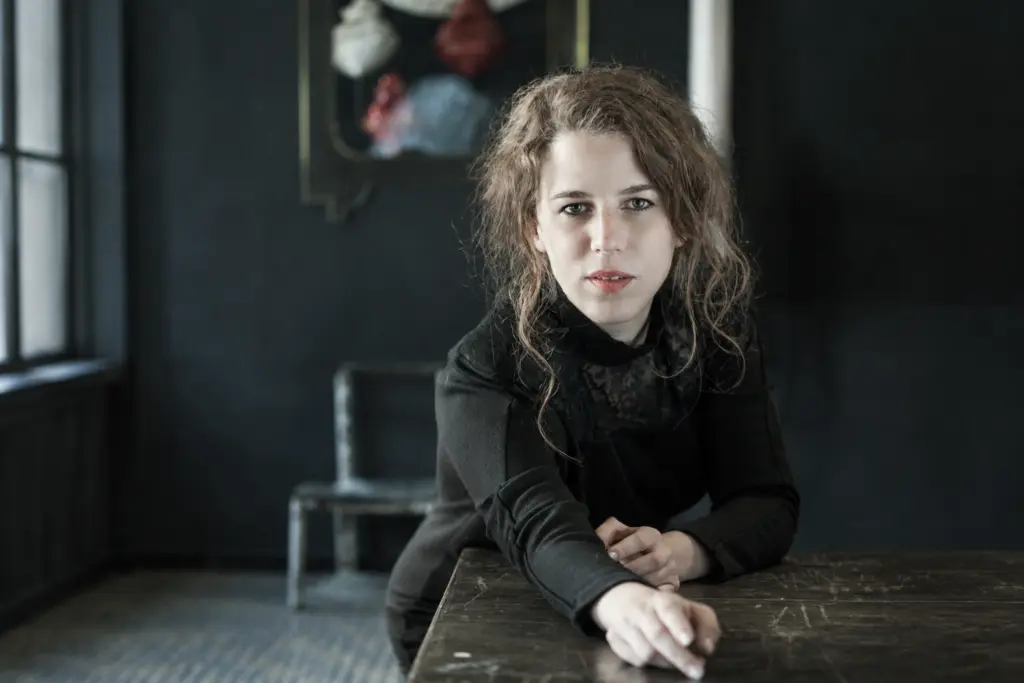

(Photo Credit: Mariapia Ballarino)
Executive Overview
In the rapidly evolving landscape of contemporary music theater, few emerging directors possess the rare ability to seamlessly bridge the gap between historical reverence and avant-garde theatricality quite like Marialuisa Bafunno. Recently, OperaWire attended a breathtaking performance of "Farinelli: The Voice That Remains," a virtuosic one-man show starring countertenor Nicolò Balducci. The production—a mesmerizing hybrid of opera, spoken drama, and intimate recital—left audiences spellbound. Behind this triumph of artistic synthesis stands Bafunno, whose multifaceted role as conceptualist, stage director, and librettist has marked her as one of the most compelling creative voices of her generation.
To understand Bafunno’s meteoric rise is to understand an artist forged in the crucible of classical Italian heritage yet fiercely attuned to modern psychological complexities. From her roots in Andria, Puglia, to the storied halls of Milan’s Teatro alla Scala, Bafunno’s trajectory is defined by a relentless pursuit of emotional truth through music. In this exclusive, wide-ranging profile and interview, OperaWire delves into the mind of the director, exploring her formative influences, her creative methodology, her fascination with the paradoxes of 18th-century castrati, and her ambitious plans for the future of opera and libretto writing.
Detailed Chronology: From the Stones of Puglia to the Stages of La Scala
Formative Years and the Spirit of Frederick II
Marialuisa Bafunno’s journey into the arts began far from the glamorous lyric stages of Milan, in the sun-drenched southern Italian town of Andria, Puglia. When asked about the cultural figures who shaped her early worldview, Bafunno points not to a musician or a playwright, but to a medieval monarch: Frederick II, Holy Roman Emperor.
"He is not from Puglia, but he spent many years of his life here," Bafunno reflects. "I live close to his castle, and he is closely identified with the region. As a child, our teachers told us lots of stories about him. He was a very enlightened ruler, a man of learning."
This early exposure to a historical figure who championed intellect, architectural grandeur, and cross-cultural curiosity instilled in young Bafunno an appreciation for grand narratives and historical depth—themes that would later permeate her directorial work.
The Epiphany at La Scala
The defining pivot of Bafunno’s life occurred during her young adulthood in Milan, where she was formally studying scenography at the prestigious Academy of Fine Arts. It was during an internship at the legendary Teatro alla Scala that she experienced her theatrical baptism by fire: a live performance of Giuseppe Verdi’s masterpiece, "Un Ballo in Maschera."
The sheer scale, visceral power, and architectural majesty of the production fundamentally altered her artistic ambitions. "The sheer scale of the performance, and the music was so powerful," she recalls. Working behind the scenes in set and spatial design exposed her to the mechanics of grand opera, but it was the auditory and visual synergy that unlocked her true vocation. Almost overnight, Bafunno realized her destiny lay not merely in designing the world of the stage, but in commanding it.
Supporting Context & Metrics: The Philosophy of Opera Direction
Transitioning from scenography to stage direction provided Bafunno with a distinct aesthetic advantage. While many traditional directors focus primarily on text and blocking, Bafunno approaches opera through a spatial, visual, and sonic lens.
When asked why opera ultimately appealed to her far more than spoken theater, her answer highlights the unique alchemy of the lyric art form:
"I was attracted by the voices and the music. They allow you to enter the story from different perspectives. It also allows the audience to connect to the story on a deeper level."
Influences and Aesthetic Markers
Bafunno’s directorial style does not emerge in a vacuum. Her work reflects a rigorous intellectual curiosity paired with a deep empathy for human fragility. Among her literary touchstones is Hermann Hesse’s philosophical novel "Siddhartha," a book that explores the individual’s quest for spiritual enlightenment and self-discovery—motifs that frequently surface in Bafunno’s character-driven staging.
In the realm of modern directing, Bafunno acknowledges a profound debt to British theater and opera director Katie Mitchell. Known for her hyper-realistic psychological depth, use of real-time video technology, and fierce focus on female perspectives, Mitchell’s influence is visible in Bafunno’s meticulous handling of character psychology and temporal layers.
Furthermore, Bafunno’s eclectic personal tastes reveal an artist who refuses to be constrained by genre boundaries. Whether discussing her favorite non-classical track—Florence and the Machine’s anthemic "Dog Days Are Over"—or her unconventional childhood pet, an untethered parrot named Aristide who lived freely on her shoulder rather than in a cage, Bafunno champions freedom, emotional release, and untamed expression.
Official Statements & Insights: Unpacking "Farinelli: The Voice That Remains"
Bafunno’s most recent triumph, "Farinelli: The Voice That Remains," stands as a masterclass in biographical music theater. Bringing the legendary 18th-century castrato Carlo Broschi (known to history as Farinelli) back to life required an extraordinary act of theatrical imagination.
The Paradox of the Castrato
Farinelli was the undisputed rock star of the Baroque era—adored by monarchs, showered with unimaginable wealth, and possessing a vocal range and purity that reduced audiences to tears. Yet, his public adulation masked a profound, irreversible personal sacrifice.
When asked what initially drew her to the subject, Bafunno did not hesitate:
"His life story is a contradiction that moves between the perfection he presented to the world and the suffering he experienced in his private life."
Asked to distill Farinelli’s essence into just two adjectives, Bafunno chose words that cut straight to the core of the tragedy: "Glitzy, Broken."
Choosing the Ideal Collaborator: Nicolò Balducci
To realize this complex vision, Bafunno cast countertenor Nicolò Balducci in the demanding one-man tour de force. The selection was far from accidental; it was born of a perceptive alignment between performer and historical subject.
"It is the perfect repertoire for him," Bafunno explains. "Also, I saw in him certain parallels with Farinelli."
Balducci’s ability to navigate the demanding vocal acrobatics of the Baroque canon while embodying the deep psychological isolation of the character elevated the production from a historical retrospective into a vital, breathing exploration of sacrifice, identity, and the price of artistic perfection.
Future Outlook: Librettos, Dream Projects, and Upcoming Productions
With "Farinelli" cementing her reputation as an innovative force in music theater, Marialuisa Bafunno shows no signs of slowing down. Her calendar is packed with high-profile engagements, and her ambitions stretch well beyond traditional staging.
The Transition to Librettist
Buoyed by her success in writing the text for the Farinelli production, Bafunno harbors a strong desire to formally enter the realm of libretto writing. When asked if she would consider pursuing it as a career, her response was unequivocal: "I would love to."
She already has a striking, socially resonant subject in mind:
"I would like to write a libretto about Pippa Bacca, who was killed in Turkey while hitchhiking from Milan to Jerusalem dressed as a bride as part of an artistic performance."
The tragic yet poetic narrative of Bacca—an artist seeking universal peace and human connection through vulnerability—aligns perfectly with Bafunno’s theatrical sensibilities.
Upcoming Engagements and Dream Repertoire
Looking immediately ahead, Bafunno is slated to direct Gaetano Donizetti’s beloved comic masterpiece, "L’Elisir d’Amore," at the theater in Livorno. It is a project that will allow her to showcase her versatility, pivoting from the melancholic, high-stakes psychological drama of the Baroque era to the sparkling, bittersweet wit of 19th-century bel canto.
However, when asked which opera she would most love to tackle in the future, her eyes light up at the prospect of Mozart’s monumental "Don Giovanni." Her perspective on the title character offers a fascinating glimpse into her socially conscious, modern directorial approach:
"He is an extreme version of an alpha male with all their problems, such as narcissism, toxic masculinity, hunger for power, and the need to conquer and consume. I would love to explore this through his character."
The Ultimate Dinner Party
To capture the essence of Marialuisa Bafunno’s intellectual universe, one need only look at her dream dinner party guest list. Given the challenge of inviting three figures—living or dead, real or fictional, with at least one opera connection—Bafunno assembled a formidable trio: Maria Callas, Freddie Mercury, and Peter Brook.
It is a grouping that mirrors Bafunno’s own artistic triad: the uncompromising vocal and dramatic intensity of Callas, the genre-defying theatrical dynamism of Mercury, and the revolutionary, stripped-down spatial purity of director Peter Brook.
As Marialuisa Bafunno continues to mount productions that challenge, move, and redefine the boundaries of opera, the lyric theater world would do well to watch closely. If her past work is any indication, her journey has only just begun.